
Canadians long for the sight, sound, smell and taste of the sea no matter the season or how close they are to the coast. Seaworthy operators are reeling in these customers with menu options using frozen seafood. Are you?
Make waves with seafood options
Chef Philman George is the corporate chef for High Liner Foodservice, which is on a mission to remind everyone just how healthy, versatile and tasty seafood is.
Chef Phil knows seafood; with both parents hailing from Barbuda, he naturally learned to appreciate seafood at a young age. “My goal is to place craveable seafood on your menu and help you generate more profit. I work closely with operators to help them succeed and reach their full potential with seafood offerings.”
Why seafood on your menu?
- Seafood drives traffic. Customers tend to order food they can’t easily make or don’t like to cook at home. Most Canadians are simply not that comfortable with creating a quality seafood meal and prefer a restaurant curated seafood experience.
- Seafood increases profits. Seafood plays a critical role in maximizing profits and increasing customer satisfaction. Profitable operations frequently use seafood such as shrimp to upsell and pair with other proteins to ensure that no money is left behind. “Would you like some garlic & herb shrimp to go with your steak/salad?”
- Customers crave seafood. Coming out of the pandemic, customers stated that seafood is a highly craved item – the second most highly missed restaurant dish, according to Datassential.
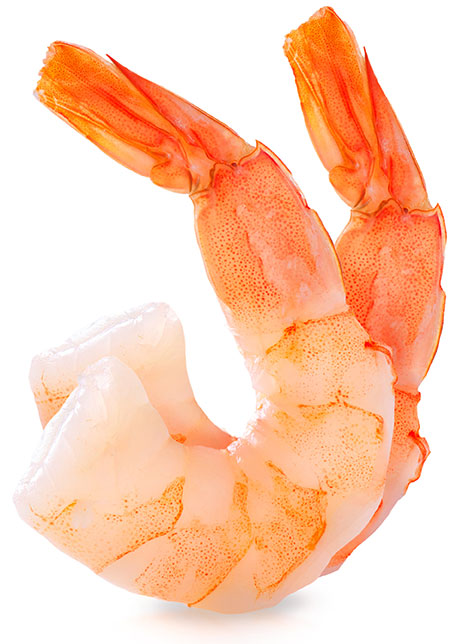
Rocking the boat on frozen seafood misconceptions
Foodservice operators need to add the word “fresh” when they think about frozen seafood.
Chef Phil explains: “I’ve hosted many presentations surrounding the benefits of frozen seafood. I often start by asking the attendees, ‘what is the opposite of fresh?’ Over 90% of the participants answer with ‘frozen.’ There is a perception that frozen cannot be fresh.”
“Significant advancements in freezing technology allow seafood to be flash frozen moments after harvest to preserve the texture, taste and appearance. Flash freezing seafood is like pressing pause on mother nature. The freshness is sealed in until you are ready to use it.”
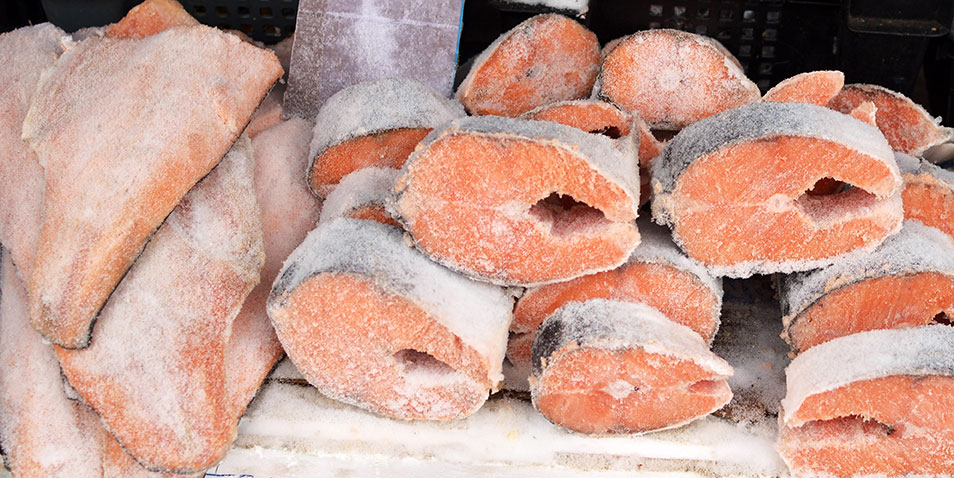
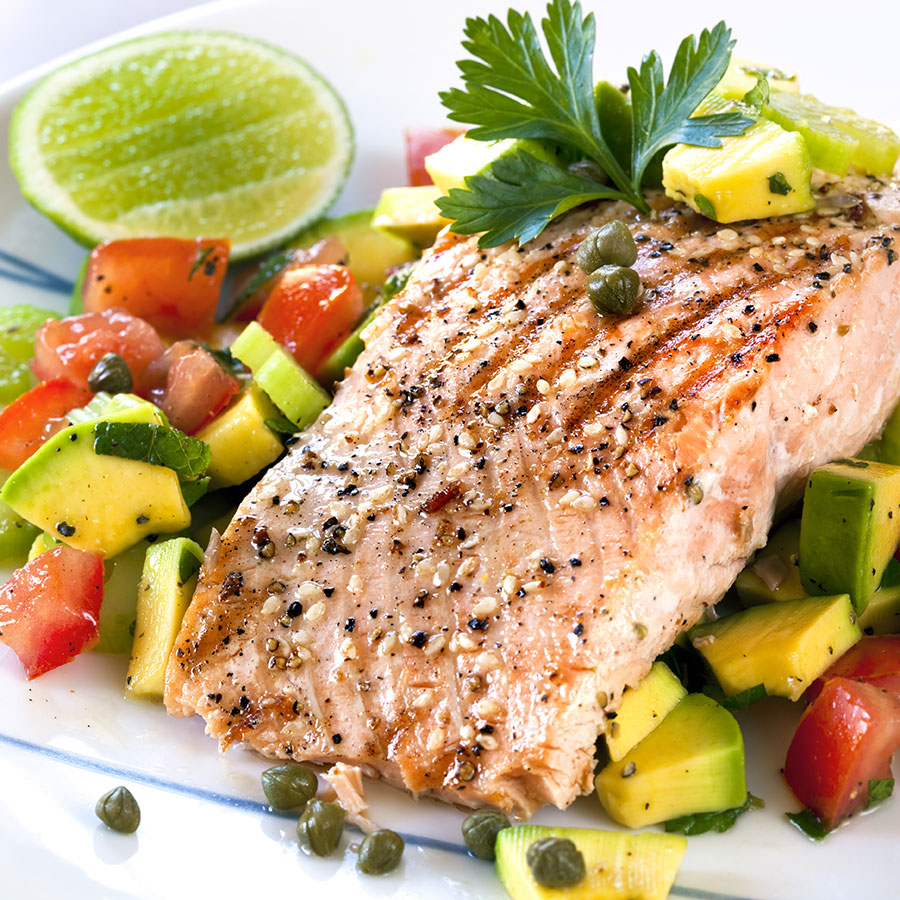
“Flash freezing seafood is like pressing pause on mother nature. The freshness is sealed in until you are ready to use it.”
Chef Philman George, Corporate Chef, High Liner Foodservice
Run a tight ship using frozen seafood
The shot across the bow that foodservice businesses received this last year and a half has only reiterated the importance of keeping a close watch on all the nickels and dimes that can make or break an operation. Utilizing frozen seafood on menus just makes sense (and cents). Chef Phil breaks it down:
- Availability – Frozen seafood gives the operator access to a larger variety of seafood that can be utilized all year-round.
- Portion Control – A foodservice operator can order specific sizes and cuts from a large variety of species. For example, 4oz Pacific Cod Loins, 6oz Pollock Fillets or 4oz Haddock Tails.
- Pricing – Ability to lock in pricing on specific species, cuts and sizes for an extended period helps an operator better determine profit margins and stay one step ahead of changing market conditions.
- Profits – Using value-added seafood allows an operator to go from freezer to cooking source to plate, a process which virtually eliminates waste and helps maximize profits.
- Quality – Seafood that has been flash frozen moments after harvest locks in the freshness by preserving the natural appearance, texture and flavour of the seafood.
- Sustainability – Gone are the days where we can brag about seafood being flown/air freighted into a restaurant from overseas. Preserved seafood travels through the supply chain using methods that are far more efficient and favourable to our environment when compared to air freight.
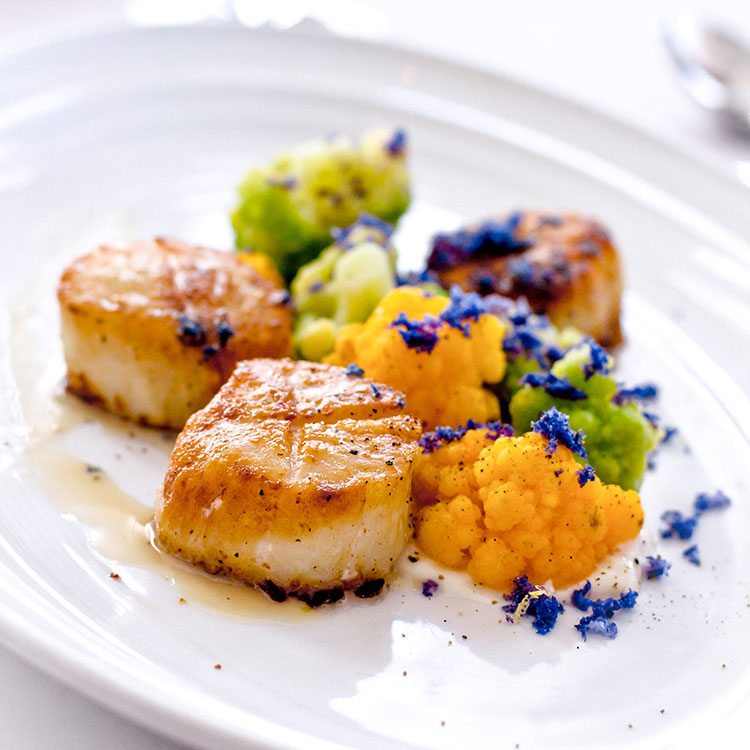
Always on board
Delicious is always trending and frozen seafood is always in season, it’s a match made by the sea.
High Liner Foodservice, says Chef Phil, continues to add trend-worthy options to the product portfolio. “Our new Wild Alaska Fish Fries make it easy for the operator to add seafood to menus and take advantage of snacking and handheld trends. They come in two versatile, on-trend flavours, Salt & Pepper and Dill Pickle.”
Canadians request and expect healthy options, and frozen seafood definitely can help foodservice operators deliver. These ingredients also help busy foodservice kitchens by reducing labour needs, increasing consistency, providing versatility and saving time and money. It’s quite simple: choosing frozen seafood means clear sailing.
Seafood Recipes
Check out some seafood appetizer recipes by High Liner Foodservice:
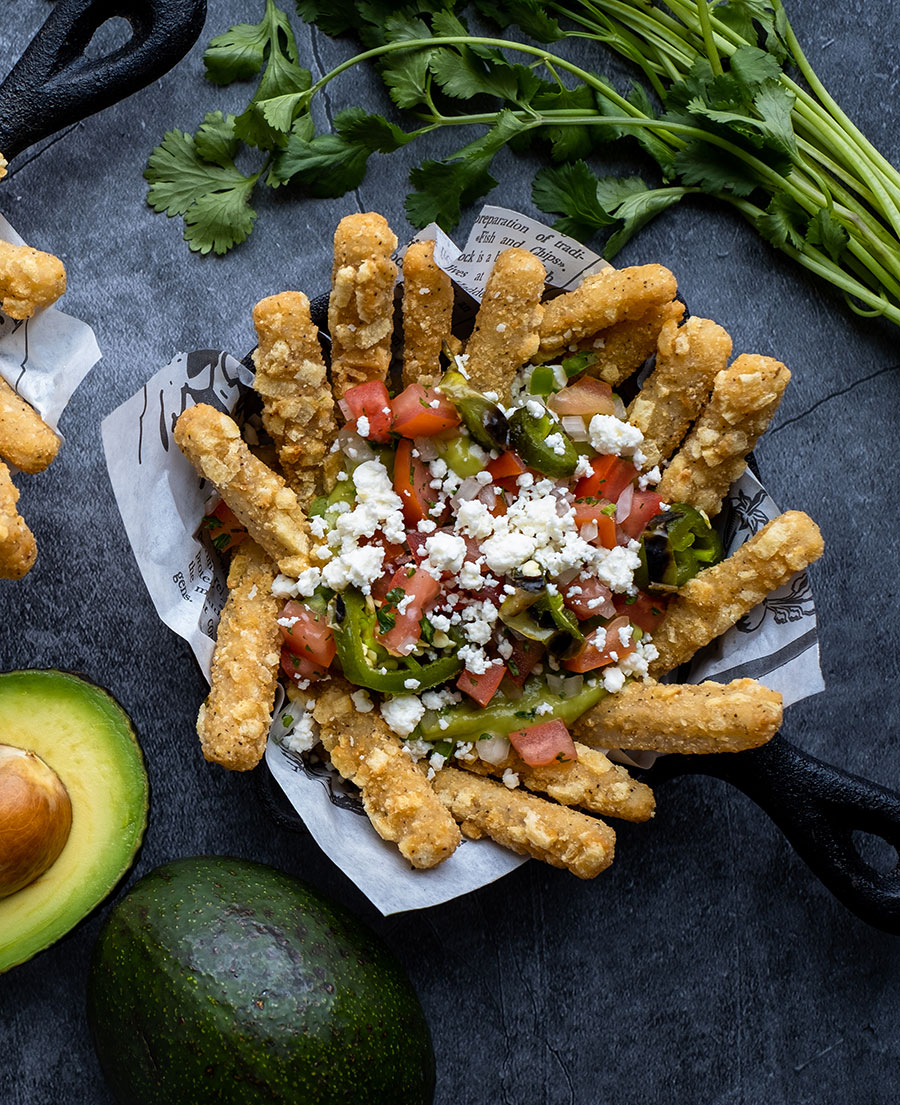
Baja Style Loaded Fish Fries
Ingredients:
- 1 portion Alaska Wild Fish Fries
- 2 tbsp guacamole
- 2 tbsp pico de gallo
- 1 tbsp crumbled Mexican cheese
- 3 slices charred jalapeno (garnish)
Method:
- Cook Alaska wild fish fries according to box directions
- Strategically place the remaining ingredients on top of the fries and serve
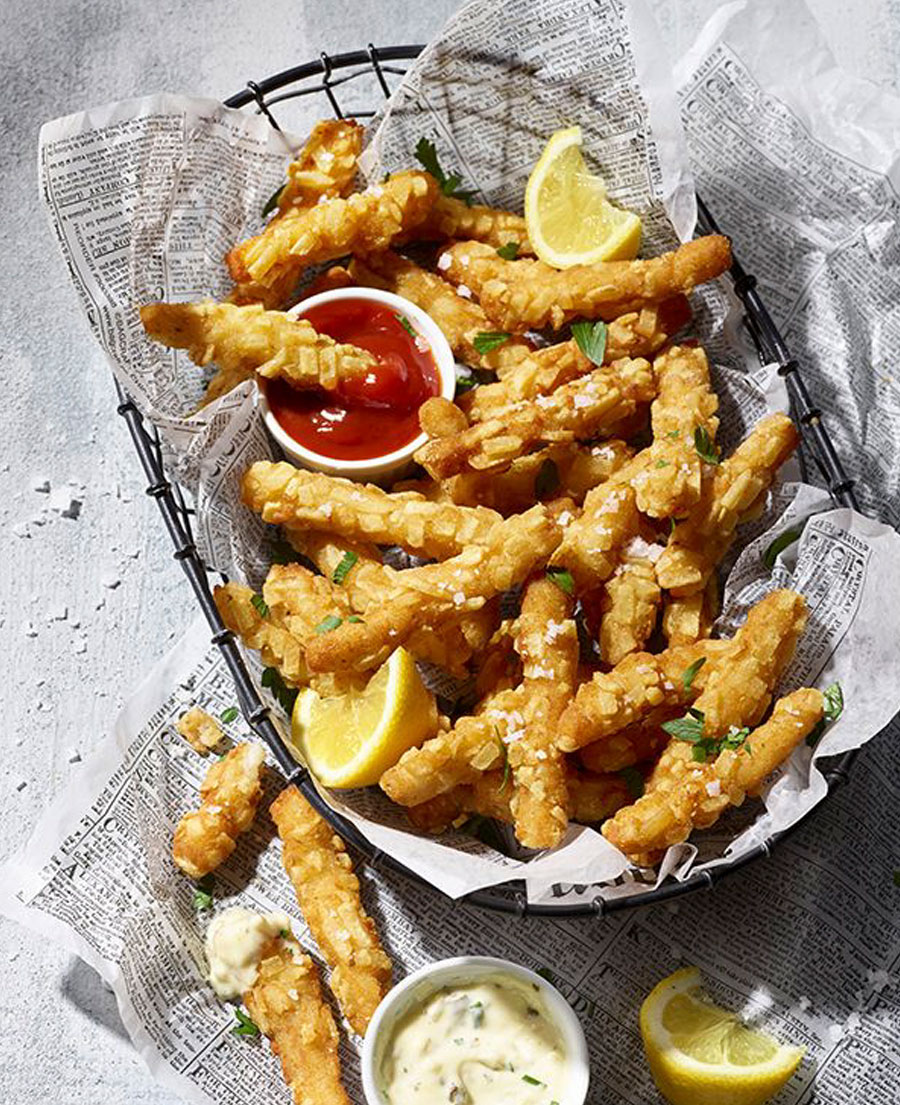
Global Dippers
Ingredients:
- 12 portions Alaska Wild Fish Fries
- 2 cups mayonnaise
- 1 tbsp east Indian curry powder
- 1 tbsp lemon juice
- 1 cup ketchup
- 2 tsp chipotle, ground
- 2 tbsp lime juice
- 1 tbsp wasabi powder
- 1 tbsp rice vinegar
- 1 tsp fish sauce
Method:
- Cook Alaska wild fish fries as per box directions
- For curry citrus mayo – Combine curry with lemon juice, add to 1 cup mayo and whisk until incorporated
- For chipotle lime ketchup – combine chipotle with lime juice, add to ketchup and whisk until incorporated
- For wasabi aioli – Combine wasabi powder with rice vinegar, and fish sauce, add to remaining 1 cup of mayo and whisk until incorporated
- Serve each portion of fries with all three sauces
With the coming of cooler days, getting ready for a return to more inside dining is an annual practice in the foodservice business. Autumn is a time to begin scaling back patio operations and introducing more menu items that use the bounty of the harvest to best advantage.
It’s also a good time to review operational procedures, says consultant Lionel Morey of Vancouver Island Hospitality Consulting. “Why not initiate a conversation with your trusted foodservice rep to pick their brain on trends, ideas, or new products? I spoke to a manager who was thrilled his rep mentioned transitioning them away from liquid fuel-based votive inserts for their tables to rechargeable ones – an upfront cost that paid for itself in less than one winter.”
The end of summer usually means big staffing changes, too, as many employees head back to school or embark on other life changes. Look carefully at how many team members you will need based on your sales projections and then determine how many you need to hire and when you need to start training them. Slightly shorten shifts to retain more key staff over the downtime and avoid paying overtime.
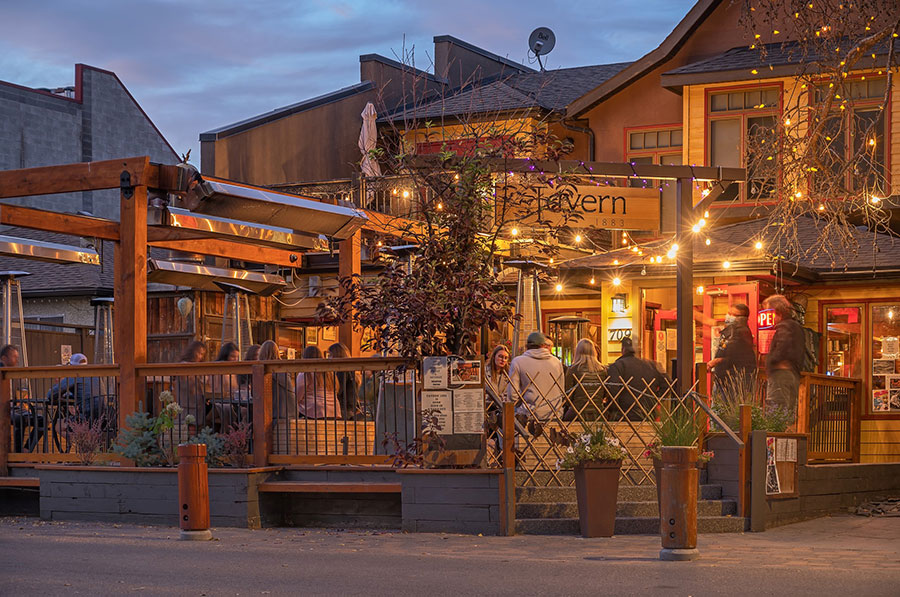
Restaurant patio’s winding down, now what?
Create a checklist of what needs to be done for winter storage for the furniture, flower pots, and outdoor host stands/bars/side stations. “I have a client who donates the flowers to a local seniors’ facility who has room for them and she picks them up in the spring – a win-win! Just remember for the furniture to check the manufacturer’s specs on cleaning and storage, and a basic rule of thumb is clean/dry/stack/store ideally in a warm, moisture controlled room,” Morey says.
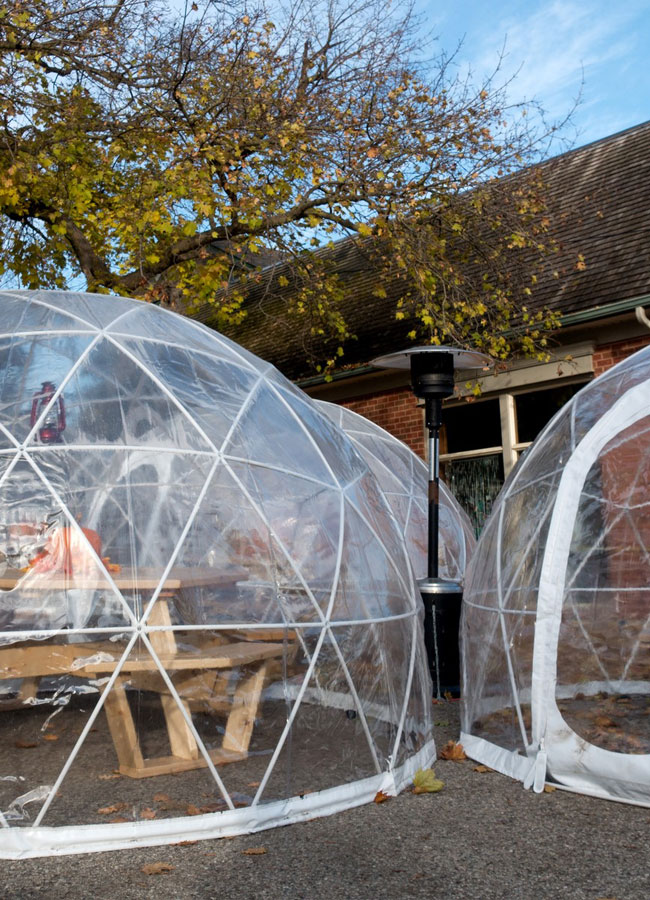
Consider a covered and heated patio. It’s a great way to attract those guests not ready to return indoors, says Jenny Companion, VP eastern operations for hospitality consulting agency The Fifteen Group. “It also provides more options for operators should there be any changes to indoor dining restrictions.”
If your traffic slows in the fall, the season is a perfect time to schedule a deep clean and complete repairs, upgrades and seasonal maintenance. Consider smaller details, too, like updating your music playlist, auditioning live entertainment, and trying out an alternative seating plan.
Change is in the air
Fall may be the perfect time to consider changes to seating styles and layouts, Companion says. “Replacing fixed seating with more flexible chairs and tables may be a good way to accommodate more guests and a smart investment for the fall and cooler temperatures when guests choose the indoors. Being flexible should restrictions change will be an asset for operators.”
“Replacing fixed seating with more flexible chairs and tables may be a good way to accommodate more guests and a smart investment for the fall.”
Jenny Companion, VP eastern operations, The Fifteen Group
Now is also the time to start thinking about the return of large groups and holiday season celebrations, Companion says. “Being prepared is the key to selling this type of business and capitalizing on opportunities.”
Showcase the bounty of the harvest
It’s never too early to start planning a fall menu built around some key considerations:
- Locally/regionally-sourced fruits and vegetables, the essence of fresh and good.
- Comfort food classics like mac and cheese.
- Desserts loaded with fruits of the season – pies, puddings, cobblers, and more.
- Incorporating savoury spices that warm and wow.
- Announcing your fall menus on social media.
Don’t forget that a $3 head of cauliflower turns into a $7 head in January, so sharpen your pencil and cost out with the peak numbers you’ll be seeing. “Involving your suppliers in these conversations can save a lot of grief,” Morey advises.
Recharge!
If you are a seasonal operation and fall and winter are your downtime, take the opportunity to find that elusive work/life balance. “Send your chef on an R&D trip to see what’s hot, plan that management getaway that’s heavy on fun and light on work, and just step away from your business as much as possible to diminish the fatigue and burnout so often associated with restaurants,” says Morey.
Let loose a little
Prepare for the days (and nights!) when restrictions are lifted and people are allowed to gather indoors again. Pubs have success with open mic night or a comedy show, diners have quirky promotions that guests love like “flip a coin and you pay double or nothing,” or do food challenges, Morey says.
“Upscale cocktail lounges can offer a “dealer’s choice” drink special or feature industry experts for a fun night of Q&A with guests or more typically other industry folks. Late night offerings are rapidly growing as well so let your teams involve the more junior staff in these promotions and they benefit from both the experience and camaraderie – a real team building exercise.”
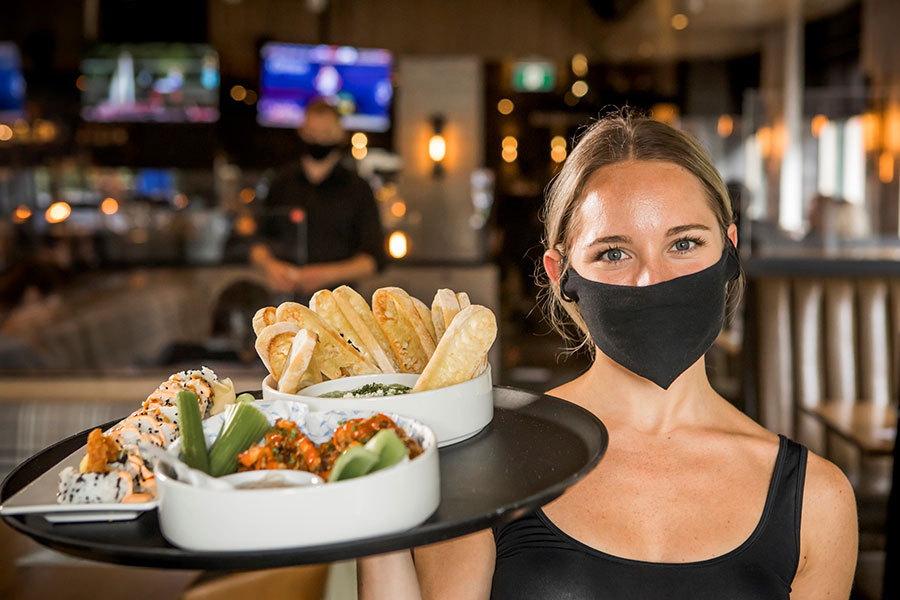
COVID-19 considerations for restaurants
With COVID-19, there’s a lot more to consider, and careful planning and attention to detail are even more crucial.
- Various health bodies including the Canadian Centre for Occupational Health and Safety recommend that all customer parties remain at least two metres (six feet) apart. Where that is not possible, certain tables and chairs can be marked as unavailable for use.
- Where practical, separate booth seating with physical barriers such as clear acrylic plastic or plexiglass. Temporary table dividers may be installed to make social distancing easier for restaurants with communal seating or larger tables.
- Create separation from action stations or open kitchens. Separate guests from the kitchen or plating team with high, clear dividers if the distance between guest and staff is less than two metres.
- Install physical barriers, such as sneeze guards and partitions, particularly in areas where it is difficult for individuals to remain at least two metres apart. Barriers can be useful in restaurant kitchens and at cash registers, host stands, or food pickup areas where maintaining physical distance is difficult.
- So that people can speak as quietly as possible and reduce aerosol transmission, reduce noise levels as much as possible including turning off or down the volume of background music. Suspend live music and performances.
- Configure order pick-up areas in such a way as to provide the greatest possible distance possible (minimum two metres) between guests and employees. Use floor markings for clarity.
- Modify payment pads to have long handles to help employees and guests maintain greater separation.
Thinking ahead
- Offer drive-through, curbside takeout, or delivery options as applicable.
- Ask customers to wait in their cars or away from the establishment while waiting to pick up food or when waiting to be seated.
- Discourage crowded waiting areas by using phone app, text technology, or signs to alert patrons when their table is ready.
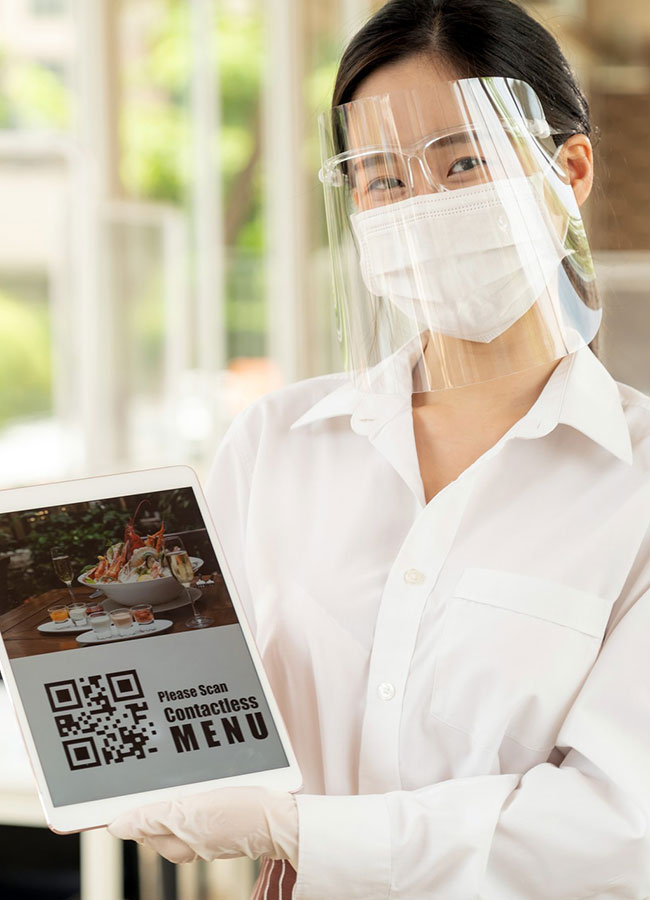
- Consider options for dine-in customers to order ahead of time to limit the amount of time spent in the establishment.
- Provide a weather permitting overflow waiting area outside, if possible.
- Replace traditional menus with easy-to-disinfect, laminated menus or replace them with one-time use paper sheets.
- Temporarily suspend self-serve options that require using shared utensils such as salad bars, breakfast bars, or buffets.
- Provide physical guides, such as tape on floors or sidewalks and signage, to ensure that individuals remain apart, especially where lines form.
- Have cutlery, condiments, napkins, and other items behind a counter and available upon request instead of in communal dispensers.
Masking
Health and safety remain very important in the consumer’s mind. It’s important to follow provincial and municipal guidelines and to post and communicate your actions to your customers, Companion says. “Beyond that, the key importance is to stay diligent with enforcing these restrictions for the safety of your staff.”
The CCOHS recommends that all foodservice operators implement a mask-wearing policy. Require employees to properly wear well-constructed and well-fitting masks. Masks should cover the nose, mouth, and chin without gaps.
Vaccines
- Encourage employees to get the COVID-19 vaccine as it is eligible and available in your jurisdiction.
- Share additional information on the vaccine by posting it on your premises or sharing it electronically.
More COVID resources:
- Restaurants Canada COVID-19 Rapid Recovery Guide
- CCOHS COVID-19 Health and Safety Resources – Restaurants
- CDC’s Considerations for Restaurant and Bar Operators
Green Goddess Dressing
Frozen spinach enhances the colour and amps up the nutrition of this delightfully fresh dressing. Pair with a Green to the Green Salad — greens, edamame, celery, cucumber, peas, green onions.
Ingredients
- ½ cup plain Greek yogurt (or mayonnaise)
- ½ cup fresh parsley
- ¼ cup Alasko IQF Chopped Spinach, prepared according to package directions and cooled
- 1 green onion, chopped
- 1 tbsp lemon juice
- ¼ tsp minced garlic
Instructions
- Add all ingredients to a blender, process until smooth, season to taste.
Notes

Grilled Montreal Steak Spiced Portobello Salad
Double up the greens over and under this simple, yet flavourful Portobello steak.
- Yield: 1 Serving 1x
Ingredients
Montreal Steak Spiced Portobello:
- 1 Portobello mushroom cap
- 1 tsp vegetable oil
- ¼ tsp Horton Spice Mills Montreal Steak Spice
Lemon Horseradish Dressing:
- 1 tbsp mayonnaise
- 1 tsp lemon juice
- ½ tsp white wine vinegar
- ¼ tsp (or more) horseradish
Salad:
- 1 cup arugula
- ¼ cup sliced sweet pepper
- 2 quartered cherry or grape tomatoes
- ¼ cup microgreens — spicy mustard blend works well here
Instructions
- For Portobello steak: Brush both sides of mushroom with oil. On a preheated grill at medium-high heat, cook 3-4 minutes per side, sprinkling with Horton Spice Mills Montreal Steak Spice.
- For the dressing: Whisk together all ingredients and allow flavours to blend, season to taste.
- For each serving of salad: Arrange arugula in bowl/plate. Top with Portobello steak. Arrange peppers and tomatoes. Drizzle with Lemon Horseradish Dressing and garnish with microgreens.
Notes

Strawberry Lemonade Blast
This strawberry lemonade slushy is a cool and refreshing summertime drink that takes a favourite flavour combination to the next level.
- Prep Time: 5
- Total Time: 5 minutes
- Yield: 4–6 Servings 1x
Ingredients
- 450 g frozen strawberries
- 1 can (12 fl. oz.) frozen lemonade concentrate, thawed
- 4 cups (1 L) water
- 1 tbsp (15 ml) honey
Instructions
- In a blender combine the frozen strawberries, thawed lemonade concentrate, water and honey.
- Blend at high speed until smooth.
- Pour into glasses and garnish with whole strawberries.
Note: Some blenders may not be suitable to blend all at the same time. If this is the case, blend in two separate batches.
Notes