
Chicken Katsu Sando with Tonkatsu Sauce
Japanese-style fried chicken is complemented by the traditional flavour of Tonkatsu sauce in a modern sandwich format!
- Total Time: 20
- Yield: 2 1x
Ingredients
Tonkatsu Sauce:
- 2 tbsp (30 ml) ketchup
- 4 tsp (20 ml) worcestershire sauce
- 1 tbsp (15 ml) oyster sauce
- 1 tbsp (15 ml) mayonnaise
- 2 tsp (10 ml) honey
- 2 tsp (10 ml) soy sauce
Assembly:
- 4 pieces sliced white bread, crusts removed
- 2 pieces (180 g) Reuven Fully Cooked Crispy Breaded Chicken Breast (Product Code 10551)
- 2 tsp (10 ml) butter, softened
- 20g cucumber, thinly sliced
- 20g napa cabbage, thinly shredded
- 1 tsp (5 ml) chives, sliced
- 2 tbsp Tonkatsu Sauce
Instructions
Tonkatsu Sauce:
- In a bowl combine ketchup, worcestershire sauce, oyster sauce, mayonnaise, honey and soy sauce.
- Season with salt and pepper and set aside.
Assembly:
- Prepare Crispy Breaded Chicken Breast according to package directions.
- Butter bread and cut off crusts.
- Add a layer of shredded cabbage and cucumber slices to 2 slices of bread, top with prepared Crispy Breaded Chicken Breast and remaining bread slices.
- Cut sandwich in half and serve with Tonkatsu sauce.
Notes

Nutrition
- Serving Size: 1
- Calories: 293
- Sugar: 13 g
- Sodium: 1,464 mg
- Fat: 12 g
- Carbohydrates: 36 g
- Fiber: 1 g
- Protein: 10 g
- Cholesterol: 28 mg
If there is one thing this pandemic has proven, it’s that hospitality businesses can no longer rely on one service offering as a sole source of revenue.
Over the last 16 months we’ve witnessed a complete shift in the hospitality industry as businesses pivoted and innovated their experiences to keep doors open, which resulted in new concepts evolving from bodegas, to takeout windows, pop-up restaurants within restaurants, and private brand consumable retail expansion.
For restaurants, leveraging top-selling dishes and ingredients by converting them into sellable products is an effective way to deliver a taste of your brand for guests to enjoy at home, while driving new and repeat business. Another effective approach is to sell similar items to what’s featured on your menu, which are less seasonal and can be offered all year round. This secondary strategy provides more flexibility in terms of product development, allowing your team to create items that are better suited to the retail experience.
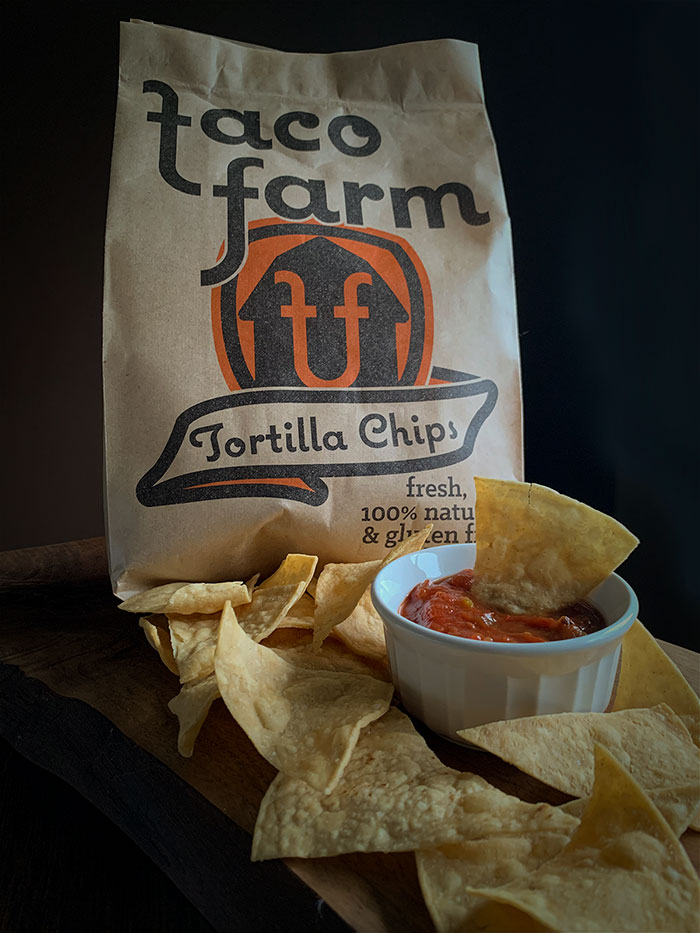
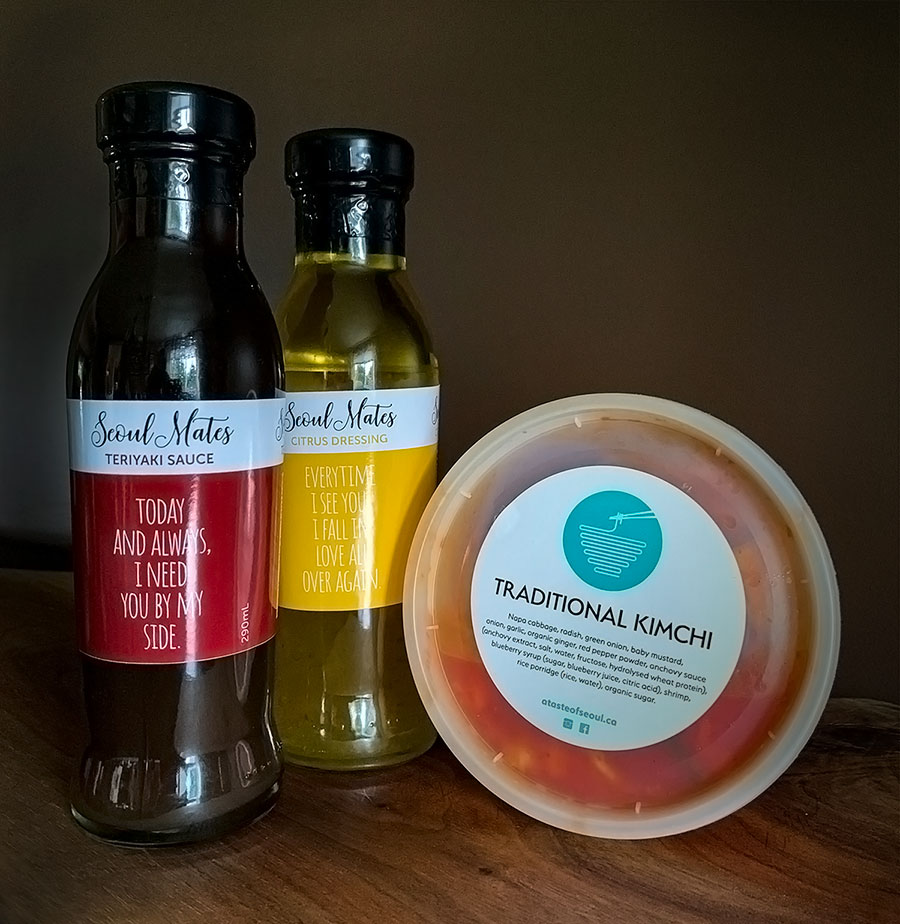
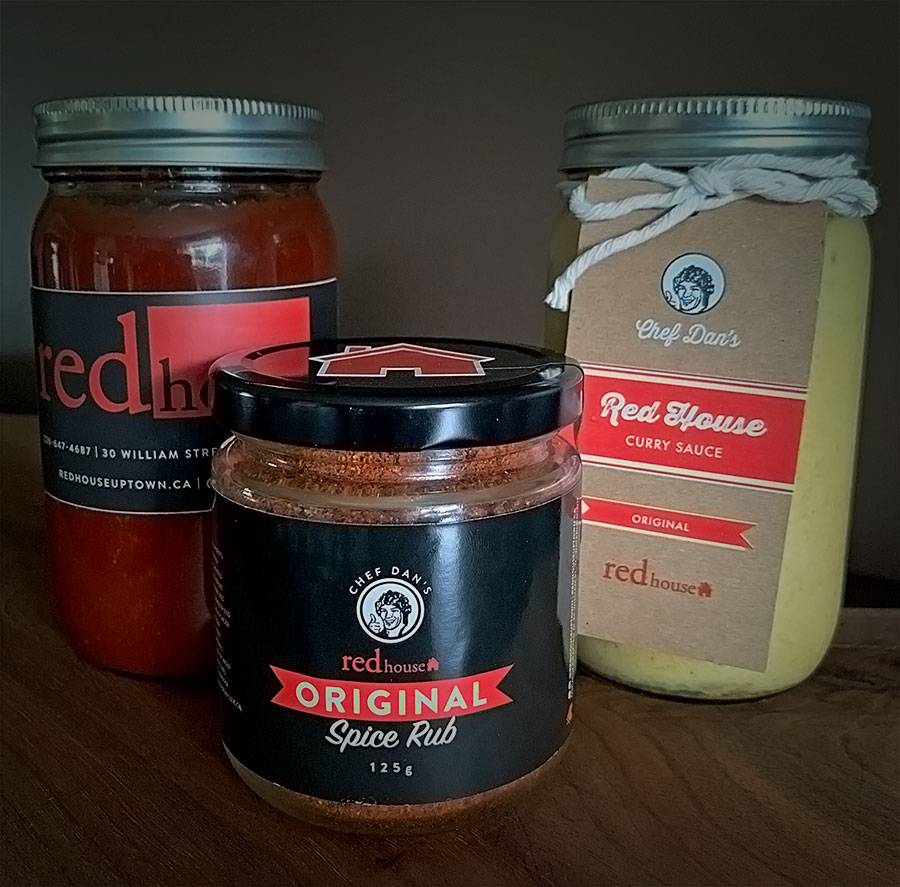
Whether you plan to sell consumables within your restaurant space, or through specialty shops, developing a retail assortment is an excellent opportunity for increased brand positioning, especially when you design standout packaging that keeps your brand top of mind wherever the product goes.
Packaging is typically categorized as an operational necessity, and most businesses are looking to source the most cost-effective options, but this sourcing often results in the packaging falling short in terms of creating a well-branded consumer experience. Like visiting your website, or dining at your restaurant, packaging is another touchpoint representative of your overall brand experience and therefore requiring sufficient investment.
When designing your packaging consider this:
Size and shape
You want to first consider how it will be stored in a retail setting and a consumer’s home, to ensure your sizing is suitable for easy storage. Go with standard shapes and sizes that can be easily shipped, stored and stacked to optimize shelf space and product display. The larger the packaging, the more it will cost; uniquely shaped or custom sizing will also incur more costs, and again will be more challenging to display and ship. If a brand value is environmentally friendly, then your packaging should also reflect and communicate that same experience.
- TIP: To better guarantee guests experience the expected quality and freshness of your consumables, select a container size that provides consumers with enough to enjoy in a shorter period of time. This approach can also positively impact repeat purchases.
Get branded
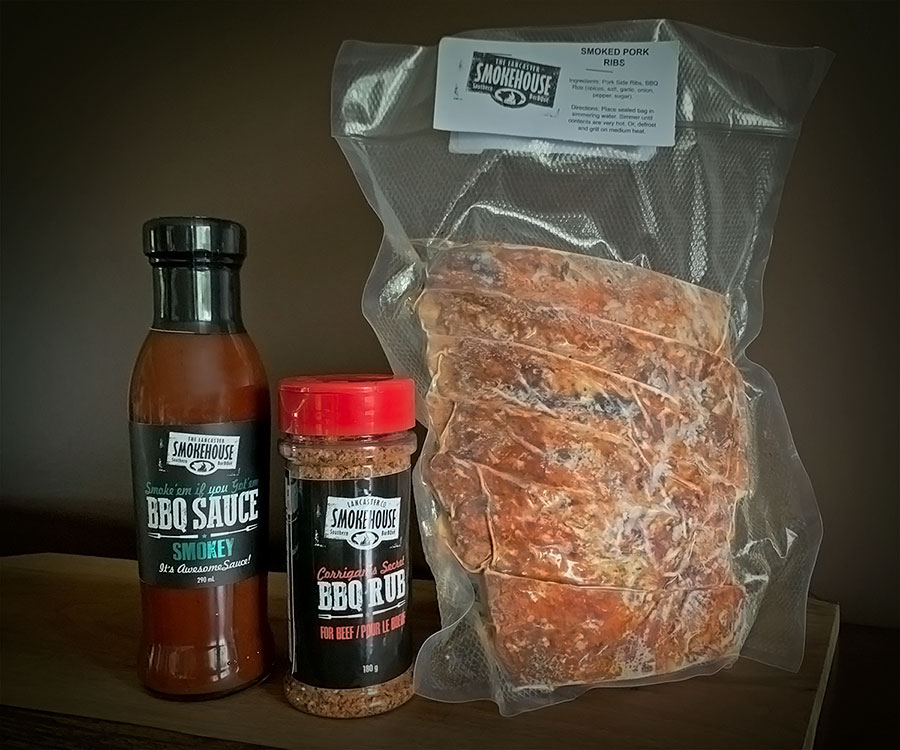
From the container to the carryout bag, your packaging should be consistent in terms of brand colours, fonts, design aesthetic, and messaging. The objective is to have consumers see your packaging and recognize it’s your brand.
Unless you’re a design wiz, hire an experienced designer who understands packaging, labels, and printing, to create your custom branded look. Standout labels, bright colours, key messages, ribbons, and custom stickers are just a few of the ways to add a custom branded touch to your packaging.
With Instagram being your most feasible and effective communication tool to leverage, consider how you can add Instagrammable moments to your packaging that consumers would want to share. For example, a call-to-action tagline on the inside of a flap or cap. Keep in mind, packaging is a silent form of “word of mouth” marketing; every side of your package is an opportunity to tell a piece of your brand story and connect with guests.
- TIP: Design a WOW factor, one element in your packaging that will surprise and delight consumers as they open or indulge in your goods. Give them a story to share.
If you’re looking to expand into the retail sector, then get ready to shift your perspective on packaging to successfully apply this effective marketing tool. For some consumers, this may be their first time experiencing your offering, and it needs to be representative of what you want your brand experience to be, from restaurant to retail.
Restaurants across Canada are opening up again. There are varying degrees of restrictions across jurisdictions, but one way or another, people are once more enjoying the experience of dining out. Although we don’t know the future of the COVID-19 pandemic, Canada’s vaccination rates are cause for optimism.
As Restaurants Canada reported on June 17, 2021, the pandemic’s brutal financial impact on restaurants has “stretched their resiliency to the limits.” Restaurant Canada’s survey data indicates that 80 per cent of restaurants have been losing money or “barely scraping by” during the pandemic, and that 45 per cent of foodservice operations have been losing money for over a year.
As restaurants navigate this period of recovery, the question of how to recoup lost revenues will be top of mind. Guest capacity, labour utilization and menu costs are key factors in achieving cost efficiency.
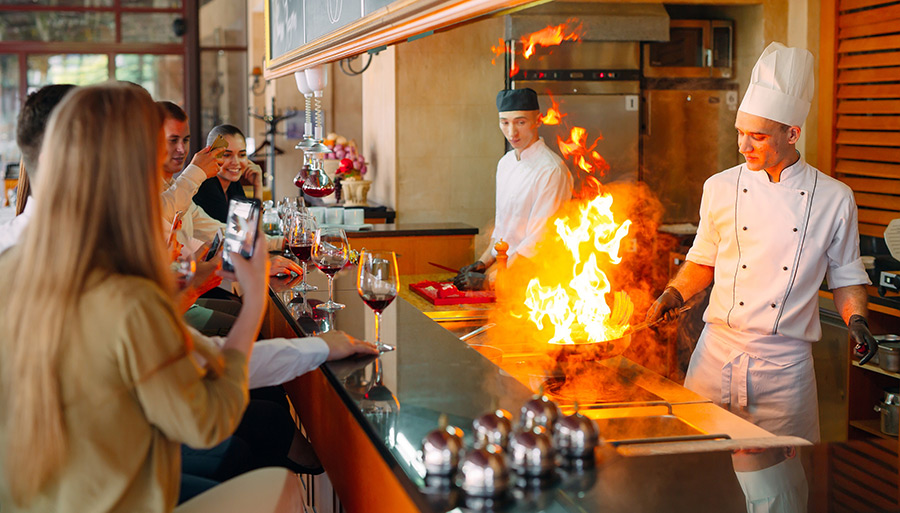
The guest experience is paramount
Foodservice operators need to find the right balance between cost reduction and meeting the expectations of eagerly returning guests.
Jenny Companion, VP eastern operations for the hospitality consulting agency The Fifteen Group, says, “The key to regaining restaurant sales and profitability is tied to guest experience.” She notes that guests will be looking for ongoing safety measures and for “high levels of experience and service. People are excited to dine out again and are willing to spend their money, but just as before COVID, they expect value for their money.”
“The key to regaining restaurant sales and profitability is tied to guest experience.”
Jenny Companion, VP eastern operations, The Fifteen Group
Companion adds, “Trying to improve profits by cutting staff hours or changing the quality of product won’t work. Instead, restaurant owners and managers need to find ways to manage provincial restrictions and guidelines to make dining experiences seamless for guests from start to finish. Using screening apps and providing online information are quick, efficient ways to engage with guests and manage expectations.”
Focus on guest communications
Some cost-reduction measures won’t be visible to your guests, but others, like timed seating, impact them directly and shouldn’t come as a surprise. Open, upfront and ongoing communication is key to guest acceptance of such measures.
Advise guests about changes that affect them on your website and social media, and at the time of reservation, arrival, and at the table. Explain why these measures are needed, ask for their support, and thank them for understanding. Patrons, especially the regulars, want you to succeed.
Top 10 cost reduction tips for your restaurant
Maximize guest capacity
As restaurants focus on financial recovery, maximizing table turns is critical, especially in jurisdictions with ongoing restrictions. The more you can turn tables (without alienating guests!), the more efficiently your labour costs can generate profit.
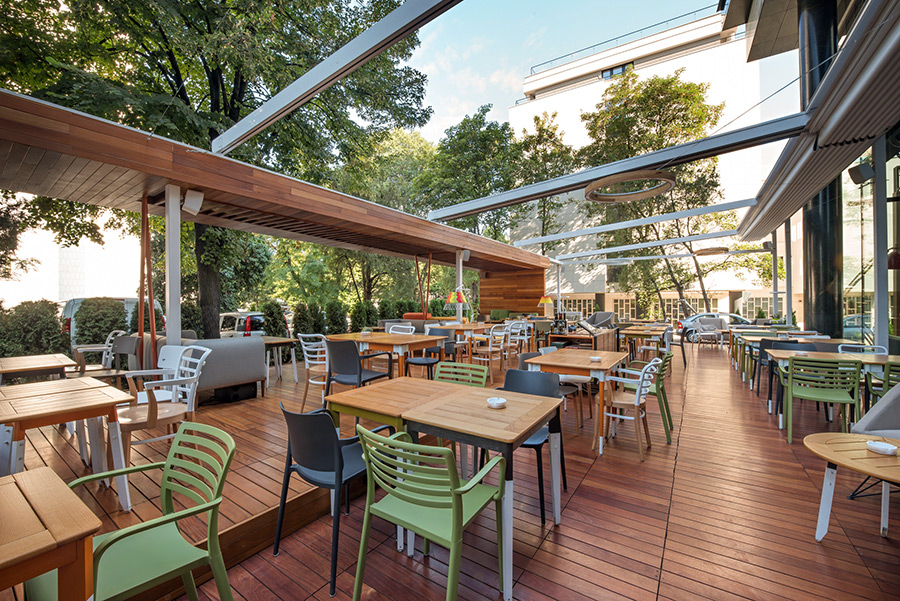

- The (almost) all-weather patio: Canadian weather can be capricious even in summer, from blisteringly hot to cool and wet. You need to outfit your patio for any number of conditions at any time of year. Umbrellas, misters, heaters, wind breaks and other options can make outdoor dining more comfortable for your patrons and keep those tables turning.
- The in-kitchen chef’s table: If you have the space and regulations permit it, consider adding a table for guests to dine right in the kitchen and be served by the chef. Discerning diners will clamour for this exclusive experience and you’ll have more table turns.
- Timed seating: Now more than ever, you simply can’t afford for guests to linger for hours over their meal. Setting time limits for seatings (e.g., 90 minutes for dinner) may be the answer. Encourage guests to review the menu before they arrive to expedite ordering. Give them a quality experience by expressing your gratitude and sending them on their way with a little treat for later.
- Fixed seatings: Take the concept of timed seating a step further with two or three fixed seatings for dinner, if not daily then on certain days. Guests may be familiar with this concept from past New Year’s and Valentine’s Day dinners. Keep up that spirit of celebration with a special seasonal menu and make it an event not to be missed. The time limits and a set menu also help you manage labour and menu costs.
Manage restaurant labour costs
- Utilize government wage subsidies: Research and take advantage of any federal or provincial wage subsidy programs available to restaurants. Companion says, “We recommend taking advantage of the wage subsidy to help cover some of the costs associated with proper staff training and skill-building, to create a more efficient, well-trained team executing at a 10 out of 10 level going forward.”
- Optimize staff scheduling: Reducing staff may be a tempting cost reduction strategy, but it can backfire if customer service suffers and affects sales. Focus instead on optimal scheduling. Your goal is to have the right number of staff for anticipated customer traffic, while keeping both cost effectiveness and employee retention front of mind. For example, don’t book one employee into an avoidable overtime pay situation when another could be scheduled at regular pay. Similarly, take care not to schedule staff on their requested day off if other employees are available to work.
Manage menu costs
“Controlling costs, and specifically menu costs, is vital to the profitability of any restaurant,” advises Companion. “Inventory costs are on the rise and some products are becoming increasingly difficult to find. This means that it’s more important than ever to know and document all of your recipes, determine the plated item costs and properly engineer your menu.” And while she says that foodservice operators need to be prepared to raise prices, hopefully these cost reduction tips can mitigate that.
- Work with your suppliers for the best prices: Work with your suppliers to secure the best prices, and buy in bulk according to items’ shelf life. You could share some of those savings with customers through limited time offers, another strategy for keeping seats filled.
- Streamline your menu: Putting your menu on a diet improves the guest experience by making choices easier. A shorter menu allows you to showcase your signature dishes while favouring those that generate the most revenue and profit. Other benefits include the economies of buying fewer items but in larger quantities, and staffing efficiencies.
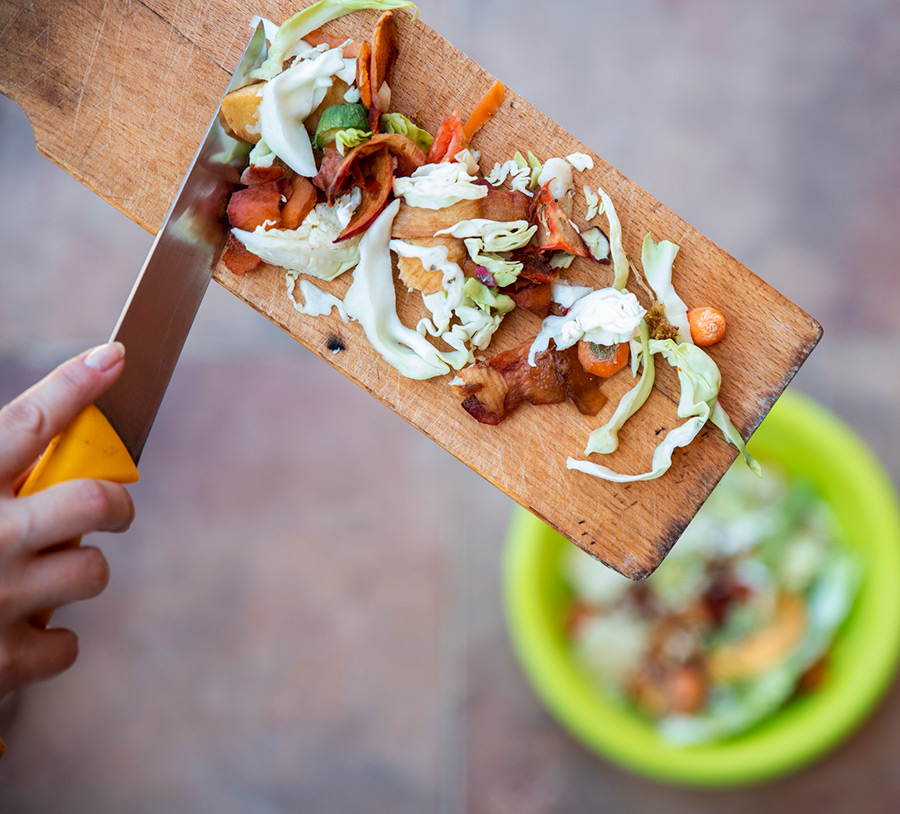
- Reduce food waste: Wasted food is wasted money. It’s also an ethical issue. Make the most of every ingredient you purchase through proper temperature-controlled storage, tip-to-tail cooking, reasonable portion sizes, creating specials using ingredients before they expire, and streamlining your menu.
- Know your inventory inside-out: Inventory management is crucial to managing menu costs. Keep a detailed stock inventory so you know what you have on hand at all times and expiry dates. This and understanding demand patterns can prevent overbuying. When food is delivered, inspect it to ensure it’s what you ordered and don’t accept anything with spoilage or damage.
Chicken Fried Rice
This easy one-skillet fried rice recipe boasts onions, carrot, garlic, and soy sauce, topped with crunchy breaded chicken, for layers of flavour and texture.
- Total Time: 25
- Yield: 10 1x
Ingredients
- 1/4 cup (60 ml) vegetable oil, divided
- 8 eggs, beaten
- 3 cups (750 ml) chopped carrot
- 2 cups (500 ml) chopped onion
- 1 tbsp (15 ml) minced garlic
- 10 cups (2.5 L) cooked brown rice, cooled
- 1 1/2 cups (375 ml) each frozen corn and peas, thawed
- 1/3 cup (75 ml) sodium-reduced soy sauce
Assembly:
- 30 oz (900 g) Reuven Fully Cooked Dusted Chicken Breast Chunks (Product Code 10540)
- 2/3 cup (150 mL) sliced green onions
Instructions
- Heat 2 tbsp (30 ml) vegetable oil on flat-top set to medium heat. Add eggs and cook, stirring occasionally, for 2 to 3 minutes or until eggs are set and small curds form. Remove from flat-top and transfer to plate.
- Increase heat to medium-high. Add remaining oil; cook carrot, onion and garlic, stirring, for 5 minutes or until softened.
- Stir in cooked rice, corn, peas, eggs and soy sauce. Cook, stirring, for 2 to 3 minutes or until corn and peas are heated through. Keep warm.
Assembly: Prepare Dusted Chicken Breast Chunks according to package directions. For each serving, portion 1 cup (250 ml) fried rice onto plate. Top with 2 oz (60 g) cooked chicken chunks. Sprinkle with 1 tbsp (15 ml) green onions.
Notes
Tiki Island Shrimp Roll
For a fresh, healthy snack that’s always a crowd pleaser, try Vietnamese-style salad rolls. Not only can you add your favourite ingredients inside the roll, but you get to play around with all the amazing dipping sauces that complement a salad roll, like spicy peanut sauce.
Technique and flavours are, of course, very important in any dish you create, but another important factor to keep in mind is mouth feel. Tiki Island Shrimp provides the perfect marriage of flavour and mouth feel. Large premium Pacific white shrimp rolled in crushed wontons and sandwiched in the middle of all that fresh veg is the perfect protein to complete this healthy snack.
Ingredients
- 16 pieces Tiki Island Shrimp (1008627)
- 4 oz dried rice vermicelli
- 16 (8½ in.) round rice paper wrappers
- 32 medium fresh mint leaves
- 32 fresh basil or Thai basil leaves
- 2 Serrano chiles, stemmed, halved, seeds removed and julienned
- 1 medium English cucumber, peeled and cut into sticks (¼ x ¼ x 2½ inch)
- 3 medium scallions, quartered length-wise, then cut crosswise into 2½-inch pieces
- 1 large carrot, matchstick cut
- 1 red/green pepper, matchstick cut
Peanut sauce
- ¾ cup natural creamy peanut butter
- â…” cup water
- 3 tbsp hoisin sauce
- 2 tbsp freshly squeezed lime juice
- 4½ tsp soy sauce
- 1 tbsp granulated sugar
- 2¼ tsp chili garlic paste
- 1 medium garlic clove, mashed to a paste
- ½ tsp toasted sesame oil
Instructions
- Whisk all sauce ingredients together.
- Cook the Tiki Island Shrimp and rice noodles according to package directions..
- Place a clean, damp kitchen towel on a work surface. Fill a large bowl with hot tap water. Working with 1 wrapper at a time, completely submerge the wrapper until it is soft and pliable, about 15 seconds. Remove the wrapper from the water and place it on the towel.
- Working quickly for each roll, lay down 2 mint leaves, 2 basil leaves, rice noodles, half the veg you would like to use, shrimp and rest of veg.
- Roll into a tight wrap using the same technique you would use for rolling a burrito. Serve with dipping sauce.
Tip: For more variety, replace Tiki Island Shrimp with other proteins such as grilled fish or scallops.
Notes