
Tipping has rattled restaurateurs for years, as they struggle with the merits of tipping and tipping policy. Are tips shared? How are they factored into servers’ wages? What’s the split between front and back of house? What are the tax implications?
Most diners in Canada have accepted the practice for years and use it to reward good service, but every now and then there are rumblings of change in this age-old practice.
This could be one of those times.
2020 and the coronavirus pandemic may have brought tipping into focus as restaurants that closed are slowly reopening and trying to return to some semblance of normality. With increasingly contactless encounters, how do restaurants and their guests handle gratuities? And is there a sea change in the way diners view gratuities?
A recent Canada-wide survey conducted by Sylvain Charlebois at Dalhousie University suggests that more than half of Canadians (56% of respondents) are now in favour of including tips in menu prices. In a 2016-2017 Angus Reid study, it was only 36%, so there is a significant increase, some of it likely because of COVID-19.

This is music to the ears of Bruce McAdams, the Associate Professor, School of Hospitality, Food, and Tourism Management, Gordon S. Lang School of Business and Economics at the University of Guelph. “I think tipping creates an unfair compensation system for workers in the restaurant business. For example, cooks and managers often play just as big of a role in a customer’s experience, but may not get the monetary benefits the wait staff does,” he says.
A 2016 study conducted by McAdams and Prof. Michael von Massow, Department of Food, Agricultural and Resource Economics, found that tipping, in fact, causes challenges ranging from quality control to pay inequity. He’s seeing a resurgence of interest in the issue.
“I think tipping creates an unfair compensation system for workers in the restaurant business.”
Bruce McAdams and Prof. Michael von Massow, Department of Food, Agricultural and Resource Economics
“Two really big things happened this spring,” he says. “One is COVID and one is the attention to social justice issues in North America. With the first, when COVID hit restaurateurs, owners had the time to reflect on an archaic system. The system really has not changed in 30-50 years. Everything from our pricing to costing to rent to fixed costs has pretty much been the same. With COVID, we really had to go deep and look closely at systems. COVID pointed out the inequities. Also, Black Lives Matter. Tipping is discriminatory, with sexist overtones, so that became an issue as well.”
A sea change? Not so fast
Does this mean we’ll be seeing a wholesale change in the way gratuities are handled? A few Canadian restaurants have announced a new no-tipping policy, but so far, the “trend” has not taken hold. At the same time some guests are making a point of tipping more to help offset the financial difficulties servers may have suffered under the pandemic.
“This topic has come up several times, but it has not gained traction,” says Jeff Dover, president of fsSTRATEGY. “In restaurants, service charges have been added for larger groups (i.e., six or more). The service charge started at 10% of sales and has increased significantly. Issues arrise when the service is not good (whether or not it was the server’s fault) and the gratuity or service charge is included. The argument, rightly or wrongly, was that the server knows the tip, and might work to increase it by upselling, however, is not under an incentive to provide good service.”
Building service or tips into the pricing may also put a restaurant at a disadvantage, he adds, compared to other restaurants that don’t follow the practice, since prices will be higher.
Servers are also not generally in favour of built-in service charges, Dover notes, especially when the restaurant institutes tipping pools, since the tips may be added to pay checks and are subject to income tax. “While transparency of tipping is changing as more and more gratuities are processed using credit and debit cards as opposed to cash, not all servers report all tips as income.” In addition, some guests may be put off by the sticker shock of another value-added tax appearing on their checks.

Are tips here to stay?
While more and more restaurant dining is being done off-premises and we are seeing an increase in fast casual concepts where tipping is not as ingrained as in full-service, industry watchers like Jeff Dover think that tipping will remain the norm in full-service restaurants.
Even no-tipping pioneer Danny Meyer has returned to a tipping policy, but with a difference. In 2015, Meyer, the entrepreneur behind New York’s Union Square Hospitality Group, eliminated tipping as being an inequitable practice. But with restaurants reopening under COVID-19, even the pioneering Meyer has rethought his no-tipping policy in favour of tips — but with a sharing component added.
Tipsheet
If you do decide to change your tipping strategy, how do you communicate the new policy?
For front-of-house and back-of-house staff
- Let staff know what the new plan is and how it will affect them.
- Be clear with how much and when staff will receive the tips. Currently, receipt of tips is instant (i.e., the day of the shift or the next shift if staff leave early).
- Make sure to train staff in communicating the tipping messaging to the customers.
For guests
- Let guests know how the system works and that all service charges added to checks are going to those who prepared and served their meals as opposed to managers and/or the restaurant operators.
- Be clear in communicating your reasons for making the change — to provide a living wage for all employees in a fair and consistent way.
Don’t forget to revisit your decision. Times change, as we’ve all learned with the COVID-19 pandemic.
Important link
- For more information read: Q&A with Professor Bruce McAdams
Centre-of-plate proteins are some of the most expensive ingredients. Implementing strategies to lower food costs without sacrificing quality and presentation can help your bottom line while feeding creativity and inspiration in the kitchen. Selecting less expensive cuts, marinating with creative sauces, creating soups and stews, and choosing sides that complement well while providing exceptional value are just some of the ways to tame the food cost beast.
Contribution to margin
Rather than deciding what proteins to use based solely on food cost percentage, consider contribution to margin by subtracting food cost from your selling price. “By working from a contribution to margin calculation, operators can more clearly see how customers might choose one item over another if the value isn’t strong enough on price point,” says James Keppy, national culinary chef, Maple Leaf Foods. “It also illustrates how paying attention to pricing can make the difference between making a sale or not, and to your overall sales and profit margin.”
“Do you go to a lower grade or a smaller portion?” Keppy asks. “Does it have to be a 10-ounce steak or could it be an eight-ounce? If you go to a smaller cut, then you can add protein with chick peas and lentil options. And by keeping your sides flexible, you add ability to respond to food cost pressures.”

Fresh vs frozen
No surprise, fresh product is time-limited. Frozen cases offer more flexibility since you can take out as many bags as you need without fearing that the rest will spoil. This flexibility enables you to plan ahead, forward buy, and more accurately assess your needs.
Remember that markets dictate price, and by understanding the fluctuations, operators can gain maximum pricing advantage. Supply and demand pushes steak prices up during grilling season; hips and chucks begin to rise in August based on future bookings for delivery in October.
The AAAs have it
According to meat experts, a well-aged AA program will produce higher value steak than a lesser-aged AAA program. A quality product depends on proper aging, but if you age AA and AAA beef in the same ways, the AAA will offer a consistent, flavourful and juicy product.
Working with chicken? Test for yield.
Do your due diligence and carry out a proper yield test on your raw chicken breast to see cooking loss against a competitor, Keppy recommends. “The loss can be significant if you are buying an inexpensive frozen chicken breast. Protein is reduced by the amount of water that is added and that water is purged out leaving a smaller cooked product.”
“It is the sign of a good cook who can prepare tougher cuts.”
James Keppy, national culinary chef, Maple Leaf Foods
Lesser cuts can mean more profit
Offering a skirt steak or top sirloin in place of tenderloin, or a chicken thigh instead of chicken breast can make a great meal with even more flavour, Keppy says. “It is the sign of a good cook who can prepare tougher cuts. Depending on your operation, a value-added product may be the best answer because of the staff savings, portioning and hold times that can balance off a raw product with labour, cook time and waste.”
Celebrate the story
Canadian meats are among the best in the world. By proclaiming place of origin on menus, operators can build pride and customer loyalty.
Quick tips
- TIP: Build a feature menu item. Try offering a mix grill with three smaller servings of protein like a three-ounce chicken breast, a small dinner sausage, and three-ounce piece of steak.
- TIP: Work your seasonings. A cheaper cut marinated and seasoned properly can show off your talents as much as a top cut.
As the days get shorter and colder, guests are going to be turning more and more to bowls. Not just any bowls, but bowls with soul, bowls with warmth, bowls packed with ingredients and creativity.
Give these bowls a Poke
With its mixture of raw cubes of seafood in a soy sauce-based marinade, poke (pronounced “POH-keh”) is a flavour-filled version of sushi. It’s visually beautiful, healthy, easy to adapt, and very popular with Millennials looking for new and interesting ways to experience seafood.
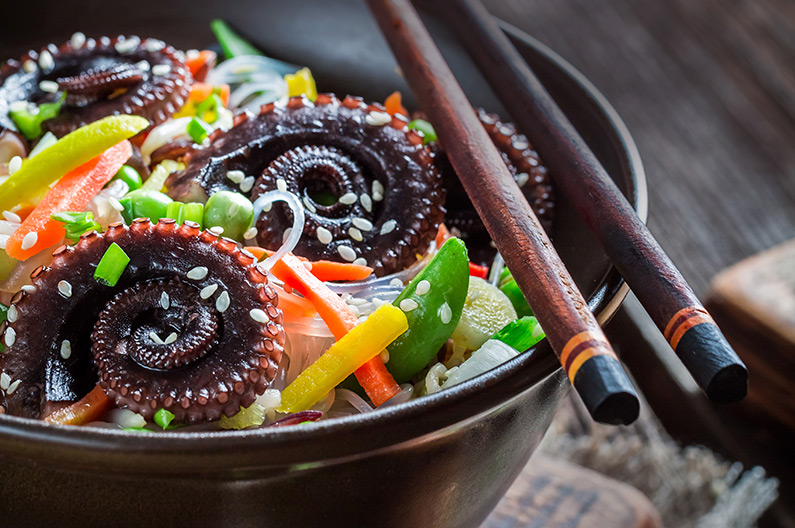
“You’ve got sweet rice in the bottom that some operators are seasoning with togarashi and different flavours for customization,” says Philman George, corporate chef for High Liner Foods. “Add crunchy tempura bits and seaweed for a fantastic blend of textures, colours and flavours that is really enticing.”
Don’t want to use raw fish in your poke? Try fully-cooked shrimp! Check out this recipe for Soy & Togarashi Marinated Shrimp “Poke” Bowl.
- CHEF’S TIP: Strategically position your ingredients in different quadrants of the bowl to showcase the colour contrast of your protein, starch and vegetables.
Changing of the bowls
Soups aren’t the only great place to repurpose ingredients. “Offering different daily bowls is a smart way to move a lot of produce and protein,” Chef Phil says.
He suggests including sharable mini bowls in the appetizer section of the menu. “You can take what would have been a seafood chowder and turn it into a share board for three. It’s still the experience of comfort food but in a shareable format using what you already have in-house.”
Take stock of your options
Good stock adds a clean, basic flavour which can work well when you’re building your bowl. Your bowl is easier to make, so you save valuable time in the kitchen.
Today’s diners are eager for grain bowls, vegetable and gluten-free. Using a vegetable stock, you can substitute toasted quinoa for noodles and add vegetables to keep your creation healthy and on trend.
Campbell’s Foodservice suggests:
- Start with reduced sodium stock and shape flavours in a much more innovative way using great ingredients. Your guests will appreciate it.
- Ignite your creativity. Build signature bowls with Mediterranean flair, craft vegetarian soups with unique flavours like chipotle.
- Get on trend with Pho from Vietnam and curries from Singapore, Malaysia, India and Thailand.
- Be inspired with global influences like Modern Middle Eastern and North African and flavours like cinnamon, cumin, and turmeric in soups and stews.
Global bowls
Think globally, act locally when it comes to your bowls. Canadians are open to fusing different types of cuisines together to create a global mash-up of flavours and textures, and putting new twists on traditional breakfasts.
Hot cereal in North America is traditionally sweet, however many global hot cereal bowls are savoury.
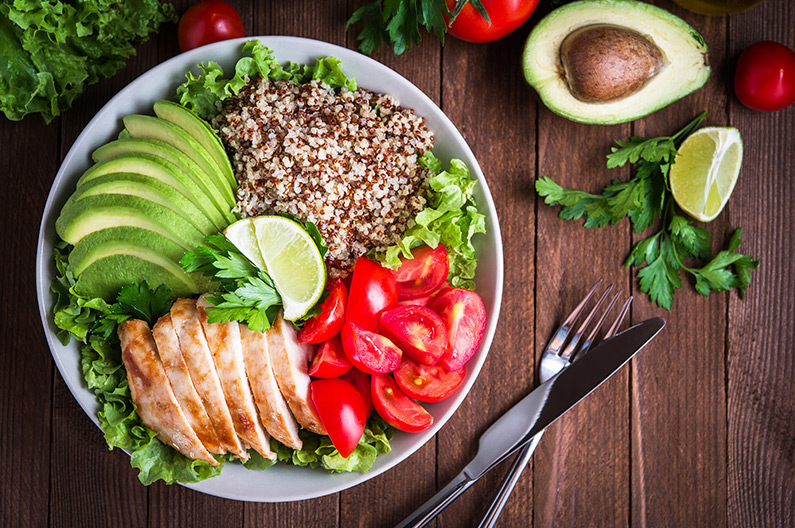
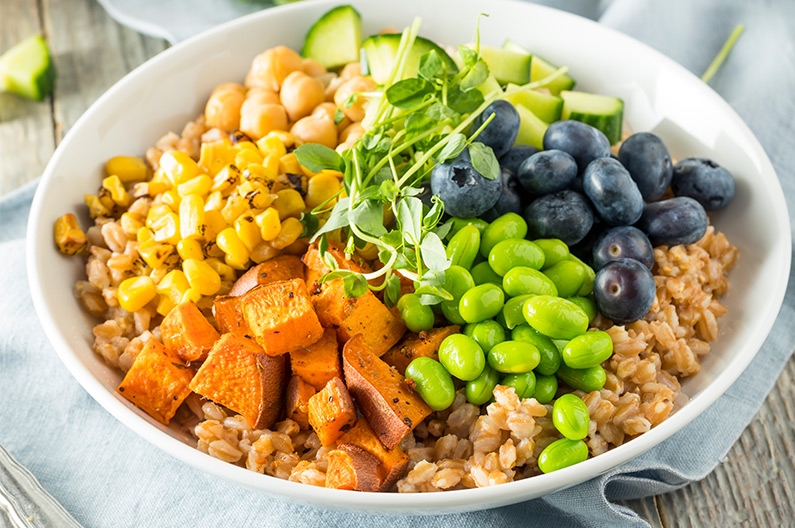
- CHEF’S TIP: When combined with ancient grains such as quinoa, breakfast bowls have the potential to be low-carb, gluten-free and nutrient rich options for the first meal of the day.
Skhug for a kick
Think outside the box, and start your diners’ day with a traditional Middle Eastern hash. Tender chickpeas, ground lamb or beef and butternut squash seasoned with a blend of coriander, cumin and fennel are the star of the bowl. Add skhug, a popular Middle Eastern hot sauce, for a tangy-savoury spiciness, and top it off with a dollop of creamy skhug ricotta and diced cucumber.
Some (other) worldly breakfast bowls
- China: Congee/Jook: Rice porridge with egg and pork, garnished with cilantro and fried wonton.
- India: Upma: Breakfast dish made from semolina or suji, served with coconut chutney, lime slices or lime pickle.
- Middle East: H’riss: Spiced chicken and wheat porridge.
- Burbura: Sweet porridge with wheat, nuts, spices.
- Ethiopia: Genfo:Thick barley porridge often served with butter or berbere (a mixture of spices such as chilli and ginger).
- Latin America: Atole: Masa (corn hominy flour)-based, hot corn based beverage, made with piloncillo, cinnamon, vanilla and optional chocolate or fruit.
- Brazil: Angu: Cooked cornmeal flavoured with salt or chicken/beef broth. Often served with chicken and okra.
Source: McCormick Canada
How are servers — and other restaurant staff — connecting with guests now that they have to wear face masks and avoid contact? And how do guests know when servers are smiling?
The personal touch is a key part of the restaurant experience, but new safety protocols have upended that experience. Servers need to work extra hard to create that feeling of welcome. Has the thumbs-up become a new form of communication between servers and guests to signify satisfaction? Or has “eye talk” become the norm? And how are operators training staff to replicate the warm, welcoming feeling of the “old days“?
“Smiling is part of service.”
Jeff Dover, Principal at fsStrategy Inc.
“Smiling is part of service,” says Jeff Dover, Principal at fsStrategy Inc. “So, with masks, eye contact is important.“

Masks can be adapted, he adds:
Top Tips
- Customize the mask with a smile on it or something appropriate to your brand —have some fun with it and turn it into something positive.
- “I have seen masks with clear plastic in the mouth area allowing for smiles.“
- Have staff wear a pin or button with their picture on it (smiling and friendly of course).
- “The first customers (are) comfortable dining out and looking forward to it,” he adds. “The next wave will include diners that are a little tentative and worried. Service, as we perceive it, will change.“
Changes to server communication need to be part of a bigger strategy of letting guests know what you are doing to keep them safe.
Here are other tips from Dover for servers adjusting to the new restaurant normal. Many of them, you have probably already instituted:
Top Tips
- Don’t pre-set tables. Bring sanitized salt and pepper, cutlery etc. after guests have been seated.
- Have sanitizer in the dining room at all server stations.
- Make sure servers sanitize regularly — after placing orders, etc.
- Offer wrapped plastic cutlery for those who request it (many won’t take you up on it if you have regular cutlery, but the offer will be good for those a little uncomfortable and will show all customers you care about their health.
- Use disposable menus. Servers should make a point of letting guests know that menus will not be used again.
- Have your menu available online and mobile friendly for those who don’t want to touch menus.
“…it is about making people feeling comfortable dining again,” Dover says. “I also think thanking them for coming back and supporting your business will go a long way and be appreciated.“
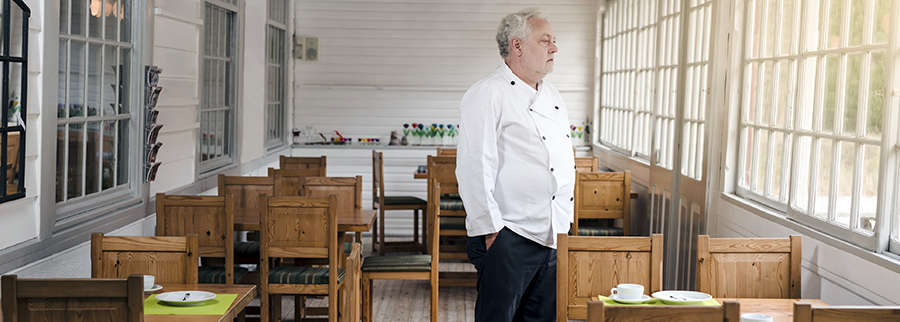
Is it all doom and gloom? According to projections by the Canadian Chamber of Commerce (based on Statistics Canada research), 60% of operators are at risk of closure by the end of 2020. Dark clouds continue to gather on the horizon: the prospect of a reduction in various government support programs; a six-month hiatus in patio dining over the fall and winter; and a likely second wave of the virus.
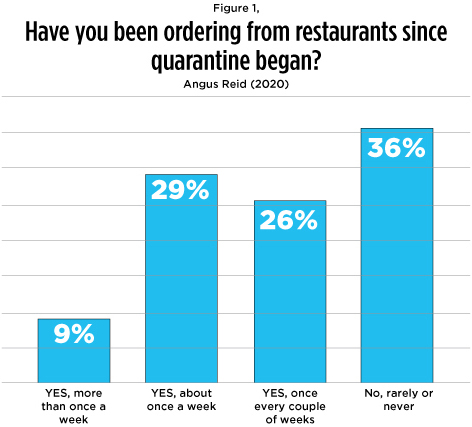
To better understand the mood and attitudes of Canadian consumers with respect to COVID-19, the Agri-Food Analytics Lab at Dalhousie sponsored a detailed research project conducted by Angus Reid in June 2020.
A total of 1,505 Canadians were surveyed. They were asked if they had been ordering food from restaurants during the pandemic and if they intended to return to their old habits afterwards. The survey also measured consumer expectations in terms of using foodservice in the rest of the year.
Behavioural impacts of COVID-19 — key insights
The good news
- Two-thirds of Canadians kept ordering food regularly from restaurants during the pandemic. A total of 64% of Canadians had ordered food at least every two weeks from a restaurant.
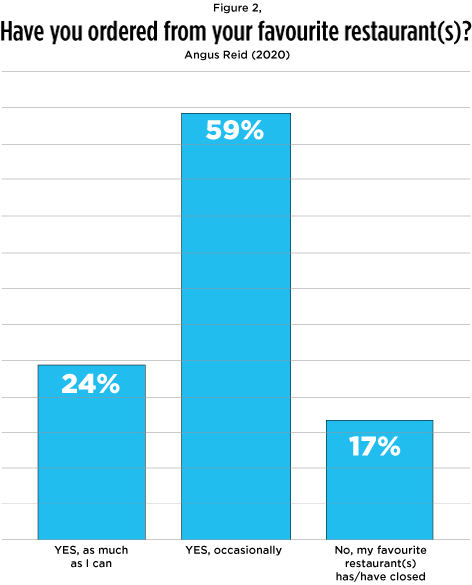
- A total of 83% of Canadians ordered from their favourite restaurant during the first three months of the pandemic.
- Younger people were more likely to order out from a restaurant. A total of 81% of respondents between the ages of 18 and 34 years old had ordered from restaurants, the highest rate among age groups.
- About 29% of Canadians ordered from restaurants at least once a week, and 9% had ordered food once a week since the beginning of the pandemic.
The bad news
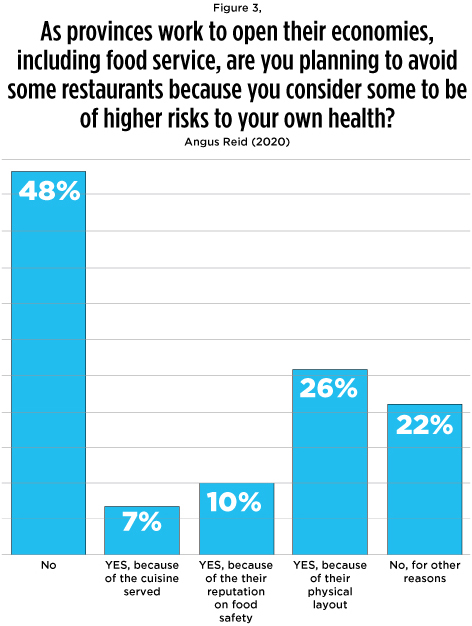
About half of Canadians were hesitant to resume restaurant patronage to protect their own health.
- Physical layout appears to be the most important issue for people.
- About 10% of Canadians say they will avoid establishments due to their food safety reputation.
- And about one-fifth of Canadians will avoid establishments for an undisclosed reason.
Bottom line for operators is the need to invest in changes to your physical environment and perceived service level to build trust. Consistency and commitment in the implementation of these changes will enable you to gain and keep consumer confidence.
Meeting and managing expectations
In the Dal Agri-Lab survey Canadians were asked what they expect to see when they return to their restaurant of choice. The overwhelming majority of respondents said they expected to see more personal protective equipment worn by staff, and measures taken to separate/protect diners (e.g. more plexiglass).
Interestingly, there was also an appreciation for the challenges faced by operators to maintain safety and manage the circumstances. Nearly 40% of Canadians said they expected slower service and 29% expect menu changes or fewer choices.
Author of the Dal Agri-Lab study, Professor in Food Distribution and Policy at Dalhousie University Sylvain Charlebois estimates that up to 30% of lost restaurant revenue in 2021 could be a result of people working from home. “The more people work from home, the less likely they are to spend money on food and beverages at local restaurants.”
“The more people work from home, the less likely they are to spend money on food and beverages at local restaurants.”
Sylvain Charlebois, Professor in Food Distribution and Policy at Dalhousie University
The road forward will depend on both governments and operators helping themselves by doing what is needed to optimize the safety of foodservice in order to convince guests that it is safe to return to restaurants.
Foodservice has already been buffeted by unparalled difficulties as a result of COVID-19. A survey of operators by Restaurants Canada at the end of March 2020 revealed that one in 10 restaurants in Canada had already closed permanently — roughly 10,000 businesses that had decided not to reopen. Charlebois adds, “We are expecting the industry to lose $20 billion, on top of what actually happened this spring. In a year from now, 25% of all restaurants will disappear.”
Though many more operators may be forced to close by 2021, the industry will endure. However, reduced meal occasions and altered consumer behaviour may be with us for the long haul.