
Since the mid-teens, traditional grocery stores in Canada have been blurring the lines between grocery and restaurant foodservice with so-called “grocerants.”
These intersections of grocery and eatery have seen a number of food retailers, like Longos, Loblaws and Farm Boy (Sobeys) add in-store restaurants and full meals for shoppers who want to do more than pick up their bread and bananas. For Millennials on the go, especially, these hybrids have offered the perfect combination of convenient food shopping and a hospitality experience.
Fast forward to 2020 and our new world under COVID-19. More and more people need groceries — and prepared meals — especially with workers returning to offices and kids back to school.

More and more people need groceries — and prepared meals — especially with workers returning to offices and kids back to school.
As more and more restaurant operators have pivoted successfully to offer customers takeout & delivery, why not pivot even more? Many restaurants have surplus supplies and continued access to food from their distributors. Savvy operators are already becoming food “purveyors,” and not just restaurants as they realize they are in the “food business,” and not only in the restaurant business.
As cooler weather calls, operators are turning from takeout & delivery and converting into restaurant-grocers offering meal kits, take-home/make-at-home meals, and more.
Set up your online grocery section
Earls Kitchen and Bar’s website features an entire Grocery section as the chain added a virtual grocery store to its regular takeout & delivery menu early in the pandemic. Customers can buy a variety of grocery staples as well as DIY meal kits and prepared meals.

Try food box subscriptions
Farm-to-table operations have been sending fresh boxes of goods to customers via subscription for years. Restaurants with access to local and seasonal ingredients can get into the game with their own branded food boxes. If you already send e-newsletters to your regulars, you can easily introduce this new service to supplement your takeout & delivery sales. The food box can contain meals as well as grocery staples… and even a roll of toilet paper.
Replicate the restaurant experience
Pre-packaged ingredients, meal kits, and menus can help turn your social distancing regulars into sometime gourmet cooks.
Upscale Toronto eatery Buca has created branded packaging of its favourites for customers who want to replicate the experience of eating a Buca meal, but in a take-home grocery format. A full page advertises cook-at-home favourites that keep the Buca brand front and centre.
Even traditional pizzerias can add groceries to their deliveries. The pie is still the main event, but your customers will appreciate having access to other pantry staples too like milk, butter, tomatoes, cheese, and olive oil. And yes, you can even throw in a roll of toilet paper.
Top Tips
- Get the word out on your website and social media platforms that you have groceries, as well as prepared items, on offer.
- Use the opportunity to brand your grocery packaging. This is a great way to build brand loyalty.
- Choose your delivery platform carefully. Will you DIY or rely on a third-party service like Skip the Dishes, DoorDash, Foodora or Uber Eats? While you may save money doing it yourself, consider if you can increase your geographical reach using one of the biggies.
What happens when the sustainable food packaging movement collides with a global pandemic? New evidence shows that use of single-use plastic food packaging increases, while at the same time concern about the environmental impact of plastics remains high.
Dalhousie University’s Agri-Food Analytics Lab has published the results of a July 2020 survey about how the COVID-19 pandemic has affected Canadian consumers’ attitudes toward single-use plastic food packaging compared to 2019.
Results show that a strong majority of Canadians (87% compared to 91% in 2019) still feel that plastic food packaging is a serious environmental issue. And the percentage of consumers actively shopping for non-plastic packaged goods is almost unchanged at 60% (from 58% in 2019).
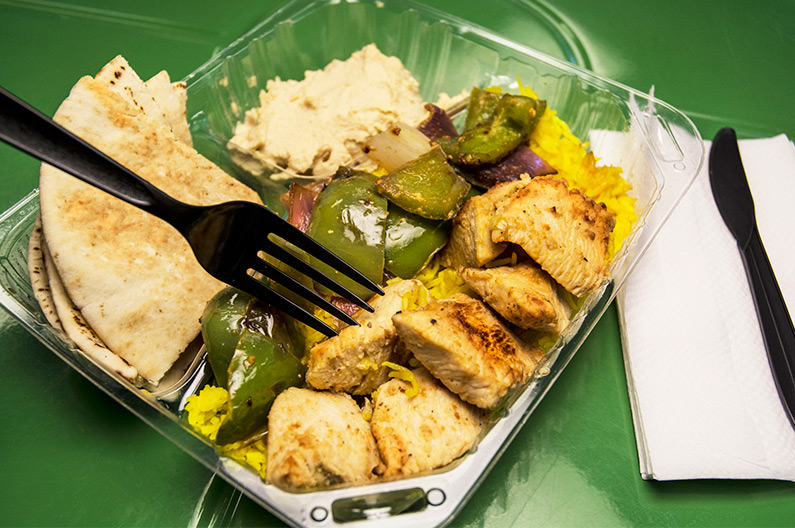
Yet 29% of survey respondents feel they’ve purchased more foods in plastic packaging during the pandemic. This is more prevalent among those aged 18 to 39.
According to Robert Kitz, research associate with the Agri-Food Analytics Lab and lead author on the study, the message for foodservice operators is that “generally this is not because they want to turn their backs on the environmental issue. There has been a change in priorities for now, but there is still strong commitment to achieving reductions in plastics waste.”
In March 2020, all Canadian provinces prohibited in-restaurant dining, leading to increases in takeout, delivery, and services like meal kits. This is one driver of increased plastics use. Although many restaurants have reopened, ongoing restrictions and concern about the pandemic’s second wave mean disposable-packaging-heavy off-premise dining options remain elevated.
An April 2020 report from Technomic, Inc., which provides insights to the foodservice industry, identifies the focus on to-go and delivery services as the second-highest Canadian foodservice trend in response to the pandemic.
“45% percent of younger consumers, including Gen Zers and Millennials, are buying more meal kits now from restaurants compared to before the pandemic.”
Report from Technomic, Inc.
Technomic also reports that for 2020’s second quarter in Canada, “45% percent of younger consumers, including Gen Zers and Millennials, are buying more meal kits now from restaurants compared to before the pandemic.”
The Dalhousie report identifies COVID-19 food safety concerns as essentially tied with takeout and delivery as the top reasons people say they’re buying more plastics. It finds that 55% of respondents are more concerned about food safety since the pandemic began.
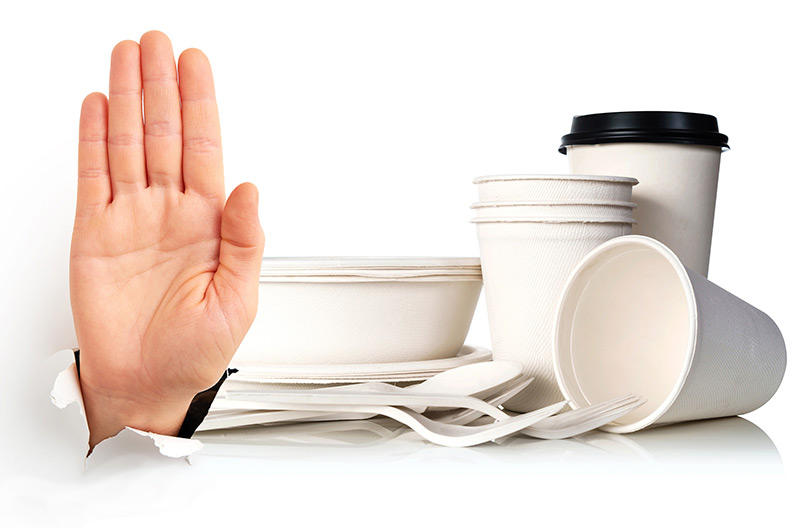
Food safety and sustainability
Can pandemic-related food safety and environmental sustainability in food packaging be compatible goals? Kitz definitely thinks they can. “Most evidence seems to show that the risk of COVID-19 transmission from food is very low,” he offers. “That said, we still need to ensure that consumers feel safe, where risk perceptions may not line up perfectly with actual levels of risk. But really, food in Canada remains very safe: the industry just needs to demonstrate that commitment to Canadians, while working to minimize dependence on single-use plastics. It is by no means an easy problem to solve, but nor is it incompatible or impossible.”
Dalhousie’s study reveals a shift in opinion on how to reduce plastics use. There’s been a substantial decrease in support for bans on plastics (from 72% to 58%), but a sharp increase in willingness to pay more for biodegradable packaging (from 40% to 55%). However, 50% of respondents are more price-conscious since COVID-19.
Kitz acknowledges the tension between these findings, noting that lower income households are more likely to be price-conscious, while higher income households tend to support paying for sustainable packaging. “But,” he says, “I would still say generally that a lot of consumers are feeling these competing pulls — both the desire to have green alternatives, and also a concern about costs.”
He also points out that many consumers and foodservice operators alike face economic uncertainty and food costs are rising rapidly.
The key message? When it comes to safety, affordability and sustainability, balance is required.
Read our story: 10 great ideas to win the war on plastics
Plastics have come under heavy fire, and heavy scrutiny, recently for the congestion and contamination they inflict on our landfills, our oceans and our parks. Governments, consumers, communities — and the restaurant industry — are looking for viable, affordable alternatives. Here are 10 great ideas to get you started and take you further along the plastic-free path:
Plan for less waste
There are a myriad of new approaches and new products chefs can use to satisfy customers, meet their individual kitchen needs, and lend the environment a helping hand. “The first option is improving waste management so that consumers have the ability to effectively dispose properly of items that are recyclable, and then the operator to effectively recycle it through their waste management stream,” says Jason Raven, national sales manager with the Polar Pak Company in Montreal.
Be rooted to better options
Restaurants are finding novel ways to return to the earth what customers are consuming — and gain some recognition for their efforts in the process. Last year the National Arts Centre (NAC) launched an innovative program that introduced plant-based food and drink containers and transformed them into rich compost. The move will divert 500,000 containers from the landfill every year. The containers, used at the NAC restaurant and banquet operations, intermission bars, as well as in the employee cafeteria, include wine and beer glasses, coffee cups, plates, utensils, straws, and take-out boxes. The compost created is being put back into the Centre’s rooftop herb garden, which in turn, provides fresh ingredients to the NAC’s culinary team.
“Audit what you purchase and what actually gets used by your customers, from delivery and food preparation to storage and disposal.”
The Plastic Pollution Coalition
Audit your restaurant
The Plastic Pollution Coalition, a global initiative launched to eliminate plastic litter, recommends restaurant owners and chefs start their plastic-free plan by looking at their current use. “Audit what you purchase and what actually gets used by your customers, from delivery and food preparation to storage and disposal,” the coalition says. Include monthly order size and costs for such items as plastic wrap, straws, bibs, and storage containers.
Test the waters
One project in Australia, Plastic Free Noosa, is helping restaurants reduce the number of plastic water bottles going to landfills with three very savvy suggestions. First, provide table water in glasses and/or have a water jug at the ready for customers. You might even want to toss in a few lemons or cucumber slices. Second, explore the use of an on-tap water system and offer up filtered and carbonated options for dine-in customers. Third, consider joining a water refill network such as Tap, an app that allows water bottle users to find nearby refill stations. This may also encourage new customers to your business and you can even sell your own branded reusable water bottles.
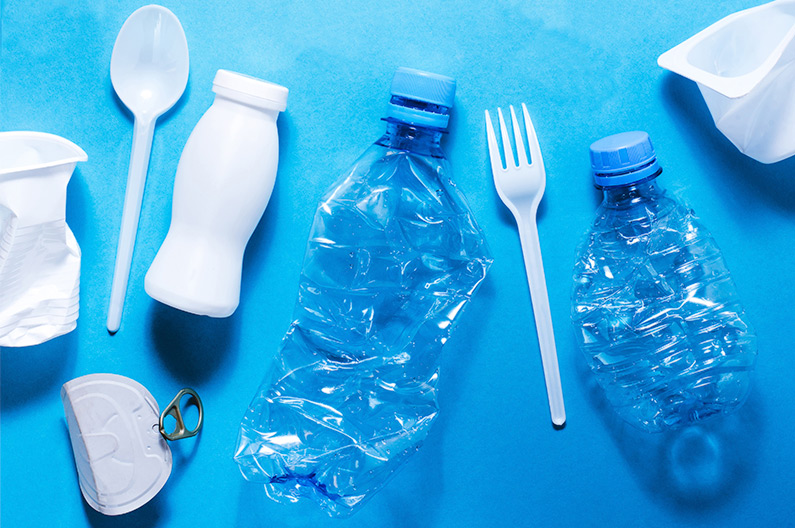
Be a Super Bowl fan
More and more eco-friendly options are on the market — and kitchen shelves. Polar Pak, for example, has “super bowls” that are made from 100 per cent sugarcane, a rapidly renewable resource. The bowls are grease and cut resistant, hot and cold food friendly, and both freezer and microwave safe.
Go for the green bin
In addition to thinking renewable, chefs and restaurant owners also need to think compostable, stresses Raven. “[Restaurants need] to use compostable products which again need to be ensured are effectively disposed of and then composted.”
Talk trash
Late last year Novolex, the foodservice packaging company that owns De Luxe Packaging in Montreal, launched Eco Blend Max, a new line of trash can liners made with 50 per cent post-consumer recycled content. The bags, using what so-called right-sizing dimensions, fit the most common cans. According to the company, correctly fitting liners use less material, which reduces costs and the impact on the environment, and saves time placing liners in cans.
Think big, act bold
Every small step you take to reduce or eliminate plastic is a thumb’s up for the environment. But thinking big can be better and bolder. McDonald’s Canada has announced it will be unveiling two Green Concept Restaurants in London, Ont., and Vancouver, B.C. These restaurants will act as incubator locations to test new packaging options and recycling initiatives including a fully repulpable cup for cold beverages, a Canadian QSR first. The cup uses an aqueous coating that is acceptable in recycling streams. New fibre lids, another Canadian QSR first, is made from 100 per cent Forest Stewardship Council-certified wood fibre and is recyclable. Wooden cutlery, wooden stir sticks, and paper straws will also be mainstays of the new eateries. But you don’t have to as big as the Golden Arches to introduce innovations like these to your operation.
Prepare for change
Less than 10 per cent of plastic used in Canada gets recycled. Without a change in the current course, by 2030, Canadians will throw away an estimated $11 billion worth of plastic materials each year. The federal government intends to reduce those numbers through a series of initiatives including banning single-use plastics by as early as 2021. This includes plastic bags, straws, cutlery, plates, and stir sticks. The government of Nova Scotia has already announced that single-use plastic bags will be banned this year [2020]. Will you be ready?
Plan for better business
The contemporary customer comes to your restaurant armed with an appetite — and expectations. Among those expectations: that your approach to preparing and serving food will mirror their values. One of those fundamental values is to protect the environment. That is smart business, says Raven. “Your investment in plastic alternatives and reduction will be paid back with consumer brand loyalty, improved experience and waste management expense.”
Loyal guests are repeat guests, so incentivizing them with valuable offerings that reward their commitment to your brand is definitely a win-win.
Consumers have become accustomed to being rewarded for their business since the 1700s, and Canadians on average are members of eight loyalty programs per household. For restaurants, introducing a loyalty program offers a magnitude of benefits.
“To amp up basic loyalty programs, operators can further engage customers by adding a gamified aspect or even incorporating surprise awards into their programs,” recommends Anne Mills, senior manager of consumer insights at Technomic. “With a rewards program, brands can also harness big data to better understand consumer behaviour and offer more tailored experiences. This, in turn, will drive repeat traffic and sales.”
- 36% of consumers say a rewards program is an expectation at fast food, and 34% say it’s not an expectation but could encourage them to visit more often
- 41% say a rewards program is an expectation at fast casuals, and 32% say it’s not an expectation but could encourage them to visit more often
- 64% of consumers say they visit fast-food restaurants because the price is reasonable, while 53% say the same of fast-casual restaurants
Source: Technomic’s 2018 Canadian Future of LSR Consumer Trend Report
“With a rewards program, brands can also harness big data to better understand consumer behaviour and offer more tailored experiences.”
Anne Mills, senior manager of consumer insights at Technomic
Building your brand
Developing the “right” loyalty program for your restaurant concept can result in many positive benefits from an improved guest experience, elevated brand position, and financial paybacks:
Guest experience
A complimentary glass of champagne, a discounted meal, complimentary birthday treats, and perks that surprise guests at point-of-sale checkout or payment all evoke positive guest brand association that leaves them feeling well thought of and valued, and returning for more. Often the calculation of what was spent to achieve the reward becomes overlooked, which results in guest retention.
Brand awareness
Positive restaurant brand experiences lead to positive word of mouth, which in turn lead to more bums in seats. In this digital age, positive reviews, social sharing, and increased website traffic are critical to a restaurant’s survival, so these opportunities are HUGE pros when considering a loyalty program.
Financial payback
The fact: brand loyalty equates to increased sales. On average guests enrolled in an effective loyalty program will spend 46% more with your business, because they are visiting you more by an average of 35%. These results are achieved by offering an easy-to-use program where the guest values the reward benefits
Getting started
Asking your guest to join another loyalty is a big ASK from a consumer perspective. Keeping their fears, daily challenges, spending habits, and decision-making behaviour top of mind is critical in developing a loyalty reward program designed for “your guest.”
So, what’s going to entice YOUR restaurant guests to feel comfortable in providing their personal information and gaining their interest in managing yet another app on their phone, or carrying another plastic card in their wallet?
Here’s where to begin understanding the loyalty landscape from an operational and guest perspective:
Identify
The loyalty applications or systems that will pair best with your existing POS system to avoid incremental equipment, integration and training fees.
Find the best digital reward and loyalty programs for you
These have become more popular in recent years as mobile phone capabilities have transitioned into digital wallets. A simpler acquisition process, less plastic in guests’ physical wallets, automatic reward tracking and user updates, reduced marketing costs, and daily brand exposure are just a few of the benefits of going solely digital.
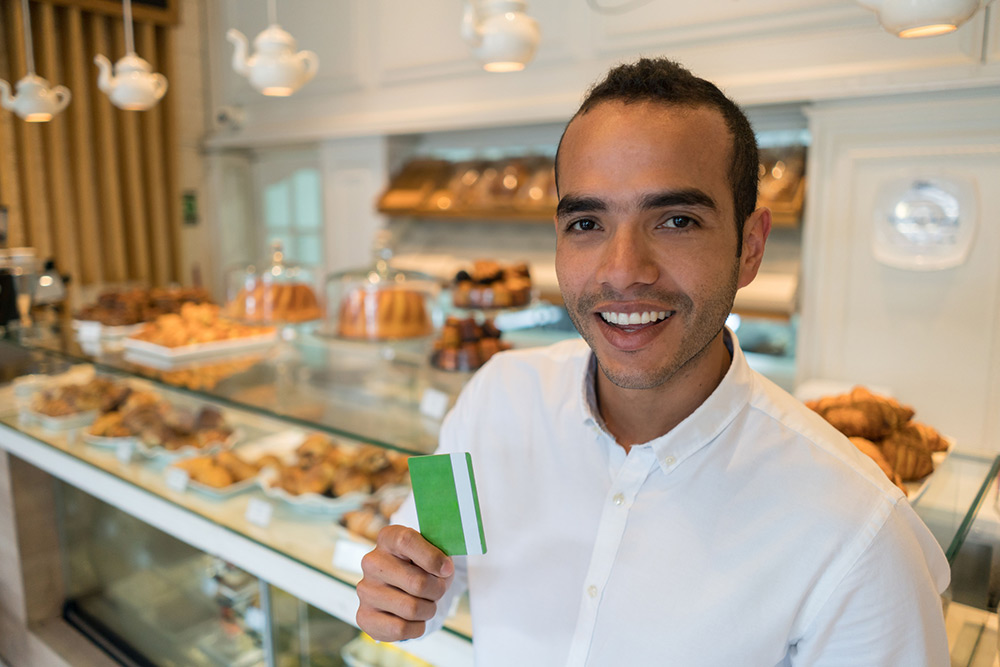
Do a comparative analysis
Review the ease with which guests can join the program directly at POS or through digital channels, the data depth of the reporting, automation and trigger marketing support, the ease of reward redemption, flexibility in developing new rewards and incentives, and the fee structure of the program.
- TIP: 49% of Millennials eat out at least once a week and they are using takeout and delivery apps on average more than other guest segments. Millennials prefer point accumulation reward programs, based upon dollars spent, as seen with the success of the Starbucks reward program.
(https://www.softwareadvice.com/resources/5-tips-for-restaurant-loyalty-programs/)
Be the guest!
Join restaurant loyalty programs that already exist to understand the end-user experience, to gauge the value of various reward incentives from complimentary menu offerings to point accumulation.
Consider member acquisition
This is the initial goal of every loyalty program, but where does this step make sense within your current guest experience? For quick-service restaurants with an ordering counter, the “join us” ask is much more authentic when your guests place their order. However, for fast-casual and sit-down restaurants, table and receipt messaging may fit in more smoothly as part of the guest experience, with subtle server messaging relating to perks that can be achieved by joining the loyalty program.
Create a dedicated role
Assign someone within your team to act as the reward and loyalty expert. This step is critical to the program’s success, as it won’t manage itself. Organization of a successful loyalty program begins up front.
These various steps will provide your team with valuable insights to help identify which type of loyalty program will achieve guest retention, increase cheque size, but also be manageable for staff from front-of-house operations to head office.
It’s a familiar scene in Hollywood movies, top-rated reality shows, and bestselling murder mysteries: Volatile, demanding, unreasonable chefs who make life miserable for their staff, especially those working side by side with them, and have sous-chefs and waitstaff alike in tears. The fictional character is, unfortunately, all too real in many professional kitchens.
It’s a stereotype — and a reality — the industry is actively working to change. With good reason. While the out-of-control gourmet mastermind may play well to movie-goers, reality TV junkies, and whodunit aficionados, it is, quite simply, bad business.
“Creating a professional and respectful work environment is critical to the restaurant industry. The industry continues to experience challenges in attracting interested and qualified staff, especially back of house,” says Jeff Dover, president of fsSTRATEGY, a Toronto-based management consulting firm that specializes in the hospitality sector.
He notes that employees, especially younger workers, value the quality and social aspects of their work environment and actively compare their work experiences with their friends. “They want to make a difference, want input into their work, and crave constructive feedback to validate their efforts and help them grow. While remuneration is important, so is the overall quality of work experience.”

The value equation
For many currently working in the restaurant business, their work environment is actually making them feel devalued. Global research conducted by Unilever Food Solutions found that one of every four back-of-house restaurant employees has been physically abused on the job, and nearly two-thirds of restaurant chefs have suffered from depression because of their work. The research also revealed that roughly 74% of chefs lose sleep to the point of exhaustion, more than half feel pushed to their breaking point, and 34% feel underappreciated on a daily basis.
“It’s no surprise why kitchen turnover is so high and why many young people are forsaking restaurant careers to pursue jobs in other field,” says Kyla Tuori, Unilever’s corporate chef for Canada, who is based in Toronto.
To help make professional kitchens more respectful and create a culture shift that values respect and good health, Unilever has launched Fair Kitchens, a movement focused solely on building a better future for chefs and cooks in the industry through support and acknowledgement of mental and physical well-being.
Tuori notes there are five core values that can significantly change the industry. On an emotional level, these include staff feeling encouraged and comfortable to talk openly as well as praising staff for a job well done. On a practical level, chefs must make time for staff breaks, for fresh air, daylight. “We rest, relax and recharge where we can,” says Tuori.
“It’s no surprise why kitchen turnover is so high and why many young people are forsaking restaurant careers to pursue jobs in other field.”
Kyla Tuori, Unilever’s corporate chef for Canada
Hiring right
The first step en route to a respectful and positive workplace is to hire carefully, says Dover.
- TIP: “Select candidates with an attitude that suits the work to be done. Skills can be taught; attitudes are challenging to change.”
He also recommends restaurant owners and chefs engage with employees.
- TIP: “Define expectations clearly, review progress, and provide constructive feedback so they can grow in their positions. Encourage creativity.”
Empowering employees to make decisions will also allow them to excel at their work and give them an appropriate level of control over what they are doing. Another of Fair Kitchens’ five core values is linked to this tenet: Exciting passion. “We train, mentor, and inspire the next generation. We fuel their flame,” says Tuori.
The final value in the Fair Kitchens’ movement calls on staff, especially those leading the team, to work collectively. This is about embracing diversity and respecting individuality. “Employees usually quit their bosses, not their jobs,” notes Dover. “Owners and managers must treat employees the way they expect to be treated and understand the value each and every employee brings to the success of the business. Two-way communication of these values is crucial.”
Creating a new culture will take time, but it is an attainable goal. “You know this has been achieved,” says Tuori, “when the work environment is full of energy, creativity and there is passion to serve great food, where everyone works as one team, and can succeed without sacrificing well-being and a personal life.”
What’s in a name?
A Fair Kitchen is defined as:
- a financially stable business with a high staff retention and diner loyalty because it reflects their values.a human-centric, positive, and structured workplace led by the head chef.
- one that follows a code of conduct with clearly outlined behaviours and five core values designed to change the industry.

To learn more about Fair Kitchens, visit https://www.fairkitchens.com/en/About.html