
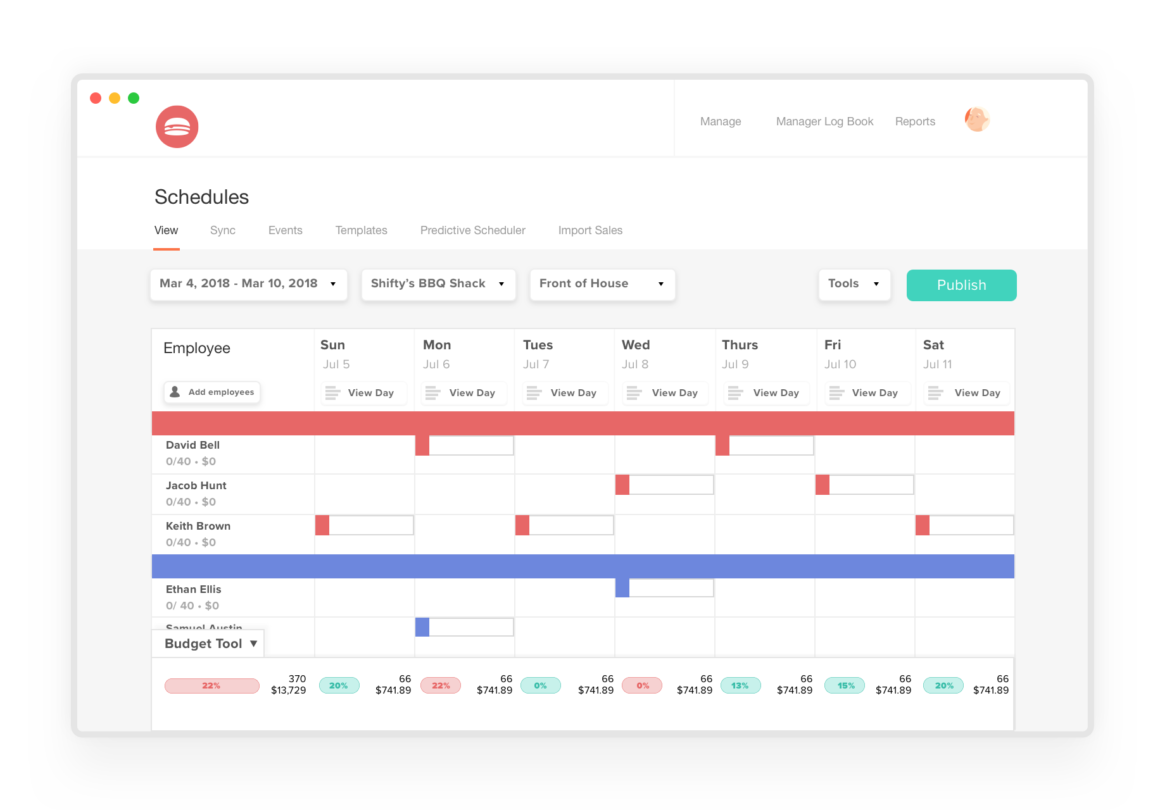
As a teenager, Jordan Boesch was a “sandwich artist” at a popular quick-service restaurant, an experience in a family business that eventually spun itself out as 7shifts, a North America-wide company he founded in 2014. At its most basic, 7shifts is a web and mobile-based labour management and communications platform for restaurateurs which provides tools for controlling labour costs and scheduling staff, among other functions.
Save time and money
7shifts — and other programs like it, such as HotSchedules — offer a self-serve, simplified experience for restaurateurs and managers to get on top of some of the most nagging problems all operators face — labour management, staffing and scheduling, among the most pressing.
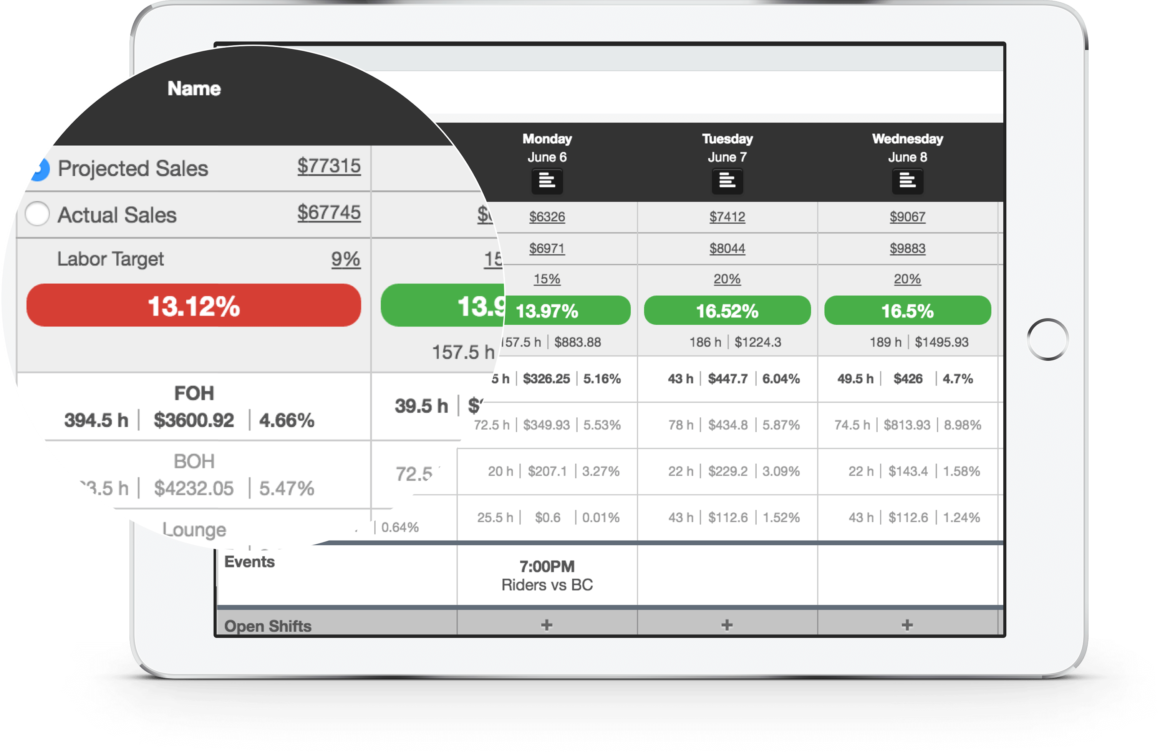
These programs can save operators considerable time and money, according to Boesch, and help them stay on top of their labour targets. “Our platform gives managers a chance to see if they are going to go over or be under those labour and budget targets in real time,” Boesch says, adding that the 7shifts system assists with forecasting sales and predicting costs.
It also helps employees communicate with managers and provide shift feedback, too. “If I had to bundle it all together, I would say that we’re not only a platform for managers but also for employees to help them be more engaged with their workplace.”
Eliminate scheduling chaos
Boesch saw up close the chaos that is the typical hourly-worker scheduling process. “There were always a lot of sticky notes and papers everywhere, and hand-written notes about shift-trading and when people could or could not work. It got me thinking about improving the situation.”
Labour management is a central focus of platforms like 7shifts, and Boesch stresses it’s not a matter of just scheduling the right number of people at the right time. “We draw on historical sales data from a point of sale (POS), and we look at weather patterns and seasonality. We look at all these variables that could influence how much labour you would need to service the demands of your restaurant at a particular time. We build that out for the restaurant, and they can make adjustments as needed depending on the insights.”
Behind the scenes, machine learning — the algorithms and models used by computer systems which continuously improve their performance over time — takes place, as it does in most of today’s technologies. The company draws on their own in-house machine learning team and data science team, which optimizes for the various efficiencies as they relate to weather and seasonality, but also the skill level of staff members. The result is less time wasted on scheduling and more time devoted to working with staff and driving sales — and profits.
“There were always a lot of sticky notes and papers everywhere, and hand-written notes about shift-trading…”
Jordan Boesch, 7shifts
Reduce turnover rates
Platforms like 7shfits can also help managers better control the “employee lifecycle” in the restaurant — hiring, training, scheduling and retaining. Employee turnover in restaurants is the highest of any private industry in North America, according to Boesch, and it has continued ramifications for restaurants. “Restaurants are now starting to look more closely at turnover rate and its costs from a macro level. It’s quite expensive, ranging from $3,000 to $5,000 when you lose an employee and upwards of $20,000 when you lose a manager,” he notes. “If $5,000 worth of meat disappeared from your fridge, you’d probably be checking cameras, yet operators have become almost complacent and see high turnover as normal.”
“The ROI for 7shifts is substantial in just being able to help operators schedule better,” Boesch says, adding that some of that is saved by preventing early clock-ins that quickly add up. The platform can also reduce the time spent scheduling by 80 per cent. “It takes some of the work out of the manager’s hands and gives employees the responsibility of determining the shifts they can work. The manager is involved only when approval is needed.”

Embrace technology
“It’s becoming more common that restaurants are using technology,” says Boesch. “It has largely been an industry that’s slow to adopt technology, but that’s also meant that there is a lot of technology companies with a lot to offer the industry.” Boesch sees that trend continuing as a younger demographic of restaurateurs and food-business operators enter the industry. “Cloud-based technology is where they are going to look first. It’s an exciting trend, and I think it is going to grow.”
As we head into 2020, Boesch says it’s a good time to think strategically about the next 12 months. “Think about how you engage staff and manage your labour. Doing things the same way could mean leaving dollars on the table.”
Source: The Dish
PrintPan Fried Thai Peanut Chicken Wings

- Total Time: 20
- Yield: 10–12 1x
Ingredients
Thai Peanut Sauce:
- 1/4 cup (60 ml) creamy peanut butter
- 1/2 cup (125 ml) sweet thai chili sauce
- 2 tbsp (30 ml) rice wine vinegar
- 1 lime, juice and zest
- 2 tbsp (30 ml) soy sauce
- 2 tbsp (30 ml) garlic chili sauce
- 1 tbsp (15 ml) fresh ginger, minced
Pan Fried Chicken Wings:
- 2 kg Reuven Fully Cooked Plain Steamed Chicken Wings
(Product Code 35001 or 35002) - 1 tbsp (15 ml) canola oil
- 2 tbsp (30 ml) toasted peanuts, chopped
- 1 tbsp (15 ml) green onion, sliced
Instructions
- Thai Peanut Sauce: Combine all ingredients together and set aside.
- Pan Fried Chicken Wings: In a large sauté pan heat canola oil over medium heat. Place thawed chicken wings in the pan, turning after 4 minutes, or until golden brown colour. Add Peanut Thai Sauce and continue to warm over medium heat for 1 to 2 minutes.
- Plate, garnish with toasted peanuts and green onion.
Notes

Tandoori Tilapia Skewers

An East Indian inspired appetizer for sharing or serving as a main course.
- Yield: 6 1x
Ingredients
- 12 High Liner Signature Tilapia Fillets, thawed 3 – 4 oz
- ½ L Greek style plain yogurt
- 3 tbsp Tandoori paste
- ½ cup water
Instructions
- Cut each fillet width-wise into 3/4 inch strips.
- Fold each piece in half and spike onto skewer.
- Mix yogurt and tandoori paste, add water if mixture is too thick.
- Place skewers into an insert and pour in Tandoori marinade. Ensure that all skewers are submerged in the marinade.
- To order, season, spray with oil, char on the grill and finish in the oven at 350 F (180 C) for approximately 10 minutes or until done.
- Serve with biryani rice.
Notes