What comes after X and Y? If you said, “Zed” or “Zee,” you would be partly correct. When it comes to demographics, the group order is Boomers, GenX, GenY, and then GenZ. That chronology of labels for the demographic age cohorts makes alphabetical sense, but it misses the bigger picture.
In an extensive profile of GenZ by Global News, GenZs describe themselves in a diverse number of ways. GenZ is a generation unlike any other, and they challenge the notion that they can be understood as a mere extension of GenY (Millennials).
In their own words…
- “We have a unique mindset”
- “Have our own way of thinking”
- “We know what we want”
- “We are creators, innovators, entrepreneurs, and Activists”
- “Technologically impacted”
- “We’re pragmatic, sensible, and seek value for money”
- “We want control”
- “Optimistic about what the future holds — and truly believe we can change it. But we have an emergency fund just in case”
Who’Z the boss?
GenZ may be young, but they’re already smart enough to know that their time is nigh. Consider that by 2026, in the US, GenZ is estimated to represent 23% of the population and become the single largest US consumer segment.
Depending on how you define the cohort, Generation Z makes up approximately 20 per cent of Canada’s population, based on 2017 data from Statistics Canada. In terms of purchasing power, GenZ in Canada directly spends about $50B annually. However, their influence over food decisions extends beyond this.
“We’re pragmatic, sensible, and seek value for money.”
Generation Z
NPD Canada’s analysis of consumer foodservice purchases in 2019, showed that GenZ was responsible for:
- Driving foodservice traffic growth
- Having the highest relative redemption rate of foodservice purchases on deals
- The highest percentage of digital foodservice transactions
Getting to know GenZ
Kevin Stewart, founder of AgVision Media, an agricultural insights and consulting company, has developed a number of insights about GenZ and their impacts on the food industry:
- Their food choices are based on health, animal welfare and environmental sustainability
- They are driving the growth of the popularity of plant-based patties in foodservice and retail
- They “spend more money on food than they do on clothes”
- “They’re looking more towards what they call ‘eating with a conscience'”
- More inclined to order food online than eat at a restaurant – “They want their food on the couch or on the go” — mobility is key
CauZes & effects
He suggests that the coming of age of GenZ will be a significant disruption for the food industry. With GenZ becoming your leading customer demographic, you may do well to question whether you’re in the restaurant business, or if you’re committed to leveraging technology and delivery solutions to meet the food and beverage needs of your clients. Clearly, this trend got turbo-charged as a result of COVID-19.
Foodservice and consumer insights provider Technomic recently published findings of their 2020 Canadian Generational Consumer Trend Report. The report benchmarks the current attitudes and tendencies of GenZ, and documents strategies that large chain operators are already implementing in response.
- Environmentally consciousness is a core value for GenZers
- Among GenZers, plastic reduction is evolving from preference to expectation
- GenZ over-indexes with operators that deliver convenience/mobility and value-for-money
Away from homeZ
It’s clear you’ll want to tap this generation.
My work/life balance does not permit me to prepare and/or eat my meals at home (by Age Group):
| 1. GenZ (Born 1996 and later) | 51% | ||
| 2. Millennials (Born 1977 to 1995) | 34% | ||
| 3. GenX (Born 1965 to 1976) | 20% | ||
| 4. Boomers (Born 1946 to 1964) | 12% | ||
Compared to last year, I generally eat outside my home more often than I used to (by Age Group):
| 1. GenZ (Born 1996 and later) | 51% | ||
| 2. Millennials (Born 1977 to 1995) | 30% | ||
| 3. GenX (Born 1965 to 1976) | 13% | ||
| 4. Boomers (Born 1946 to 1964) | 11% | ||
Source: Dalhousie University Study: Disintegration of food habits, 2018
The future is now
If it feels like you were just being told about Millennials and the importance of that segment to your foodservice business, you wouldn’t be wrong. One of the unanticipated consequences of the adversity brought by COVID-19 has been to confirm that change is the only constant in foodservice.
Foodservice has shown a remarkable ability to quickly adapt operations in a myriad of ways. However, in a post-COVID world, the GenZ tsunami will rise fast. By all accounts, GenZ will lean heavily into disruption, with a generational understanding of their power to demand the reinvention of foodservice to meet their unique needs.
Ghost kitchens (also called virtual kitchens, cloud kitchens, dark kitchens) are delivery-only spaces that have the back-end without the front. No seating areas, no counters, no servers, no real “ambience,” not even a physical takeout space.
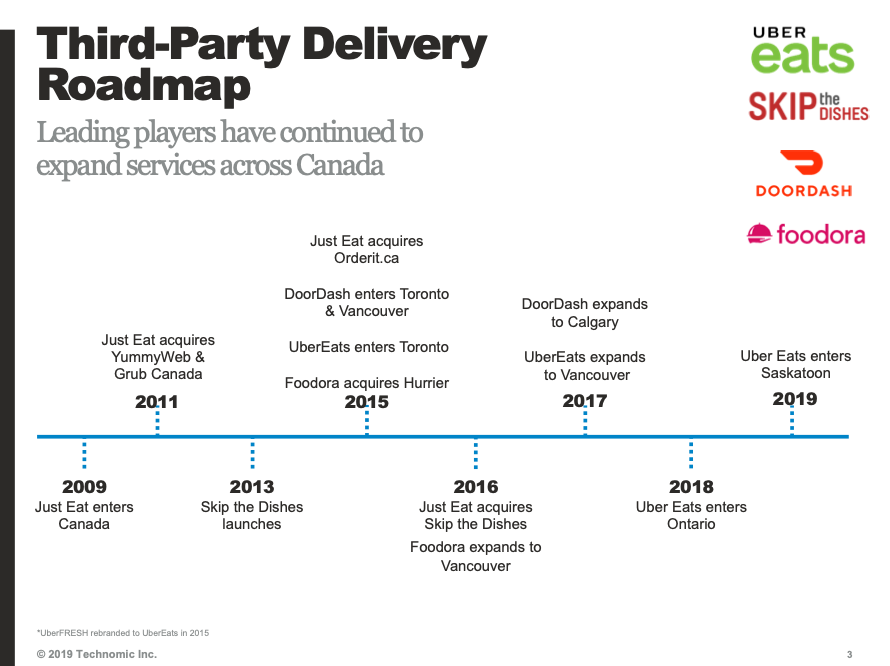
In a society where the sharing economy is growing more important and driving innovation, it’s an idea for our times. Everything is ordered online, prepared in the ghost kitchen, and delivered by third-party marketplaces like Uber Eats, Skip the Dishes, DoorDash and Foodora. Customers interact with the delivery company only. (See Exhibit 1.)
This technology-driven concept lowers overhead for staffing and site costs. As rents have gone up and margins shrink, more operators are enticed by the lure of doing away with front-of-house expenses. In short, it can make the numbers work where they might not otherwise. But there can be challenges if not done properly.
Virtual flexibility
Depending on the brands being served, ghost kitchens can turn out more than one type of cuisine and can feed various menus or sites. That’s especially appealing if you want to move efficiently from one market segment to another to take advantage of trends and growth. And it can be a great way to help counter the ebb of seasonal fluctuations.
“Chefs and restaurateurs have to maximize their capacity,” says Dana McCauley, associate director of new venture creation, University of Guelph. “You’ve got an asset that you need to run as many hours a day as possible to make the numbers work.”
Focusing on making, delivering and marketing food while reducing overhead is a saavy strategy, McCauley observes. “Today’s technology is making it possible. A solid online presence through websites and Instagram and various services are offsetting the importance of neighbourhood storefront locations to build visibility and diner loyalty.”
“Virtual kitchens are a blend of technology plays and restaurant plays.”
Sterling Douglass, co-founder and CEO of restaurant-tech company Chowly
Technology feeds operations
To succeed, ghost kitchens require a tech setup that fits with their operational flow. “Often, virtual kitchens are being run by technology companies and missing key operational steps,” says Sterling Douglass, co-founder and CEO of restaurant-tech company Chowly.
“Virtual kitchens are a blend of technology plays and restaurant plays,” Douglass says. “The teams building these technologies need a significant amount of experience in both areas. Lacking in technology experience will hurt volume and affect operations. Lacking in restaurant experience will decrease food quality, margins, and guest experience.”
He recommends operators answer the following key questions:
- How are concepts separated?
- How are they communicated to cooks?
- How are they bagged and prepped differently?
- How is the driver handoff different?
Know what you don’t
Ghost kitchens present a learning curve for bricks-and-mortar restaurant operators and those new to the industry. That includes everything from understanding the different labour costs to juggling multiple third-party services which are delivering the food.
Thinking about entering the ghost kitchen sphere? Chowly CEO Sterling Douglass offers four pointers:
- Concepts should be data driven
- Menus should be small and VERY simple
- POS integration is a must-have
- A very deep margin analysis should be conducted before launching
Delivery services typically take a 30 per cent cut from every order, though larger operations can negotiate more favourable rates.
On the virtual edge
Ghost kitchens can be found in shared commissary spaces and back ends of storefronts, and some other places, too:
- Popup cooking stations within the main kitchen of a restaurant that fill delivery-only orders from one, two or even a half dozen brands.
- Pod kitchens in shipping containers that can be placed wherever zoning permits. Some double as drive-throughs.
It will be important that operators can efficiently serve both dine-in consumers as well as those ordering takeout or delivery. Also, expect to see more restaurants forego dine-in altogether and experiment with delivery-only stores, especially in partnership with third-party delivery services.
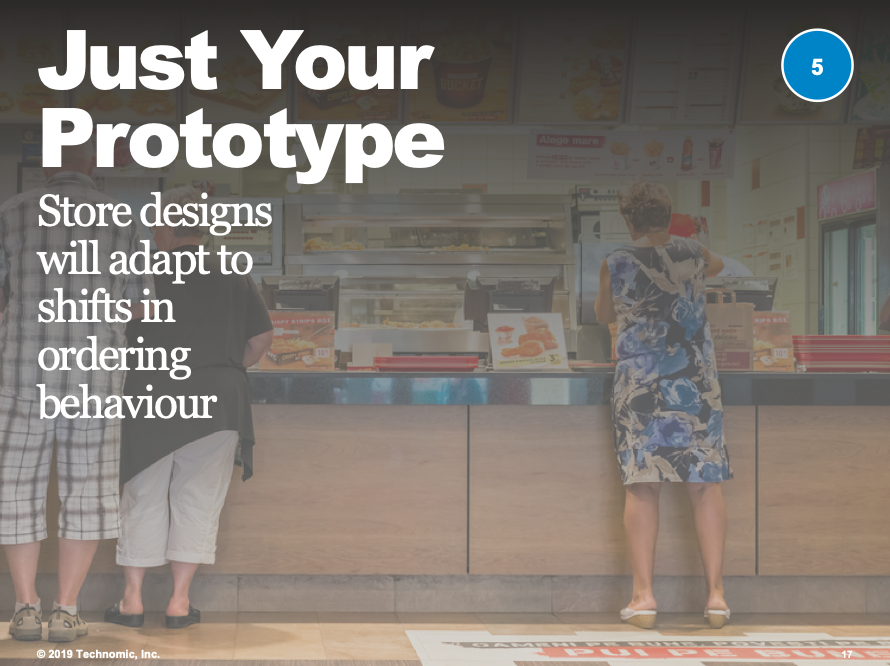
Exhibit 1. (Referenced in article)