
Once a necessity during the tumultuous year the foodservice industry has faced, now smaller streamlined menus are here to stay. And with good reason. Trimming and slimming down your menu adds well deserved money back to your bottom line, benefiting both you and your customers.
Long before COVID-19, if you remember back that far, Technomic had already acknowledged simplification of menus. Their Canada’s Shrinking Menus 2018 report noted that restaurant operators had been gradually cutting back on their menus since 2013.

Stat: Number of entrées down 15%, appetizers down 12% and dessert menu offerings down 18%. But number of beverages, sides, add-ons, kids’ and senior menu options were increasing.
Technomic reported that operators were being strategic about how and where to spend their money while dealing with the labour issues in the Canadian workforce.
Their Post-Pandemic Playbook continues the same macrotrend, stating labour issues already felt in foodservice pre-pandemic could be worse as former employees find other opportunities.
They also predict that many operators will likely focus on menu items that are revenue and profitability drivers, post-crisis.
Simplifying the menu makes good business sense: assisting cost control, reducing labour costs and keeping customers happy.
Cost control
Smaller menus naturally use fewer ingredients. A tighter food inventory provides operators with many cost-control options without hurting menu quality. In fact, menu quality will naturally improve.
James Keppy, corporate chef for Maple Leaf Foods, is busy helping operators streamline menus and promoting value-added ingredients to help chefs in their kitchens.
“Operators need to do a few things well. No one can afford to have their menu be a book anymore,” says Keppy.

“Operators need to do a few things well. No one can afford to have their menu be a book anymore.”
James Keppy, corporate chef for Maple Leaf Foods
“Inventory items need to be reduced so that they can be controlled and better utilized in multiple applications across the menu. This inventory reduction affords little to no waste.”
Technomic’s State of the Canadian Menu 2021 report agrees and suggests operators adapt products to various dayparts, mealparts, menu categories and ordering options. They state that menu streamlining will be a necessity for operators amid and after the pandemic, sticking around as a long-term trend. Multiple applications increase efficiency on several fronts, from labour to storage to spending.
Fewer ingredients mean you will be ordering larger quantities of your staples, allowing for bulk purchases and economies of scale.
The time it takes to manage inventory decreases from counting to reordering. With a tighter handle on inventory, food waste is also significantly reduced.
Consumers continue to look for customization when ordering. A smaller menu can still accommodate these requests. Operators can rethink well-performing ingredients and use them strategically in their offerings. But that also means eliminating poorly performing ingredients.
Keppy agrees. “If there are inventory items present that are costly but show low sales on the menu mix, they are a drain on your resources in both money and storage.
“Menu items and their ingredients that travel well are important. Maple Leaf Pulled Pork and Beef can be customized by individual operators with their seasonings and sauce and will keep their heat for delivery. These products can be used for sandwiches, build your own tacos, and for mac and cheese topping.”
Labour costs
Relying on menu fundamentals is key, according to Technomic’s State of the Canadian Menu 2021 report. Operators scaled back their menus to focus on core items. Smaller SKU counts helped operators reduce operational complexity by streamlining their menus, reducing waste and staffing needs, and increasing speed of service.
“Smaller menus factor in labour. This could lead to the elimination or doubling up of stations in the kitchen,” says Keppy.
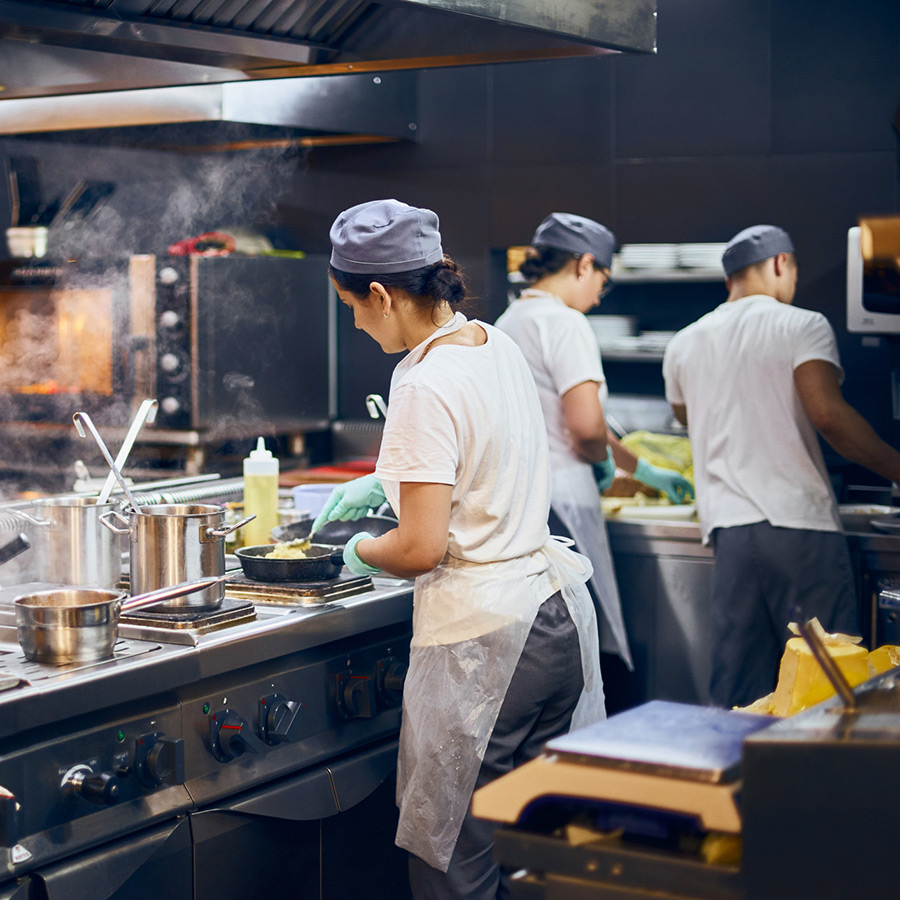
“Smaller menus factor in labour. This could lead to the elimination or doubling up of stations in the kitchen.”
James Keppy, corporate chef for Maple Leaf Foods
With fewer items on the menu, it is faster to train new employees — front of house and back of house. Wait staff will have more comprehensive menu knowledge and can effectively upsell and educate customers. Kitchen staff can quickly become experts on recipes, leading to faster service and higher quality dishes.
Additional benefits of having fewer moving parts, people and ingredients are increased efficiency and minimal mistakes — everybody wins in this scenario.
Happy customers
Everyone wants to be happy. Smaller menus help your customers get there. It is easier for your customers to understand who you are and what makes you awesome if they aren’t getting lost in your menu.
Visually, the menu will be more appealing in print and online. The physical menu will have white space and room to move, taking advantage of menu psychology theories. Plus, the digital menu will be simpler to scroll.
“Keep the menu easy to read and therefore easier to make a menu choice… especially if your customers are reading and ordering from a phone.”
James Keppy, corporate chef for Maple Leaf Foods
“Keep the menu easy to read and therefore easier to make a menu choice… especially if your customers are reading and ordering from a phone,” says Keppy.
Smaller menus increase the perception of quality over quantity and don’t overwhelm indecisive guests.
As ticket times decrease, customers get their orders faster, and that makes them ecstatic.
Gearing down to go up
“Do what you are good at and what you are known for while still offering items that appeal to the general groups of meat eaters, vegetarian and vegans, healthy eaters and indulgent consumers. If you are a chicken place, offer fried, grilled and a plant-based version,” says Keppy.
He also reminds us that “no matter what you offer, always consider the quality and appearance on the plate as well as in the takeout container.”
Shrinking your menu is all about dollars and cents, and just makes good sense. Your operation will be stronger, more focused and even better than before. Your customers will thank you, and so will your bank account.
Where children prefer to dine, parents will follow. Kids have big influence on where their families choose to eat, and restaurants that meet their specific needs are better positioned to capture their repeat business.
Parents are always eager to find places where their children like the food, where they will eat healthy meals, and have a great time. By building loyalty, your pint-sized patrons will come back again and again — and they’ll bring their parents, families, and tell their friends, too.


Family-friendly fun
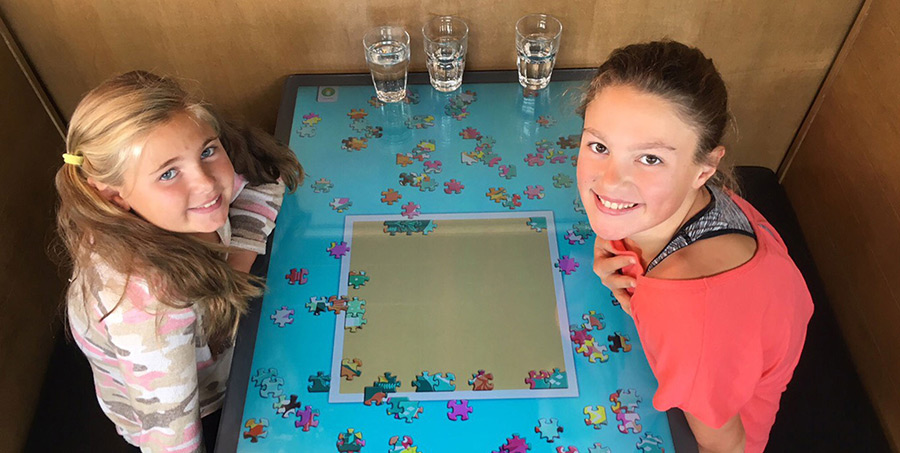
At Joe Dog’s Gasbar Grill in Burlington, Ont., family-friendly fun is the focus. Kids can design their own sundaes, play games on 14-inch mega touch screens, and interact with super heroes. Children love having their photo taken with mascots, and they’re an excellent way to market and brand your operation.
“It’s all about entertainment, and fun, and giving them reasons to keep coming back,” says operations manager Paul Teague. “Our two booths with the mega touch screens are always the first to be booked, and consistently the most popular.”
Joe Dog’s adds value with frequency cards that reward kids every fifth meal with stuffed toys and other goodies. “We’re focused on building loyalty and a sense of fun,” Teague explains.

Kids menus are growing up
Today’s young online savvy diners are much more discerning than we were as kids. “They’re looking for healthier options like kale and quinoa salads,” he says.
When you’re thinking about kids’ menus, think adventuresome. “Everybody — kids included — knows more about food than ever before,” says Christine Couvelier of Victoria-based Culinary Concierge. “Let’s do something exciting and different that will be a food memory for the kids, so they will want to return with their families again and again.”
- Offer well-balanced kid-sized meals that are healthy and fun.
- Choose a variety of fresh fruits and vegetables and serve creatively.
- Watch your price points.
- Provide nutritional information like calorie count and fat and sugar content.
- Pay close attention to allergies and gluten-free designations.
Engaging activities
While they are waiting for their food, engage children with interactive games, colouring activities, and puzzles. Consider providing online access with tablets or computers where children can register for an online club and watch videos.
Kids love to photograph their food and post their pics through online apps like Instagram. “It’s insta-licious,” Couvelier says. “You could have a contest and provide recognition for posting their photos.”
Pint-sized beverages
Children love fun drinks, especially if they come in a distinctive container. Mocktails are great for kids who want something fun and different.
“They want to be the first to try something new and then they will tell their friends,” Couvelier says. “Whatever you do, make sure that it’s all about taste. Kids, just like adults, notice taste in what they eat and drink, and it must be delicious.”
Top kid dining tips
- Consider that it’s often the kids who make the decisions where the family is going to go.
- Serve kids meals that are healthy, visually appealing, and taste great.
- Hire staff that are fantastic with children and inspire them to ensure they receive special attention.
- Engage kids at the tables and elsewhere in your establishment with games, colouring activities, puzzles and online access where they can post pics.
- One size does not fit all: Remember that four-year-olds and 12-year-olds have very different expectations and needs.
- Ensure your booster seats and high chairs are in good working order, clean, and safe.
As Canadians add layers to ward off the elements, they also crave menu options with added layers. Flavour, warmth and comfort are naturally built into layered foods and should feature on cold weather menus.
Enzo D’Adamo, sales and marketing director for foodservice at Grisspasta, agrees.
“Customers are looking for heartier meals when the temperature drops, and of course, pasta is one of those heartier dishes. Pasta dishes come back into vogue and should be prominent on winter menus — layered products like lasagna, stuffed cannelloni, filled jumbo shells, and macaroni casserole.”
Strong foundations to build on
Quality ingredients are paramount to build strong foundations. For pasta, that means using ingredients grown in Canada and manufactured in Canada.
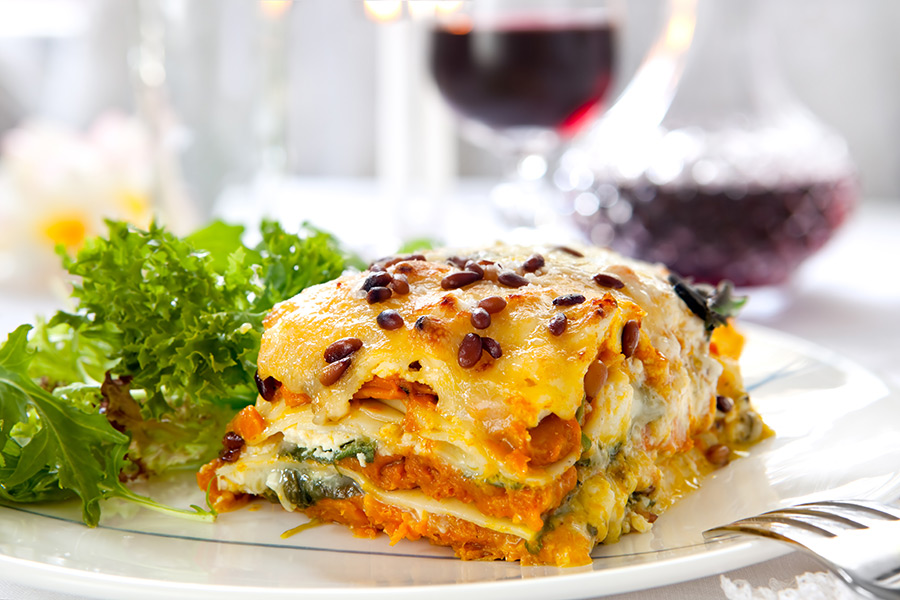
“Lasagna, by far, is my favourite quintessential cold weather layered food,” says D’Adamo.
“For an operator, lasagna covers all the bases. It can be made well in advance, has great portability and longevity. Lasagna thaws and reheats to serve while maintaining great taste and texture profile. Lasagna is a no brainer for operators.”
Grisspasta is well known for lasagna in the industry and offers many types (10″, 20″, thin-style, oven ready). With products packaged for foodservice — 10lb box with 4 x 2.5 lb individually wrapped packs to maintain integrity of the product — this family-owned company always puts quality first.
D’Adamo reminds us that “pasta remains a favourite and has become even more so in our desire for comfort throughout the pandemic. Pasta lends itself to so many possibilities, is delicious and nutritious.”
Benefits of layered pasta dishes
- Time savers – making ahead and in large quantities
- Outdoor patio friendly — portioned and baked in ceramic, these dishes retain heat
- Infinite combinations — easily tweaked to fit season
Towers of strength
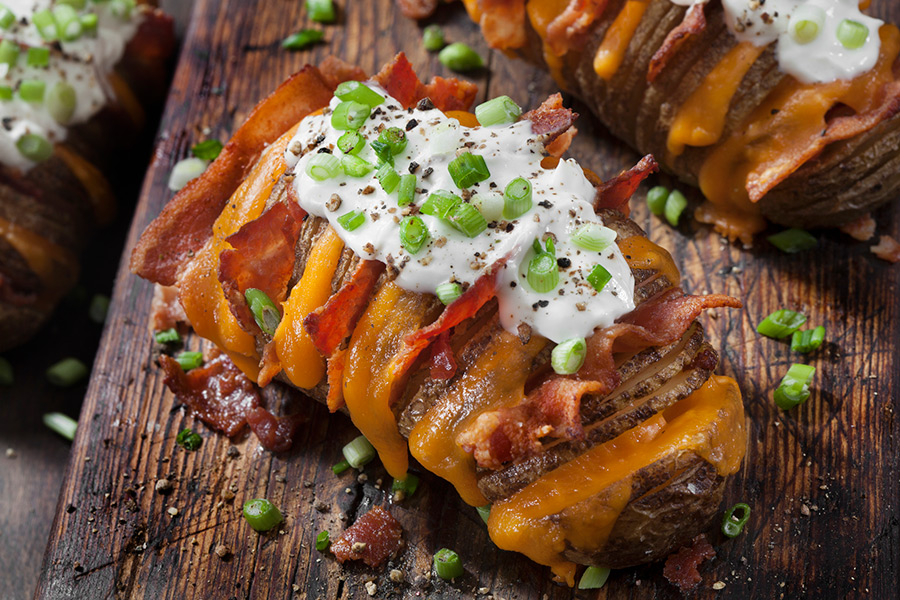
Holding it all together is key to visually appealing layered dishes, whether open portioned or contained. Using an ingredient that provides strength but also brings flavour is a bonus.
“When I think of layered foods, I think of premium food, quality ingredients, taste variety and appetizing visual presentation — lasagna, casseroles, premium sandwiches and layered desserts,” says Steve Hutchinson, VP of marketing for foodservice, ingredients & export for Lactalis (Parmalat).
“Don’t underestimate the versatility of dairy in layered foods. Dairy is a fantastic ingredient. Cheese (hard, firm and soft varieties) is a great ingredient for taste variation and functionality (feta, fresh mozzarella, aged cheddar, etc.).”
And don’t count out cottage cheese, cream cheese, yogurt and whipping cream when assembling layered creations both sweet and savoury.
“When I think of layered foods, I think of premium food, quality ingredients, taste variety and appetizing visual presentation — lasagna, casseroles, premium sandwiches and layered desserts.”
Steve Hutchinson, VP of Marketing for Foodservice,
Ingredients & Export for Lactalis (Parmalat)
Building bridges (of flavour)
With a foundation of pasta and the strength of dairy, building hearty, quality layered dishes to winterize your menu is easy. The tricky part is choosing the combination that tells your story.
“Simply put, layered foods are a great way for operators to showcase their chef’s expertise and recipes that highlight their point of difference from other establishments,” says Hutchinson.
Customers’ flavour expectations are worldly. Yes, they love classics but they also desire more global mash-ups.
- Lasagna alla Bolognese → Butter Chicken Lasagna
- Spinach and Ricotta Lasagna → Harissa Roasted Vegetable Lasagna
- Pasta with Tomato Sauce → Pizza Pasta Skillet
- Greek Pastitsio → Southwest Style Pastitsio
- Classic Mac & Cheese → Chickpea Masala Mac & Cheese
Stack up layers and flavours to comfort customers and warm up your menu this winter.
Grisspasta/D’Adamo’s top lasagna tips:
- Never over-cook your lasagna. Stop cooking a minute or two before reaching al dente.
- Allow for rethermalizing. You also will have a product that resists breaking during assembly.
- Don’t use oil to separate pasta or lasagna sheets; oil will create a barrier on the pasta that will encourage the sauce to slide off.