
In our digital age the influence of a titled food critic’s opinion has been replaced by the emergence of guest review websites, social media, and food influencers. Food critics per se are not as common as they used to be, however the thorough process that notable food critics follow is extremely useful in understanding how your operation stacks up.
Unlike unforgiving guests who often give you one chance to make it, food critics never dine just once at a restaurant and they often wait until a few weeks post opening to test it out. To gain a deeper understanding of how your restaurant brand is actually performing, it’s critical that you maintain operational check-ins regularly to see the level of consistency in the service, food quality and overall brand experience.
So, put on your food reviewer hat, it’s time to put your own operation under the microscope.

Investigate the competition
Dine at your competitors on a regular basis to get a true picture of the lay of the land. Make notes of what they are doing well and not so well, and overall how their service, food, and brand stack up to yours
Take a seat at your own table
In addition to regular tastings for quality control, invite a few guests in for a complimentary experience that you can trust will offer an authentic opinion. Sit at the table with them to see your operation from the guests’ perspective.
- TIP: To maintain a typical experience, refrain from letting your service and kitchen teams know in advance that you will be dining in!
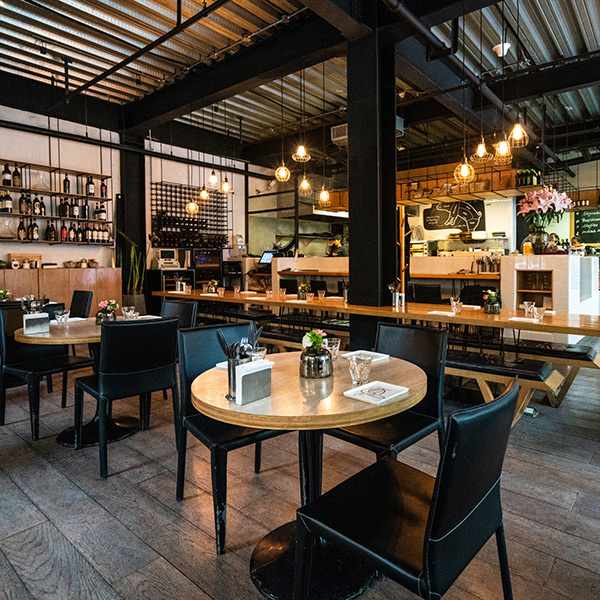


Review each guest touchpoint
Every touchpoint in your restaurant needs to be representative of the experience you want to offer your guests. Take the time to review each brand touchpoint; you know your biggest critics will be!
- Exterior design and décor — entranceway, front signage, patio, sidewalk, parking area, planters and foliage. Ensure these first impression zones are clean, up to your brand standards and guest expectations.
- Entrance and greeting area — doors, lighting, floor mat, greeting stand. The first greeting and entrance to the space set the tone for the guests’ dining experience.
- Team attire and presentation — ensure the team attire is professional and aligns with the personality of your brand, whether it is causal or upscale.
- Interior design — floor layout, lighting, flooring, wall designs, accent décor, signage, floral and live plants, window coverings, bar design, washrooms, menus — each detail must be consistent with your overall brand experience.
- Music — this sets the tone and the mood for your space. It needs to suit your guest demographic, ideally changed for the time of the day, and matching and enhancing the vibe of your brand.
- Table setting and arrangement — whether you’re a modern upscale restaurant or casual vibrant pub, your table setting needs to provide guests with the tools and information they need to understand your restaurant offering and enjoy what’s to come, without having to ask.
- Kitchen and server stands — guests have eyes and ears open to what’s going on in the restaurant, so be alert to how your team is congregating in visible areas.
- Service — professional, caring and consistent service is essential in running a successful restaurant operation.
- Quality — the presentation, the quality and the freshness of dishes and drinks is your number one biggest factor for success or failure. Just like a food critic, trying all menu items at various times will give you a true sense of quality consistency.
These three practices will provide beneficial insight into your operational opportunities for improvement, and the changes needed to achieve a 5-star review.
When you peel back the layers of the term “cause marketing,” the core of the message stands for “to do good, by doing good,” for partnering organizations that share in a mutually beneficial goal.
Tim Hortons annual $1 Smile Cookie Campaign in one week raised more than $9.2 million for over 550 charities, hospitals, and community programs across Canada in 2019 alone. THAT’S AMAZING! Through cause marketing partnerships, Tim Hortons has benefited from national media coverage, increased brand buzz, a unique competitive advantage, and the valuable brand loyalty of consumers and even more so, communities.
If the cause marketing partnership makes sense, is communicated effectively, and aligns with guests’ values, the benefits for a restaurant brand — whether big or small — can be enormous.
There are currently more than 170,000 charitable and nonprofit organizations in Canada. So how do you choose the right cause for your brand?
Identify the “why” — your purpose and goal for cause marketing
Are you looking for effective environmentally friendly ways to reduce food waste? Is there a spike in child hunger in your community? Has there been a natural disaster that has damaged a school you want to help rebuild? Your “why” will begin narrowing your search.

Start local
A report from the US shared that 43 per cent of consumers want to see a company’s charitable efforts influence their local community, a fact that is not surprising and is ideal for independent restaurant operators who want to raise their profile at home. Larger franchised operations have the resources to focus more of their energies on national and local causes for a more dramatic impact.
Go for guest support
In an era where social responsibility is top of mind, especially with the Millennial generation, which is likely to choose one brand over another based upon their efforts, understanding what your guests care about is critical to your cause marketing effectiveness. A restaurant customers survey from Statistica revealed the top five types of charities guests would like to see restaurants support:
- Those that fight hunger (48% of survey respondents)
- Those that help poor families (41%)
- Those that help children (28%)
- Short-term disaster relief (28%)
- Those that fight diseases (26%)
Gain guests’ feedback before making your final decision. Get going on the GOOD!
“buy one, give one”
Here are a few impactful ways restaurant brands can get involved:
Food and meal donations
Mealshare partners with restaurants, using the “buy one, give one” model. Partnering restaurants place a Mealshare logo on specific menu items, and when those items are ordered, Mealshare will provide one meal to a youth in need in the local community through their charity partners. As of August 2020, Mealshare had served 3,711,158 meals.
- Equipment and supply donations
- Hosting fundraising events
- Team volunteering in the community
- Environmental and waste reduction operational improvements
In January 2019, “The Avoidable Crisis of Food Waste” report shared shocking Canadian food stats. Unbelievably, 58 per cent of all food produced in Canada — 35.5 million tonnes — is lost or wasted, and a third of that wasted food could be “rescued” and sent to communities in need across the country.
Make cause marketing work for your brand, by following these quick tips:
Focus on one partnership at a time. Benefits:
- ONE clear goal
- ONE clear message
- Simpler for training
- More impactful communication
Select a less busy time of the year to launch the partnership program. Benefits:
- Staff can prioritize supporting the goal
- Less disruptive for operations
- Your bottom line will benefit from a lift in sales
Utilize every communication channel you’ve got from social media, brand website, billfolds, washroom signage, receipt printing, community groups, and local newspapers to share the goal, and spread the good.
Be sincere and transparent about the “WHY,” find the right partner for your cause, leverage your communication channels, and by doing good, the positive benefits can support building a winning, more socially-conscious restaurant brand.
To learn more, read these related articles:
- Aaron Allen & Associates Global Website Consultants
Five Times Restaurant Chains Used Cause Marketing to Their Advantage - restaurantmarketing.com Restaurant Market & Sales-Building Insights
Restaurant Embracing Cause Marketing & Social Fundraising - newswire.ca
Tim Hortons Smile Cookie Campaign is Back – Supporting over 550 Charities Across Canada
Working with soup bases can save you time, labour and money. Two experts share their chef tips and soup-er recipes.
A good soup base can be an immeasurable asset to the foodservice kitchen. It adds depth of flavour to dishes, can be built upon to create signature recipes and eliminates the cost of raw ingredients required to make a consistently flavourful stock. There are many advantages to using a soup base as the platform for soup innovation:
Time- and labour-saving
Making the switch from scratch recipes to “speed scratch” recipes, including those using and building on a good soup base can mean significant time and labour savings for operators. “Scratch made stocks, and sauces derived from these stocks, can take hours of skilled labour,” says Kyla Tuori, corporate chef at Unilever Food Solutions. “The cost of raw ingredients used to make a consistent flavourful stock can be a hassle, as well as the storage needed for these raw ingredients.”
Cost-saving
On the rising cost of labour across North America, Gerald Drummond, executive chef, North American Foodservice, Campbell Soup Company, says, “As minimums continue to increase, chefs and operators need to be creative in driving down costs while continuing to give customers creativity. It’s always a delicate balancing act.”
Inventory-saving
“Having a good-tasting and well-balanced base helps the operator have greater variety on the menu while not increasing their inventory,” Chef Drummond continues. “It allows for the ability to offer multiple menu items while using the same product, as well as being able to stay relevant when it comes to food trends.”
Creative
What makes a good soup base? Beyond lending great flavour and aroma to dishes, Chef Kyla says, “a good commercial base is a concentrated product meant to be diluted to mimic a scratch-made stock (yet is also) so much more, and can be used for seasoning, marinating, and enhancing other scratch-made recipes.” When it comes to which base(s) to choose, knowing what you want to achieve will help dictate what is important to look for. “Not all soup bases are created equal, or alike,” she continues. “With the variety of formats, ingredient decks, and (nutritional or special diet) claims, there is a base for every application and operator.”
Versatile
Beyond soup, many soup bases can be used in a variety of applications. Chef Gerald suggests turning a cream soup base into sauce for flatbread or pizza, alfredo sauce for pasta or using as a rich and flavourful base for chicken pot pie.
“Powder bases can be used in their raw form for seasoning dishes,” says Chef Kyla. Since these bases are often ‘salt first’ in the ingredient decks, they can add a lot of flavour where it may otherwise be lacking.
“Paste bases, due to their consistency and ‘ingredient/meat first’ ingredient decks, are great for rubs and marinades,” she adds. “They will adhere easily to the item that you are marinating and infuse it with flavours. Liquid concentrated bases can be used for seasoning dishes, marinating, glazing, and as a finishing enhancer. They are the most versatile of bases due to their consistency and flavour complexity.”
It’s time to soup up your creativity in the kitchen, as well as your profit margin, with the addition of soup bases.
Creamy Pumpkin Tortilla Soup
- Total Time: 30
- Yield: 10 1x
Ingredients
- 1 tbsp (15 ml) olive oil
- 1 medium yellow onion, finely chopped
- 1 stalk celery, diced
- 2 carrots, diced
- 3 cloves garlic, minced
- 10 oz (280 g) cooked chicken breast, shredded
- 1 can (15 oz/425 ml) pumpkin puree (NOT pumpkin pie filling)
- 1 can (19 oz/540 ml) black beans, drained and rinsed
- ½ cup (125 ml) corn kernels, frozen or canned (drained)
- 2 tsp (10 ml) ground cumin
- 1 tsp (5 ml) chili powder
- 1/2 tsp (2 ml) black pepper
- 3 cups (750 ml) Campbell’s Classic Cream Concentrated Soup Base
- 3 cups (750 ml) water
- Tortilla chips
Instructions
- Heat oil in large stockpot over medium heat. Add onion, celery, carrots and garlic; cook, stirring, for about 15 minutes or until softened.
- Add chicken, pumpkin puree, black beans, corn, cumin, chili powder, pepper, Campbell’s® Classic Cream Concentrated Soup Base and water. Stir well to combine.
- Bring to boil, reduce heat and simmer for about 10 minutes.
- Portion into bowls. Garnish with tortilla chips and optional garnishes such as diced avocado.
Notes

Many operators contend they shouldn’t use higher quality bread because of the higher cost and the perceived notion that these breads tend to age more quickly. However, the value and versatility of high quality bread tell a different story. You can add interest to your menu with top quality bread and help keep your customers coming back.
Waste not
It’s a cinch avoiding bread waste, as quality bread — even a day or two past its prime — can take centre-stage in a multitude of dishes, from breakfast through dessert. “Typically, a few of the best ways to use bread as it ages is in crumbs, croutons, stuffing and as a base for crostini,” offers Weston Foods Foodservice. Crumbs can also be used as a binder in burgers, meatloaf and crab cakes, and are quintessential as breading used to coat everything from pan-fried schnitzel to deep-fried calamari.
Here is a selection of more deluxe ways for using up less-than-fresh bread:
- Gremolata: consisting of crumbs mixed with fresh herbs and lemon zest, used to add colourful and flavourful impact to a variety of dishes. Sprinkle on braised meats and baked or tossed pasta dishes — with or without the addition of minced garlic, extra virgin olive oil or grated Parmesan cheese.
- Bread pudding: a baked dish made with day-old bread mixed with custard, it can be made savoury with the addition of flavourful add-ins such as roasted garlic, thyme, roasted cherry tomatoes and brie cheese (great with roasted chicken or steak). Or, serve as dessert with such extras as chopped dark chocolate and dried cherries, and accompanied with a complementary sauce like crème Anglaise or (perhaps vanilla or coconut) ice cream. For an outstanding twist, swap out the bread for stale croissant pieces.
- French onion soup: this timeless dish offers a classic way to use stale bread, swimming in caramelized onion-and-wine-enriched broth under a blanket of bubbling cheese.
- Pappa al Pomodoro soup or panzanella salad: a pair of traditional Tuscan dishes, both serving as an ideal way to use stale cubes of rustic bread, along with tomatoes and extra virgin olive oil.
- French toast: another classic, this beloved brunch dish offers an excellent way to use quality bread, and is especially good made with brioche. While topped with maple syrup or fruit preserves and served up sweet is the norm, savoury stuffed French toast offers an enticing spin on tradition. Try it with ham or turkey, Swiss cheese and spinach along with grainy mustard.
The upper crust
“Quality breads are made with no preservatives, no additives, no added-sugar,” says Michelle Cave, key account manager at Boulart. “It remains fresh because of the high hydration content but clearly ages more quickly than some commercial breads.”
Along with knowing how best to make use of stale bread, Cave offers another perspective and simple solution: “If you believe in the true value of high quality bread but want to avoid waste, the best option is to buy full-baked flash frozen bread. The flash freezing process seals in freshness for up to nine months and allows the operator to simply thaw (or reheat, if crusty is preferred). A 100% baked bread gives you the possibility to thaw or reheat on demand.”
“Bread is the first impression you give to a customer,” she adds. “Is it really where you want to save?”
Did you know?
More goods on top-notch bread from Technomic Canada:
- 40% of casual dining consumers would be more likely to visit/purchase food from restaurants more often if they offered higher-quality menu items.
- Bread and meat quality are the top two most important attributes for premium burgers, at 84% and 85% respectively.
- 71% of consumers are willing to pay more for sandwiches that feature premium or higher-quality ingredients.
- 53% of sandwich customers would pay more for higher-quality bread.
- 84% agree that bread quality is extremely important when creating a good sandwich.