
Herb & Garlic Marinated Rice and Veg with Greens
This satisfying dish with flavourful rice and spinach salad quickly comes together with the help of the freezer and spice blends.
- Yield: 8 1x
Ingredients
Herb and Garlic Dressing
- ½ cup vegetable oil
- ¼ cup cider vinegar
- 2 tbsp Horton Spice Mills Herb and Garlic Bread Topper
- ½ tsp sugar
- ¼ tsp salt
Marinated Rice and Veg
- 48 oz Alasko Mekong Rice Mix
- Herb and Garlic Dressing
Baby Spinach Salad
- 8 cups baby spinach
- 2 cups kidney beans or chickpeas
- ½ cup diced red onion
- 1 cup quartered cherry or grape tomatoes
Instructions
- For the dressing: whisk together all ingredients and allow flavours to blend.
- For the marinated rice and veg: Steam Alasko Mekong Rice Mix according to package directions. While warm, toss with Herb and Garlic Dressing. Cool completely.
- For each serving of salad: place 1 cup spinach in bowl/plate. Top with 1 cup Marinated Rice and Veg, ¼ cup beans, 1 tbsp red onion, and 2 tbsp tomatoes.
Notes


Nothing says summer more than green — grass growing, trees in full leaf, gardens showing their green. Green is all over the menu too, but is definitely the headliner for salads. Enchant your guests with creatively complex summer fare.
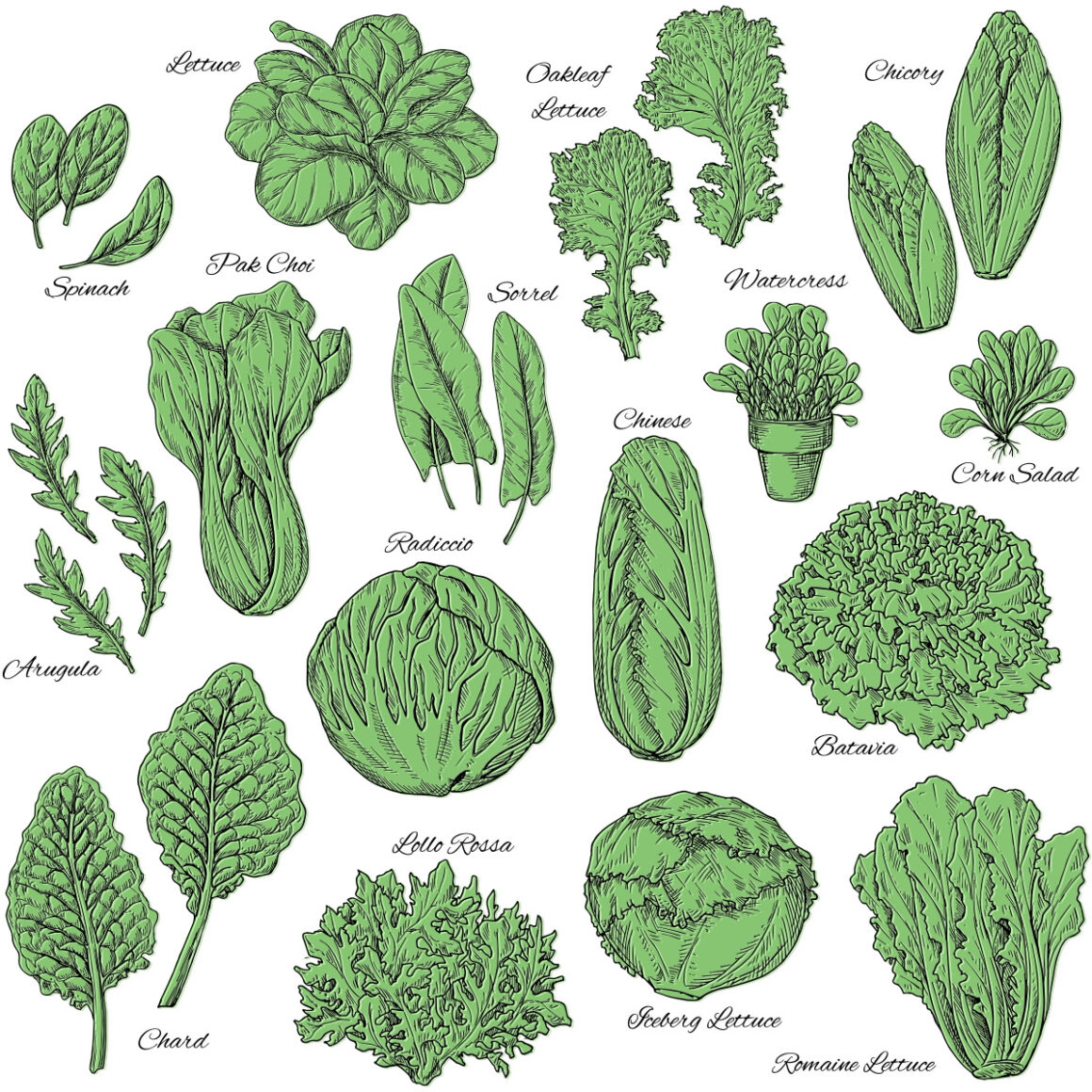
Meet your green team
Greens, or leaf vegetables, offer a cavalcade of colours, textures and flavours to enhance your salad offerings. Ensure you are using the best ones to complement your dish or change it up to adjust the taste or visual appeal. The combinations are endless.
Lettuce (crisphead, butterhead, loose leaf and romaine), spinach, arugula, chicory (radicchio, escarole, endive, frisée), and brassica greens (kale, cabbage, collards) are longstanding pillars of a great salad.
But there are others, too, perhaps not as common: dandelion, beet leaves, cress (water, garden or peppergrass), mâche and fresh herbs. These green outliers offer a complexity used either alone or in combination with the pillars.
Although baby leaf vegetables are mainstream, microgreens are surging through. Somewhere between a sprout and a baby, this nutrient-packed option is both visually stunning and flavourful. Think concentrated flavour of the grown-up version.
Best of all, greens can be used on, in, over, under and around your cold plate menus.
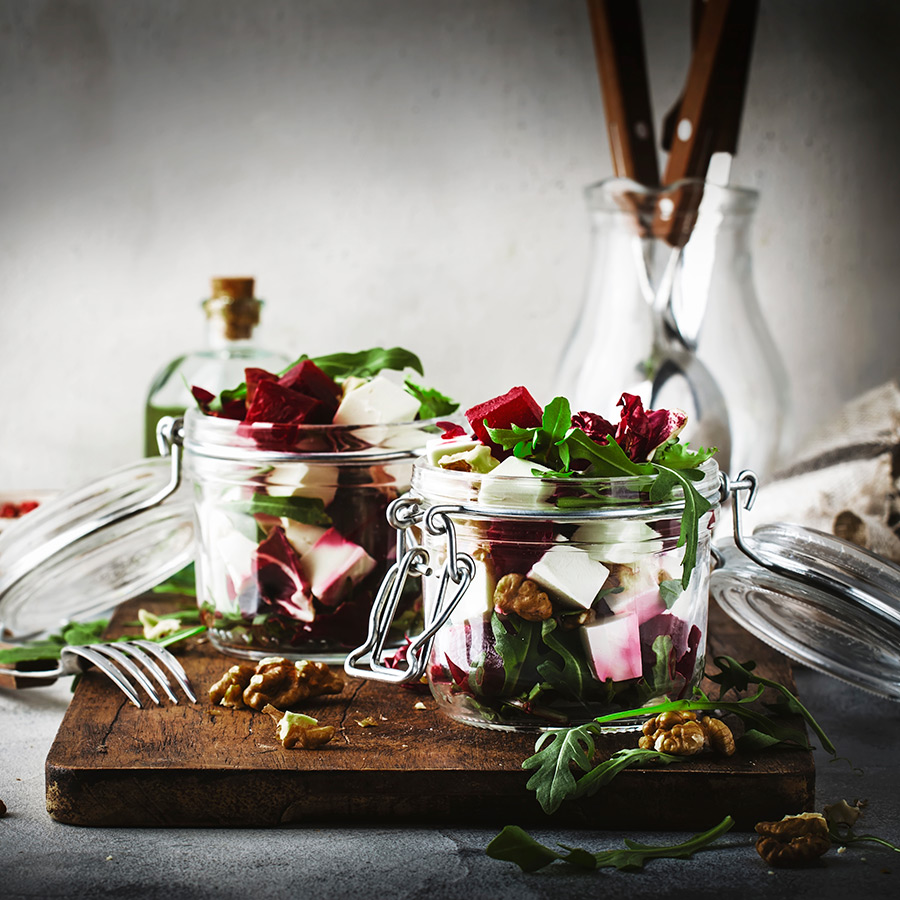
Salads are perfect to add plant-based menu options
With the ever-growing popularity of plant-based eating, greens are basking in glory, as they should. Leaf vegetables hit numerous consumer trends: vegan/vegetarian, plant-based, low-carb, gluten-free, “clean,” locally available and naturally delicious. You would think they were engineered specifically for today’s kitchens.
In fact, 34% of the population is eating more meals with vegetarian options, according to Technomic.
Whatever the reason for eating vegetarian or vegan options — healthier options, feeling better physically, nutrition — consumers still crave flavour.
More than 25% of the population would like restaurants to offer a wider variety of vegetarian entrées, according to Technomic 2019 Centre of the Plate Consumer Trend Report.
Have you increased your vegetarian entrée selection? Salads are an excellent, and simple, vehicle to pump up these offerings.
Getting the most out of your frozen vegetables
The freezer doesn’t usually come to mind when designing a salad, but it should.
“When it comes to nutrition, fruits and vegetables have always been the go-to in terms of healthy eating. Tried and true, their combination of practicality, taste, and nutritionals benefit are second to none. Frozen, rather than fresh, has several unique benefits, a clear choice for resourceful restaurant operators,” says Lisa Waizmann, marketing manager for Alasko Foods.
Edamame is a great example, offered by Alasko in a shelled IQF format. This multi-functional vegetable can be a base for a hummus style dressing, protein add-on or colourful salad ingredient — always ready to help. Remember frozen vegetables need to be prepared according to package directions before consumption, even if using them cold.
“Using frozen fruits and vegetables minimizes labour and food waste costs,” reminds Waizmann. “Using IQF (individual quick freezing) technology also locks in freshness, flavour, colour and taste and might even be less costly than their fresh counterparts.”
Mekong Rice Mix — basmati rice, yellow and orange carrots, leeks, peas, corn and onions — also by Alasko, can save hours and no waste. Or how about using frozen fruits? Pomegranate arils sprinkled on top or mango chunks in a salad dressing?
During busy spring and summer months, restaurant operators should embrace any time savings available without compromising quality.
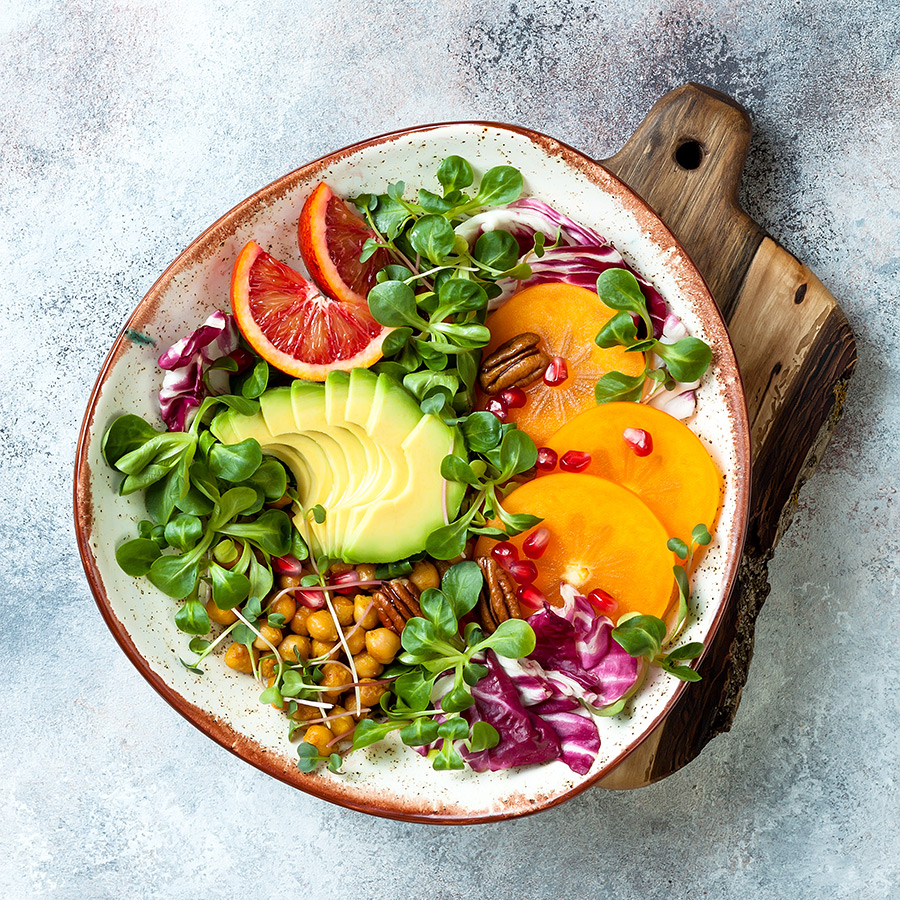
Create the perfect salad
For a salad to satisfy your customers, power up greens with flavour, texture and fun.
Here’s a basic formula for a vegetarian/vegan entrée salad:
- 3 cups greens
- 1-2 cups vegetables
- ½ cup grains
- 3-4 oz protein
- 2-3 tbsp dressing
- garnish
“I am slowly cutting down my meat consumption and eating more like a vegetarian. Chickpea tacos are my current favourite vegetarian dish,” says Victoria Horton, sales and quality assurance at Horton Spice Mills.
Why not take that flavour profile to a salad?
“Spices, quite simply, give food the flavour we need and want,” says Horton. “Spices create a whole new world in the kitchen.”
Going global is easy when you combine the spice rack with greens and vegetables. Horton Spice Mills make it even simpler with their range of high-quality products.
Take the Chickpea Taco Salad for a spin around the world — change the flavour on the chickpeas to Horton’s Curry Seasoning, or ginger and turmeric or Ultimate Vegetable Seasoning. It doesn’t need to be complicated.
Multi-functional ingredients are key in today’s kitchens. “The benefits of using blends are their versatility. They also save on time, space and money,” says Horton. “Many, if not all blends are useful for more than their name says.”
Warm weather brings cravings of fresh and flavourful yet good-for-me fare. A cleverly designed vegetarian entrée salad menu will fit the bill. If done right, expect an encore.
Create the perfect plant-based menu
Consumers are hungry for more plant-based menu options. Why not use a vegan/vegetarian entrée salad as a springboard to an entire tasting menu? Here are a few themes to get your creative juices flowing:
- Taste the rainbow — follow the colours of the rainbow as you move through courses; remember green looks good with everything
- Root to shoot — take a page from the carnivores and showcase vegetables that are savoured from root to shoot, a no-waste menu
- Around the world — hit all continents to feature plant-based dishes
- All in the family — focus on one family of vegetables, like brassicas, to pull through the menu
- “Unperfect” — celeriac is an odd-looking specimen but utterly delicious; bring these oft overlooked delicacies out of obscurity and onto plates
- Loco for local — try a farm-focused menu
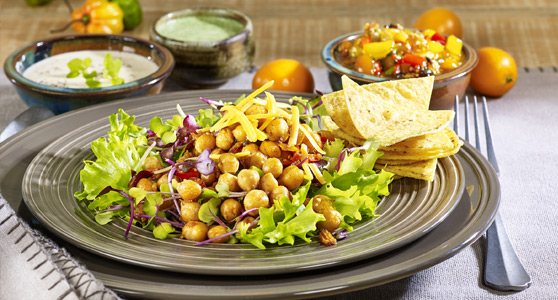
Chickpea Taco Salad
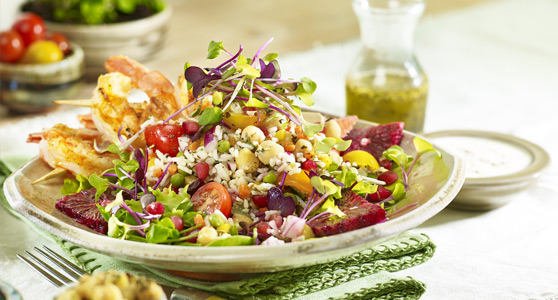
Herb & Garlic Marinated Rice and Veg with Greens
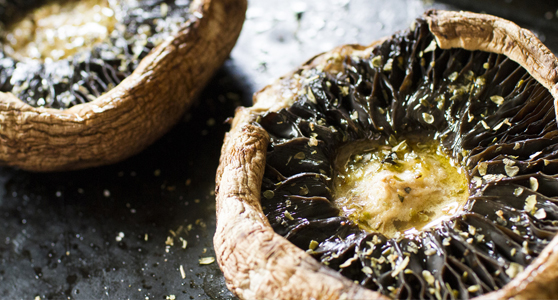
Grilled Montreal Steak Spiced Portobello Salad
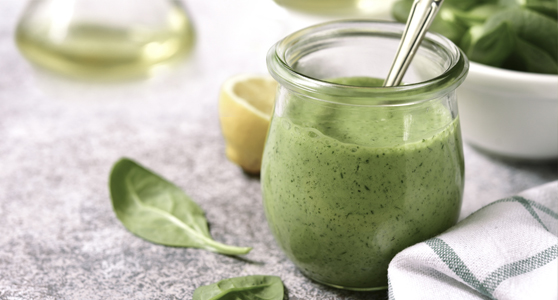
Green Goddess Dressing
Chickpea Taco Salad
Use chickpeas, the original plant-based protein, to make this fresh take on a menu favourite. If you want the chickpeas saucier, add a splash of salsa while cooking or water and tomato paste.
- Yield: 1 1x
Ingredients
Taco Chickpeas
- 1 tbsp vegetable oil
- ¼ cup diced onions
- ¼ cup diced sweet peppers
- 1 tbsp Horton Spice Mills Taco Seasoning
- 1 cup cooked chickpeas, drained and rinsed
Chickpea Taco Salad
- 2 cups greens — crisp varieties work best here to hold up the other ingredients
- 3 Cherry or grapes tomatoes, quartered
- 1 tbsp sliced green onions
- 2 tbsp shredded cheese
- 1 tbsp Lime crema
- 1 cup prepared Taco Chickpeas
Garnish
- Tortilla strips or crushed tortillas
- Cilantro leaves
Instructions
- For the taco chickpeas: in a skillet over medium high, heat oil. Add onions and peppers until softened. Add Horton Spice Mills Taco Seasoning and chickpeas. Reduce heat to medium and continue cooking until chickpeas are heated through.
- For the salad: Assemble in bowl or plate in the order listed.
- Garnish with tortilla strips and cilantro.
Notes
Do you lead a fair kitchen? According to Fair Kitchens, “A Fair Kitchen is a positive working environment where staff happiness is as important as diner satisfaction.”
When the rush is on and tensions spike, a healthy functional team can determine whether your foodservice workplace is happy or toxic. By building a fair, friendly and emotionally healthy environment where team members are valued, foodservice operators can build greater job satisfaction, improve employee retention, and increase productivity.
Peter De Bruyn, a restaurant consultant and provincial chair of the B.C. Restaurant and Foodservices Association (BCRFA), says clear communication on each person’s role is one of the most important elements of a highly functioning team. “Depending on the size of the kitchen, people’s roles may change daily, and as long as it is clear what that role is, then they have a greater chance of being successful.”
Opening lines of communication — and keeping them open — can help quash small issues before they become big ones.
Opening lines of communication — and keeping them open — can help quash small issues before they become big ones. Unchecked annoyances may lead to disgruntled employees who may ultimately leave over something that could have been fixed.
Good results are the result of empowered leaders who have the authority to make decisions, De Bruyn says. “A leader can be a line cook who has simply taken a leadership mentality to make thoughtful decisions. Employees who don’t make decisions generally tend to not be as successful and may not cooperate as well in the team environment.”
Saying ‘thank you’ doesn’t cost anything
“Small things like ‘thank yous’ help build the ‘healthy’ portion of the functional team,” he says. “Kitchens can be a stressful place to work and often communication is direct — not necessarily rude or pleasant, but simply direct. When time permits, small gestures of gratitude for a job well done can go a long way to help build the support of the team.”
Being grateful positively impacts the culture of the restaurant business as well. Young people entering the workforce who have a positive experience with a restaurant are far more likely to stay in an environment that treats them well.
And, remember: rewards don’t have to be monetary. They can be the staff member’s perfect schedule, or the days off requested. Small things go a long way.
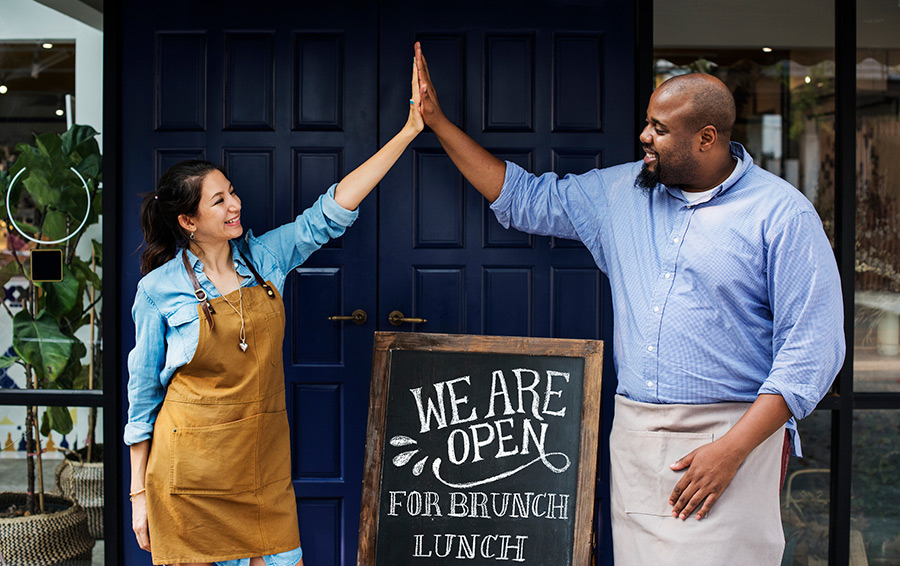
Share the vision with your team
De Bruyn says it’s crucial that foodservice operators share their vision of success with their team members.
“A clear vision of the property and what is expected out of the employees is a great way to start and probably the most important.”
It’s important to be clear about roles and responsibilities, and how to deal with issues, through empowerment. “Barriers can also be that shift leaders don’t have enough accountability and responsibility to deal with issues,” he says. “If that leader needs to check with the manager on each issue, this can slow service and create undue stress. Empowered shift leaders yield better results.”
By nurturing a culture of inclusion and diversity, foodservice operators can build a space where everyone feels welcomed and valued.
By nurturing a culture of inclusion and diversity, foodservice operators can build a space where everyone feels welcomed and valued. “Fair scheduling and rates of pay for all staff based on experience and capability is essential for all workers,” De Bruyn advises.
When challenges arise, clear communication and a culture of appreciation can help ensure success. “Transparency and achievable goals help pull the staff together,” he says. “For example, if food cost is running 32% and the target is 31% and five key elements to achieve this goal are clearly communicated, then the team is far more likely to achieve results.”
Five tips for nurturing healthy teams and restaurant work environment
- Clear communication. Formalize the dialogue with practices like regular short check ins, and encourage honest feedback throughout the team.
- Identify and knock down barriers. Determine what is holding somebody back, and remove it.
- Empower engagement and efficiency. Share responsibility, provide support when something works (and when it doesn’t) and encourage innovation.
- Appreciate effort and acknowledge achievement. Say thank you and tell your team members when they have done a good job.
- Pull together, not apart. Working collaboratively when challenges arise helps to enhance a sense of belonging, loyalty and pride in shared success.
Focus on positive performance
- Nurture respect and dignity. By making everyone welcome and heard, they can feel safe with a free exchange of thoughts, feelings and ideas.
- Speak from experience rather than giving advice. We can share our experiences and tell others what worked for us instead of telling them what to do or how to feel.
- Listen. That’s how we understand somebody else’s point of view.
- Be open to new ideas. Provide multiple ways for team members to offer suggestions for improvement, and be willing to compromise and respect different perspectives.
Caring and sharing
- Take an empathetic approach. Instead of putting your feelings on someone else’s actions, assume others have positive intentions.
- Watch your tone. No yelling, and no harassment or offensive humour. Identity is important, and nicknames may not necessarily be nice.
- Cultivate respect for all. Hierarchies are by their nature lopsided, so encourage growth. Understand that not everybody is at the same level — but everybody is valued.
More resources for a healthy kitchen

United States-based Fair Kitchens is working to create a healthy kitchen culture based on open communication, passion, support and teamwork. More than 50 Canadian foodservice and beverage operators have already signed on as friends.
PrintHoneydew & Coconut Frappé
This refreshing summer cooler is easy to blend up and rivals any coffee-house favourite.
- Prep Time: 5
- Total Time: 5 minutes
- Yield: 2-4 1x
Ingredients
- 1 cup (250 ml) honeydew melon, cubed
- 1 cup (250 ml) ice, crushed
- 5 mint leaves
- 2 cups (500 ml) GAY LEA – Coconut Whipped Topping
Garnish
- 4 tbsp (60 ml) GAY LEA – Coconut Whipped Topping
Instructions
- Place melon, ice and mint leaves in a blender.
- Pipe enough whipped cream to measure 2 cups (500 ml). Add to blender.
- Blend until smooth. Divide mixture between serving glasses.
- Top with extra whip and mint to garnish.
Tip: For a bright and energizing flavour twist, add a generous squeeze of fresh lime juice before blending.
Notes