
Social media influencers seem to be everywhere these days. They create content on platforms like Instagram and Facebook to sway their followers to engage with the businesses they promote.
But does influencer marketing work for restaurants?
Trevor Lui, restaurateur, cookbook author and co-founder of the agency Quell, says it can. “I think that in the age of trying to figure out how to expand the reach of your brand, utilizing people that have reach within their own network on a social level is beneficial.”
“I think that in the age of trying to figure out how to expand the reach of your brand, utilizing people that have reach within their own network on a social level is beneficial.”
Trevor Lui, restaurateur, cookbook author and co-founder of Quell
Sean Beckingham, principal at the food and beverage marketing agency Branding & Buzzing, agrees. He says working with an influencer allows you to address their niche audience. “They’re going to tell the best story from their lens.”
Beckingham says digital marketing “is not just about an influencer having an Instagram account. It’s about running ads, having a content strategy. It’s about partnerships. You have to really open up your basket of marketing.”
But influencers are still important.
“When you’re purchasing their power, they can do many things for you,” Lui says. These include posting on their account, temporarily taking over your account or live feed, or being a brand spokesperson. Each has a different fee structure, which may involve a combination of dollars and product.
Beckingham notes that the COVID-19 pandemic’s toll on restaurants has led his agency to approach costs differently. “Where we used to charge restaurants to do certain things, we’re asking suppliers to cover costs. We’re doing everything we can to keep them (restaurants) open because they’re such an important part of society.”
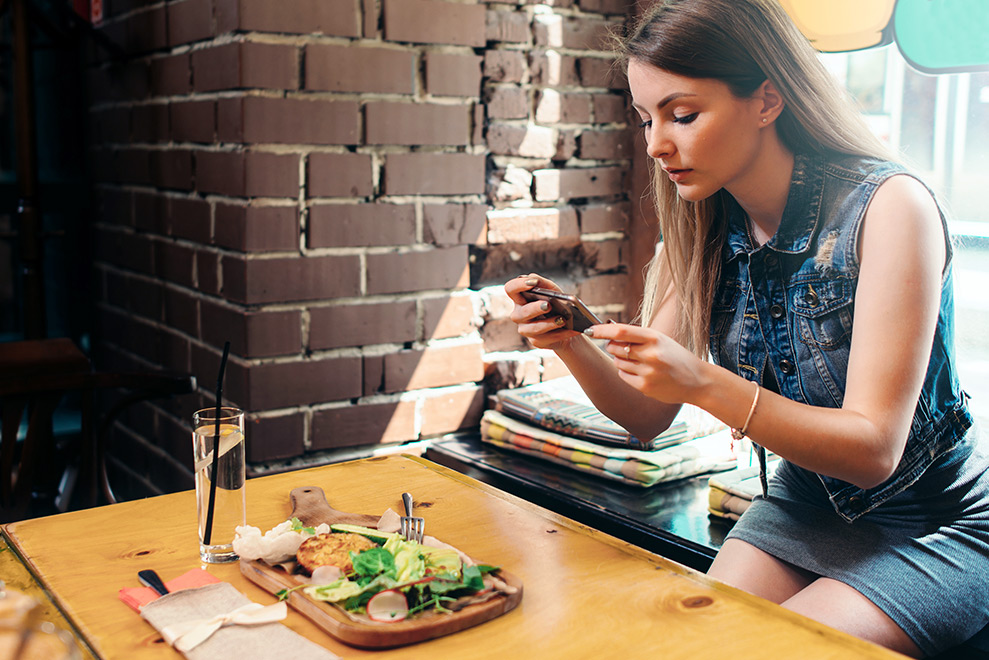
Building authentic partnerships
Beckingham says restaurant operators can find influencers through an agency, social media specialist, or on their own. Lui’s first approach is to “rely on a tight network of people that I’ve done work with in the past,” whether influencers or trusted advisors who select them for him.
- Tip: Whatever the approach, don’t focus only on follower count.
Beckingham advises vetting influencers to ensure they’re a good fit. Are both they and their audience local to you? Do their demographics fit your target market? He suggests using selection tools like geo-targeted maps in Instagram, hashtag searches, and identifying contributors to local publications. Also ask for the influencer’s media kit — it should explain their demographics and reach.
- Tip: Assess the authenticity of a potential influencer partnership. Would your burgers-and-fries brand resonate with their wellness-focused followers?
Ryan Hinkson of @EatFamous, an influencer and food culturalist with 275,000 Instagram followers, echoes the importance of authenticity. “The times when I’m most excited to actually try something or eat somewhere are usually when I get the best results.”
Building and measuring success
Successful campaigns start by discussing with the influencer your goals, such as target reach and specific outcomes. Also communicate expectations for deliverables and data measurement. “I have very tangible, transparent and clear outcomes for what I want to achieve on any program,” Lui says, “so I have those conversations well in advance.”
- Tip: Develop measurable tactics to meet your goals.
For instance, if your initial focus is on building your social media following, a contest to drive engagement can be effective.
Lui, who recently launched a new brand, Joy Bird, says, “The more impressions on your brand, the faster it gets bumped up in any type of algorithm. Because everything is algorithm based.”
They partnered with an influencer to run a contest where entrants had to follow the brand and tag two friends. The result? Brand followers increased from 320 to 960 over a two-week period.
Beckingham suggests established restaurants could offer a series of tastings for influencers. “You may want to do a burst when you have a new menu launch where you have five influencers come in at the beginning, and every month have another influencer come in.”
Specific calls to action like a secret menu item or limited time offer promoted only in a specific campaign allow you to directly measure its sales results, as do trackable gift cards.
Mutually rewarding relationships

Building trusted relationships between influencers and restaurants is a mutually rewarding outcome of successful influencer marketing.
Hinkson says he’s worked with some restaurants repeatedly over the years and they’ve developed synergy. “They’ve been happy with what I’ve done and I’m a fan of what they do.” He knows of other influencers who also experience this. “And if it’s yielding good results, then I say go with it.”
These relationships matter more than ever during the pandemic. “Really and truly,” Beckingham says, “if your restaurant is established, you should go back and look at the folks you’ve worked with in the past that have been good to you […] because you’re both in it together.”
How do you know when to use which type of cheese for the menu item at hand, for maximum efficiency and cost savings — and all while still exceeding customer expectations?
The right cheese for the job — the benefits of each
Block (such as 2.3 kg Black Diamond Mild Cheddar Blocks or Racolli 17% Pizza Mozzarella Blocks)
- Flexibility to slice, shred and cut in-house for best portion control
- Versatility of being able to transform into a multitude of different formats, cuts and shapes to best suit maximum number of menu items from one block
- Made without anti-caking agents such as cellulose, which could impact cheese application performance
Pre-sliced (such as 500 g pre-sliced 14 g Mild Cheddar Slices)
- Lower labour costs and potentially higher yield in comparison to slicing in-house
- Faster speed of service
- Best used in high volume settings and especially for burgers and sandwiches
Shreds/Diced (such as Racolli 17% Pizza Mozzarella 2.27 kg Shreds)
- Consistency of shreds or dice size for best coverage on pizza, nachos, etc.
- Convenient and easy to use straight from the bag
- Reduces food handling and potential cross-contamination risks
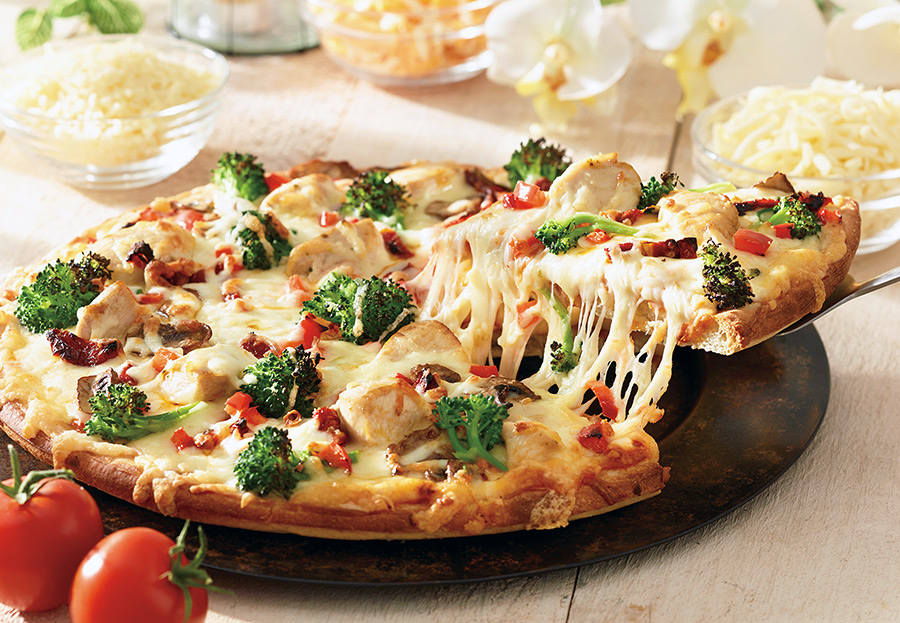
Comparing milk fat in cheese for pizza
We spoke with Casey Zheng, Associate Brand Manager Lactalis Foodservice Canada (formerly Parmalat Foodservice), about her company’s cheeses in a variety of shred cuts suitable for pizza preparation. All provide the best performance possible in stretch, browning, melting and overall coverage. Higher milk fat (M.F.) cheese generally has a higher melt with lower stretch. When used on pizza, this deliver a greater sheen and “fattier” appearance with less browning. Typical ranges of M.F. for Pizza Mozzarella and Cheddar cheese are between 17% M.F., as in Racolli Pizza Mozzarella 17% Shred, and 31% M.F., as found in Black Diamond Cheddar Coloured Mild Shred.
Going “gourmet” with premium cheese
The benefits to including premium in your menu items:
- Lends a unique or unexpected flavour profile that will add a twist to traditional pizza and pasta applications
- Robust, bold and sharp flavours mean a little goes a long way
- Some full-flavoured premium cheese options with a focus on the flavours of Italy include Racolli Parmesan and Black Diamond Romano, while other “Old World” cheese selections such as Black Diamond Swiss and Président Double Crème Brie add authenticity and value to soups, sandwiches and more.
- Canadian versions of full-flavoured cheese made with 100% Canadian dairy offers a cost-effective alternative to give a gourmet boost to menu items
Creamy Mushroom Risotto
- Prep Time: 10
- Cook Time: 30
- Total Time: 40 minutes
- Yield: 3 Servings 1x
Ingredients
- 1 tbsp (15 mL) Lactantia Butter
- 1 onion, finely chopped
- 1 garlic clove, minced
- 1 1/4 cups (300 mL) short-grain rice
- 1 cup (250 mL) finely chopped button mushrooms
- 1/2 cup (125 mL) dry white wine
- 1/4 tsp (1 mL) each salt & hot red pepper flakes
- 10 oz (300 mL) can undiluted chicken broth
- 2 1/2 cups (625 mL) water
- 1/2 cup (125 mL) Lactantia Spreadable Cream Cheese
- 1/4 cup (50 mL) freshly grated Black Diamond Parmesan (optional)
- 1/4 cup (50 mL) chopped parsley (optional)
Instructions
- Melt butter in a large saucepan over medium heat; add onion and garlic. Cook, stirring often, until onion is softened, 3 to 4 minutes.
- Stir in rice until evenly coated. While constantly stirring, add mushrooms, white wine, salt and pepper flakes. Keep stirring frequently until wine is absorbed.
- Gradually stir in chicken broth, about a 1/2 cup (125 mL) at a time. Stir frequently until most of the broth is absorbed before adding the next half-cup. Once absorbed, add water, half a cup at a time, stirring until almost all liquid is absorbed before adding more. Stop adding once rice is tender and creamy, in 25 to 30 minutes.
- Stir in small spoonfuls of Lactantia Spreadable Cream Cheese, mixing well until all the cheese is used. Sprinkle with Black Diamond Parmesan and chopped parsley, if using.
Notes

Creamy White Cheddar Dressing
- Prep Time: 15
- Total Time: 15 minutes
- Yield: 1 3/4 cups (425 mL) 1x
Ingredients
- 1 cup (250 mL) milk
- 2 tsp (10 mL) all-purpose flour
- 1 tsp (5 mL) Dijon mustard
- 4 oz (120 g) Balderson Heritage 3-year aged Cheddar, shredded
- 1/2 cup (125 mL) mayonnaise (regular or light)
- salt and coarsely ground black pepper, to taste
Instructions
- Whisk milk and flour together in a medium saucepan; bring to boil over medium heat, stirring frequently. Remove from heat; add mustard.
- For a smooth dressing, add all of the cheese and stir until melted. Or, for a chunkier dressing, reserve ¼ cup (50 mL) of the cheese to add to cooled dressing. Let cool to room temperature.
- Whisk in mayonnaise; season to taste. For optimum flavour, serve at room temperature, but store in refrigerator.
Chef Tips:
- When shredding cheese, to prevent sticking, moisten shredder with water, or lightly spray with cooking spray.
- If desired, add crumbled crisp-cooked bacon, or finely chopped chives to dressing.
Notes
French Onion & Mushroom Soup with Mozzarella
- Prep Time: 10
- Cook Time: 20
- Total Time: 30 minutes
- Yield: 4 Servings 1x
Ingredients
- 2 tbsp (25 mL) Lactantia Salted Butter
- 3 cups (750 mL) thinly sliced mushrooms
- 2 tbsp (25 mL) quartered, thinly sliced onions
- 2 tbsp (25 mL) all-purpose flour
- 2 cans (each 10 oz/300 mL) condensed beef broth
- 2 cups (500 mL) water
- 1/4 tsp (1 mL) Worcestershire sauce
- 12 slices baguette bread, toasted
- 1/2 pkg Black Diamond Mozzarella Cheese, shredded
Instructions
- Melt butter in large non-stick saucepan; add, cook and stir mushrooms and onions over medium heat until tender and any liquid has evaporated.
- Blend in flour; gradually stir in broth, water and Worcestershire sauce. Cook and stir over medium heat until mixture boils. Reduce heat; cover and simmer 10 minutes.
- Ladle soup into 4 oven-proof soup bowls. Place 3 slices toasted bread in each bowl; top with cheese. Broil until cheese is melted.
Notes
Garden Deluxe Pizza
- Prep Time: 5
- Cook Time: 15
- Total Time: 20 minutes
- Yield: 12 Servings 1x
Ingredients
- 1, 16-inch (40 cm) ball raw pizza dough
- 1 cup (250 mL) prepared rosé sauce
- 2 cups (500 mL) Racolli Pizza Mozzarella shredded cheese
- 1 cup (250 mL) bite-size pineapple pieces
- 1 cup (250 mL) chopped sweet green bell peppers
- 1 cup (250 mL) dried tomato pieces
- ½ cup (125 mL) chopped white onions
- 1 cup (250 mL) sliced black olives
- ½ cup (125 mL) sliced mushrooms
Instructions
- On a floured surface, roll out pizza dough, stretching to fit on a lightly-greased, 16-inch (40 cm) pizza pan, allowing for 2-inch (5 cm) crust.
- Spread evenly with rosé sauce; sprinkle with half of the Racolli Pizza Mozzarella shredded cheese. Scatter green peppers evenly over surface, followed by tomatoes, then onion, then, olives, and finished with mushrooms. Sprinkle evenly with remaining Racolli Pizza Mozzarella shredded cheese.
- Bake in a pre-heated 450°F (230°C) oven until golden brown on the bottom, 15 to 20 minutes. Let sit for 3 minutes before slicing.
Notes
As a little girl on the Blood Reserve in southern Alberta, Shantel Tallow watched her elders prepare food the traditional Blackfoot way from what they had hunted and gathered. “Those lessons of respecting the ingredients and appreciating the food are in me,” she says. “Those lessons helped me become who I am today.”
Tallow and her partner Paul Conley are part of a new generation of Indigenous cooks determined to preserve and share the food culture of their ancestors. Their Calgary-based venture, Aahksoyo’p Indigenous Comfort Food, is rising at a time Canada is trying to reconcile with its uneasy colonial past, and as Canadians are discovering a renewed appreciation of First Nations culture and food. (Aahksoyo’p means “we’re going to eat” in Blackfoot.)
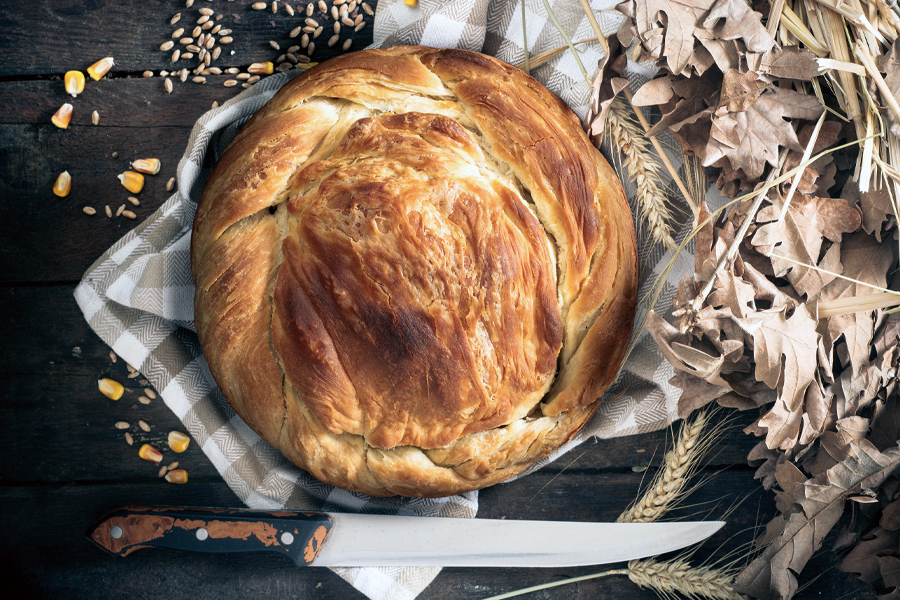
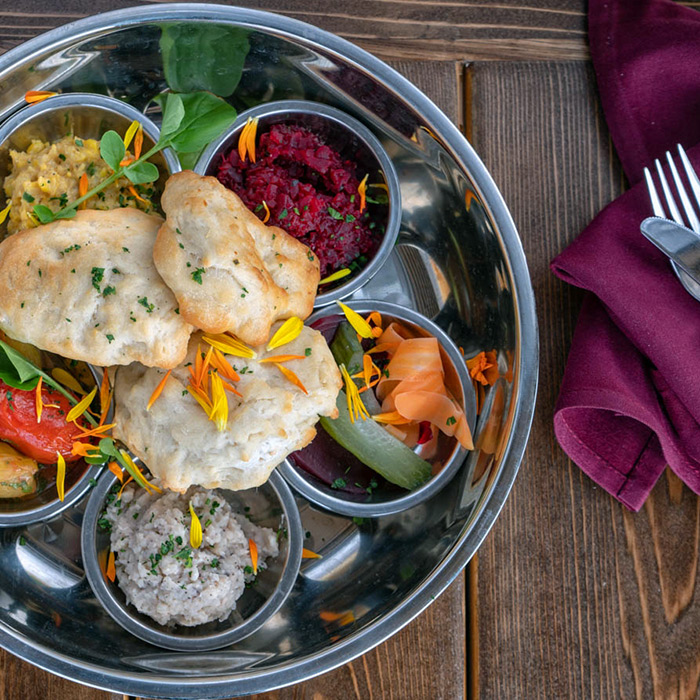
Bannock — a quick bread of flour, baking powder and water — is among the most recognizable Indigenous dishes.
Bannock — a quick bread of flour, baking powder and water fried on the stove top, baked in the oven or rotated on a stick over an open fire — is among the most recognizable Indigenous dishes. Just as her grandfather did, Tallow bakes the mixture and flips it to make it crispy on both sides.
She dries beef flank and makes it into pemmican — a lush mixture of the meat, Saskatoon berries (sometimes cranberries) and fat. It’s a four-day process that begins with slicing meat and then smoking it for two days and another day of open drying.
“I started this because I wanted the comfort food that I grew up on. For me, that is what my grandma and grandpa made. Dishes like hamburger gravy, potatoes and bannock. Simple and so good.”
Indigenous street food
Vancouver’s first Indigenous food truck, Mr. Bannock, opened early in 2018, with creations from Squamish Nation chef and owner Paul Natrall and his team. Their truck and catering menus include a range of bannock-based dishes, a BBQ salmon burger, and house-made tacos made with chili.
Chef Natrall calls it “Indigenous street food. We’re focusing on traditional foods and cooking methods and mixing it with other cuisines. We love being creative to see what we can make with what’s fresh and available.”
Wherever Chef Natrall would use other breads, he uses bannock instead. “It’s so versatile.” Their waffle bannock is a pan bread baked in a waffle press, not fried.
It’s all served up from a bright red and white truck designed by Heiltsuk artist KC Hall featuring berries, squash corn and beans. “There’s a lot of support and interest for what we are doing, and the media coverage has been a real boost,” he says.
A taste for tradition
Indigenous eateries are popping up all over Canada, with a range of food trucks, catering businesses and sit-down eateries. Indigenous cuisine hits two major food trends, Technomic reports. It fits demand for ethnic foods and answers consumer interest in local and domestic ingredients.
“Concepts dedicated entirely to authentic Indigenous ingredients and preparations will continue to emerge as diners’ interest in First Nation cuisines grows,” Technomic predicts. Many of the ingredients, long valued by Indigenous people, are now being discovered by a new generation of chefs who employ modern techniques and are bringing new ideas to their plates. They are leading the way in a revival of long-neglected culinary traditions and a reawakening of our collective history.
Basics with flair
Working with Songhees Nation members, Songhees Seafood & Steam Executive Chef David Roger built a menu with fresh local ingredients that authentically incorporates the craft of traditional recipes with the flair of modern techniques. “It’s simple cooking, back to the basics, with a twist,” he says. “Lots of marinade, lots of smoking, fresh and local ingredients, prepared with an eye on seasonality.”
Their menu, served from a food truck on the Songhees Nation just outside downtown Victoria and during catered events, includes smoked brisket poutine, caribou pot pies, venison sausage rolls, bison burgers, salmon salad, and bannock and jam. They use foraged ingredients as much as possible, too, like stinging nettles from their rooftop garden.
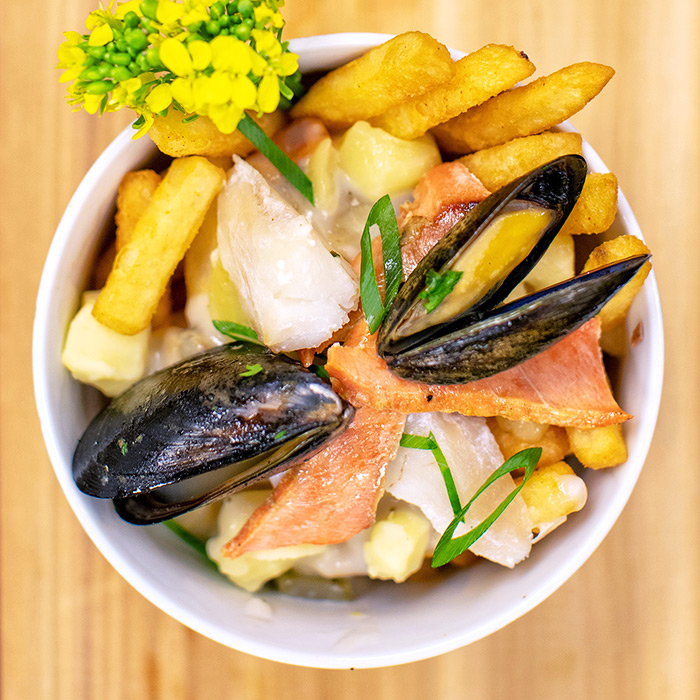
What is Indigenous food?
It’s a broad range of foods reflecting ingredients harvested and prepared by Canada’s First Nations peoples — from salmon on the coast to bison on the plains. Traditional Indigenous cuisine is based on living in balance with our surroundings, giving back to the earth, respecting life, and no-waste head-to-tail cooking.
What are considered Indigenous ingredients and dishes?
Game meats, fish and seafood, fruits, berries, mushrooms, herbs and flowers hunted, fished and foraged locally. (In most provinces meat that has been hunted cannot be served to patrons, meaning wild game such as moose — a staple in many Indigenous communities — cannot be served in restaurants.)
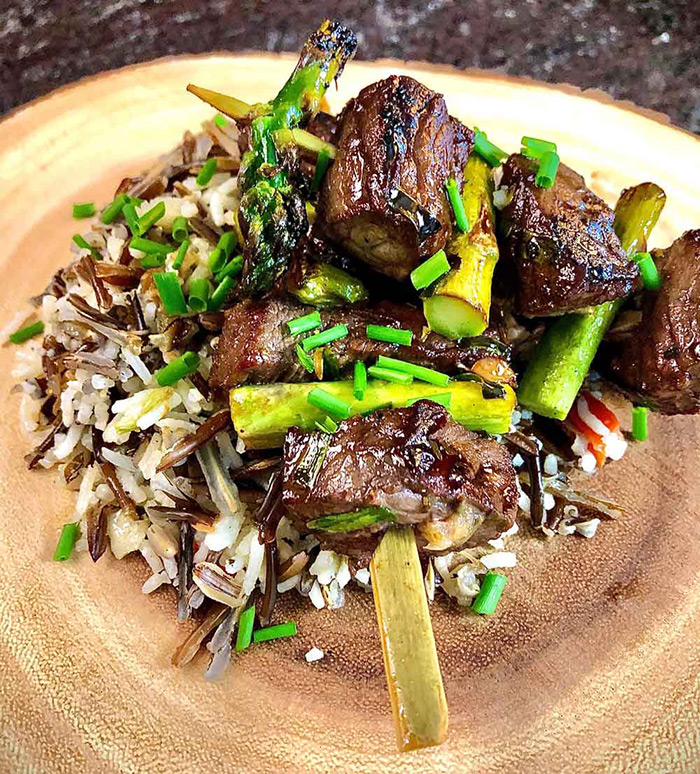
Popular dishes include bannock (bread), pemmican (a concentrated mixture of meat, fat and berries), Ojibwe wild rice, salmon chowder, venison chili, Nehiyaw tacos and bison pot pie, to name a few.
How can operators incorporate Indigenous dishes into their menus?
Start basic with items like bannock and Saskatoon jam, and put them in a basket and onto the table as starters, recommends Chef Shantel Tallow. A berry soup, using seasonal Saskatoon berries, is an easy mixture of water, berries, sugar and a little flour to thicken. “It is good hot or cold, and it’s a great detoxifier.”
Going fresh, local, inspired
- Respect the traditional way of hunting and gathering with local sourcing of ingredients. Pay attention to seasonality.
- Swap ingredients such as cheese and wheat flour with beans, corn and squash.
- Practise sustainable food culture and reduce waste by utilizing the entire animal.
- Get playful and have fun. Tempt customers with modern fusion creations that combine traditional ingredients and world culinary tastes.
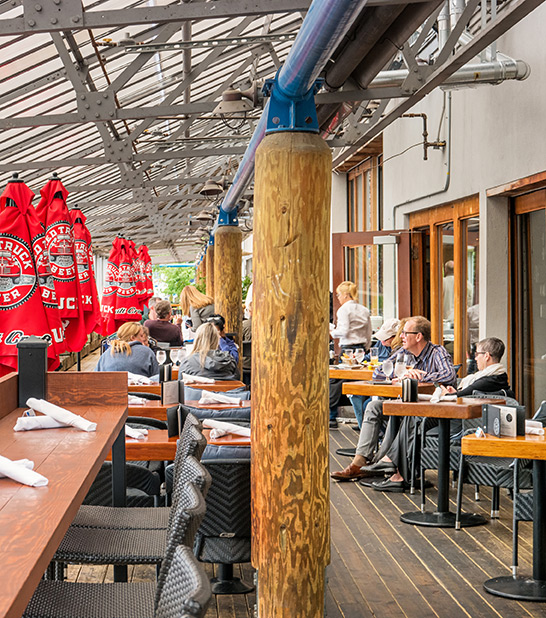
The delay of game caused by COVID-19 has many on thin ice. Patios have been a boon to weather the storm. Extending patio season into the colder months is essential to maximize capacity. Canadians understand cold and willingly brave it for entertainment — think hockey, skiing, skating, and sledding, to name just a few. Being prepared in all these sports is vital to success.
The lineup
“If operators can make it work, extending patio season is a source of revenue. It’s that simple. Restaurants right now are in a situation where they have accumulated a lot of debt over the last six to eight months. Anything that can bring in revenue and get them back to profitability is important,” says James Rilett, VP Central Canada for Restaurants Canada.
“If operators can make it work, extending patio season is a source of revenue. It’s that simple.”
James Rilett, VP Central Canada for Restaurants Canada
What will it take to be successful?
Rilett says, emphasizing the three Cs, “Capital, clear rules and customers.”
“The capital or investment and infrastructure, if needed, might be difficult for some operators but worth the effort.”
Your checklist… at a minimum
- Ensuring you have the required space for a cold weather patio
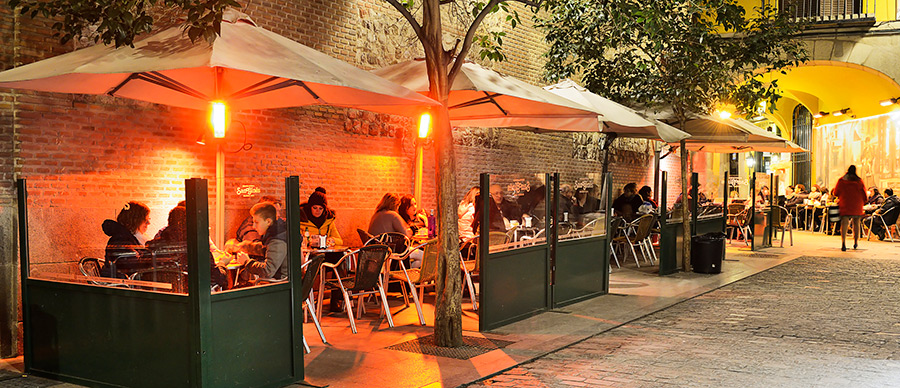
- Finding suitable tables and chairs, wind breaks, and heaters
- Making doorway adjustments
- Finding mats suitable for the elements and winter weather-ready vests for serving staff
“It’s imperative that operators clarify and understand the rules and regulations set out by their municipality to operate a patio beyond the typical season,” Rilett adds.
These R and Rs include space restrictions, operation times and acceptable equipment (heater types). Reach out to your local government to confirm understanding, if required. It’s in your communities’ best interest to be successful.
“Finally, customers need to embrace the change,” says Rilett.
The game plan
Comfort. For customers, definitely, but also for staff. Remember, comfort is both physical and psychological.
“For customers to embrace the change, operators must make it as comfortable as possible,” says Rilett. “Wind breaks, heaters and hot drinks on the menu but also through marketing initiatives like (BYOB) ‘bring your own blanket’ to make it inviting and a destination/experience.”
Bright and warm lighting, fabrics and music all add to the feel of the space and create a non-temperature warmth.
“It will be difficult on staff moving repeatedly between warm to cold. It’s imperative to keep your staff comfortable braving the elements,” says Rilett. Providing branded toques and vests, an allowance for boots, or setting shifts to rotate between patio and indoor dining can ease their minds and reduce their exposure.
Remember to share safety protocols with customers and staff repeatedly for their mental comfort. Make sure customers know your operation cares for their wellbeing and their community.
How do you know it’s working? “If people are willing to come there and Instagramming and telling their friends about it, it’s a success,” says Rilett.

Breakaway
No matter the weather, customers crave great food.
Rilett reminds us, “Adapt your menu to outdoor dining. Offer more soups and stews, hot toddies, hot drinks. Maybe, don’t offer fries.”
Yes, it’s about taste, but it’s also about the three Ts: transport, texture, temperature.
Transport
How is the food delivered to the table? Use insulated mugs (branded, of course), ceramic bowls that can be preheated (those with lids are even better), and embrace extra layers like cozies or napkins to retain heat.
Texture
What foods should be the stars of your winter patio? Baked, stewed, braised, roasted — just the words evoke warmth. How about patio-only specials? Soups you can sip paired with comfort-filled sandwiches and wraps or hearty baked items that retain heat (such as smoky butternut squash mac and cheese, chicken black bean enchiladas, turkey pot pie).
Temperature
Add a selection of hot beverages with and without alcohol to increase the temperature — think house-mulled wine, chai spiced hot chocolate, caramel apple cider, maple walnut latte, and teas.
Heat up dessert selections, too. Fresh from the oven cookies, hot pear crisp with warm caramel sauce, warm hand pies are only a few examples.
“To extend patio season, almost every part of the business will be affected, from adjusting table configurations so indoor diners don’t sit next to a cold door area to special patio-only menu items,” says Rilett.
Face off against the weather and put your patio into overtime. Be creative. Make it comfortable. Be memorable. Game on!
Heat up your patio with creative twists
- Toque night — the crazier the better and get staff involved.
- Scarf it up — wrap up necks and scarf down great food.
- BYOP — bring your own pillow. Go beyond blankets and encourage your customers to bring their own comfort options.
- Hot stones — create the Zen of warmth.
- Inside out — warm up with a hot sauce challenge.
- Ice ice baby — think oysters, caviar.
- Hand and foot warmers — warm hands, warm heart. Provide disposable hand/foot warmers or invest in rechargeable (and cleanable) ones.
- Brain buckets — trivia nights, winter sport-themed, helmets optional.

Bruce McAdams is the Associate Professor, School of Hospitality, Food, and Tourism Management, Gordon S. Lang School of Business and Economics at the University of Guelph. After coming from a background in foodservice — working three decades in restaurants as a dishwasher, cook, kitchen manager, general manager, and VP of Operations at Oliver & Bonacini — he moved to education in 2009. With his deep industry experience, McAdams figures he’s something of an inside expert on tipping.
He’s been studying the subject — from both a business and societal perspective — for nearly a decade. In a TED talk, he argued that the “relationship between tipping behaviour and quality of service is very insignificant.” People are used to tipping a certain percentage whatever the quality of service. A 2016 study conducted by McAdams and Prof. Michael von Massow, Department of Food, Agricultural and Resource Economics, found that tipping, in fact, causes challenges ranging from quality control to pay inequity.
Question: What got you interested in tipping in the first place?
Answer: My interest in tipping is now in its third incarnation. I think tipping is highly opinionated (so many different opinions around the practice) and misunderstood. It’s become my focus — and I believe I am only one of two or three academics who study the organizational dynamics of restaurants — even though, when I was working in the business I never questioned the practice.
I think tipping creates an unfair compensation system for workers in the restaurant business. For example, cooks and managers often play just as big of a role in a customer’s experience, but may not get the monetary benefits the wait staff does.
Question: Tipping has been in the news lately as some restaurants turn to a no-tipping or tip-included policy/service charge. Was COVID-19 the tipping point, or were restaurants going this way anyway?
Answer: Two really big things happened this spring. One is COVID and one is the attention to social justice issues in North America. With the first, when COVID hit restaurateurs, owners had the time to reflect on an archaic system. The system really has not changed in 30-50 years. Everything from our pricing to costing to rent to fixed costs has pretty much been the same. With COVID, we really had to go deep and look closely at systems. COVID pointed out the inequities. Also, Black Lives Matter. Tipping is discriminatory, with sexist overtones, so that became an issue as well. Tipping was accepted in the industry, but in the last 10 years people have been questioning it.
The system really has not changed in 30-50 years. Everything from our pricing to costing to rent to fixed costs has pretty much been the same.
Bruce McAdams, Associate Professor, School of Hospitality, Food, and Tourism Management, Gordon S. Lang School of Business and Economics at the University of Guelph
Question: Is tipping, in fact, an outdated practice?
Answer: It is. It’s been proven to have so many negative effects. With almost every operator, if I ask them the question — if God were able to create restaurants tomorrow, would you have tipping as part of the business model? — they’d say no. It’s a poor model because of inequity in pay, lack of revenue control, and it’s discriminatory in some respects.
Another huge impact is that tipping is concerned about what’s best for servers versus what’s better for the restaurant. A bartender will give a free drink to get a better tip. A server won’t serve a guest in another section. In a no-tipping restaurant, everyone’s success is based on all guests’ success.
Question: You say that tipping entrenches inequities. In what way?
Answer: You have to have two compensation systems. The regular system and the three-headed monster of tip-sharing, which is hugely concerning if managers are taking control of tips. It presents a huge CRA issue, and it takes hours and hours and hours of spreadsheets to say who’s making what. Some managers give their favourite servers the best sections and that creates issues between servers. The biggest issue is that it not only affects organizations but the entire industry. It creates transience in the industry because there’s no vested interest in the business. The server earns some money, then goes to travel. The cook studies for two years, then has to quit because of earning only $15/hour.
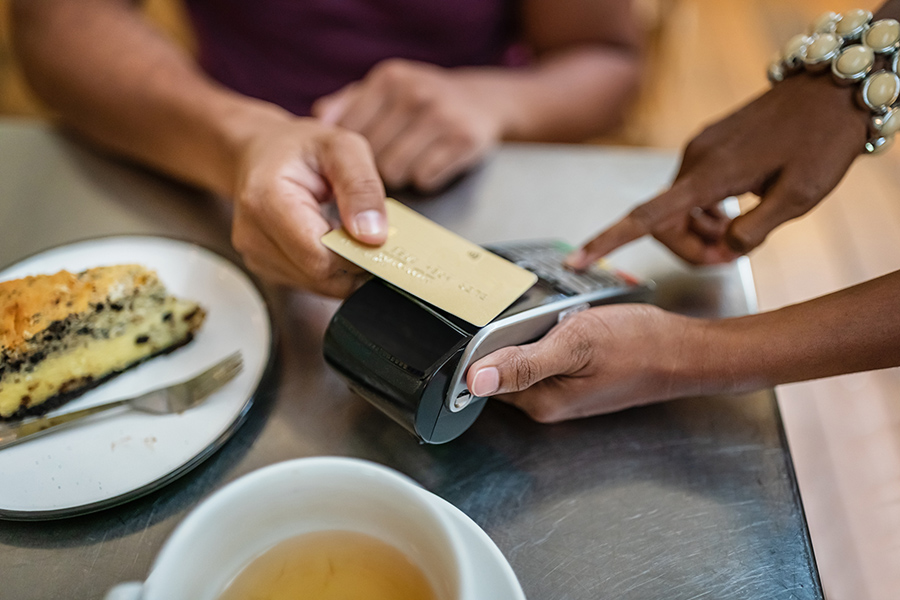
Question: How did we get tipping anyway?
Answer: There was tipping in Europe first, then it was brought here. It became lucrative for servers to earn a gratuity. In Europe there wasn’t this schmoozefest. Here friendly servers became a competitive advantage. Then along came places like Hooters, with the sexualization of servers. We evolved into this. It is a system that no one wants to be the first to go away from, but the tide may be turning.
A recent Canada-wide survey conducted by Sylvain Charlebois at Dalhousie University suggests that many Canadians (56% of respondents) are now in favour of including tips in menu prices. In a 2016-2017 Angus Reid study, it was only 36%, so there is a significant increase, some of it is because of COVID.
Question: How are consumers reacting to the change with some restaurants moving away from tipping? Will it take them long to adjust or are they pivoting as quickly as restaurants are these days?
Answer: Pre-COVID, I wouldn’t have seen us moving away from tipping. There is precedent in other countries, like France. I honestly didn’t think it would take root here, but an Angus Reid study shows that younger people are more accepting of no tipping and are more sensitive to social justice issues.
Question: If a restaurant decides to go this route, how should it communicate the change?
Answer: When Earls opened a new concept called Earls.67 in Calgary in 2016, they added a 16% service charge, and some people were angry because they felt they were being told how much they were allowed to tip. Six months later, the restaurant was forced to back down. So, many people who wanted to go to no-tipping got off on wrong foot with a built-in service charge.
Communication is the most important thing — on the menu, on the website, when you’re seating people, when you’re talking to your staff — explaining why, explaining how to handle questions. It’s a lot of talking, talking, talking. Reinforce the reason: to provide a living wage for all employees. It’s a huge decision that takes a lot of time and thought. Even restaurants doing it will need to continually revisit the decision.
Important link
- For more information read: Have restaurants reached the tipping point?