
Just when you thought you were getting the hang of social media and content marketing, along comes another digital platform to shake things up!
Although it may seem relatively new, TikTok began in 2016, and since then has become the fastest growing social media platform, with more than 1 billion people worldwide and an average of 3.2 million Canadians, engaging in the video platform monthly. That’s a BIG consumer audience that you can be tapping into, and similar to Instagram, food, drinks and recipe creation continue to be top trending topics. And as any successful foodservice operator knows, it is important to stay ahead of the latest trends in restaurant marketing.
Currently on TikTok there are more users generating restaurant content with a rise in hospitality brands beginning to utilize the platform. Let’s dive into 101 on how restaurants can utilize TikTok’s video sharing platform to generate buzz and reach more guests.
Who’s your TikTok audience?
Since launching, the platform has continued to attract a younger audience with more than 50% of global users being under the age of 34, 41% of them aged 16-24, and in Canada 60% of users are female. Even if this core audience doesn’t represent your average customers, it is still worth having them connect with your restaurant brand for future business, and keep in mind, the other 50% are 35 and over. These audience profiles are critical to developing effective TikTok content and messaging.
TikTok Basics
TikTok videos can range between 5 and 60 seconds in length. One of the most exciting benefits for restaurant brands is that unlike other social platforms that are driven by highly professional and polished content, TikTok is popular for videos that are fun, creative, authentic, personalized, and humorous. As you get started, forgo hiring a professional videographer until you understand if this platform is right for your brand. However, invest in a phone camera adjustable tripod that allows you to set up shots from many angles, and provides some additional lighting. Prices range from $30-$200, and tripods can easily be sourced through Amazon.ca.
- TIP: Natural lighting always produces the best video and photography results. If your restaurant space is darker, then it’s worth the $100 to invest in softbox lighting and reflectors to achieve the best shot. This type of portable equipment is available at photography stores as well as Amazon.ca.
3 Steps to follow before you create your first TikTok post:
- Set Up a TikTok Business Account, versus a personal account, as it provides you with performance analytics that will be useful for future advertising campaigns.
- Use a well-branded image or logo (recommended size 200 x 200), as your profile picture, include a brief description including a custom hashtag unique to your brand, and links to either your website or takeout platform. Link your TikTok account to Instagram for automatic sharing.
- Follow similar businesses to yours within your industry, and follow their followers. Then monitor the types of video content that your competitors are sharing, and make note of what is achieving engagement, likes, and comments.
Explore your creative side
TikTok’s unique in-app content creation features have set the platform apart, as the creative opportunities are endless yet they do take some time to master.
- Music – TikTok will suggest music for your post from popular songs, trending songs, and your video length. Music selection can lead to viral content, so choose wisely.
- Filters/Effects – you can easily add in creative effects and filters to make your video stand out in the feed. Create or select a unique element for your brand that is consistent across all of your videos.
- Timing and Voiceover – within the app you can edit your video, add in text, pauses and sounds at key moments, as well as voiceovers to help share your message further. Incorporating popular voiceovers is a fun and easy way to achieve more engagement.
TikTok content ideas for your restaurant
Start creating simple and fun video content that showcases what your brand does best.
- Your team – create fun short videos of your team in action from front to back of the house. Record personalized messages from team members who feel comfortable speaking on camera about why they enjoy working at your business, and what they enjoy on the menu.
- Space – engage new guests with a tour of your restaurant space so they know what to expect from the moment they step through your front doors.
- Menu – your menu is one of your differentiating brand experiences so leading with this content will be effective in establishing for new followers what your offering is all about. Share your unique dishes, seasonal changes, ingredients and where they come from, as well as daily specials.
- How to make – TikTokers love tutorials that can be replicated at home, turned into challenges, or just for brand insight. Create videos of your team preparing signature dishes, cocktails, and unique menu items with a wow factor that generates shares.
Post and grow your restaurants TikTok account
Here are additional tips to effective posting, and growing your TikTok reach:
- Keep your post descriptions short and to the point, as you only have 150 characters to work with.
- Use hashtags relevant to your content and trending, while repeating a hashtag that is unique to your brand for content searchability.
- Encourage guests to follow you – send DMs on Instagram, post a QR code in your restaurant, add the TikTok icon and link to your website, and send an e-newsletter to increase your followers.
- Encourage diners to create and share content about your restaurant, then comment and share their video content for increased engagement.
- Post weekly, with a goal of sharing daily as you become a TikTok pro.
Stay tuned for TikTok 102 for restaurants, to learn how to leverage influencer campaigns and advertising best practices.
Playing the right music at the right time and at the right volume is as essential to a restaurant’s health as the food on the menu or the décor of the room. The music you play tells your guests that you want them to linger and relax, get up and dance, or leave quickly and never come back.
Music engages us on an emotional level and has the power to help us through the most challenging times. Combine good music with great food and the result can be a positive and comfortable experience your guests will cherish – and make them more likely to linger, spend, and return.
In an increasingly competitive market space, progressive businesses are realizing the power of music to define themselves and communicate the aesthetic of their brand, says Noel Steen, creative director of Bespoke Music Services at MOOD:MEDIA. “The strategic selection of music can help communicate and strengthen a brand’s identity, can influence consumer behaviour, and increase sales.”
“The strategic selection of music can help communicate and strengthen a brand’s identity, can influence consumer behaviour, and increase sales.”
Noel Steen, creative director of Bespoke Music Services at MOOD:MEDIA
One study showed consumers are more likely to purchase higher priced wines when a restaurant is playing classical music rather than pop or top 40. The power of suggestion is strong, and customers are more apt to choose French wines when a restaurant plays French music.
Music impacts food choices
We perceive our environment through five senses: touch, taste and sight are proactive, while smell and hearing are passive. Unless we plug our ears, we cannot actively decide whether we want to hear something.
“Because our ability to listen is always present, hearing music is pervasive,” Steen says. “Guests in a retail or restaurant environment will always hear the music that’s played, which makes it an extremely effective part of the environment, but also stresses the importance of getting it right. Music is evocative – it speaks to emotion and it sets the tone and creates a mood that adds to the experience and can have a significant influence on a listener.”
“Music is evocative – it speaks to emotion and it sets the tone and creates a mood that adds to the experience and can have a significant influence on a listener.”
Noel Steen, creative director of Bespoke Music Services at MOOD:MEDIA
Studies show that faster paced music encourages faster eating. When it comes to volume, age and gender impact preferences, research shows younger people will linger when music is louder, while older people prefer restaurants where music is in the background. Volume impacts the food choices guests make, too, and can have an influence on overall sales, according to this 2018 study.
For foodservice operators to take control of the music and truly realize its powerful effect (in a legal way), it’s best to partner with a professional music curation and licensing provider. “Reducing your music program to the whim of your staff is a sure way to miss the mark,” Steen says.
“It’s also really important to understand the flow of a typical weekday or weekend, evening or dinner and to ensure that your music selection and volume is appropriate for each. Not every part of your day is the same, and the music should reflect that.”
7 music strategy tips for your restaurant
- Sound systems should meet the needs of your room and your format. Pay attention to sound quality, speaker selection and placement, and volume levels.
- Online, streaming, disc or satellite? The choice is yours.
- A music designer can help to create your custom playlists, a fully branded soundtrack that your customers won’t hear anywhere else.
- As the mood and tempo of the day change, so too should the music you play. Answering the demand of dayparts means not only offering different food menus, but also different musical menus.
- An effective music program might include faster paced tunes for the business lunch crowd, relaxing background for mid-afternoon loungers, sophisticated slower paced selections during dinner, then up-tempo choices for night caps and late-night diners.
- Music should make the dining experience fun, refreshing and relaxing for your guests. Give them a place they can put aside the stresses of the outside world for a while.
- Feedback from your customers and staff about what they like and what they don’t should be part of your music choices. Elevated conversations can be a sure sign background music is too loud.
Licensing and regulations to play music in your restaurant
When a business plays music in a commercial setting, it is using an artist’s work to enhance their business. Regulation requires that these artists be compensated for the commercial use of their intellectual property.
There is currently no license available that allows the end users, restaurant operators, to select music ‘on-demand’ and manage this content themselves. To be compliant, a subscription to a commercial background music provider is required. In short, consumer products, like Spotify, are not allowed.
Music creators and their publishers have rights under Canada’s Copyright Act. Any time music is played in restaurants, whether downloaded or streamed, copyright laws apply, and public performance license fees must be paid through performing rights organizations, like the Society of Composers, Authors and Music Publishers of Canada (SOCAN).
In Canada, SOCAN music licenses take into consideration the value of music to a business and ensure that the owners of that music are compensated legally and ethically. Entandem is a joint venture between RE:SOUND and SOCAN, created to simplify the licensing process.
Understand what your customers want to hear
A signature sound says a lot about your restaurant and your brand, and it’s often underutilized. Music consultants say it’s vital to evaluate selections for their energy and sound density and to understand your target demographic and those you want to attract – both as customers and employees. If the music stimulates and makes your staff happy, they’re going to do a much better job keeping diners happy.
Consultants recommend that restaurateurs ask themselves a simple question that sometimes doesn’t have a simple answer: Do you want to keep people in their comfort zone or do you want to play up to them? So-called “randomization,” so the music remains fresh and ever changing, is a critical element. Playing the same song or the same playlist over and over is a sure recipe for staff malaise and customer irritation.
The content and relative variety of a music program really depend on the particular aesthetic of the brand, Steen says. “The brand identity should lead all creative decisions. If a brand values variety, then the music should reflect this. At the same time, if a brand’s values are narrow, I would expect a more consistent sounding music program.”
Choosing the right music mix can lift restaurant sales. When the music fits, it elevates the restaurant, the food and the service, and sets it apart from the competition. The best restaurants are more than just places to eat; they are places that sing with positive energy and ambience as they say precisely what their guests want to hear.
Consistency in the guest experience is a winning factor for successful restaurant brands. From menu execution, service levels, to ways the staff are presented, guests return to restaurants where their experience consistently meets their expectations.
Traditionally, restaurants enforced staff uniforms such as matching pants, shirts and branded aprons, as a way to provide consistency in their teams’ visual appearance and the restaurant brand experience. Lately, though, the idea of the traditional uniform has evolved as more restaurant brands encourage staff to express their individuality, while following brand guidelines.
The “non-uniform” uniform concept can be tricky to navigate. How important is a uniform to your overall restaurant brand? VERY, and here’s why!
Customer experience is becoming the new competitive brand advantage, and what’s eye opening is that 80% of companies believe they deliver “super experiences,” but only 8% of customers agree. Everything a restaurant brand does, including how the team is presented, influences the overall customer experience, according to Forbes.com.
A uniformed team look provides regularity in your staff’s appearance, helping diners identify who actually works for the establishment from other patrons. Being able to easily pinpoint staff is important to the overall guest experience. Some restaurant brands go one step further to have a defined or elevated management dress code, to clearly define for guests who is in charge!
A uniformed team look provides regularity in your staff’s appearance, helping diners identify who actually works for the establishment from other patrons.
Here is a harsh truth about restaurant guests: they are judging your front-of-house staff on their appearance and how it relates to the service level of your operation. For this reason, fine dining restaurants traditionally impose a strict uniform standard, where each staff member is identically dressed in a polished manner, reflective of the refined dining experience. This is what guests have come to expect in this category of restaurants, so it is important to factor in how your team’s attire represents your restaurant’s level of service.
- TIP: Align your attire to your brand
Uniforms also support the overall brand experience, so even if you are developing a “non-uniform” uniform, ensure that your attire guidelines align with the restaurant’s vibe and atmosphere. If you are operating a fun casual pub, then your staff’s attire should match that.
North Winds, a craft brewer and casual eatery, has taken this approach and gives their staff freedom to choose what they wear on the bottom in terms of pants, shorts, skirt and footwear, but provides them with a North Winds shirt that is mandatory from Saturday to Thursday. On Fridays, however, the staff are encouraged to wear a shirt from another craft brewer to support the industry while letting the team showcase their beer interests and personal style.
So how do you design and regulate the “non-uniform” uniform?
- TIP: Create a dress code for your restaurant brand and your staff
Most importantly, maintain your brand image, because your staff’s appearance should never hinder your restaurant’s reputation. Begin by defining and upholding a clear dress code standard that emphasizes professionalism and cleanliness, while supporting a “non-uniform” diverse concept. Your guests will appreciate this and it sends a strong signal to your staff that your restaurant brand and how customers perceive it, is important to the business’ overall success.
Seasonal weather shifts, the flow of service, plate and tray sizes, tableside experiences, ordering standards, and restaurant design will impact what your team can wear to comfortably and safely perform their duties. Reference workplace safety laws to ensure your standards align with best practices.
Regulating your staff’s unconventional uniform can sometimes lead to uncomfortable chats. To avoid misinterpretation, provide examples of what is acceptable and what is not, and how your team can vary their work style while maintaining brand consistency. Jenny Companion, VP of Eastern Operations at The Fifteen Group, recommends providing retailer suggestions and picture examples of looks that match the attire standards.
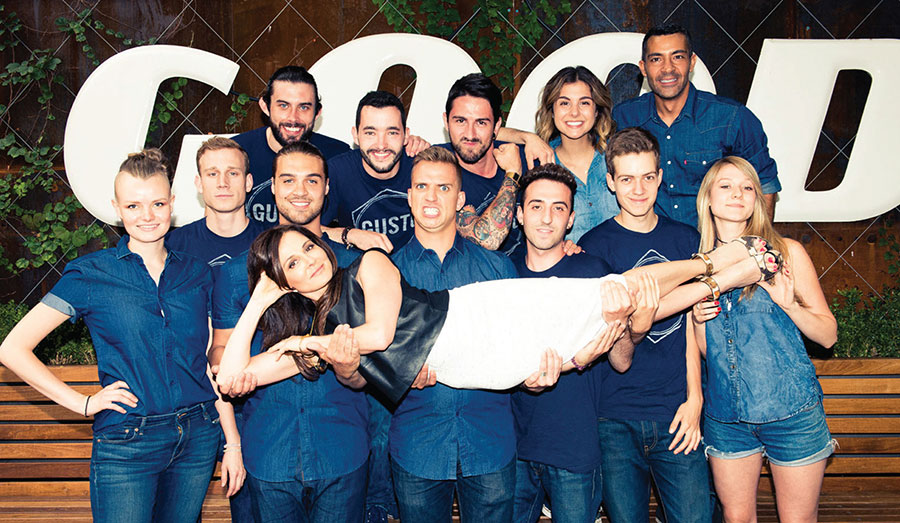
Gusto101 in Toronto designed the ideal “non-uniform” uniform that maintains the overall brand image and feel. Gusto’s wait staff and bartenders dress in blue denim shirts, or a blue branded t-shirt, and jeans, but the brand choices and style choices are all theirs. Guests are still able to identify who works at Gusto, employees can be comfortable in their own clothing that fits their shape and style, and the restaurant saves on uniform costs; it’s a win-win!
“Going with the ‘non-uniform’ uniform for your restaurant can be a fun way to express staff individuality while maintaining your brand,” says Gusto owner and chef Janet Zuccarini, “but it is still important to understand the rules around who covers the cost of the uniform, even if it isn’t head to toe.”
Be sure to read up on Canada’s latest Employment Acts that outline this useful information.
Governance of beverage alcohol in Canada is complex, with 13 different bodies responsible for regulating sales and distribution across 10 provinces and three territories.
While the rules vary from province to province, some elements are consistent right across the country. Restaurant operators and their staff must:
- Know the law
- Understand how and when to check identification
- Employ effective techniques to prevent intoxication
- Manage risk at special and large-scale events
- Understand liquor-serving best practices and policies
- Comply with the permitted hours of licensed alcohol service
To ensure compliance with liquor regulations and avoid violations, restaurant operators must ensure that everybody who serves alcohol has the knowledge and understanding they need.
Serving smart
“The first step is to take the responsible service training program in your province,” says Richard Anderson, executive director, Smart Serve Ontario. “This will help you understand the law and your responsibilities. Secondly, it is very important that the establishment have clear house policies that have been reviewed with staff on a regular basis. This ensures good communication so the team is clear on responsibilities. Lastly, acquaint yourself with your provincial liquor laws.”
Those laws control a variety of elements including who can be served, when, how much, and how they can be identified. “Generally speaking, it is important to not serve underage patrons, monitor your patrons to ensure that you do not serve them to intoxication,” Anderson says. “You accept liability the moment you begin to serve someone. Your number one responsibility is to ensure that your patrons have a safe experience and do not leave intoxicated or drink and drive.”
“You accept liability the moment you begin to serve someone. Your number one responsibility is to ensure that your patrons have a safe experience and do not leave intoxicated or drink and drive.”
Richard Anderson, executive director, Smart Serve Ontario
Under provincial liquor laws, restaurant operators and their employees are responsible for controlling the behaviour of patrons. And they can be held responsible for any resulting injury or death with consequences that can include licences being suspended and revoked.
In 2021, a restaurant in Cambridge, Ont. was fined $50,000 for over-serving alcohol to a man who caused a fatal crash. The maximum fine under the Ontario Liquor Licensing Act is $250,000.
Checking IDs
The restaurant or bar should have a policy on when they I.D. Some use the ‘anyone under 30 years of age approach.’ “Whatever you feel you need to do to ensure that you do not serve underage patrons,” Anderson says.
Staff should know the acceptable forms of identification in your jurisdiction: Typically, they include:
- Driver’s Licence
- Canadian Passport
- Canadian Citizenship Card
- Canadian Armed Forces Card
- Secure Certificate of Indian Status
- Permanent Resident Card issued by Government of Canada
- ID cards issued by provincial liquor authorities
To be legally acceptable, all identification must be valid, and expired I.D. is not acceptable. Staff should assess whether the card is genuine and comparisons can be made with current legitimate I.D.s.
- Compare the I.D. photo and description – height, weight, eye and hair colour are easily tampered with and most likely to be off
- Ensure letters are in the same font and same size of font
- Beware of misspelled words
- Check that no colours are dulled or faded
- If birth or expiry dates look scratched or appear to have been tampered with, do not accept the I.D.
To prevent intoxication:
- Monitor service at all times
- Encourage meals or snacks and non-alcoholic beverages if possible
- Know when it’s time to cut off a patron
- Ensure that person has a safe ride home
When it comes to training staff to understand the applicable laws, the simplest way is to ensure that all relevant staff take a program like Ontario’s Smart Serve. “The program clearly outlines the law, liability and the responsibility of the server,” Anderson says. “It is about ‘Duty of Care’ for the customer to ensure that their experience is safe.”
Some provinces have made completion of training mandatory for anyone who serves and sells liquor at licensed establishments. New Brunswick was the latest to do so, effective September 1, 2021. Most provinces do not recognize certifications from other jurisdictions.
Canadian liquor service training programs
| British Columbia | Serving It Right |
| Alberta | ProServe |
| Saskatchewan | Serve It Right |
| Manitoba | Smart Choices |
| Ontario | Smart Serve |
| Quebec | Service in Action |
| New Brunswick | Responsible Beverage |
| Nova Scotia | Serve Right |
| Prince Edward Island | Responsible Beverage Service |
| Newfoundland & Labrador | Serve Responsible NL |
| Nunavut | Server Training |
| Northwest Territories | Server Training |
| Yukon | Be A Responsible Server-Liquor (BARS-L) |
Recruiting and retaining staff has long been one of the biggest challenges for foodservice operators, and COVID-19 has upped the intensity. Public health restrictions, lockdowns, loss of employee positions, uncertainty about job security and apprehension around health and safety practices are all factors that have turned up the HR heat.
In its Q3 2021 Restaurant Outlook Survey, Restaurants Canada reported 93% of respondents are contending with a shortage of workers, and 50% say they are struggling with a significant staffing shortage. Three-quarters of respondents said the labour shortage has put more pressure on owners and management level staff to work more hours. Seven out of 10 respondents said they are reducing their hours of operation. Where they can afford to, 63% said they are raising wages to entice staff to work for them.
The crunch is especially acute in back-of-house, notes Jeff Dover, principal at fsSTRATEGY Inc. “Enrollment is down in culinary programs across Canada, so help isn’t on the horizon, and now is especially the time for operators to be innovative.”

“Minimum wage increases are forcing the industry to restructure operating budgets and operations as a whole. Operators are competing with other industries who are offering higher pay rates.”
Laura Traynor, district manager for ADP Canada
Compensation is becoming a challenge for all industries, and especially in foodservice. “Minimum wage increases are forcing the industry to restructure operating budgets and operations as a whole,” says Laura Traynor, district manager for ADP Canada. “Operators are competing with other industries who are offering higher rates of pay even for those with little to no work experience or post-secondary education.”
By stepping up their recruiting, hiring and retention game, restaurant operators can successfully compete for labour and get their restaurants running at peak efficiency. By taking a page from the gig economy playbook, restaurants can lure back workers who might be otherwise enticed by platforms like UberEats and DoorDash by offering flexibility and the added sweeteners of benefits.
“It’s important that operators continue learning and staying ahead of trends,” ADP’s Traynor says. “Employees will feel safer and more likely to stay if they know their employer is on top of the latest legislation and health and safety regulations.”
The wage challenges for restaurant owners
Wages are on the way up right across the country, and some restaurant operators are paying much more than minimum wage. One of them is Alex Moore, owner of Bampot House of tea and Board Games, in Toronto. He pays his employees $22.50 an hour before tips. “I’ve been working in this business for a long time, and I honestly feel like a liveable wage is the bare minimum I can do. I don’t want people who work for me to struggle. So I’ve made the numbers work.”
Moore says paying a liveable wage helps to improve morale and builds loyalty. He is also looking at instituting a salary grid and profit sharing with his three employees. “I’m running it tight, but I want to make it happen because it’s the right thing to do.”
The increase of minimum wage has created a domino effect across this and many other industries, ADP’s Traynor says. “With new employees being hired at a higher rate than before, this puts pressure on employers to increase the rate of more tenured employees in order to keep compensation structure fair.”

“Signing bonuses and retention bonuses and being flexible with scheduling can help with recruitment and retention.”
Jeff Dover, principal at fsSTRATEGY Inc.
In many markets, offering minimum wage is not enough, and many employers are offering well over that to retain talent. “Applicants know they can get wages at more than minimum wage and are not settling,” fsSTRATEGY’s Dover says. “Signing bonuses and retention bonuses and being flexible with scheduling can help with recruitment and retention.”
Top tips to recruit and retain hospitality workers:
- Treat staff like the valuable assets they are
- Pay more and increase wages as quickly as you can
- Be flexible on scheduling and time off
- Offer signing and retention bonuses
- Customize benefits to meet employee needs
- Provide rewards, recognition and opportunities for career advancement
- Offer mental health support
“All of this comes at a cost to operators but there is, at least in the short term, a willingness amongst consumers to accept price increases,” Dover adds. “Adjust operating hours if you must and close when not profitable. With a five-day week, one core team can work full time with two days off.”
Use technology to empower your restaurant staff
Third-party solutions like ADP’s HR Assist can help operators stay on top of and properly apply rapidly changing government policies. “Implementing technology solutions to streamline scheduling and management of paid time-off requests from employees makes navigating the unknowns more efficient,” says Shubh Mann, director of sales – channels at ADP Canada. “Giving employees the power to view their schedules in advance, request days off and swap shifts empowers them to have more control over their work-life balance and in the long run can help lower employee turnover.”
Shubh Manns top tips for restaurant operators:
- Take advantage of data-analyzing technology to effectively make decisions when scheduling staff so you do not over- or under-staff
- Outsource day-to-day admin tasks (e.g. payroll, HR, time and labour management) to free up time to focus on people and operations
- Streamline the onboarding process
- Use HR portals to efficiently create job descriptions, onboarding guides etc.
- Post jobs on sites such as Zip Recruiter to avoid looking through hundreds of résumés and posting manually on several locations to drive enough traffic
- Revaluate your current HR setup to ensure HR support is in place for your employees
Employ smart scheduling in your restaurant
“By reviewing your historical sales data, you can anticipate staffing as much as possible and plan accordingly,” Mann says. “If possible, get to know a bit about your employees’ lives outside of work and schedule them accordingly. For instance, a parent of three might be a better fit to handle the lunch rush and single students will likely prefer the evening shift.”
- Make scheduling controlled, organized, and easily accessible for staff
- Be prepared to quickly onboard with rapid training programs
- Activate a scheduling app that allows staff to show their availability, request days off, easily view their schedules, and swap shifts
- Post schedules in advance to help smooth out any bumps with seasonal ups and downs
- Establish clearly understood guidelines for time-off requests
- Where possible, ensure staff take paid time off in advance of holiday seasons and busy times to ensure they are well rested and ready to handle the workload
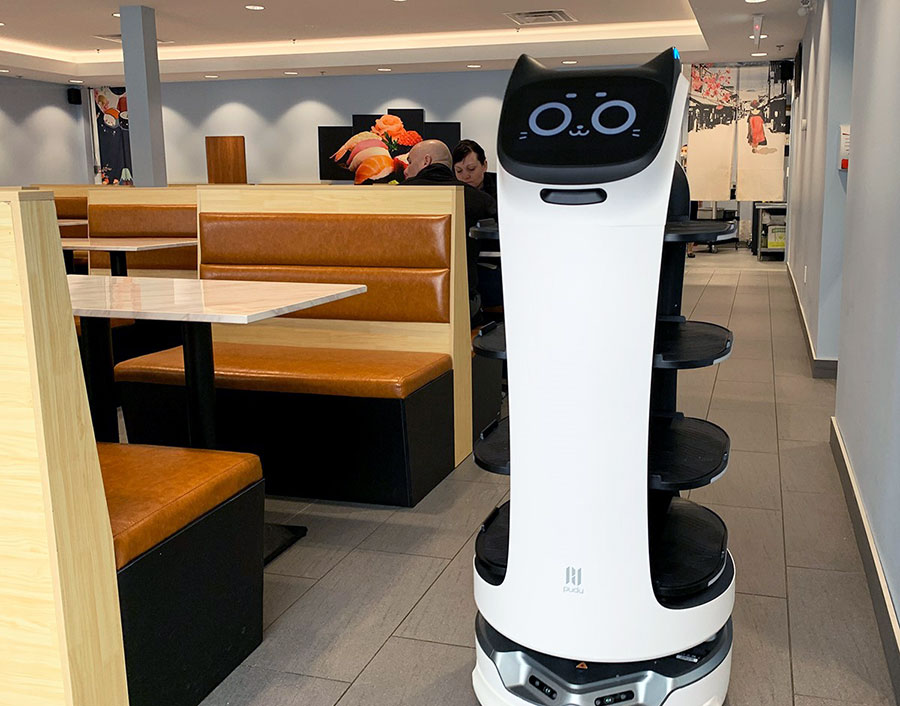
Try robot retail to alleviate staffing shortages
Robotics and artificial intelligence (AI) have been making strides across every industry and the restaurant and hospitality sectors are no exception, reports Restaurants Canada. Robot retail is making its way into dining experiences – from sanitation and disinfection to serving and hosting. Brands like GreenCo Robots are leading the way with robotics applications in restaurants.
Headed by engineer Liang Yu, the Edmonton-based company has about 40 robots in use across Canada. “The idea is not to replace people completely,” he says. “The robot is an assistant for the labour-intensive and repetitive work like busing and delivering water.”
Kitty Tong, owner of Golden Ocean Seafood Restaurant in Vancouver, says they’ve been using their robot to help serve food and alleviate some staffing issues during the pandemic. The robot has also attracted interest from regular customers and others who have heard about it by word of mouth and through media reports. “Both adults and children like to take photos with ‘Bella.’ They think the robot has a very special and fresh feeling.”
GreenCo robots range in cost from $16,000 to $30,000, depending on the model, and the company offers a three-year lease-to-own program and a one-week trial.