Since the mid-teens, traditional grocery stores in Canada have been blurring the lines between grocery and restaurant foodservice with so-called “grocerants.”
These intersections of grocery and eatery have seen a number of food retailers, like Longos, Loblaws and Farm Boy (Sobeys) add in-store restaurants and full meals for shoppers who want to do more than pick up their bread and bananas. For Millennials on the go, especially, these hybrids have offered the perfect combination of convenient food shopping and a hospitality experience.
Fast forward to 2020 and our new world under COVID-19. More and more people need groceries — and prepared meals — especially with workers returning to offices and kids back to school.
More and more people need groceries — and prepared meals — especially with workers returning to offices and kids back to school.
As more and more restaurant operators have pivoted successfully to offer customers takeout & delivery, why not pivot even more? Many restaurants have surplus supplies and continued access to food from their distributors. Savvy operators are already becoming food “purveyors,” and not just restaurants as they realize they are in the “food business,” and not only in the restaurant business.
As cooler weather calls, operators are turning from takeout & delivery and converting into restaurant-grocers offering meal kits, take-home/make-at-home meals, and more.
Set up your online grocery section
Earls Kitchen and Bar’s website features an entire Grocery section as the chain added a virtual grocery store to its regular takeout & delivery menu early in the pandemic. Customers can buy a variety of grocery staples as well as DIY meal kits and prepared meals.

Try food box subscriptions
Farm-to-table operations have been sending fresh boxes of goods to customers via subscription for years. Restaurants with access to local and seasonal ingredients can get into the game with their own branded food boxes. If you already send e-newsletters to your regulars, you can easily introduce this new service to supplement your takeout & delivery sales. The food box can contain meals as well as grocery staples… and even a roll of toilet paper.
Replicate the restaurant experience
Pre-packaged ingredients, meal kits, and menus can help turn your social distancing regulars into sometime gourmet cooks.
Upscale Toronto eatery Buca has created branded packaging of its favourites for customers who want to replicate the experience of eating a Buca meal, but in a take-home grocery format. A full page advertises cook-at-home favourites that keep the Buca brand front and centre.
Even traditional pizzerias can add groceries to their deliveries. The pie is still the main event, but your customers will appreciate having access to other pantry staples too like milk, butter, tomatoes, cheese, and olive oil. And yes, you can even throw in a roll of toilet paper.
Top Tips
- Get the word out on your website and social media platforms that you have groceries, as well as prepared items, on offer.
- Use the opportunity to brand your grocery packaging. This is a great way to build brand loyalty.
- Choose your delivery platform carefully. Will you DIY or rely on a third-party service like Skip the Dishes, DoorDash, Foodora or Uber Eats? While you may save money doing it yourself, consider if you can increase your geographical reach using one of the biggies.
Whether you are seating 10 guests or more in a physically distanced space, creating an outdoor patio environment that is just as good as your indoor guest experience should be the key focus throughout your patio planning.
The space may be temporary, but guests’ experiences are long-lasting and so are their memories, so it is remains critical to a restaurant brand’s overall success to invest sufficient planning and development to create a seamless dining experience.
By being thorough in designing and executing your perfect patio experience, you will be in an ideal position to attract diners.
Daniel Lemin, Strategy & Analytics Lead at Convince & Convert, says, “When choosing a restaurant, GenZ and Millennials are 99% more likely to rely on social media and online reviews than are GenX and Boomers.” By being thorough in designing and executing your perfect patio experience, you will be in an ideal position to attract these diners.
Seasonal patios often pose many challenges for restaurateurs. Should you install heat lamps for cooler nights? What’s the seating plan? How do you schedule wait staff for patio season? What patio trends make sense to your restaurant brand?
There are many considerations in how you approach your patio to ensure it is “the place to be seen” this summer with many Instagrammable moments. To create this winning formula, you must consider important factors from an operational perspective as well as the details of the atmosphere.
What you serve inside, you serve outside
Be prepared for your kitchen to handle the extra capacity. Consider your current equipment capacity, the amount of space in refrigeration and storage, as well as your team’s skill level. A streamlined offering or change of purpose for the area is a better option than having your customers wait an extra 30 minutes for food because you cannot execute to expectations.
Stock up!
From plate ware, glassware and cutlery to napkins, to-go containers and chopsticks, all items need to be stocked up to support the additional seats to service. Be prepared by ordering in advance, as suppliers tend to get busy with patio orders as spring approaches.
Need more staff, but how much?
Calculate the number of shifts per week this will add to your front-of-house schedule and determine the date your new staff need to be hired and trained by. Then work back from that date to allow for enough time for hiring and training.
- TIP: Hire gradually over a few months to alleviate the pressure of mass training to allow new staff to get comfortable and ready for patio season. It does incur higher labour costs on the front end, but will pay off with greater productivity and less turnover throughout the summer.
Your patio design, décor and overall outdoor experience are the fun part of the planning process, and also what define your patio as a place to be and shared on social media.
So, what are the “rules” of patio design?
Know the laws
Each province and municipality has different laws on what restaurants can serve, how they serve it, when they serve it, and where they serve it. Some local laws prohibit outdoor bars while others require partitions or café barriers around sidewalk seating. Educating yourself on local laws and obtaining permits sounds about as appetizing as a spam and prune salad, but it’s a crucial part of the process. Punishments violating local laws and not having proper permits can range from a citation to fines or even closure. Before you start building your outdoor patio, research your local laws and be sure to obtain the proper permits.
Design your seating plan
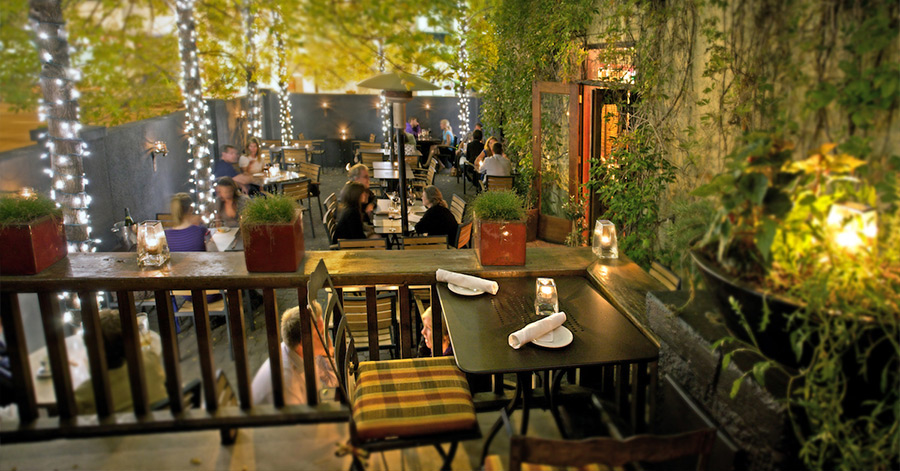
Your gut instinct might be to place as many tables and chairs in your patio design as possible. After all, more tables mean more customers and more revenue, right? Not necessarily. Make sure you have ample space between tables and chairs for both servers and guests to manoeuvre through your restaurant’s outdoor seating, struggle free. A cramped floor plan can take away significantly from the patio experience and have a negative effect on sales.
As well, ensure your patio can take advantage of a view if you have it with as many seats possible. Obviously, these will be in high demand and the more you can take advantage of the view, the more you can mitigate potential customers being upset. If a view is not part of the patio experience, use high walls to create a more intimate experience. Some of the best patios are ones in parking lots that have used this strategy to make you feel like you are in an oasis.
Find appropriate furniture
- TIP: Do NOT reuse your interior table and chairs for your patio.
A patio requires patio furniture made of durable materials that can hold up to the wear and tear of the outdoors. Look for furniture that’s weatherproof and easy to clean. If space and storage are an issue, opt for stackable chairs. Additionally, make sure your patio furniture jives with your restaurant’s décor and atmosphere. For example, if you run a high-end restaurant, you may want to reconsider outfitting your patio with foldable plastic chairs.
Patio pitfalls
When serving outdoors, you must be prepared for whatever Mother Nature has in store. You’ll need solutions for keeping bugs away, providing shade from the sun, keeping your diners warm on cooler evenings, and of course what to do in case of rain! Your weather preparation plans can significantly add or detract from the outdoor dining experience.
Patio perfection
Acceptable restaurant patios have these basics and essentials mastered, but great restaurant patios take it a step further. Give your outdoor seating a personal touch to distinguish yourself in the market. Enhance your diners’ experience with food and bar specials, live music or yard games. A restaurant patio that’s well planned, unique, and full of character can quickly turn those one-time customers into regulars and boost profitability. And remember, 35% of Canadians prefer to visit a restaurant or bar when going out with family and friends — far ahead of the second-favourite option, outdoor activities, selected by 23% of Canadians (Source: Restaurants Canada-sponsored poll). Canadians will come if you build your patio the right way.
When all these items are considered in your patio planning, the result will be a patio experience that customers will remember and great word of mouth for your brand. With your operational overhead covered by your revenue inside, a well-operated patio can add 30% profitability on the additional revenue brought in. It can be very lucrative indeed to ensure these details are part of your plan to create the perfect patio experience!
Flexible restaurant operators converted quickly from eat-in to takeout during the COVID-19 pandemic. And whether they’re fine dining, QSR or casual eating establishments, they’re finding it’s not as hard as you may think to revamp an eat-in operation. Also, according to infectious disease specialist Isaac Bogoch, the risk of contracting the virus from takeout & delivery is “so extraordinarily small” — good news for consumers and restaurant operators alike.
Still, perfect takeout & delivery are not a matter of just putting food into any old containers and hoping it makes the journey in one piece.
You may not be able to judge a book by its cover, but when it comes to foodservice, your takeout packaging had better hold up to scrutiny. More importantly, your takeout packaging has to stand up to delivery… and still look appetizing when it reaches its destination.
“With takeout, the customer is in control of when that food is consumed,” says John Veder, director of innovation – paper for Novolex North America. “For delivery, the customer is at home, waiting. Their expectation is that the food is ready to eat. Not soggy. Not cold.”
Must Have: The right packaging for the food being delivered
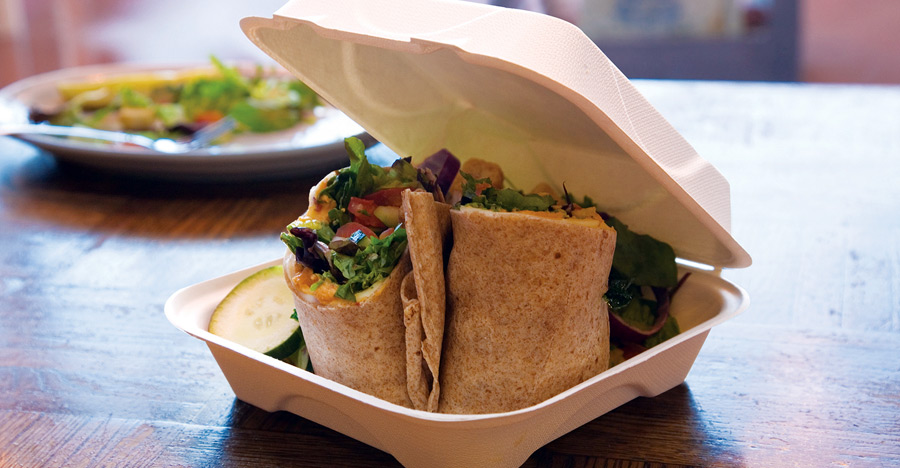
When food is delivered, customers see the packaging first, and they eat with their eyes. Is it clean, neat and tidy? You need to make a great first impression otherwise customers may not go to you for takeout again. That’s why Veder suggests ensuring the packaging is correct for the application in terms of size and material. “The packaging a french fry requires for travel is different than a pasta dish. And packaging will also depend on the miles or time it needs to travel.”
Must Have: Packaging designed specifically for foodservice
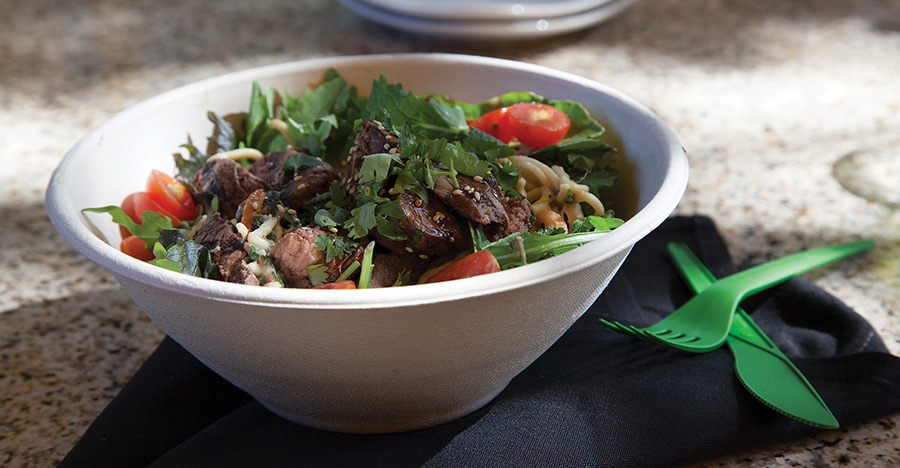
No one likes to pick up or receive soggy, leaking, messy or unattractive food packages. Companies like W. Ralston, Novolex and Polar Pak, a Novolex brand, feature packaging specifically for foodservice operations that include takeout & delivery, and also packaging that’s size-appropriate.
Must Have: Customizable packaging
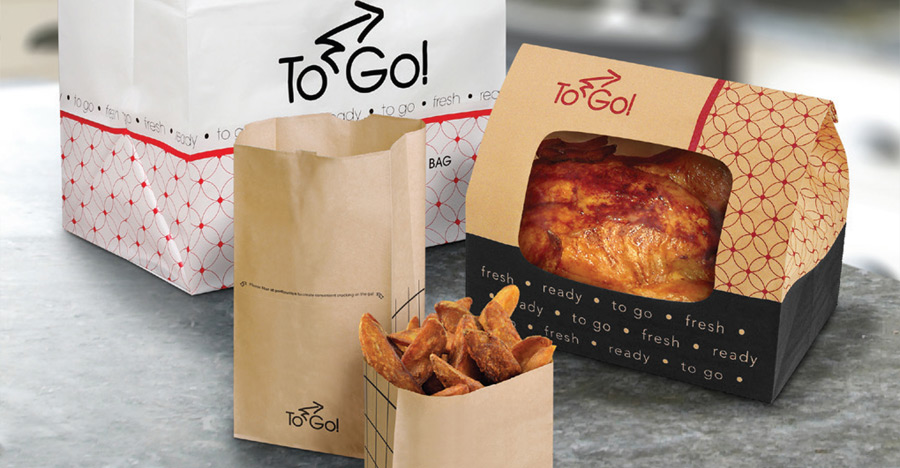
Consider customizing your existing menu specifically for delivery, Veder advises.
Novolex’s innovation is driven by providing solutions to delivery (and takeout) packaging needs, offering a wide range of options with thermal properties, moisture resistance, visual appeal, and security. “Our load and fold bag offers functionality in terms of transport but also that tamper evident feature where a branded sticker could be added to give your customer peace of mind.”
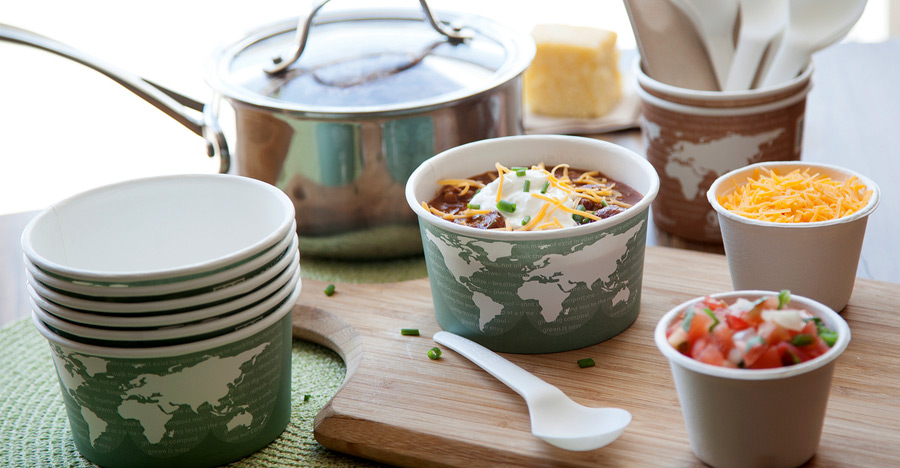
Must Have: Meal-in-a-package ease of use
Many of your guests turned to takeout & delivery because they couldn’t enjoy the eat-in experience at your restaurant. A winning strategy to keep your food — and your brand — front of mind is a mealkit approach to takeout & delivery. When they open the packaging at home, their order should as closely as possible resemble a restaurant meal you might serve. Attractively presented, appetizing, clean (as in, no drips or sogginess) — food that’s ready to eat and that leaves your customers with good feelings and continued loyalty.
 |
About the AuthorsJANE AUSTER & CHERIE THOMPSON |
Jane Auster is the editor of ChefConnexion.com. She has been a foodservice writer and editor for more than 30 years. Jane was the editor of Your Foodservice Manager, a national magazine for professionals in the foodservice and hospitality industry in Canada, and FoodBiz.ca digital site. She was also editorial consultant and managing editor for the relaunch of Flavours magazine.
Cherie Thompson understands foodservice from field to fork. A B.Sc. in Agriculture and experience in quality control, food science, product development, recipe development/editing, customer service, and teaching as well as owning and operating two independent foodservice operations have given her a unique perspective on the food industry.
COVID-19 has made the general public much more aware of restaurant cleanliness. Here’s your perfect opportunity to do the kind of deep cleaning that makes regular spring-cleaning look like a light dusting — and make it part of your routine.
“Cleaning is getting the visible; disinfecting is getting the invisible, the germs, the viruses.”
Cleaning Expert Mark Mellish, Owner of Saskatoon Janitorial
Here’s how to do it right:
Think like Mr. Clean
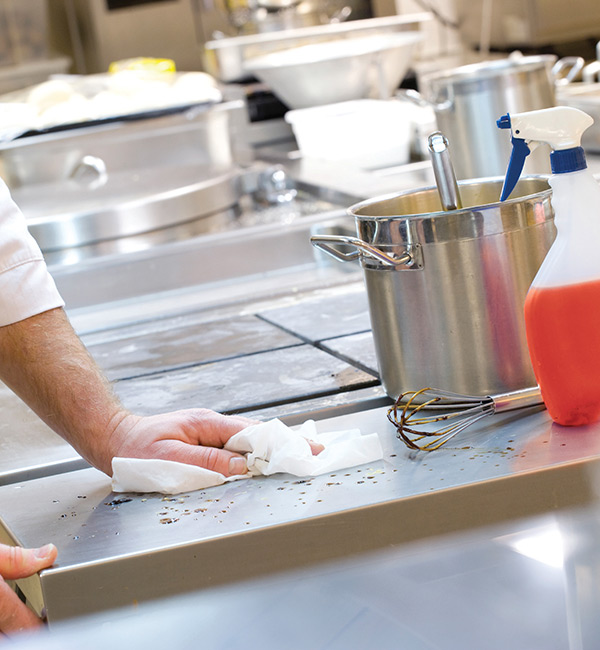
It’s not just about cleaning now, it’s about sanitizing. That means sanitizing all work surfaces (i.e., countertops, equipment, etc.) and focusing on key touchpoints (tables, chairs, door handles, credit/debit machines, self-serve kiosks, light switches, utensils/plate ware… anywhere hands can carry germs). Back-of-house and front-of-house should both receive heightened attention.
Institute a cleaning schedule
Even if you haven’t reopened to dine-in business and with fewer staff in place, you still need a rigorous cleaning schedule and checklist that you share with all employees. Hourly cleaning may sound excessive, but it will ensure your surfaces remain clean — and likely germ-free.

Read the labels
The fine print on cleaning products recommends how long to keep the disinfectants on the surface for them to be effective at killing germs. Also, make sure you’re using the right product for the right job. Homemade mixtures with vinegar, for instance, have not been shown to be potent enough against COVID-19.
Don’t forget your washrooms
While washrooms are removed from the kitchen and dining area, they, too, need extreme cleaning. That means toilets, stalls, hand dryers, toilet paper dispensers, sinks, waste bins, and any other people-facing equipment.
Mind your menus
If menus can be discarded, whether they’re made of paper or plastic, replace them with new ones. If you have laminated menus and this isn’t feasible, disinfect them carefully and “isolate” them from everyday use until it’s safe to return to more normal operations.
Remember, the little things count
Deep cleaning means taking into consideration even the smallest items, such as the salt and pepper shakers. Empty them before cleaning and allow them to air dry before refilling. Empty and thoroughly clean any other tabletop food containers, like ketchup, mustard and vinegar dispensers.
Give walls, curtains and blinds a thorough cleansing
COVID-19 is a respiratory virus and not considered to be a food-borne illness. To be on the safe side, clean vertical surfaces, which may carry air-borne pathogens.
Let your customers know
Use social media and signage in your front window to tell diners what steps you’re taking to keep your operation clean. Use this as an opportunity to keep in touch and keep customers informed and loyal. They’ll thank you for the care you’re taking.
Ghost kitchens (also called virtual kitchens, cloud kitchens, dark kitchens) are delivery-only spaces that have the back-end without the front. No seating areas, no counters, no servers, no real “ambience,” not even a physical takeout space.
In a society where the sharing economy is growing more important and driving innovation, it’s an idea for our times. Everything is ordered online, prepared in the ghost kitchen, and delivered by third-party marketplaces like Uber Eats, Skip the Dishes, DoorDash and Foodora. Customers interact with the delivery company only. (See Exhibit 1.)
This technology-driven concept lowers overhead for staffing and site costs. As rents have gone up and margins shrink, more operators are enticed by the lure of doing away with front-of-house expenses. In short, it can make the numbers work where they might not otherwise. But there can be challenges if not done properly.
Virtual flexibility
Depending on the brands being served, ghost kitchens can turn out more than one type of cuisine and can feed various menus or sites. That’s especially appealing if you want to move efficiently from one market segment to another to take advantage of trends and growth. And it can be a great way to help counter the ebb of seasonal fluctuations.
“Chefs and restaurateurs have to maximize their capacity,” says Dana McCauley, associate director of new venture creation, University of Guelph. “You’ve got an asset that you need to run as many hours a day as possible to make the numbers work.”
Focusing on making, delivering and marketing food while reducing overhead is a saavy strategy, McCauley observes. “Today’s technology is making it possible. A solid online presence through websites and Instagram and various services are offsetting the importance of neighbourhood storefront locations to build visibility and diner loyalty.”
“Virtual kitchens are a blend of technology plays and restaurant plays.”
Sterling Douglass, co-founder and CEO of restaurant-tech company Chowly
Technology feeds operations
To succeed, ghost kitchens require a tech setup that fits with their operational flow. “Often, virtual kitchens are being run by technology companies and missing key operational steps,” says Sterling Douglass, co-founder and CEO of restaurant-tech company Chowly.
“Virtual kitchens are a blend of technology plays and restaurant plays,” Douglass says. “The teams building these technologies need a significant amount of experience in both areas. Lacking in technology experience will hurt volume and affect operations. Lacking in restaurant experience will decrease food quality, margins, and guest experience.”
He recommends operators answer the following key questions:
- How are concepts separated?
- How are they communicated to cooks?
- How are they bagged and prepped differently?
- How is the driver handoff different?
Know what you don’t
Ghost kitchens present a learning curve for bricks-and-mortar restaurant operators and those new to the industry. That includes everything from understanding the different labour costs to juggling multiple third-party services which are delivering the food.
Thinking about entering the ghost kitchen sphere? Chowly CEO Sterling Douglass offers four pointers:
- Concepts should be data driven
- Menus should be small and VERY simple
- POS integration is a must-have
- A very deep margin analysis should be conducted before launching
Delivery services typically take a 30 per cent cut from every order, though larger operations can negotiate more favourable rates.
On the virtual edge
Ghost kitchens can be found in shared commissary spaces and back ends of storefronts, and some other places, too:
- Popup cooking stations within the main kitchen of a restaurant that fill delivery-only orders from one, two or even a half dozen brands.
- Pod kitchens in shipping containers that can be placed wherever zoning permits. Some double as drive-throughs.
It will be important that operators can efficiently serve both dine-in consumers as well as those ordering takeout or delivery. Also, expect to see more restaurants forego dine-in altogether and experiment with delivery-only stores, especially in partnership with third-party delivery services.
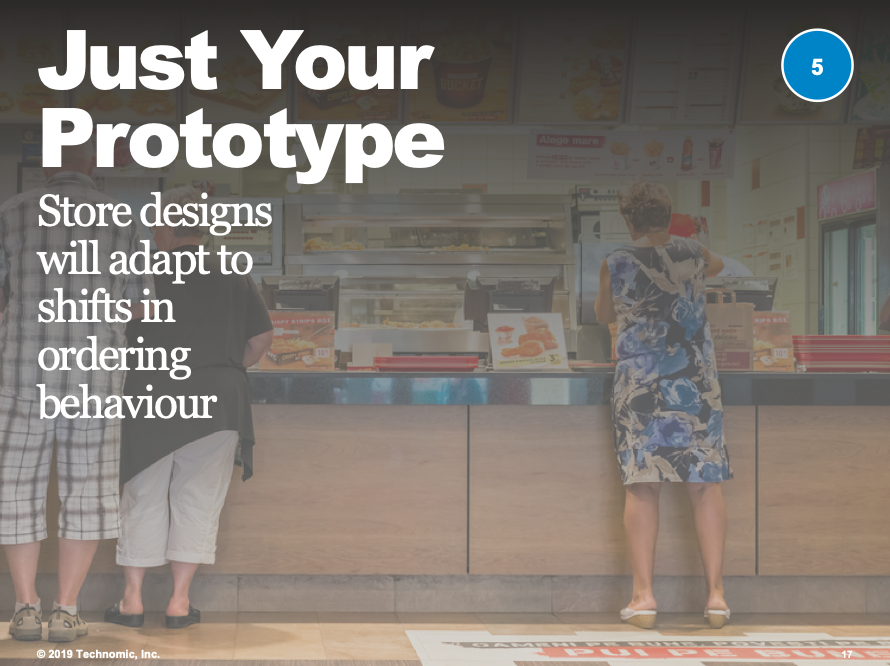
Exhibit 1. (Referenced in article)