
How Restaurant Owners Can Turn Feedback into Success | Mastering the Art of Review Management
As a restaurant owner, you know how important reviews are for your business. They can either make or break your reputation and affect the number of customers who visit your establishment. Positive reviews can bring in new customers while negative ones can drive them away. Therefore, it is essential to understand the significance of reviews and learn how to respond to them.

“When people are searching for a place to eat, they often read reviews to help them decide where to go.”
Consider the following reasons that make reviews and review management so vital:
They Help Build Trust
Reviews are a form of social proof that can build trust with potential customers. When people see positive reviews from others who have visited your restaurant. they are more likely to trust their experience will be positive as well.
They Provide Feedback
Reviews are a valuable source of feedback that can help you improve your business. You can learn what your customers like and dislike about your restaurant and use this information to make changes that will enhance their experience.
They Boost SEO
Reviews can also improve your search engine rankings. Google and other search engines take into account the number and quality of reviews when determining search rankings. Therefore, the more positive reviews you have, the higher your restaurant will rank in search results.
They Attract New Customers
Positive reviews can help attract new customers to your restaurant. When people are searching for a place to eat, they often read reviews to help them decide where to go. If your restaurant has a lot of positive reviews, it’s more likely to be chosen over a restaurant with few or negative reviews.

Responding to Reviews
Now that you understand the importance of reviews, it is crucial to know how to respond to them. Responding to reviews, both positive and negative, shows that you value your customers and are willing to listen to their feedback.
Respond Quickly
Responding quickly to reviews shows that you care about your customers and their experience. Responding promptly also allows you to address any issues before they escalate.
Thank Them for Their Review
Thanking customers for taking the time to write a review shows that you appreciate their feedback and value their opinions.
Address Any Concerns
If a customer leaves a negative review, it is essential to address their concerns. Apologize for their negative experience and offer to make things right. This shows that you are committed to customer satisfaction and are willing to go above and beyond to make things right.
Keep it Professional
When responding to reviews, it is essential to keep it professional. Avoid getting defensive or argumentative, even if the review is negative. Always remain polite and respectful, even if the customer is not.
Use it as a Learning Opportunity
Negative reviews can be used as a learning opportunity. Take the feedback and use it to make changes to your business that will improve the customer experience. This shows that you are committed to continuous improvement and that you value your customers’ opinions.
Reviews are a crucial part of your restaurant’s reputation. They help build trust, provide feedback, boost SEO, and attract new customers. Responding to reviews shows that you care about your customers and their experience. By thanking customers for their reviews, addressing any concerns keeping it professional, and using it as a learning opportunity, you can turn negative reviews into positive ones and improve your business’s overall reputation.
Ways to Make the Dining Experience Extra Special
Going to a restaurant with family and friends is a favourite experience for many people, but with the economy as it is, there are far fewer people eating out impulsively or planning get-togethers as often.

Food presentation is an important detail—whether your restaurant serves economical offerings or more lavish ones.
In order to encourage customers to eat at your restaurant, consider the following:
- Train your greeters to welcome customers sincerely and enthusiastically. Even if they’re extremely busy, looking up, smiling, and mentioning that they’ll be right with the customer will go a long way. Customers don’t want to feel as if they’re being ignored.
- Attentive, personable wait staff can make all the difference. Even if they must cover several tables, a smile, a kind word, and accurately filling the customer’s order will increase the likelihood that the customer will return and recommend your restaurant to others.
- Asking whether customers are celebrating a special occasion—and being sensitive to the guest(s) of honour’s preferences—is a nice touch. Offering the choice between two free desserts for the individual(s) will set your establishment apart
- Food presentation is important to several of your customers—whether your restaurant serves economical offerings or more lavish ones.
- Creating at least one signature dish with a twist that your restaurant does extremely well make an impression on your customers, and the word will spread.
- If you serve a complementary appetizer, consider alternatives to a breadbasket.
- If you do serve a complementary bread product, consider adding a gluten friendly option to the menu. There is an increasing number of people who are cutting back on their gluten intake.
- Whether your restaurant is casual or more formal, cleanliness is important to your customers. And don’t forget to tend to your washrooms regularly.
- Do you still put salt and pepper on your tables? Replacing traditional dispensers with grinders that hold sea salt and others that hold peppercorns is just one special touch customers will notice.
These are only a few of the many things you can do to make your customers’ dining experience extra special.
Ask yourself what makes a dining experience stand out to you, and then, seek to provide that experience for your customers.
Recruiting and retaining staff has long been one of the biggest challenges for foodservice operators, and COVID-19 has upped the intensity. Public health restrictions, lockdowns, loss of employee positions, uncertainty about job security and apprehension around health and safety practices are all factors that have turned up the HR heat.
In its Q3 2021 Restaurant Outlook Survey, Restaurants Canada reported 93% of respondents are contending with a shortage of workers, and 50% say they are struggling with a significant staffing shortage. Three-quarters of respondents said the labour shortage has put more pressure on owners and management level staff to work more hours. Seven out of 10 respondents said they are reducing their hours of operation. Where they can afford to, 63% said they are raising wages to entice staff to work for them.
The crunch is especially acute in back-of-house, notes Jeff Dover, principal at fsSTRATEGY Inc. “Enrollment is down in culinary programs across Canada, so help isn’t on the horizon, and now is especially the time for operators to be innovative.”

“Minimum wage increases are forcing the industry to restructure operating budgets and operations as a whole. Operators are competing with other industries who are offering higher pay rates.”
Laura Traynor, district manager for ADP Canada
Compensation is becoming a challenge for all industries, and especially in foodservice. “Minimum wage increases are forcing the industry to restructure operating budgets and operations as a whole,” says Laura Traynor, district manager for ADP Canada. “Operators are competing with other industries who are offering higher rates of pay even for those with little to no work experience or post-secondary education.”
By stepping up their recruiting, hiring and retention game, restaurant operators can successfully compete for labour and get their restaurants running at peak efficiency. By taking a page from the gig economy playbook, restaurants can lure back workers who might be otherwise enticed by platforms like UberEats and DoorDash by offering flexibility and the added sweeteners of benefits.
“It’s important that operators continue learning and staying ahead of trends,” ADP’s Traynor says. “Employees will feel safer and more likely to stay if they know their employer is on top of the latest legislation and health and safety regulations.”
The wage challenges for restaurant owners
Wages are on the way up right across the country, and some restaurant operators are paying much more than minimum wage. One of them is Alex Moore, owner of Bampot House of tea and Board Games, in Toronto. He pays his employees $22.50 an hour before tips. “I’ve been working in this business for a long time, and I honestly feel like a liveable wage is the bare minimum I can do. I don’t want people who work for me to struggle. So I’ve made the numbers work.”
Moore says paying a liveable wage helps to improve morale and builds loyalty. He is also looking at instituting a salary grid and profit sharing with his three employees. “I’m running it tight, but I want to make it happen because it’s the right thing to do.”
The increase of minimum wage has created a domino effect across this and many other industries, ADP’s Traynor says. “With new employees being hired at a higher rate than before, this puts pressure on employers to increase the rate of more tenured employees in order to keep compensation structure fair.”

“Signing bonuses and retention bonuses and being flexible with scheduling can help with recruitment and retention.”
Jeff Dover, principal at fsSTRATEGY Inc.
In many markets, offering minimum wage is not enough, and many employers are offering well over that to retain talent. “Applicants know they can get wages at more than minimum wage and are not settling,” fsSTRATEGY’s Dover says. “Signing bonuses and retention bonuses and being flexible with scheduling can help with recruitment and retention.”
Top tips to recruit and retain hospitality workers:
- Treat staff like the valuable assets they are
- Pay more and increase wages as quickly as you can
- Be flexible on scheduling and time off
- Offer signing and retention bonuses
- Customize benefits to meet employee needs
- Provide rewards, recognition and opportunities for career advancement
- Offer mental health support
“All of this comes at a cost to operators but there is, at least in the short term, a willingness amongst consumers to accept price increases,” Dover adds. “Adjust operating hours if you must and close when not profitable. With a five-day week, one core team can work full time with two days off.”
Use technology to empower your restaurant staff
Third-party solutions like ADP’s HR Assist can help operators stay on top of and properly apply rapidly changing government policies. “Implementing technology solutions to streamline scheduling and management of paid time-off requests from employees makes navigating the unknowns more efficient,” says Shubh Mann, director of sales – channels at ADP Canada. “Giving employees the power to view their schedules in advance, request days off and swap shifts empowers them to have more control over their work-life balance and in the long run can help lower employee turnover.”
Shubh Manns top tips for restaurant operators:
- Take advantage of data-analyzing technology to effectively make decisions when scheduling staff so you do not over- or under-staff
- Outsource day-to-day admin tasks (e.g. payroll, HR, time and labour management) to free up time to focus on people and operations
- Streamline the onboarding process
- Use HR portals to efficiently create job descriptions, onboarding guides etc.
- Post jobs on sites such as Zip Recruiter to avoid looking through hundreds of résumés and posting manually on several locations to drive enough traffic
- Revaluate your current HR setup to ensure HR support is in place for your employees
Employ smart scheduling in your restaurant
“By reviewing your historical sales data, you can anticipate staffing as much as possible and plan accordingly,” Mann says. “If possible, get to know a bit about your employees’ lives outside of work and schedule them accordingly. For instance, a parent of three might be a better fit to handle the lunch rush and single students will likely prefer the evening shift.”
- Make scheduling controlled, organized, and easily accessible for staff
- Be prepared to quickly onboard with rapid training programs
- Activate a scheduling app that allows staff to show their availability, request days off, easily view their schedules, and swap shifts
- Post schedules in advance to help smooth out any bumps with seasonal ups and downs
- Establish clearly understood guidelines for time-off requests
- Where possible, ensure staff take paid time off in advance of holiday seasons and busy times to ensure they are well rested and ready to handle the workload
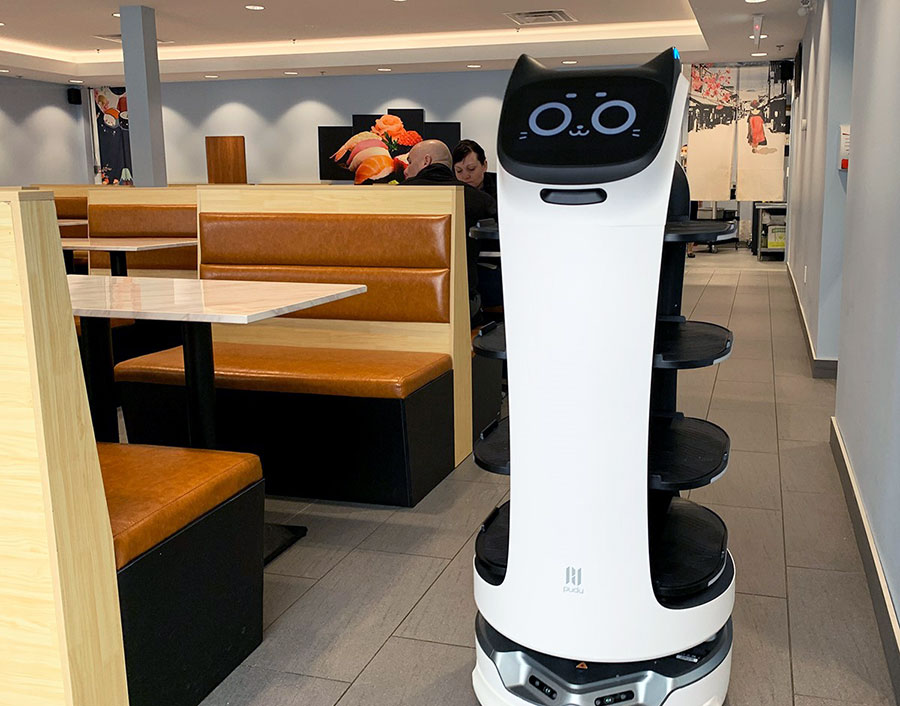
Try robot retail to alleviate staffing shortages
Robotics and artificial intelligence (AI) have been making strides across every industry and the restaurant and hospitality sectors are no exception, reports Restaurants Canada. Robot retail is making its way into dining experiences – from sanitation and disinfection to serving and hosting. Brands like GreenCo Robots are leading the way with robotics applications in restaurants.
Headed by engineer Liang Yu, the Edmonton-based company has about 40 robots in use across Canada. “The idea is not to replace people completely,” he says. “The robot is an assistant for the labour-intensive and repetitive work like busing and delivering water.”
Kitty Tong, owner of Golden Ocean Seafood Restaurant in Vancouver, says they’ve been using their robot to help serve food and alleviate some staffing issues during the pandemic. The robot has also attracted interest from regular customers and others who have heard about it by word of mouth and through media reports. “Both adults and children like to take photos with ‘Bella.’ They think the robot has a very special and fresh feeling.”
GreenCo robots range in cost from $16,000 to $30,000, depending on the model, and the company offers a three-year lease-to-own program and a one-week trial.
Brand is the personality of your business. Your brand certainly shines through on the menu and in the food you serve, but how about your restaurant décor? The slow winter months are an ideal time to refresh your space to invigorate your brand, engage your customers and revitalize your staff. (Yes, they, too, are energized when you refresh your brand.)
What’s your brand identity?
First and foremost, stay true to yourself when planning a front-of-house upgrade. “It’s essential for a restaurant to know how they want to be perceived,” says Chris Rasmussen, CEO of LeoLight, a division of Pico whose mandate is to “to provide operators and distributors a full-service partnership for their ambience and food warming needs.”
For example, wax, fuel cell and LED candles each offer a different feel. Using a wax candle on a sports bar table or an LED on a high-end steakhouse table won’t meet customer expectations or properly reflect your brand.

“Ambience is an important factor when deciding where to spend dining dollars. Ambience can lead to a better experience, which in turn can lead to a higher guest check.”
Chris Rasmussen, CEO of LeoLight, a division of Pico
“Ambience is an important factor when deciding where to spend dining dollars,” says Rasmussen. “Ambience can lead to a better experience, which in turn can lead to a higher guest check.” The goal should be to make your guests so relaxed and comfortable they stay longer…and order more.
Remember outdoor lighting for your spring and summer planning, Rasmussen reminds foodservice operators. “Canadian patio season is short and sweet; make it impactful.”
- TIP: Use string lighting and table lighting to match the interior ambience.

Find YOUR colour
Colour. Pure and simple, colour can transform your dining room (entrance and bathroom, too). Paint and a brush are really all you need to complement your brand. Repainting the entire space may not be necessary, though your assessment should factor in whether you need a complete paint job. If you’re looking for accent, trying a new colour on a focal wall may make more of a statement than using a uniform colour scheme. Use the psychology of colour to accentuate dining experience.
A splash of colour in unusual places can add personality to your brand. Imagine red chairs in a neutral coloured space, such as offsetting grey seat coverings. Contrast colour in the entrance.
- TIP: Don’t just look to artificial colour to liven your space.
Greenery also lends colour and texture and suggests a more “organic,” natural feel.
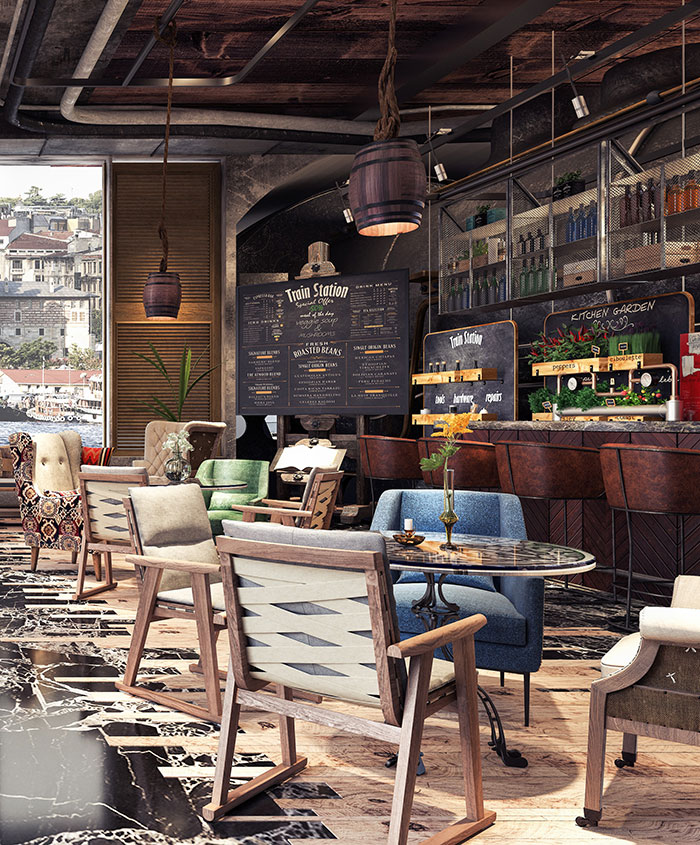
Spruce up your fabric
Fabric can add more than just texture to your restaurant. Use fabric to weave your brand through the space, whether it’s a logo treatment tastefully done or some other pattern that speaks to your brand.
Window coverings offer an opportunity to try a new colour scheme without the commitment of a big paint job. Seat cushions or backs refinished in geometric pattern smarten things up (and cut down on noise – a bonus).
- TIP: Add (or remove) tablecloths. Upgrade to cloth napkins or simply change the colour scheme to subtly elevate a dining experience.
Reinforce your restaurant brand with staff uniforms through use of colour, style or subtle logo placement. Supplying staff with hats and jackets for personal use gets word on the street.
Engage with your community
Engage with your customers and community outside the restaurant. Sponsor a sports team, charity event or festival that fits your image. Get inspired by checking out 10 creative restaurant marketing strategies.
Promote game days, school colours and community events. LeoLight offers a LED remote control, colour-changing product where you can have 16 different colours to play with.
- TIP: Invite local artists to display their work in your space. Not only do you enliven your space, but you also give profile to local talent.

Up the fun factor
Let there be light. Lightboxes can add “lightness” to your space. Slim LED Restaurant Lightboxes are becoming increasingly popular in restaurants where menus need to be prominently backlit for your guests to see the print. Lightboxes use energy-efficient LED lighting, which is 75% more efficient than fluorescent lighting, and can illuminate your printed graphics in ways that add more than just light to your restaurant.
Create an Instagram wall. This is an invitation for your customers to snap even more photos promoting your brand. How you display the shots can continue telling your story. How about creating a huge backdrop display screen with rotating Instagram images? Invite your diners to create imagines and see them instantly displayed. And don’t forget, Instagram images can liven up both the inside and outside of your restaurant…for very little money.
Invite customers to follow your TikTok profile. TikTok is a powerful way to engage and interact with your customers, and can be used to grow your brand in youth demographics.
- TIP: Go big with your Instagram images.
Strengthen your identity by rethinking your space. A few tweaks – with minimal cost – will brighten your image – and your restaurant brand.
Every week, websites across the country like DineSafe present a list of foodservice establishments that have been closed, or issued conditional warnings of closure, and the violations that have been cited.
Inspection results identify restaurants, cocktail bars/beverage rooms, bakeries and QSRs deemed by Health Inspectors to be in violation of the provincial food safety regulations.
Violators can run the gamut from independent bakeries, food court operators, and franchise restaurants, to independent family restaurants. The element that violators have in common is a breakdown in the processes and procedures that ensure food safety.
In a world of open social networks, there’s nowhere to hide from the downside risks of violating health codes and/or consumers being affected by foodborne illness. During the pandemic, concerns about food safety have only been magnified. Thus, interest in and attention to safety needs to permeate the business culture of absolutely all operators, no matter their size or location, working with food.
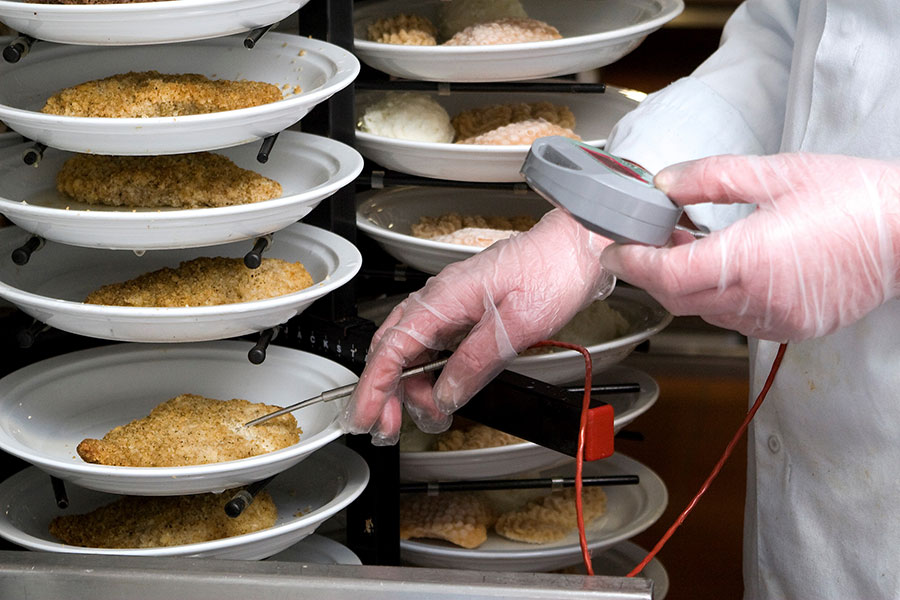
The 5 top restaurant food safety areas of concern
The vast majority of food safety violations fall into the following problem categories commonly identified in foodservice inspections. Roughly 80% of the food handling practices leading to foodborne illnesses are covered by five specific breakdowns:
- Keeping hot/cold food at correct temperatures
- Proper handwashing practices
- Food contact surfaces protected from contamination
- Sanitation plan and cleaning schedule
- Dishwasher procedures
Root causes
Pam Mandarino, an environmental health officer in Vancouver, conducted an extensive food safety study (2017) which analyzed inspection report data on temporary restaurant closures and food handling violations in British Columbia. The study cross-referenced findings of similar studies conducted in the U.S.
Mandarino concluded that multiple factors, and not just food safety knowledge, affect safe food handling practices.
Below are some of the factors she found that influence safe restaurant food preparation practices:
- Time pressures
- Manager indifference toward proper food safety practices
- Food safety certification and food safety training
- Inadequate food handler knowledge
- Poorly designed kitchen facilities and insufficient standard operating procedures
Stop food safety problems before they begin
Proactive attention to food safety practices and processes is your best bet to circumvent a food safety crisis. That being said, having an action plan in place to address a crisis, isolate the causes, and map a recovery path can forestall devastating outcomes.
Myths and Truths About Food Poisoning
| Not True | True |
|---|---|
| A food with enough pathogens to make you sick will look, smell or taste bad. | A food with enough pathogens to make you sick may look, smell or taste good. |
| Really fresh food cannot make people sick. | Really fresh food can cause food poisoning if it is not properly handled. |
| Only dirty kitchens can make people sick. | Even clean kitchens can make people sick. |
| Properly cooked food can never cause food poisoning. | Food poisoning can occur even when foods are properly cooked. |
Source: BC Centre for Disease Control (2009), Ensuring Food Safety Writing Your Own Food Safety Plan – A Guide for Food Service Operators.
Gathering storm
In 2019, the Canadian Food Inspection Agency introduced the Safe Food for Canadians Regulations (SFCR). The SFCR legislation requires food suppliers, importers/exporters, and foodservice operators to mandate preventability and to improve traceability – not an insignificant ask, given that the majority of the food we consume in Canada comes from abroad.
Lawrence Goodridge, Director at Canadian Research Institute for Food Safety, University of Guelph, feels that SFCR does not go far enough. He compares the traditional “surveillance” approach to food safety to predicting the weather: Each of us checks the weather each day, yet no individual feels strongly that their specific observations can accurately predict what will happen.
Smartphone apps are being engaged to accumulate user weather observations and their geo-locations. Feeding this data into artificial intelligence algorithms can create more accurate meta-reports on local weather patterns in real time.
Imagine now that food safety was tracked in a similarly proactive fashion. Responses on foodborne outbreaks could be identified very early on, via smartphone, by individual consumers, leading to faster removal of contaminated food from the food chain.
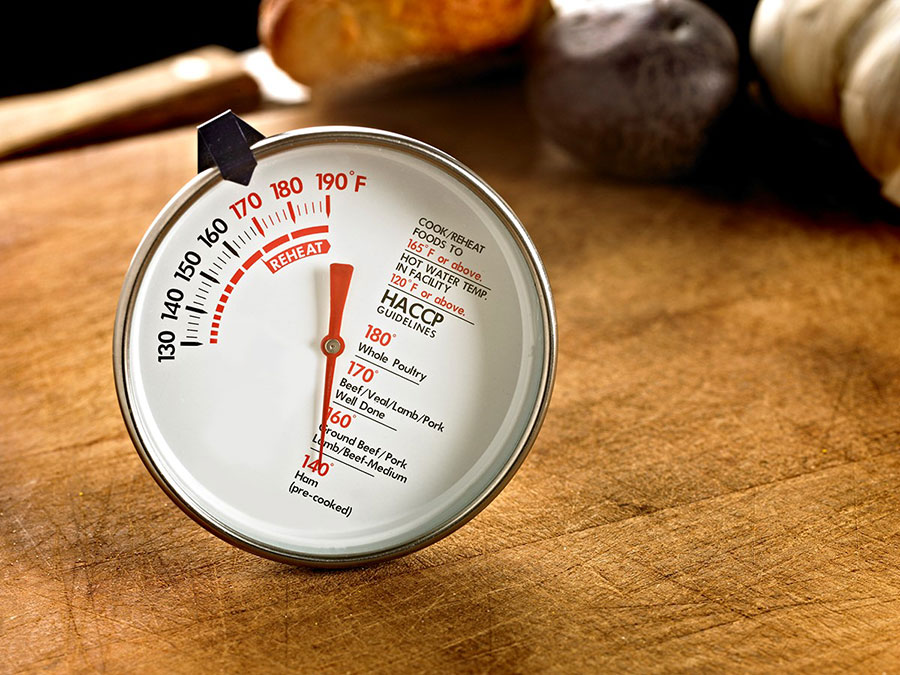
Top tips to prevent food safety situations
Restaurant food handling tip sheet
- Label and date your products when you receive them or when you prepare them.
- Understand proper food storage temperatures and storage.
- Rotate your food products (first in, first out). This should be standard procedure for everything: canned goods, produce, meat, dairy.
- Constantly do checks of the food in your fridges and ensure they’re set at the proper temperature.
- Reheat foods properly.
- Ensure correct handling of fresh produce, for instance not leaving it standing in cold water.
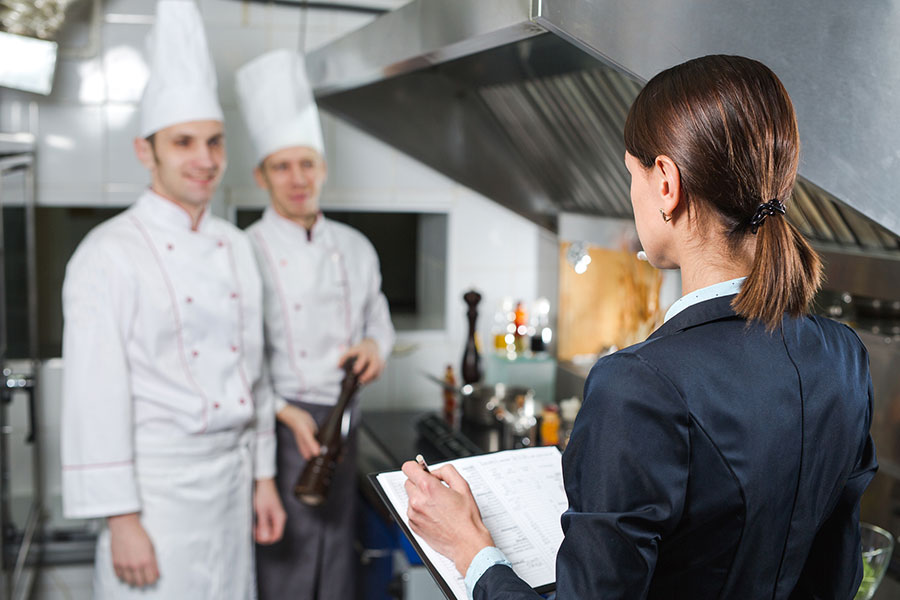
Restaurant food handling training
- Consider hiring a licensed cook with responsibility for ongoing staff training.
- Make sure all staff take a food handling course.
- Make equipment handling courses mandatory, including an annual refresher so staff understand correct operation and cleaning of all equipment.
- Work the relationship with your local health unit and ask if they’ll help with training.
- Rehearse your food handling procedures. Don’t wait for a crisis to happen, be prepared to respond.
Restaurant cleaning
- Maintain a cleaning checklist, posted prominently for kitchen staff.
- Ensure your equipment is cleaned and sanitized.
- Work with your cleaning equipment supplier to recommend best products to use in the kitchen. A lot of suppliers will come in and train your staff.
Educating
- Stay on top of food safety issues. The CFIA publishes regular updates on food-borne issues along with the latest acts and regulations. Food manufacturers publish regular bulletins on their products, and many distributors also send out food safety alerts.
- Sign up for the National Food Safety Training Program, offered across the country.