
The COVID-19 pandemic has placed unprecedented stresses on supply chains worldwide. Policies adapted to contain the spread of the virus have contributed to bottlenecks in farm labour, processing, transport and logistics and momentous shifts in demand, according to the OECD. Factory shutdowns and slowdowns, staff shortages, congested shipping routes and lean manufacturing with low inventories have all contributed to major obstructions at each stage of the supply chain.
As some shipments are delayed or unavailable, foodservice operators are adapting and embracing flexibility. With recent storms knocking out primary supply routes, operators in B.C. and Newfoundland in particular have had additional challenges to face that exacerbate supply chain challenges.
“Buy what you need … and trust the system. The long-term goal of sourcing locally-made ingredients that are plentiful is the best way to shelter your business from disruptions.”
Peter De Bruyn, provincial chair of the BCRFA
Peter De Bruyn, provincial chair of the BCRFA, says the best way for foodservice operators to get through this is to “buy what you need, not necessarily overbuy, and trust the system. The long-term goal of sourcing locally-made ingredients that are plentiful is the best way to shelter your business from disruptions.”
Experts recommend that foodservice operators focus on what they can control. That means nurturing strong (and local, when possible) partnerships, creating flexible menus that can be easily adapted, working out dish substitutions in advance, and keeping the lines of communication open with your staff, customers, and suppliers.
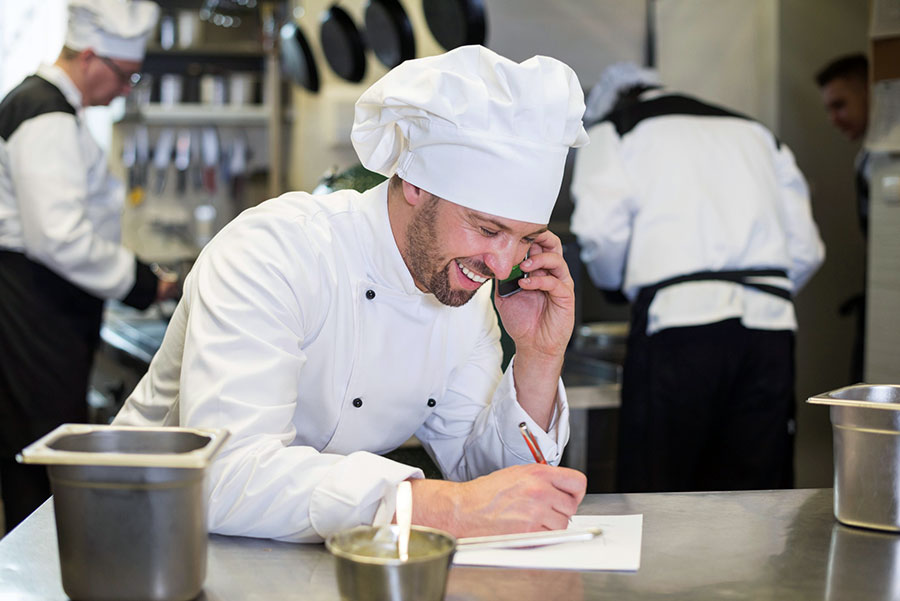
Building relationships to enhance supply links
- Maintain good relationships with your suppliers to ensure adequate warning of any shortages or even price increases.
By working with your foodservice distributors, operators can be better positioned to alleviate the impact on their business. “The supply challenges we have all faced have made the communication between operators and suppliers that much more important,” says Jason Voisey, purchasing manager at F. J. Wadden and Sons, based in Mount Pearl, Newfoundland.
“When distributors communicate any supply issues to their operators as soon as possible, the operator can adjust or modify menu plans,” he adds. “Addressing the circumstance early and working closely together helps ease the frustration and improves the relationship.”
Tips to streamline your menus and simplify kitchen operations
- Pay attention to which menu items are most impacted by restaurant supply chain issues.
- Remove them or offer them as features when ingredients are available.
- Reduce your number of items to those you are confident you can deliver for guests that day.
- Be ready to adjust menus on short notice.
- Make regular items feature items until ingredient supply returns to stability.
- Ensure your menu prices can absorb small increases from rising costs.
- Pay attention to how today’s events will affect next week’s menu…and beyond.
Be flexible to achieve results
- Build greater efficiency and stability of supply and don’t run out of menu items nearly as often.
During these challenging times, being open to more generic products adds flexibility, Voisey advises. “Each operator has preferred products that they would like to use. By working with their distributors to understand which products are available, operators can find suitable alternatives. This may impact some recipes and plate profiles, but it can help keep items on the menu and avoid guest disappointment.”
Suppliers may have several SKUs of similar products, and while some work well, others don’t, De Bruyn says. “Know what items you can easily substitute while you wait for your main supply to return.”
Managing expectations is important, adds Sylvain Charlebois, director, Agri-food Analytics Lab at Dalhousie University. “We are already seeing menus shrinking as well, which is not a bad strategy. Less could and will likely be better in the future, from a supply chain perspective.”
Carrying extra inventories can help get through the current challenges, Voisey says. “But equally, distributors have to monitor their carrying costs and cash flow closely.”

Assess your risk and plan ahead
- Update your emergency plan to include the learning from this pandemic and supply disruptions.
Audits and stress tests will become more critical for companies, Charlebois says. And more supplier options will also be critical if the company experiences a breach of some sort across the supply chain.
“Most companies have an emergency plan, but most did not include a strategy for dealing with a pandemic. Cybersecurity is another issue most companies will need a plan for, and that plan needs to be linked to the supply chain.”
Technology can help
- Online ordering systems, sales trackers and target marketers can mitigate restaurant supply chain impacts.
Using technology by tracking sales helps the foodservice operator make more informed decisions when it comes deciding if an option should be kept on the menu, Voisey says. “Focusing on the most popular items and working with the supplier to ensure these items are available allows the operator to focus on what they can sell and not what is unavailable.”
Data and technology are more important now than ever, and we generally have great access to it, De Bruyn says. “Most of us have point-of-sale systems; as well, we may have the data from our third-party delivery companies. This data can help us understand not only what products consumers are buying specifically, but what trends exist with purchasing behaviour. In times of supply shortages especially, there is no benefit to investing extra labour sourcing ingredients for a low-selling menu item.”
The use of more predictive analytics and forecasting are great tools to understand what lies ahead for foodservice businesses, Charlebois says. “We are expecting more companies in the sector to use promising technologies offered by machine learning, for example.”
Ingredient tips
- Develop or modify menus with ingredients that are common among several suppliers.
- Use reliable ingredients in several menu items wherever possible.
- Source local ingredients from trusted suppliers or even directly from farmers.
Great idea 💡
If a popular menu item is unavailable for a time, advertise it on social media when it does return – even for just a limited time offer – to build diner excitement.
More information:
Food Supply Chains and COVID-19: Impacts and Policy Lessons
Every year, about 20% of all the food produced in Canada (11 million tonnes) is lost or wasted, according to Value Chain Management International (VCMI). Recent data collected from the foodservice industry (including restaurants, hotels and institutions), indicate 38% of produce, 21% of dairy, eggs and field crops, and 20% of meat products becomes waste.
Some estimates peg waste closer to 60%, or 35.5 million metric tonnes with a total value of nearly $50 billion annually. Nearly half of that, 11.2 million tonnes, is avoidable. That’s food that could have been eaten, but was instead landfilled, incinerated, or managed as organic waste.
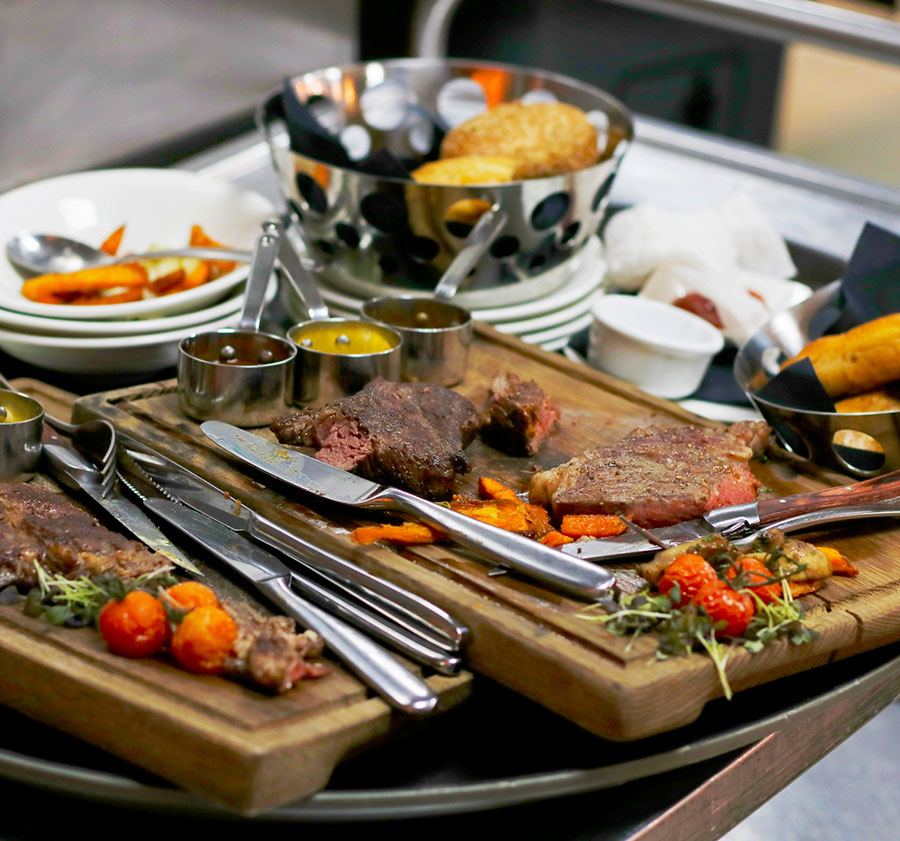
Companies that are addressing the issue typically focus on food donation, and more are now identifying opportunities to reduce waste. In a 2019 survey of Restaurants Canada members, 98% reported they recycle and 77% track, compost or donate leftover food.
A 1% reduction in food waste can lead to the equivalent of a 4% increase in profits, according to VCMI.
| Before food is served, losses in the kitchen typically come from: |
|---|
| Food prepared but not served |
| Surplus inventory of ingredients |
| Inadequate storage |
| Post-consumer losses typically occur when: |
|---|
| Uneaten food is returned to the kitchen and must be disposed |
Second Harvest’s Food Rescue program connects foodservice operators with non-profits. It sets up networks between them to create mutually beneficial and sustainable uses for surplus food.
Top tips to reduce restaurant food waste
- Monitor sales and what customers most commonly leave on the plate to adjust the menu.
- Plate only what is needed and keep the rest properly stored so that unsold food can be donated to food rescue organizations.
- Watch portion control and use smaller plates if appropriate.
- Empower kitchen staff to be mindful of ways to reduce the food they waste during preparation.
- Design menus that cross-utilize ingredients.
- Rotate, label and date your stock.
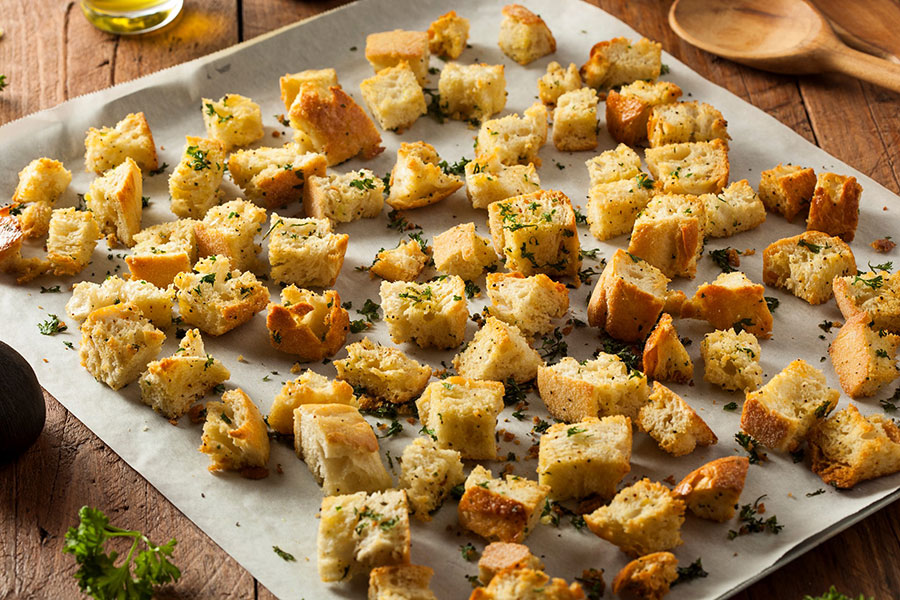
- Monitor prep waste and watch for reuse opportunities such as day-old bread as croutons.
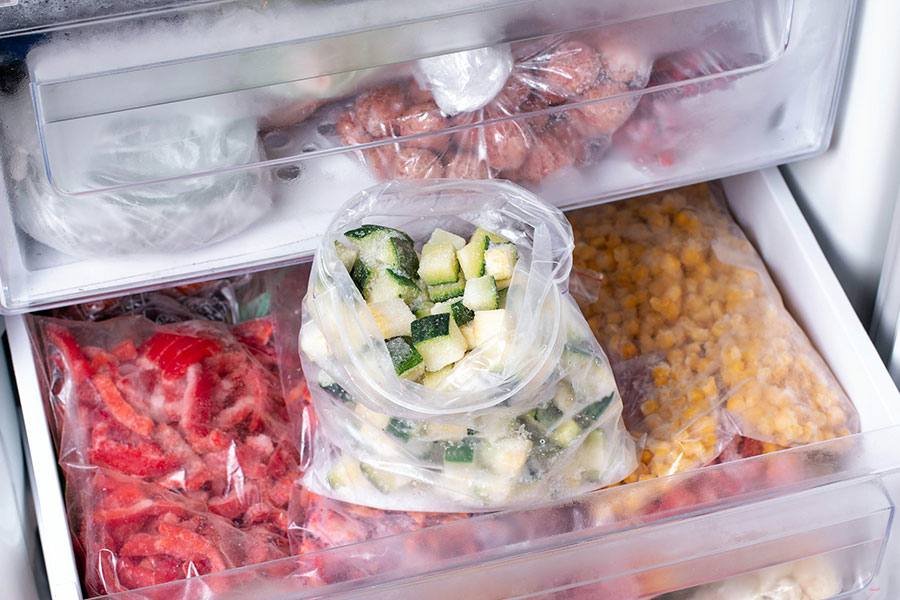
- Use seasonal and fresh and keep your ingredients moving.
- Tell your guests about your waste reduction initiatives and other ways you are striving to be more sustainable and environmentally friendly.
Too Good To Go: end restaurant food waste
Founded in Denmark in 2016 and now in 15 countries, Too Good To Go provides a marketplace using an app that connects consumers to restaurant operators and grocery stores with surplus food. It has launched in Toronto and is expanding across Canada.
Rather than throwing food out at the end of the day, items are packed by the businesses into surprise bags that are sold at one-third retail price, and consumers with the app come to collect them at a defined pickup window. The surprise bag approach addresses the unpredictable nature of food waste. It provides the flexibility to save any and all food, including prepared food and meals, that would otherwise go to waste.
“Operators win because they reduce food waste, drive incremental revenue from food items that would have otherwise gone to waste, and a new consumer in their doors.”
Sam Kashani, country manager Canada, Too Good To Go
“Operators win because they reduce food waste, drive incremental revenue from food items that would have otherwise gone to waste, and a new consumer in their doors,” says Sam Kashani, country manager Canada for Too Good To Go. “Consumers win because they get delicious food at great value and benefit the environment as we reduce food waste.”
By using the app, consumers discover their local neighbourhoods, find new spots to try, and can become repeat business, too. The company reports that 76% of Too Good To Go customers end up returning to make other full-priced purchases.
Once restaurants sign on to the platform, they gain immediate access through the MyStore Dashboard and can manage their surplus supply through any smartphone, tablet or computer. Too Good To Go handles all customer service and transfer of funds. The Too Good To Go app is available for iOS download in the Apple App Store and Google Play for Android.
Other helpful resources: to help you reduce restaurant food waste:
- Taking stock: Reducing food loss and waste in Canada. A June 2019 report from Environment and Climate Change Canada.
- B.C.’s Ministry of Environment and Climate Change Strategy has developed a Foodservice Food Waste Prevention Toolkit to support food waste reduction in the food service industry.
- The Avoidable Crisis of Food Waste is a report and roadmap compiled by Second Harvest and VCMI.
- Leanpath and Winnow Solutions offer a range of resources including software-based analytics platforms and smart weight meter technologies that are used by some Canadian foodservice providers to track and identify opportunities to reduce food waste.
- Leaders in Environmentally Accountable Foodservice offers programs that include evaluation for actions to reduce food waste in restaurants.
If you can remember Encyclopedia Britannica, Swanson TV dinners, party lines, TV converter boxes, banana seat bicycles, transistor radios, the Sears Wishbook catalogue, and the last Stanley Cup parade in Toronto, then you’re a Baby Boomer or the parent of one.
Baby Boomers remain, according to Statistics Canada, the most significant age group in Canada. They are, however, approaching a tipping point. At some point in the not too distant future, the Baby Boomer market segment (born between 1946 and 1964) will no longer be the largest market segment by population. It’s inevitable that Millennials will overtake Boomers in sheer numbers. But that doesn’t tell the whole story.
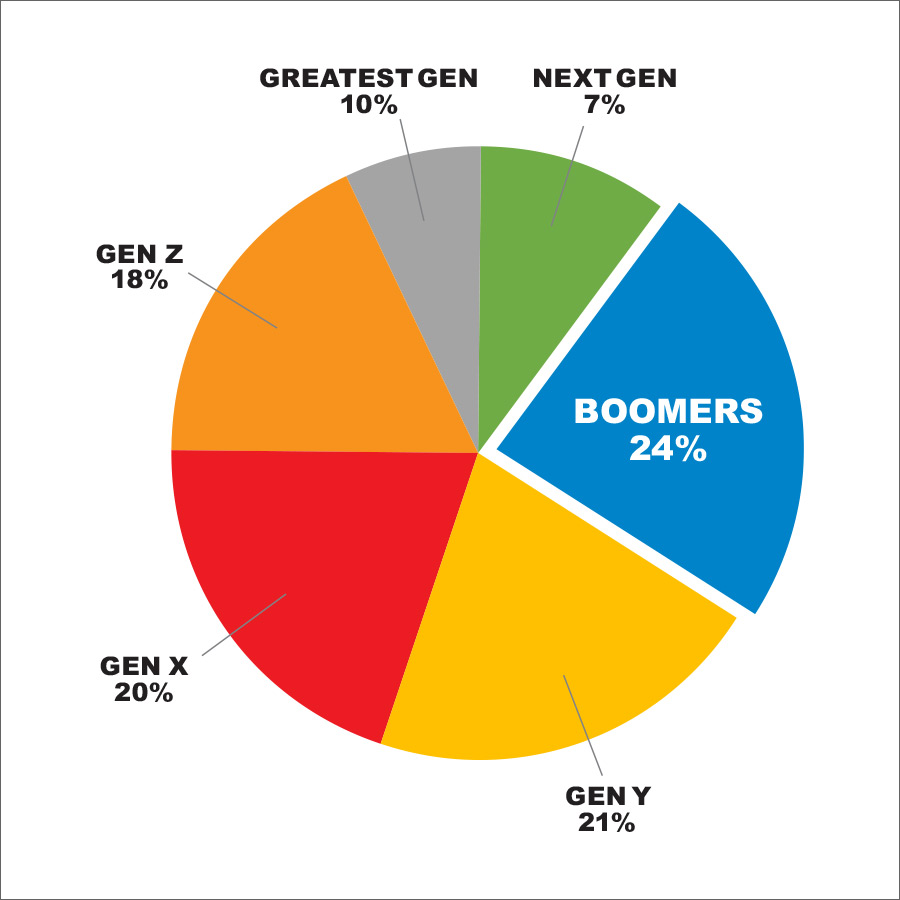
Meet Canada’s generations
- Baby Boomers: 1946-1964
Back-end Boomers: Age 57-68
Front-end Boomers: Age 69-75 - Generation X: 1965 to 1979
Age 42-56 - Generation Y: 1980 to 1994
Age 27-41, often referred to as Boomers’ kids or Millennials - Generation Z: 1995 to 2010
Age 11-28, the newest generation to be named
Baby Boomers still make up the largest segment of the Canadian population. But, beyond this, they hit above their weight in terms of economic impact. Even as back-end and front-end Baby Boomers age, they will remain a consumer force to be reckoned with.
Going, going, not gone
Close to five decades years ago, fewer than one in 12 Canadians was a “senior” (65+). By the mid-1990s, that had risen to almost one in eight. In 2011, when the first of the Baby Boom generation crossed the threshold, the number of seniors began to mushroom. By 2030, less than a decade from now, nearly one in four Canadians will be seniors.
In some ways, the Baby Boomers’ golden years could be a golden age for discretionary and leisure purchases. Over half still have a household income above $60K/year, and only about one-quarter of Baby Boomer households still have kids at home who have failed to launch.
The end is not quite nigh
In Canada circa 1976, almost 12% of jobs were held by someone 55 years of age or older. Comparatively, the current participation rate has nearly doubled to 21.5%. That’s more than one in five jobs held by those who, a generation ago, were approaching or in their retirement years.
In her piece titled, “Like it or not, the Boomers are here to work,” Linda Nazareth coined the term “Perennials” to describe mature working boomers — they keep coming back every year.
This trend will likely not significantly abate in the near term. Nazareth cites the U.S. Bureau of Labour Statistics prediction that, by 2024, the over-55 cohort will be the largest segment of the workforce. Canada and other Western-developed economies will likely be in the same boat.
Not going quietly
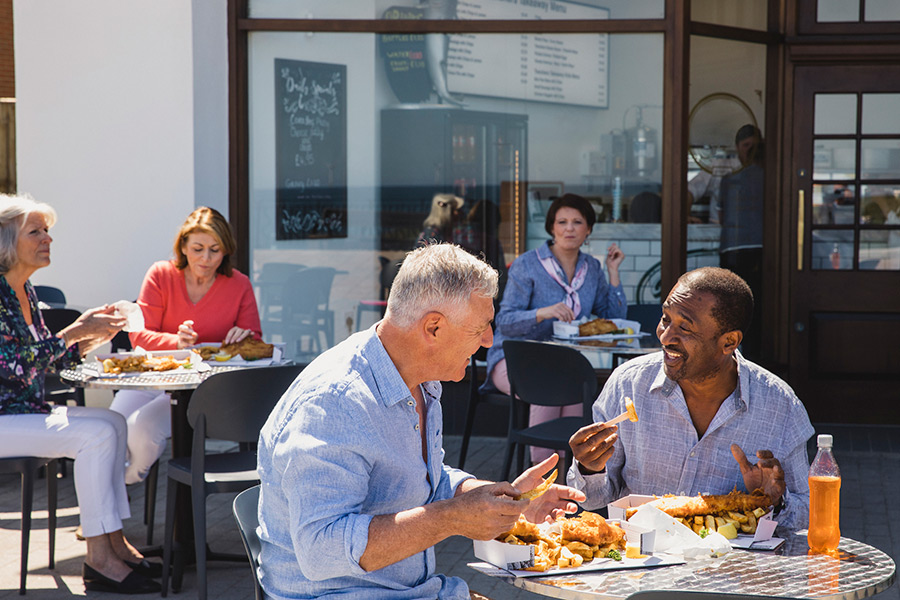
According to Technomic’s Generational Consumer Trend Report, more than half of people (in the U.S.) between the ages of 53 and 72 use foodservice on a weekly basis.
Given their disposition to not go gently into retirement, and the purchasing power that accrues from their accumulated personal wealth, Baby Boomers are worth paying attention to.
Here are some other trends Technomic has flagged for savvy restaurant operators:
- Boomers are big flavour seekers. 66% of respondents like to explore new flavours, especially when they are added to perennial favorites, such as burgers and chicken.
- Boomers are brand loyal and enjoy patronizing their favourite restaurants. Thirty-six percent tend to visit the same few restaurants each time they go out to eat. But they also value food quality and taste more than other age groups — 70% say taste is an important menu attribute and 68% value food quality.
- Boomers like deals. 50% enjoy looking for value in their dining experiences.
- Boomers like their restaurants clean. 63% of boomers say cleanliness is a very important feature in restaurants, especially as it applies to clean bathrooms and utensils.
The challenge for marketers is to provide what Boomers want as their needs evolve in the back furlongs of their lives. There’s a tendency to shift from conspicuous consumption to more experiential consumption.
While, overall, Baby Boomers’ appetite for conspicuous consumption may be waning, travel, leisure, and foodservice spending remains a priority. This holds for both Baby Boomers in retirement and those still in the workforce.

Baby Boomer eating habits are changing
How have Baby Boomer tastes and eating habits changed over the past two decades? The NPD Group has a number of survey instruments that track historical food consumption of Canadians at home and away from home.
Compared to the beginning of this century, Baby Boomers have markedly shifted their food consumption:
Eating more:
- Better-for-you foods – yogurt, RTE cereal, hot cereal, fish and vegetables
- Front-end Boomers are more likely than Back-end Boomers to choose special labels like “all natural,” “cholesterol free,” “low fat” and “no artificial sweeteners”
- Special labels at breakfast, such as “low fat/diet/light,” “whole grain” and “vitamins added.”
Eating less:
- Family friendly, less nutritious foods – waffles, pancakes, hot dogs and French fries.
Limiting the meat:
- Dr. Sylvain Charlebois, Project Lead, Institute of Agrifood Analytics at Dalhousie University, has data confirming the finding that Baby Boomers are eating less meat.
Overall, Canadian beef consumption is down by 16% or 94 million kilos per year, compared to 2010. Over six million Canadians have either adopted a meatless diet or are have adopted a “flexitarian” lifestyle, limiting the amount of meat they eat every week, AND, nearly a third of Canadians are “thinking about” reducing meat consumption in 2019.
While this trend noticeably skews to younger consumers, more than 42% of flexitarians are Boomers, who view reduced meat consumption as a healthy choice.
The bottom line?
For the first time in its history, as of 2017, Canada had more residents 65+ than children 14 years or younger.
Time will continue to march for Baby Boomers who remain working, and those participating in society in other ways. But, just as they demanded attention when they first came of age, aging Baby Boomers will reward restaurant operators who hear them.
So, it makes good sense, and will make for good business, to keep the specific likes and dislikes of this demographic multitude in mind to keep fueling the growth of your foodservice operation.
Meet your Baby Boomer diners
Factors driving Baby Boomer food choices and restaurant visits

- Flavour seekers
Boomers enjoy trying new flavors in familiar foods – 66% of respondents like to explore new flavors. - Brand loyal
Thirty-six percent tend to visit the same few restaurants each time they go out to eat. - Quality and taste
Boomers index food quality and taste more than other age groups — 70% say taste is an important menu attribute and 68% value food quality. - Deal or no deal
Along with taste and quality, price turns the dial for Boomers. Gen Xers are the most likely to seek deals and discounts at restaurants (55% say they do so), baby boomers come in a close second at 50%. - Flexitarians
Few Boomers are full-time vegetarians BUT more than 50% say they plan to increase their consumption of fruits and vegetables. - Cleanliness matters
Restaurant cleanliness matters to Boomers, with 63% saying it is a very important attribute. - Picky about takeout
Order accuracy is a top priority to 70% of baby boomers, and 75% expect the food quality and taste to be as good as it is when dining in the restaurant. Convenience is not as important to this generation as it is to millennials and Gen Zers. - Personalized service
Boomers are less likely to order from a mobile device or app. Boomers still value customer service in casual dining. - Cash is king
Not fans of cashless operations and kiosk ordering at QSRs and restaurants.
It’s a fact. Restaurants across Canada are on the brink of reopening, whether to patio dining, in-restaurant meals, or both. Diners are understandably excited to return to their favourite culinary haunts. But what about restaurant staff, many of whom have been furloughed for part or all of the pandemic? How safe is it for them to return?
As Jeff Dover, principal of fsSTRATEGY Inc., says, “Very few cases of COVID-19 have been confirmed as spreading in restaurants; this includes areas of the country where indoor dining has been allowed. In short, the restaurant industry was [already] doing a good job of keeping staff safe.”
“Very few cases of COVID-19 have been confirmed as spreading in restaurants. In short, the restaurant industry was [already] doing a good job of keeping staff safe.”
Jeff Dover, principal of fsSTRATEGY Inc.
But keeping restaurant staff safe and having restaurant staff who feel safe are two different things. Canadian Restaurant Workers Coalition has been petitioning provincial governments to improve restaurant workers’ protections like paid sick leave and overtime pay. As reported in the Toronto Star, Not 9 to 5, a non-profit providing resources for mental-health well-being among hospitality workers, recently introduced the Mind Your Health project. The project includes a certification program on workplace safety from a psychological perspective, along with an online survey to collect data on mental-health well-being among hospitality workers.
Where to start
“The key for me is to ensure that staff wear masks and, even more so, keep six feet apart when possible,” advises Dover. “When staff have to be within six feet (e.g., taking orders, picking up food), the time of exposure should be limited. One of the primary challenges is tight kitchen spaces such as a line with multiple stations not six feet apart. Redesigning the menu to have fewer kitchen stations will help keep the staff safe. COVID-19 is more likely to be transmitted indoors and in close spaces. Redesign your workflows to eliminate or limit such interactions.”
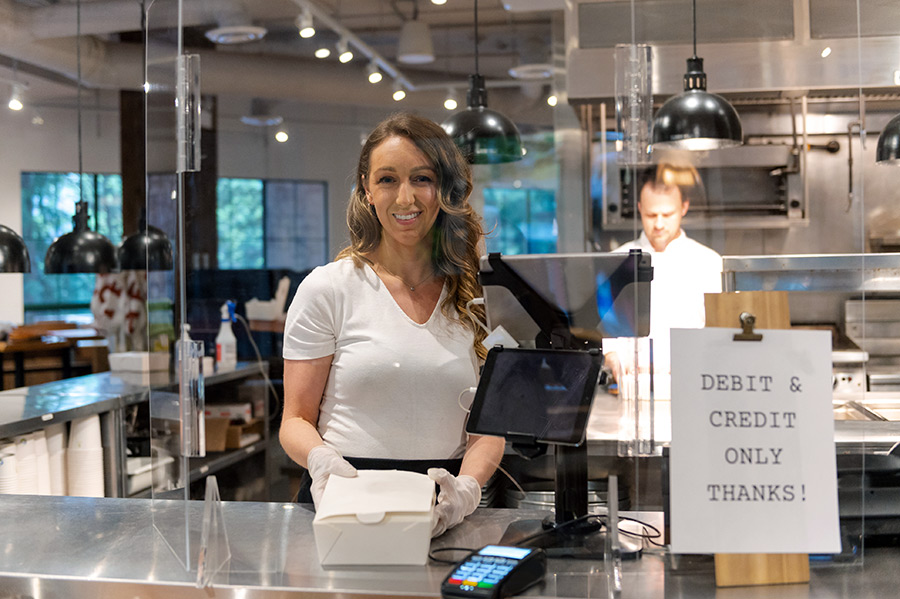
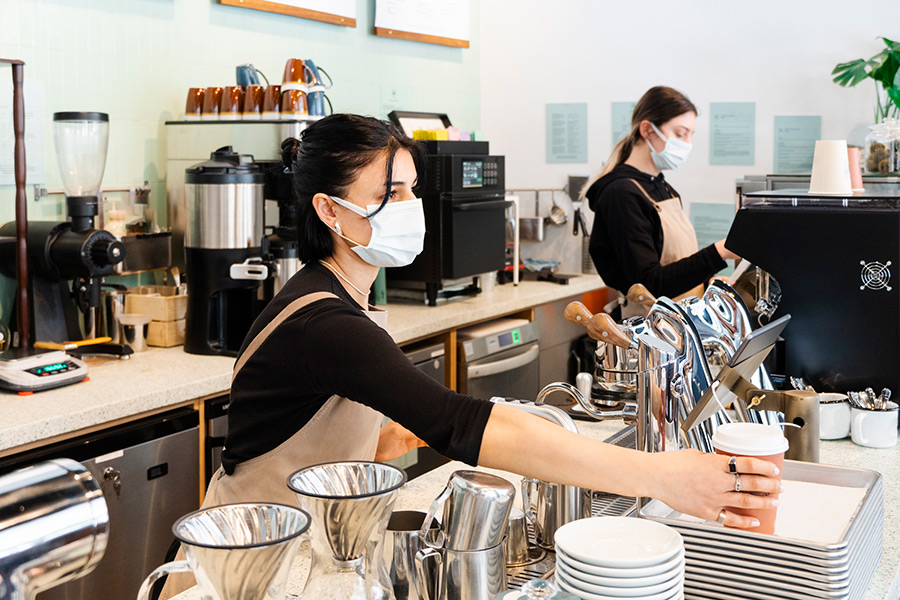
Sanitize regularly. Tables, work surfaces, and other areas, both front and back of house.
Reduce staff sharing. For instance, kitchen staff should never share utensils at back of house.
Change your menuing. Other changes will need to be instituted to ensure the safety of both your guests and your employees. Reusable menus, for instance, may become a thing of the past. Many restaurants, says Dover, are putting QR codes on tables to limit contact with shared items. “When guests request menus, they should be provided with a single use copy. Condiments should not be kept on tables and should be sanitized before use. Cutlery should be rolled and brought to the table after the guests are seated. Simple adjustments like these will assist in limiting the spread of COVID-19 for both guests and staff.”
Appoint a COVID-19 point person. “I recommend having someone responsible each shift to ensure COVID-19 prevention practices are adhered to,” says Dover. “This person could also be the go-to for questions about practices being employed to keep customers and staff safe.”
Organize vaccination days. A number of restaurant chains in the US have said they are providing pay for staff to get vaccinated and are even helping their employees to book appointments.
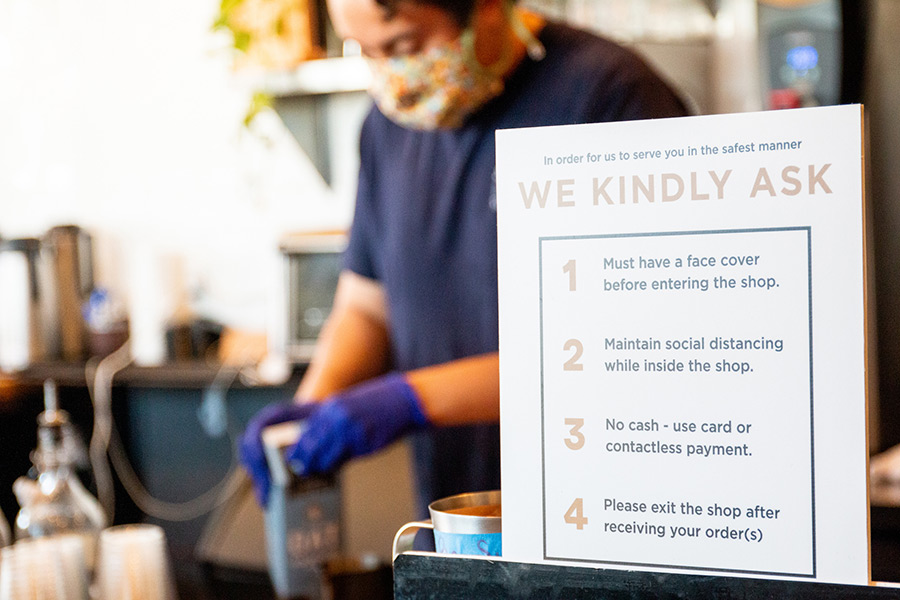
Offer paid sick days. This is key, says Dover. “You don’t want staff to come to work when they are not feeling well. Take advantage of federal and provincial paid sick day programs if you can. Paying sick days will be less expensive in the long run than having your restaurant closed due to a COVID-19 outbreak.” Should you experience an outbreak, make sure you have records of which employees worked when, along with info on your dine-in restaurant customers and who served them. Contact tracing is key.
Ramp up your communication. Let your staff know what you’re doing to keep them safe, and then inform your guests of the steps you’ve introduced to keep them — and your employees — safe. “If you are able to pay sick days, I would communicate it,” Dover advises. “The restaurant chains in the States paying staff (I heard two to four hours) to get vaccinated received great publicity. We have seen in jurisdictions that have opened up that there is significant pent-up demand. However, not all staff will be comfortable working and not all potential customers will be comfortable in dining rooms. Communication on the safety practices being employed will help alleviate any such fears.”

Your restaurant safety protocols checklist
Employee safety, testing and validation will be key to successful restaurant reopening. Healthcare and foodservice workers may be required to validate their health status before handling food in the post-COVID-19 environment. Here are some protocols you should initiate to ensure the highest level of safety:
- A Validated Body Temperature Check and Log for employees before they enter a place of work. These records will need to be maintained or even submitted to a higher authority on a regular basis, following the lead of most healthcare facilities.
- Food Safe Certification (or comparable) for all foodservice workers.
- Face Masks. All food handlers (and maybe even service staff) will be required to wear a protective mask. Ensure you have masks available for all your staff.
- Hand washing. Training in proper sanitary handwashing must be demonstrated and followed frequently.
- Sanitary uniforms. Many restaurants require uniforms but leave them up to employee. Gone may be that favourite Che T-shirt as a uniform of choice, along with unwashed shoes, baseball caps, or cargo pants and shorts, as operators pivot to requiring uniforms laundered daily and professionally, and not left in staff lockers or change rooms.
- Work surface sanitation protocol and records. Sanitizing of work surfaces, equipment and documentation of all protocols is recommended.
- HACCP enforcement. Temperature and travel logs must become second nature. HACCP (time temperature tracking) will become the most critical safety/sanitation issue in the future.
- New procedures for clean dishes, flatware and glassware. Flatware must be free of contamination before menu items are plated and delivered to a guest. Discuss with your chemical service providers how to ensure products and equipment are safe for staff and guests.
- Health inspections. Develop a plan to interact more with your local health department. Involve chefs and managers to create a flow of information.
- Focus on safe distances between employees. The typical design of a restaurant leads to the smallest amount of kitchen space to accomplish the job — leaving more space for revenue generation out front.
- Seek opportunities for menu change or equipment location swap to increase safe distancing in the kitchen and service area. While 2 metre social distancing may not be possible at all times, plan to incorporate more space.
- Rethink your staffing. Use the opportunity to rehire as many of your good staff as possible, but also consider adding new and better hires with more experience. Will you be continuing to offer delivery? Make sure you have the right staff for your right jobs.
Should your restaurant be active on social media? Absolutely. Is it important also to have a website and mailing list? Even more so.
Why? Basing your marketing plan on social media alone is akin to renting without a lease. Websites and mailing lists, however, offer the control that comes with ownership.
Why you need a website and mailing list for your restaurant
Websites offer restaurants many benefits. Jenny Companion, VP eastern operations, and Nathalie Kent, communications coordinator, of hospitality consulting agency The Fifteen Group say, “Having a proprietary website provides more freedom to tell the story of your restaurant, control the narrative, share all pertinent information and maintain a certain look and feel. You can share your full menu in a large format […], offer easy access to make reservations or contact your team, share maps, and more.”
“Having a proprietary website provides more freedom to tell the story of your restaurant.”
Jenny Companion, VP eastern operations, The Fifteen Group
Nathalie Kent, communications coordinator, The Fifteen Group
Your mailing list is your most valuable digital commodity because it consolidates contact information for people who interact with you in many places.
Companion and Kent say, “Building a mailing list is also beneficial as it affords restaurants more direct communication with their guests. Rather than posting a restaurant LTO or promotion on Instagram and hoping it gets seen, they can send a newsletter directly to their target audience’s inbox.”
“Building a mailing list is beneficial as it affords restaurants more direct communication with their guests.”
Jenny Companion, VP eastern operations, The Fifteen Group
Nathalie Kent, communications coordinator, The Fifteen Group

Why social media alone for your restaurant isn’t enough
Your community expects to find you on at least one or two social media platforms. This allows you to promote your brand and engage with followers. But each platform has both content and functional limitations.
Be mindful that what you build on any third-party platform like Instagram, Facebook or TikTok is somewhat precarious. Changing algorithms can limit who sees your posts, services can be converted from free to paid, and sometimes platforms even shut down (goodbye, Google+).
Each social media platform has both content and functional limitations.
For Facebook Pages, which businesses use, ongoing algorithm changes favour paid posts over organic reach, meaning your posts appear less frequently in your followers’ feeds. If you have a Facebook page, no doubt you receive frequent nudges to “boost” your posts — for an advertising fee, of course.
On Instagram, posts used to appear in reverse chronological order. If you posted an enticing photo of your lunch special at 9 a.m., followers who used the app that morning most likely would have seen it. Now, the rules that dictate how your posts rank in followers’ feeds are far more complex, including factors like followers’ behaviour (e.g., the types of posts they engage with), the interactions between you and them, timing and more. It’s complicated.
You might not like it, but there’s nothing wrong with social media platforms changing the rules when they please. After all, they offer their services for free, but not out of altruism. They’re businesses prioritizing their interests.
Again, just like renting that great space without a lease, basing your restaurant’s marketing plan entirely on social media doesn’t offer a lot of security.
The power of website ownership
Apart from the content, marketing, and operational benefits of having a great website, it’s yours to control. If you want to change up the design or integrate new functionality like a mailing list service, well, you’re in charge.
You own your domain name (like www[dot]bestrestaurant[dot]ca) and choose the platform to build your website on. By using a hosted website, you can focus on functionality, content, and SEO (strategies to help search engines display your site to would-be visitors) while your provider handles the nuts and bolts (think fun stuff like updates, security, backups, etc.). One website platform is Sociavore, which was developed for independent restaurants.
Yes, you’ll need to pay for your domain name (URL) and platform fees, while your social channels are free. But you won’t be at the mercy of social media’s frequently changing rules and players, and visitors to your site will find everything they need in one place.
Making the most of an email list
Congratulations if you have scores of followers on social media, but do you know how to contact them outside the platform? Visits to your website may be booming, but do you know who those visitors are?
Creating a mailing list allows you to make the most of traffic to your website, social channels and restaurant. It’s your master list of everyone who’s said they want hear from you.
No matter what happens to your social channels or website, your mailing list is there for you. It’s your most powerful marketing and relationship-building tool, allowing you to communicate directly with your subscribers. Build it with care and treat it like gold.
“Those who sign up for your mailing list are, by definition, already engaged with and invested in your brand, so you’ll be able to capitalize on an active and interested audience to drive business.”
Jenny Companion, VP eastern operations, The Fifteen Group
Nathalie Kent, communications coordinator, The Fifteen Group
As Companion and Kent say, “Those who sign up for your mailing list are, by definition, already engaged with and invested in your brand, so you’ll be able to capitalize on an active and interested audience to drive business.”
Seven tips to maximize your restaurant email list
- Offer multiple opportunities to subscribe — Put sign-up links on each social channel and your website, and provide paper forms and/or digital options on your premises. Always seek to expand your list.
- Offer incentives — It’s well worth providing special offers or promotions for people to join your mailing list.
- Personalize email — A little thing like using subscribers’ names in email goes a long way toward relationship building.
- Learn about subscribers’ interests — Polling subscribers about their interests means you can target content to them. Send the promo about your new meat lovers’ menu to the people who are happy to see it, not the vegan crowd.
- Don’t flood subscribers’ inboxes — If you send too many emails, they may tune you out or, worse yet, unsubscribe.
- Remember, consent is key — Spam may have a place on some menus, but it doesn’t belong in your mailings. Learn more about Canada’s anti-spam legislation.
- Use a mailing list service — You don’t have to manage your list alone. Services like MailChimp or Constant Contact support you in enrolling new subscribers, anti-spam compliance, sub-list creation, communication design, and analyzing impact.