
During the pandemic, the need for outstanding visuals to sell your food is even greater than before, when competition was already fierce for food dollars. That’s where professional-looking food photography comes in.
Consider food photography being worth not only a thousand words, but a thousand dollars in revenue for your restaurant brand. In a digital world that’s easily influenced by visual storytelling, this is the impact that high quality styled food images can have in attracting new business to your restaurant.
Consider food photography being worth not only a thousand words, but a thousand dollars in revenue for your restaurant brand.
According to the TripAdvisor “Influences on Diner Decision-Making” survey from 9,500 international diners, 60% of respondents from the US reported that online photos influence their dining decisions. The impact of online photos proved even higher in Spain at 72%, followed by Italy with 67%, France with 64%, and the UK with 52%. This is definitely something to keep in mind when trying to attract tourist (and other) diners.
For restaurant brands large and small, the importance of capturing high quality, well-planned menu photography remains the same – HIGHLY IMPORTANT! And during the pandemic, the need for outstanding visuals is even greater.
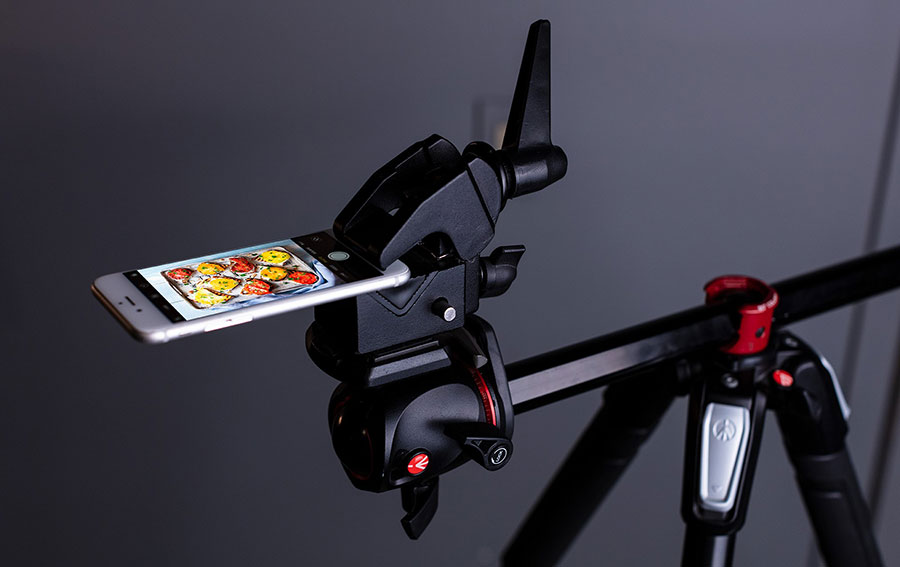
So, when is using a phone to take your restaurant brand’s photography a good idea?
For chefs or restaurateurs, if you have basic photography knowledge and understand lighting, angles, product positioning, shot styling, and are tech-savvy with the latest editing applications, then go for it!
- TIP: Scroll through Instagram to find inspiration and shot examples to guide your photoshoot.
However, if you are like most of us, with little photography expertise beyond selfies, and even less time to spend in this area, and if you want to put your best visual face forward, here are some other solutions to create a professional profile at reasonable cost:
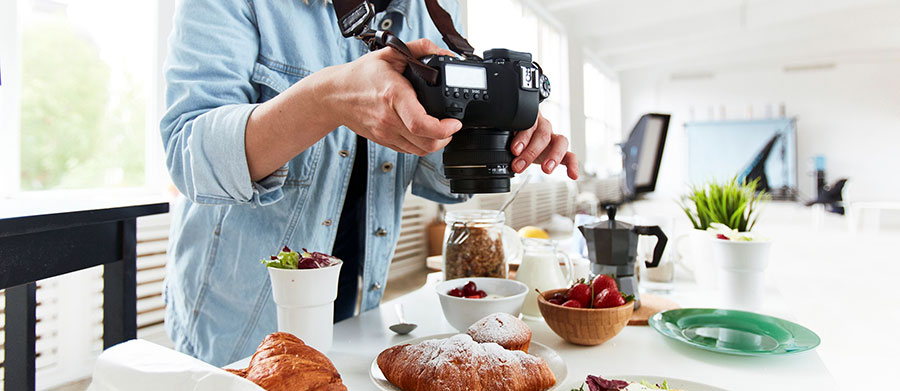
Hire new talent
Aspiring photographers or recent photography graduates are a great place to start as they need projects to build their portfolios and often have very affordable rates. Try posting a free ad on jobsites like Indeed.com and on your restaurant’s social media pages to attract résumés.
Find the food influencers
A food influencer is an Instagram user with an above average following who focuses on curating and sharing food and restaurant-related content that produces user engagement to influence consumers’ decision-making.
These are savvy photographers and editors who are always on the lookout for new content to curate!
TIPS:
- Find and follow Instagram influencers whose content relates to your restaurant brand. For example, pizza places should find influencers who curate and post content about pizza.
- Invite influencers to your restaurant to taste the menu and enjoy the overall brand experience. If you put on a great show, they will likely take LOTS of photos!
- Get the photos! Discuss if you can use their photos to post on your digital platforms. NOTE: Some may request a fee per image.
- Give credit where credit is due. Social media etiquette is always giving photographers or curators credit for their photos by tagging them in the post. This helps to promote their skillsets and personal brand in return for photo use, which sometimes is enough to eliminate fees.
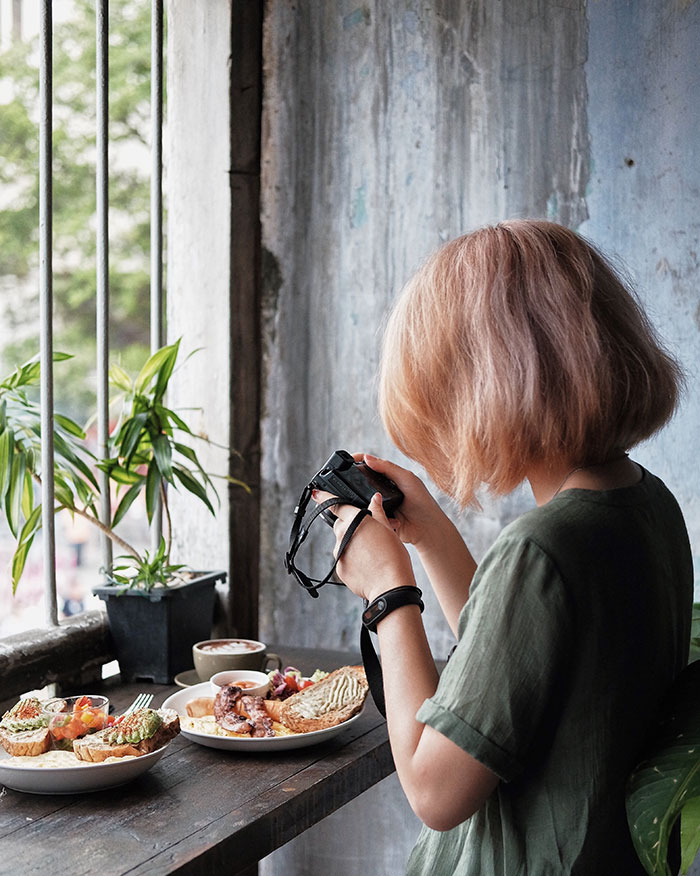
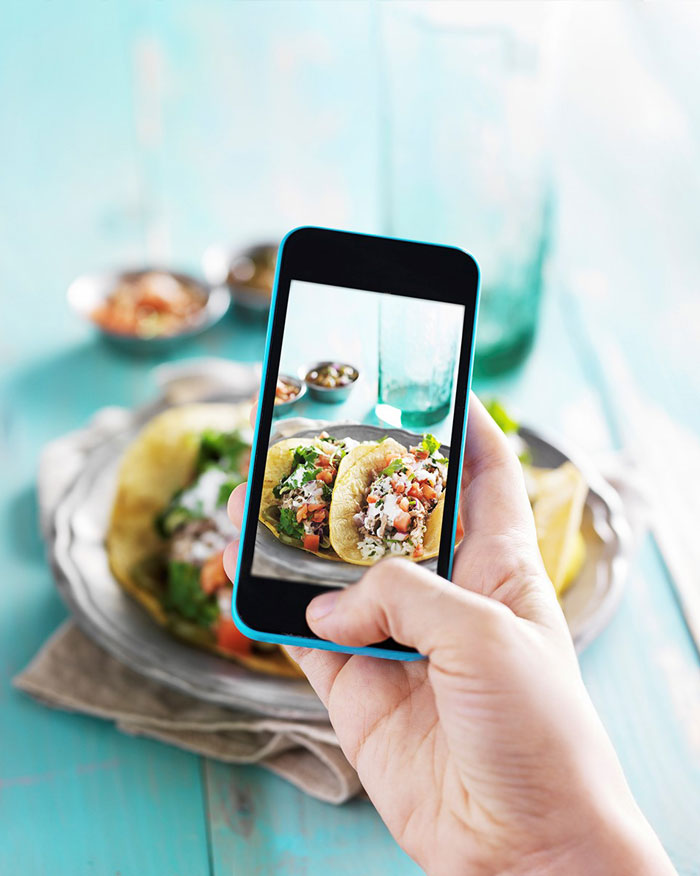
Whether you choose to take your own photos, or use a trained photographer, understanding how to make your food look its best from the kitchen preparation to the final shot can help to achieve your desired look.
Your website and social media channels might be the first experience and interaction potential guests have with your brand. You have one chance to attract business from that first impression.
This is why it is so important to put your best shot forward!
TIPS:
- Select menu items that are unique to your brand and also present well.
- Decide on a consistent element to your brand photography. Whether it’s a backdrop, tabletop surface, or prop, this helps to define your brand.
- Go for natural lighting. This means shooting near windows. If your restaurant interior is dark, then rent lighting and reflectors to achieve a natural lighting affect to avoid the “flash.”
- Develop a shoot schedule and shot list. This should outline:
- The item details, or combination of items. Consider the kitchen and bar prep time when arranging the shot list.
- Which dishware and glassware the items will be shot in.
- The angle of the shot and lighting details.
- What props or people will be featured in the shot.
- An example image of the final look you are trying to achieve.
Consumers will search your website and scroll through your social media channels to read reviews and look at photos of your menus and space before deciding whether or not to book a reservation or order from your restaurant. Those visuals may mean the difference between choosing your place…or the eatery down the street.
Is it all doom and gloom? According to projections by the Canadian Chamber of Commerce (based on Statistics Canada research), 60% of operators are at risk of closure by the end of 2020. Dark clouds continue to gather on the horizon: the prospect of a reduction in various government support programs; a six-month hiatus in patio dining over the fall and winter; and a likely second wave of the virus.
To better understand the mood and attitudes of Canadian consumers with respect to COVID-19, the Agri-Food Analytics Lab at Dalhousie sponsored a detailed research project conducted by Angus Reid in June 2020.
A total of 1,505 Canadians were surveyed. They were asked if they had been ordering food from restaurants during the pandemic and if they intended to return to their old habits afterwards. The survey also measured consumer expectations in terms of using foodservice in the rest of the year.
Behavioural impacts of COVID-19 — key insights
The good news
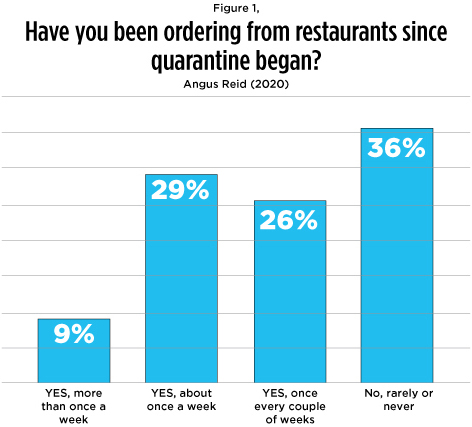
- Two-thirds of Canadians kept ordering food regularly from restaurants during the pandemic. A total of 64% of Canadians had ordered food at least every two weeks from a restaurant.
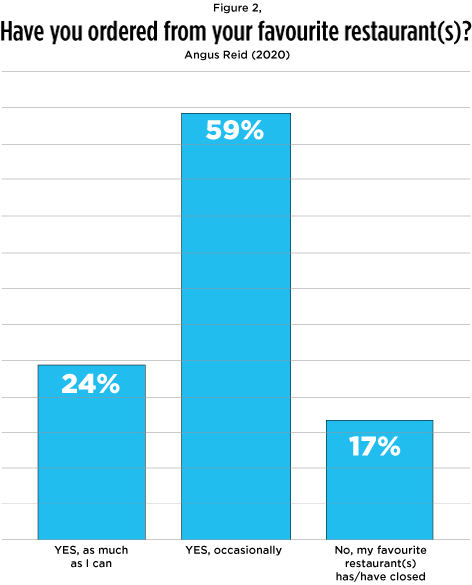
- A total of 83% of Canadians ordered from their favourite restaurant during the first three months of the pandemic.
- Younger people were more likely to order out from a restaurant. A total of 81% of respondents between the ages of 18 and 34 years old had ordered from restaurants, the highest rate among age groups.
- About 29% of Canadians ordered from restaurants at least once a week, and 9% had ordered food once a week since the beginning of the pandemic.
The bad news
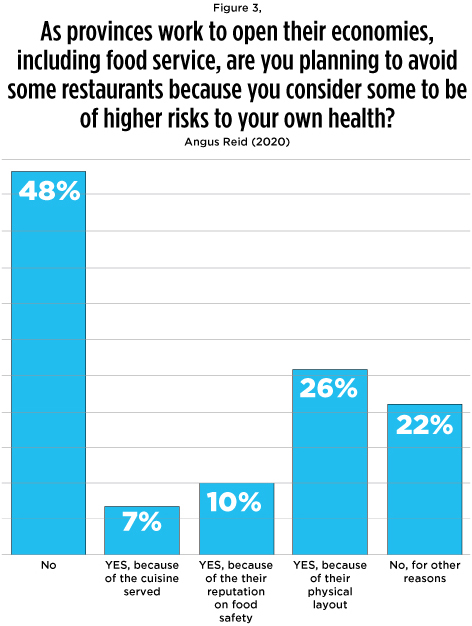
About half of Canadians were hesitant to resume restaurant patronage to protect their own health.
- Physical layout appears to be the most important issue for people.
- About 10% of Canadians say they will avoid establishments due to their food safety reputation.
- And about one-fifth of Canadians will avoid establishments for an undisclosed reason.
Bottom line for operators is the need to invest in changes to your physical environment and perceived service level to build trust. Consistency and commitment in the implementation of these changes will enable you to gain and keep consumer confidence.
Meeting and managing expectations
In the Dal Agri-Lab survey Canadians were asked what they expect to see when they return to their restaurant of choice. The overwhelming majority of respondents said they expected to see more personal protective equipment worn by staff, and measures taken to separate/protect diners (e.g. more plexiglass).
Interestingly, there was also an appreciation for the challenges faced by operators to maintain safety and manage the circumstances. Nearly 40% of Canadians said they expected slower service and 29% expect menu changes or fewer choices.
Author of the Dal Agri-Lab study, Professor in Food Distribution and Policy at Dalhousie University Sylvain Charlebois estimates that up to 30% of lost restaurant revenue in 2021 could be a result of people working from home. “The more people work from home, the less likely they are to spend money on food and beverages at local restaurants.”
“The more people work from home, the less likely they are to spend money on food and beverages at local restaurants.”
Sylvain Charlebois, Professor in Food Distribution and Policy at Dalhousie University
The road forward will depend on both governments and operators helping themselves by doing what is needed to optimize the safety of foodservice in order to convince guests that it is safe to return to restaurants.
Foodservice has already been buffeted by unparalled difficulties as a result of COVID-19. A survey of operators by Restaurants Canada at the end of March 2020 revealed that one in 10 restaurants in Canada had already closed permanently — roughly 10,000 businesses that had decided not to reopen. Charlebois adds, “We are expecting the industry to lose $20 billion, on top of what actually happened this spring. In a year from now, 25% of all restaurants will disappear.”
Though many more operators may be forced to close by 2021, the industry will endure. However, reduced meal occasions and altered consumer behaviour may be with us for the long haul.
To say that Instagram’s food community is an impactful marketing channel for your restaurant business is an understatement.
Restaurateurs need always to be thinking about how every element and square inch of their restaurant can be used to create their unique brand and be “Instagram worthy.” The more potential photo opportunities designed within your restaurant and menu, the more diners will want to snap and share, and the bigger your following will become. It’s that simple.
So first off, who is your customer base?
Of the current 800+ million Instagram users, the majority are Millennials with 90% of the Instagram user base 35 years and younger. That’s not to say Instagram can’t be effective connecting with a mature restaurant clientele, you just might experience slower growth through the platform.
Cater your Instagram content to your demographic by sharing photos and messages that will matter to them.

What should restaurants posts?
Before it was just about food, now it’s about sharing everything about your restaurant that is consistent with your brand.
- TIP: Organize your Instagram feed as a story of six posts; each post should depict a different part of your restaurant brand.
- TEAM
- MENU ITEM
- DÉCOR
- DRINK ITEM
- SERVICE
- BRAND ELEMENT
#Food #Drink
When designing your food and drink menus, create three to five items that will become your “Instagram stars” in addition to your other items. The “Insta Stars” should be unique to your restaurant — for example, in their presentation, the ingredients, or the way they’re prepared or consumed. Snap these items with a consistent aesthetic to your brand and add a custom hashtag so you can track how many times they’re posted.
Your Insta Stars will be the key elements that get you the most #instalove, and are likely to be snapped and shared the most, garnering your brand the most attention. Try to create new Insta Star dishes seasonally so Instagrammers and diners continue to come back to see what’s new.
#InstaDesign
Your restaurant’s design and décor provide endless opportunities to incorporate Instagram-worthy elements that are consistent with your brand.
- TIP: Consider messaging in tiles or signs, unique wallpaper, interesting colour palettes, feature photo walls, and themed sitting areas.
Exterior to interior design, nothing should be over looked as Instagrammers flock to restaurants for the trendy design photo opp, but then stay for the food.
#GoTeam
Action shots of your chefs cooking or plating, servers sharing their favourite dishes, bartenders shaking up fancy cocktails are all great photo opportunities. It is an Instagram fact that photos featuring faces get 38% more likes than those without, according to Sproutsocial.com.
#PicturePerfect
A professional photographer will always take the better shot and edit it to perfection, hands down. But for restaurateurs who are managing Instagram in-house it is most effective to have one team member manage the process for consistency.
- TIPS:
- Take your shots in natural light or bright, well-lit spaces.
- Purchase a Selfie Right Light to attach to your phone for immediate lighting.
- Avoid using a flash.
- Use a tripod built for phones.
- Figure out if the shot will be of one item or a few items to create a scene.
- Use props to help fill in the shot.
- Try different angles.
- Add a human element. Maintain a consistent filter.
#Hashtags
- Hashtags allow users who are searching that hashtag to connect with your post.
- Hashtags allow your posts to be part of a trending topic.
- Hashtags allow you to track the number of posts associated with the hashtag, for effectiveness.
- TIPS:
- Create unique brand-specific hashtags.
- Post hashtags that are relevant to the image and message being posted to capture the RIGHT follower attention.
- Be aware of the trending food holidays on Instagram to join in the conversation when appropriate for your brand.
Instagram is a restaurant’s gateway to the influential food photo frenzy community…