
Brand is the personality of your business. Your brand certainly shines through on the menu and in the food you serve, but how about your restaurant décor? The slow winter months are an ideal time to refresh your space to invigorate your brand, engage your customers and revitalize your staff. (Yes, they, too, are energized when you refresh your brand.)
What’s your brand identity?
First and foremost, stay true to yourself when planning a front-of-house upgrade. “It’s essential for a restaurant to know how they want to be perceived,” says Chris Rasmussen, CEO of LeoLight, a division of Pico whose mandate is to “to provide operators and distributors a full-service partnership for their ambience and food warming needs.”
For example, wax, fuel cell and LED candles each offer a different feel. Using a wax candle on a sports bar table or an LED on a high-end steakhouse table won’t meet customer expectations or properly reflect your brand.

“Ambience is an important factor when deciding where to spend dining dollars. Ambience can lead to a better experience, which in turn can lead to a higher guest check.”
Chris Rasmussen, CEO of LeoLight, a division of Pico
“Ambience is an important factor when deciding where to spend dining dollars,” says Rasmussen. “Ambience can lead to a better experience, which in turn can lead to a higher guest check.” The goal should be to make your guests so relaxed and comfortable they stay longer…and order more.
Remember outdoor lighting for your spring and summer planning, Rasmussen reminds foodservice operators. “Canadian patio season is short and sweet; make it impactful.”
- TIP: Use string lighting and table lighting to match the interior ambience.

Find YOUR colour
Colour. Pure and simple, colour can transform your dining room (entrance and bathroom, too). Paint and a brush are really all you need to complement your brand. Repainting the entire space may not be necessary, though your assessment should factor in whether you need a complete paint job. If you’re looking for accent, trying a new colour on a focal wall may make more of a statement than using a uniform colour scheme. Use the psychology of colour to accentuate dining experience.
A splash of colour in unusual places can add personality to your brand. Imagine red chairs in a neutral coloured space, such as offsetting grey seat coverings. Contrast colour in the entrance.
- TIP: Don’t just look to artificial colour to liven your space.
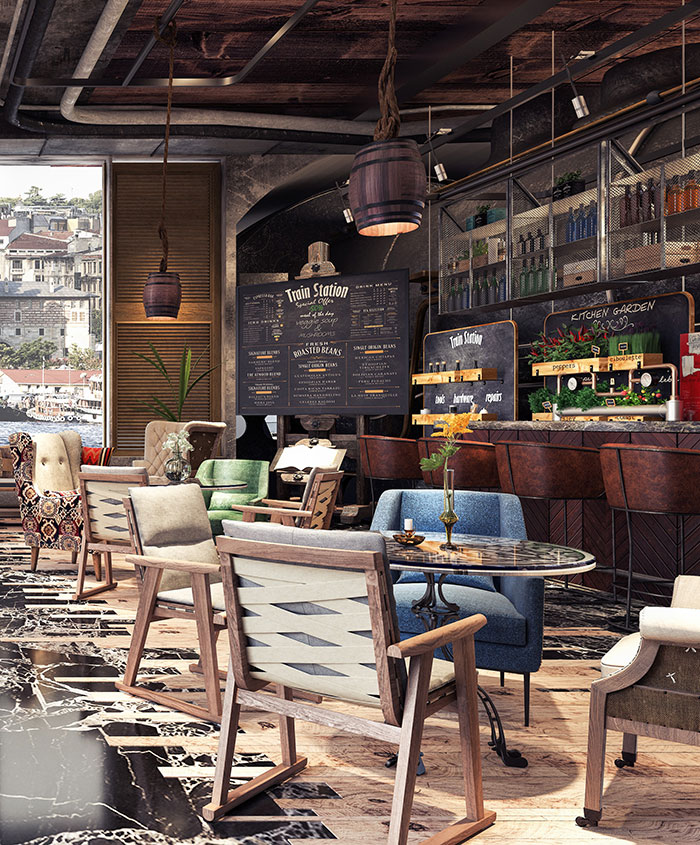
Greenery also lends colour and texture and suggests a more “organic,” natural feel.
Spruce up your fabric
Fabric can add more than just texture to your restaurant. Use fabric to weave your brand through the space, whether it’s a logo treatment tastefully done or some other pattern that speaks to your brand.
Window coverings offer an opportunity to try a new colour scheme without the commitment of a big paint job. Seat cushions or backs refinished in geometric pattern smarten things up (and cut down on noise – a bonus).
- TIP: Add (or remove) tablecloths. Upgrade to cloth napkins or simply change the colour scheme to subtly elevate a dining experience.
Reinforce your restaurant brand with staff uniforms through use of colour, style or subtle logo placement. Supplying staff with hats and jackets for personal use gets word on the street.
Engage with your community
Engage with your customers and community outside the restaurant. Sponsor a sports team, charity event or festival that fits your image. Get inspired by checking out 10 creative restaurant marketing strategies.
Promote game days, school colours and community events. LeoLight offers a LED remote control, colour-changing product where you can have 16 different colours to play with.
- TIP: Invite local artists to display their work in your space. Not only do you enliven your space, but you also give profile to local talent.

Up the fun factor
Let there be light. Lightboxes can add “lightness” to your space. Slim LED Restaurant Lightboxes are becoming increasingly popular in restaurants where menus need to be prominently backlit for your guests to see the print. Lightboxes use energy-efficient LED lighting, which is 75% more efficient than fluorescent lighting, and can illuminate your printed graphics in ways that add more than just light to your restaurant.
Create an Instagram wall. This is an invitation for your customers to snap even more photos promoting your brand. How you display the shots can continue telling your story. How about creating a huge backdrop display screen with rotating Instagram images? Invite your diners to create imagines and see them instantly displayed. And don’t forget, Instagram images can liven up both the inside and outside of your restaurant…for very little money.
Invite customers to follow your TikTok profile. TikTok is a powerful way to engage and interact with your customers, and can be used to grow your brand in youth demographics.
- TIP: Go big with your Instagram images.
Strengthen your identity by rethinking your space. A few tweaks – with minimal cost – will brighten your image – and your restaurant brand.
As a hospitality brand, your business is built on the premise of serving customers’ needs with an experience and value aligning with their expectations. The question is, have you done the due diligence to truly identify and understand who your customer is?
The answer to this is critical to the success of effectively attracting the right customers who reflect your brand experience, to achieve a win-win customer-centric approach.
But why leave it to guesswork? It’s time to eliminate the stabs in the dark. Here are five easy strategies to identify who your guests are through relevant information and factual insights.
Customer-centric: you know who your customer is and your restaurant experience is designed foremost to service their needs and meet their expectations.

Location, Location, Location
It may be an old adage, but your restaurant location plays a significant role in identifying your largest potential customer base. Location acts as a convenience factor, meaning guests who reside or work nearby are more likely to frequent your restaurant, and more regularly as well. If your eatery is near a family suburban community, then you will likely be attracting more families with children, versus a downtown city restaurant. Your city or municipality can provide you with the demographic information of who resides in your area. The first step is to utilize these data to define your overall brand experience to match with the people most likely to dine with you, and the type of guests you want to attract to meet your objectives. Use this to guide the brand theme, service level, ambience, décor, menu offering, and price point.
Who’s eating there
Understanding who your closest competitors are and the types of guests they’re attracting is typically a realistic representation of those you can expect to serve as well. So, get out there and visit at least three competitors within the same restaurant category as you: quick service if you’re in the quick service sector and family casual if you’re catering to that market. Create a list of attributes you’ll be comparing such as operational flow, marketing, team uniforms, atmosphere, menu offering and price. Then take a seat at their table to truly understand the service experience and the types of guests also dining in or taking out. Be sure to note your observations on your checklist for easy comparison and analysis to help identify who your customer will be, or should be.
- TIP: Read your competitors’ customer reviews and browse their social media platforms to better understand the community of guests they are attracting and serving!
The digital customer is your customer
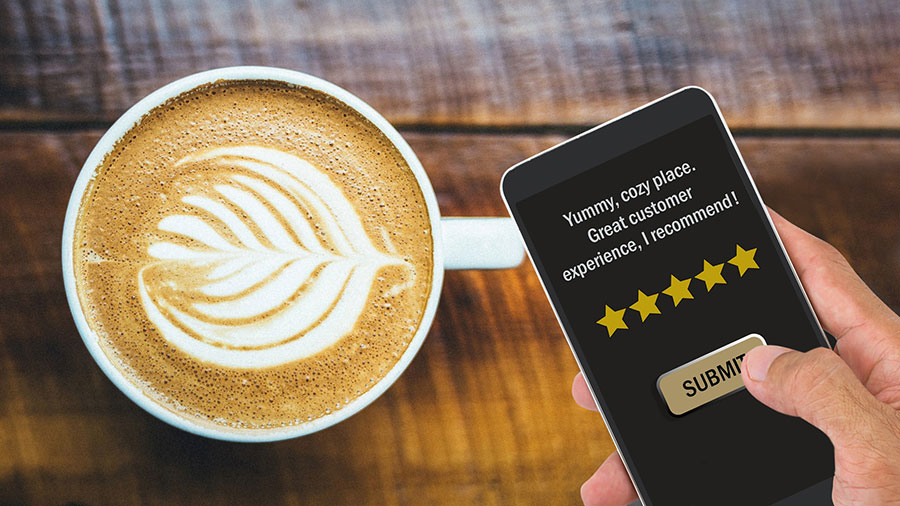
Some of the most useful information to understand your customer is right at your fingertips, literally! Social media platforms provide factual data on who is engaging with your brand from their location, age, gender, and the type of content they are most engaged in. The best part? All of this information is FREE and can be viewed over various time frames to observe how your digital customer community is growing and changing based on your marketing efforts. Start by creating a monthly report in Excel, so you can track user demographic and engagement results. Analyzing this info may uncover gaps between who is engaging with your digital brand versus who is actually dining with you, and where to focus your efforts to attract the right customer for better business results.
Have you asked them?
Ask and you shall receive, as the saying goes. If you’re an established restaurant with a social media community or a customer email list, an efficient low-cost strategy to better understand your actual customer is to ask them more about who they are. Go to the source for up-to-date intel, by creating surveys of one-10 questions or social media polls to collect data about their location, age, lifestyle, preferences, and ways you’re performing from their perspective. Remember to keep the questions short and sweet to improve customer response results. This info will be invaluable not only to identify who your current customer is, but also to improve operations and service levels to better align with guests’ expectations. Utilizing incentives such as gift cards or complimentary menu items is an effective way to motivate responses, while making guests feel valued by your brand. Total win-win!
Get to know them, personally
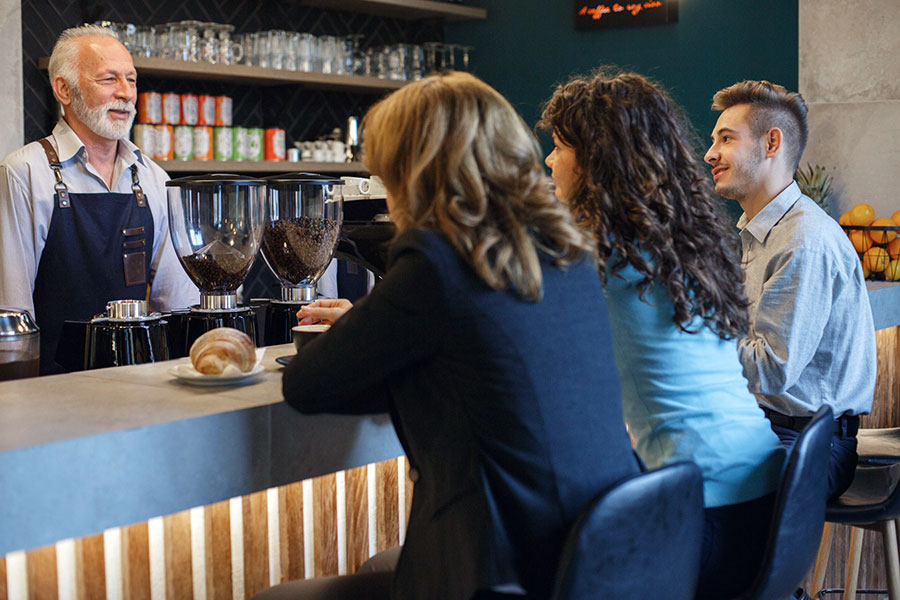
An approach at the core of the most successful hospitality brands is taking the time to truly get to know your guests on a personal level. Everybody wants to feel welcomed and valued, so that when diners walk into their favourite restaurant, they feel special when greeted personally by a familiar face. The simplest and likely the most rewarding approach to understanding your customer base is to have your team take the few extra minutes per visit to ask guests questions that in turn create the customer-centric experience. (Be careful, though, to be subtle and not intrusive.) Turn this service approach into a strategy by having a set of questions each service team member is to utilize to spark conversation with each new table. Once they’ve received the guest responses, have them document the guest profile in a shared document. The result? Collectively, as a team, you are gathering relevant information to better understand your current customers, how to better serve them, and how to improve business success.
Key demographic data to try to collect:
| Gender |
| Ethnicity |
| Age range |
| # of guests dining |
| With or without children |
Here are a few question examples:
- Name introductions.
- Inquire if they live in the neighborhood. If they do, great; if they don’t, ask casually where they’re from.
Now you will gain an understanding of how far guests are willing to travel to experience your brand. - Have they dined with you before? If so, what did they order the last time? Did they enjoy it?
- TIP: Great opportunity for suggested upselling here!
- Find out how they first heard about your restaurant.
This will provide insight on the effectiveness of your marketing and communication strategies.
In addition to these consumer data collection strategies, most point-of-sale systems provide valuable customer lifestyle and preference data such as most popular dining times, preferred menu items, and average cheque size. Report on these findings monthly and summarize the results along with the demographic data collected. By combining these five strategies and analyzing the valuable information over an extended period of time, you will achieve a clearly defined customer base you can better serve with a more finely tuned customer-centric approach.
Every week, websites across the country like DineSafe present a list of foodservice establishments that have been closed, or issued conditional warnings of closure, and the violations that have been cited.
Inspection results identify restaurants, cocktail bars/beverage rooms, bakeries and QSRs deemed by Health Inspectors to be in violation of the provincial food safety regulations.
Violators can run the gamut from independent bakeries, food court operators, and franchise restaurants, to independent family restaurants. The element that violators have in common is a breakdown in the processes and procedures that ensure food safety.
In a world of open social networks, there’s nowhere to hide from the downside risks of violating health codes and/or consumers being affected by foodborne illness. During the pandemic, concerns about food safety have only been magnified. Thus, interest in and attention to safety needs to permeate the business culture of absolutely all operators, no matter their size or location, working with food.
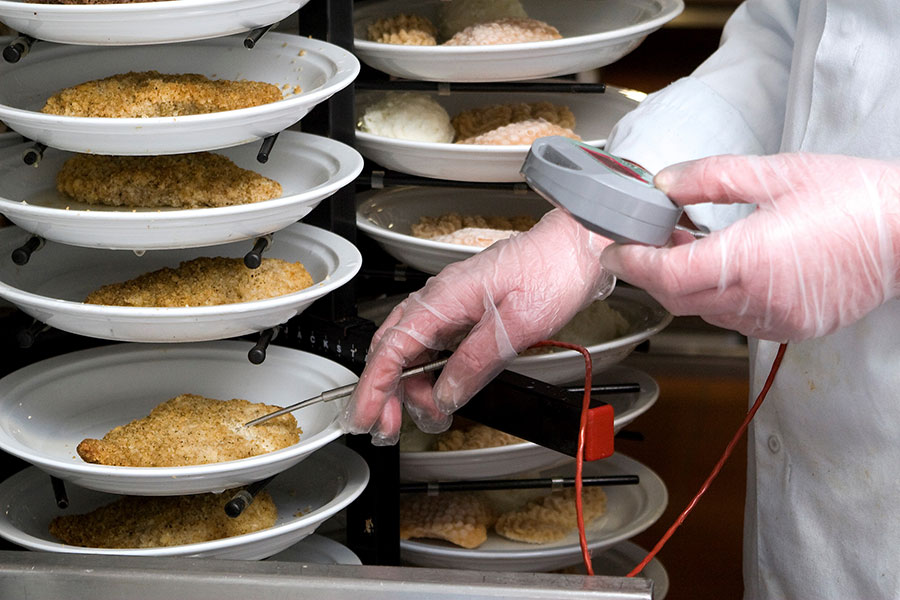
The 5 top restaurant food safety areas of concern
The vast majority of food safety violations fall into the following problem categories commonly identified in foodservice inspections. Roughly 80% of the food handling practices leading to foodborne illnesses are covered by five specific breakdowns:
- Keeping hot/cold food at correct temperatures
- Proper handwashing practices
- Food contact surfaces protected from contamination
- Sanitation plan and cleaning schedule
- Dishwasher procedures
Root causes
Pam Mandarino, an environmental health officer in Vancouver, conducted an extensive food safety study (2017) which analyzed inspection report data on temporary restaurant closures and food handling violations in British Columbia. The study cross-referenced findings of similar studies conducted in the U.S.
Mandarino concluded that multiple factors, and not just food safety knowledge, affect safe food handling practices.
Below are some of the factors she found that influence safe restaurant food preparation practices:
- Time pressures
- Manager indifference toward proper food safety practices
- Food safety certification and food safety training
- Inadequate food handler knowledge
- Poorly designed kitchen facilities and insufficient standard operating procedures
Stop food safety problems before they begin
Proactive attention to food safety practices and processes is your best bet to circumvent a food safety crisis. That being said, having an action plan in place to address a crisis, isolate the causes, and map a recovery path can forestall devastating outcomes.
Myths and Truths About Food Poisoning
| Not True | True |
|---|---|
| A food with enough pathogens to make you sick will look, smell or taste bad. | A food with enough pathogens to make you sick may look, smell or taste good. |
| Really fresh food cannot make people sick. | Really fresh food can cause food poisoning if it is not properly handled. |
| Only dirty kitchens can make people sick. | Even clean kitchens can make people sick. |
| Properly cooked food can never cause food poisoning. | Food poisoning can occur even when foods are properly cooked. |
Source: BC Centre for Disease Control (2009), Ensuring Food Safety Writing Your Own Food Safety Plan – A Guide for Food Service Operators.
Gathering storm
In 2019, the Canadian Food Inspection Agency introduced the Safe Food for Canadians Regulations (SFCR). The SFCR legislation requires food suppliers, importers/exporters, and foodservice operators to mandate preventability and to improve traceability – not an insignificant ask, given that the majority of the food we consume in Canada comes from abroad.
Lawrence Goodridge, Director at Canadian Research Institute for Food Safety, University of Guelph, feels that SFCR does not go far enough. He compares the traditional “surveillance” approach to food safety to predicting the weather: Each of us checks the weather each day, yet no individual feels strongly that their specific observations can accurately predict what will happen.
Smartphone apps are being engaged to accumulate user weather observations and their geo-locations. Feeding this data into artificial intelligence algorithms can create more accurate meta-reports on local weather patterns in real time.
Imagine now that food safety was tracked in a similarly proactive fashion. Responses on foodborne outbreaks could be identified very early on, via smartphone, by individual consumers, leading to faster removal of contaminated food from the food chain.
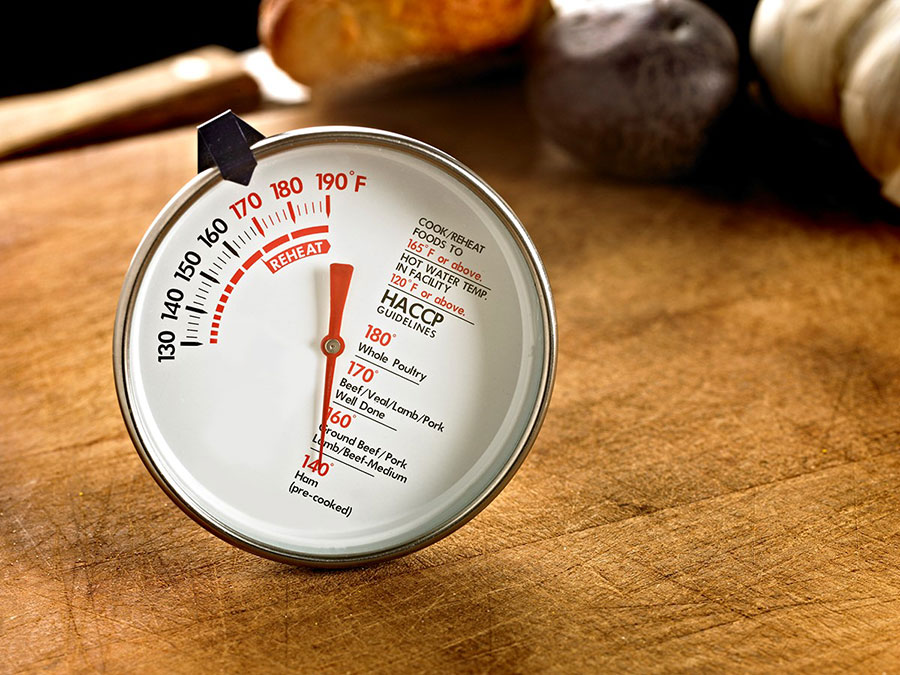
Top tips to prevent food safety situations
Restaurant food handling tip sheet
- Label and date your products when you receive them or when you prepare them.
- Understand proper food storage temperatures and storage.
- Rotate your food products (first in, first out). This should be standard procedure for everything: canned goods, produce, meat, dairy.
- Constantly do checks of the food in your fridges and ensure they’re set at the proper temperature.
- Reheat foods properly.
- Ensure correct handling of fresh produce, for instance not leaving it standing in cold water.

Restaurant food handling training
- Consider hiring a licensed cook with responsibility for ongoing staff training.
- Make sure all staff take a food handling course.
- Make equipment handling courses mandatory, including an annual refresher so staff understand correct operation and cleaning of all equipment.
- Work the relationship with your local health unit and ask if they’ll help with training.
- Rehearse your food handling procedures. Don’t wait for a crisis to happen, be prepared to respond.
Restaurant cleaning
- Maintain a cleaning checklist, posted prominently for kitchen staff.
- Ensure your equipment is cleaned and sanitized.
- Work with your cleaning equipment supplier to recommend best products to use in the kitchen. A lot of suppliers will come in and train your staff.
Educating
- Stay on top of food safety issues. The CFIA publishes regular updates on food-borne issues along with the latest acts and regulations. Food manufacturers publish regular bulletins on their products, and many distributors also send out food safety alerts.
- Sign up for the National Food Safety Training Program, offered across the country.
The COVID-19 pandemic has placed unprecedented stresses on supply chains worldwide. Policies adapted to contain the spread of the virus have contributed to bottlenecks in farm labour, processing, transport and logistics and momentous shifts in demand, according to the OECD. Factory shutdowns and slowdowns, staff shortages, congested shipping routes and lean manufacturing with low inventories have all contributed to major obstructions at each stage of the supply chain.
As some shipments are delayed or unavailable, foodservice operators are adapting and embracing flexibility. With recent storms knocking out primary supply routes, operators in B.C. and Newfoundland in particular have had additional challenges to face that exacerbate supply chain challenges.
“Buy what you need … and trust the system. The long-term goal of sourcing locally-made ingredients that are plentiful is the best way to shelter your business from disruptions.”
Peter De Bruyn, provincial chair of the BCRFA
Peter De Bruyn, provincial chair of the BCRFA, says the best way for foodservice operators to get through this is to “buy what you need, not necessarily overbuy, and trust the system. The long-term goal of sourcing locally-made ingredients that are plentiful is the best way to shelter your business from disruptions.”
Experts recommend that foodservice operators focus on what they can control. That means nurturing strong (and local, when possible) partnerships, creating flexible menus that can be easily adapted, working out dish substitutions in advance, and keeping the lines of communication open with your staff, customers, and suppliers.
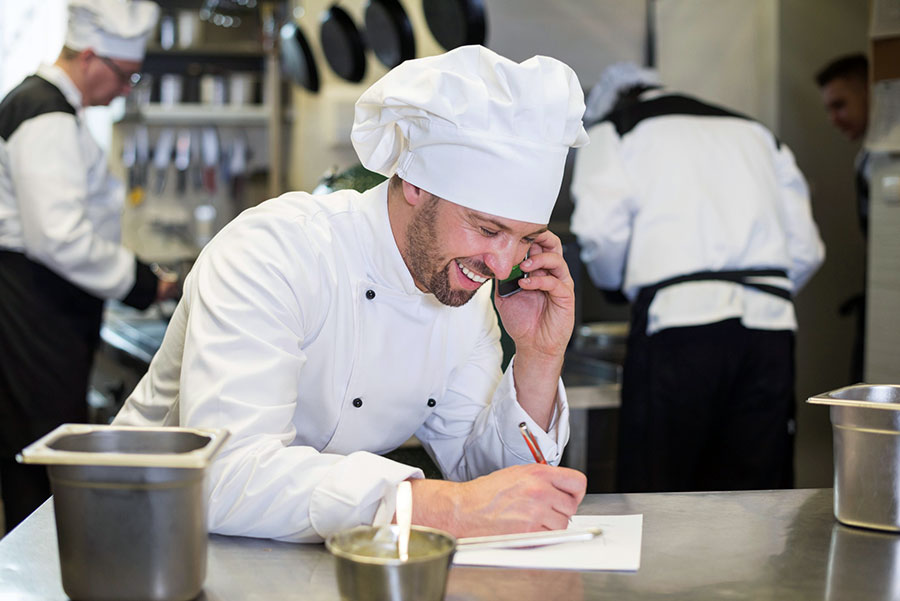
Building relationships to enhance supply links
- Maintain good relationships with your suppliers to ensure adequate warning of any shortages or even price increases.
By working with your foodservice distributors, operators can be better positioned to alleviate the impact on their business. “The supply challenges we have all faced have made the communication between operators and suppliers that much more important,” says Jason Voisey, purchasing manager at F. J. Wadden and Sons, based in Mount Pearl, Newfoundland.
“When distributors communicate any supply issues to their operators as soon as possible, the operator can adjust or modify menu plans,” he adds. “Addressing the circumstance early and working closely together helps ease the frustration and improves the relationship.”
Tips to streamline your menus and simplify kitchen operations
- Pay attention to which menu items are most impacted by restaurant supply chain issues.
- Remove them or offer them as features when ingredients are available.
- Reduce your number of items to those you are confident you can deliver for guests that day.
- Be ready to adjust menus on short notice.
- Make regular items feature items until ingredient supply returns to stability.
- Ensure your menu prices can absorb small increases from rising costs.
- Pay attention to how today’s events will affect next week’s menu…and beyond.
Be flexible to achieve results
- Build greater efficiency and stability of supply and don’t run out of menu items nearly as often.
During these challenging times, being open to more generic products adds flexibility, Voisey advises. “Each operator has preferred products that they would like to use. By working with their distributors to understand which products are available, operators can find suitable alternatives. This may impact some recipes and plate profiles, but it can help keep items on the menu and avoid guest disappointment.”
Suppliers may have several SKUs of similar products, and while some work well, others don’t, De Bruyn says. “Know what items you can easily substitute while you wait for your main supply to return.”
Managing expectations is important, adds Sylvain Charlebois, director, Agri-food Analytics Lab at Dalhousie University. “We are already seeing menus shrinking as well, which is not a bad strategy. Less could and will likely be better in the future, from a supply chain perspective.”
Carrying extra inventories can help get through the current challenges, Voisey says. “But equally, distributors have to monitor their carrying costs and cash flow closely.”

Assess your risk and plan ahead
- Update your emergency plan to include the learning from this pandemic and supply disruptions.
Audits and stress tests will become more critical for companies, Charlebois says. And more supplier options will also be critical if the company experiences a breach of some sort across the supply chain.
“Most companies have an emergency plan, but most did not include a strategy for dealing with a pandemic. Cybersecurity is another issue most companies will need a plan for, and that plan needs to be linked to the supply chain.”
Technology can help
- Online ordering systems, sales trackers and target marketers can mitigate restaurant supply chain impacts.
Using technology by tracking sales helps the foodservice operator make more informed decisions when it comes deciding if an option should be kept on the menu, Voisey says. “Focusing on the most popular items and working with the supplier to ensure these items are available allows the operator to focus on what they can sell and not what is unavailable.”
Data and technology are more important now than ever, and we generally have great access to it, De Bruyn says. “Most of us have point-of-sale systems; as well, we may have the data from our third-party delivery companies. This data can help us understand not only what products consumers are buying specifically, but what trends exist with purchasing behaviour. In times of supply shortages especially, there is no benefit to investing extra labour sourcing ingredients for a low-selling menu item.”
The use of more predictive analytics and forecasting are great tools to understand what lies ahead for foodservice businesses, Charlebois says. “We are expecting more companies in the sector to use promising technologies offered by machine learning, for example.”
Ingredient tips
- Develop or modify menus with ingredients that are common among several suppliers.
- Use reliable ingredients in several menu items wherever possible.
- Source local ingredients from trusted suppliers or even directly from farmers.
Great idea 💡
If a popular menu item is unavailable for a time, advertise it on social media when it does return – even for just a limited time offer – to build diner excitement.
More information:
Food Supply Chains and COVID-19: Impacts and Policy Lessons
PrintPulled Chicken Sliders on Rosemary Goat Cheese Scones
A tender and flaky biscuit made with cottage cheese and accented with rosemary and creamy goat cheese is loaded with shredded chicken and cranberry sauce for sliders that are next level.
- Total Time: 45 (+ 30 minutes chilling time)
- Yield: 24 Servings 1x
Ingredients
Scones
- 3/4 cup (175 mL) Gay Lea Butter Solids Unsalted, cold and cubed
- 2 1/2 cups (625 mL) Gay Lea Cottage Cheese 2%
- 1/2 cup (125 mL) Hewitt’s Buttermilk
- 1 cup (250 mL) Hewitt’s Goat Cheese Crumble
- 1 tbsp (15 mL) Gay Lea 2% Milk
- 4 cups (1 L) all purpose flour
- 2 tbsp (30 mL) baking powder
- 2 tbsp (30 mL) rosemary, fresh and finely chopped
- 1 tsp (5 mL) salt
- 1 tsp (5 mL) pepper, freshly cracked
- 1/2 tsp (2 mL) baking soda
Filling
- 1/4 cup (60 mL) Gay Lea Butter Solids Unsalted
- 1 1/2 cups (375 mL) Hewitt’s Goat Cheese Crumble
- 1 onion, finely chopped
- 3 garlic cloves, minced
- 1/4 cup (60 mL) port, or sherry
- 4 cups (1 L) cranberries, fresh or frozen
- 1 cup (250 mL) granulated sugar
- 1/2 tsp (2 mL) salt
- 1/2 tsp (2 mL) pepper
- 6 cups (1.5 L) chicken, shredded and warmed
- 1/2 cup (125 mL) chives, snipped
Instructions
Scones
- Whisk together flour, baking powder, rosemary, salt, pepper and baking soda; cut in butter until mixture resembles coarse crumbs about the size of large peas. Stir in cottage cheese and buttermilk until ragged dough is formed. Gently fold in goat cheese. Refrigerate for 30 minutes.
- Turn out onto lightly floured surface. Press into 1 1/2-inch (4 cm) thick disc. Cut out 2-inch (5 cm) rounds and arrange on parchment paper–lined baking sheet. Brush tops with milk.
- Bake in 425°F (220°C) oven for 12 to 15 minutes or until golden brown around edges. Let cool completely.
Filling
- Melt butter in saucepan set over medium heat; cook onion and garlic for about 5 minutes or until softened. Pour in port and balsamic vinegar; cook until liquid is reduced by half. Stir in cranberries, sugar, salt and pepper; cook, stirring often, for about 10 minutes or until cranberries pop and mixture is thickened. Let cool completely.
Per serving
- Split biscuit in half and top with 1/4 cup (60 mL) warm shredded chicken. Top with 2 tbsp (30 mL) cranberry sauce, 2 1/2 tsp (13 mL) goat cheese and 1 tsp (5 mL) chives.
Notes