
Although it seems the odds may be against foodservice operators these days, winterizing menus with layered dishes can stack the deck back in your favour.
James Keppy, Corporate Chef for Foodservice for Maple Leaf Foods, wholeheartedly agrees.
“While layered entrées fall into the popular comfort food category, the important note for operators is that they travel well, hold their heat for delivery and can also be prepared and sold unbaked for customers to finish at home.”
With layered dishes like shepherd’s pie, moussaka, biryani, pinon, cassoulet and chilaquiles (or sweet layers like tiramisu, fruit cobblers and parfaits), you can fortify your menu against the bracing storm.
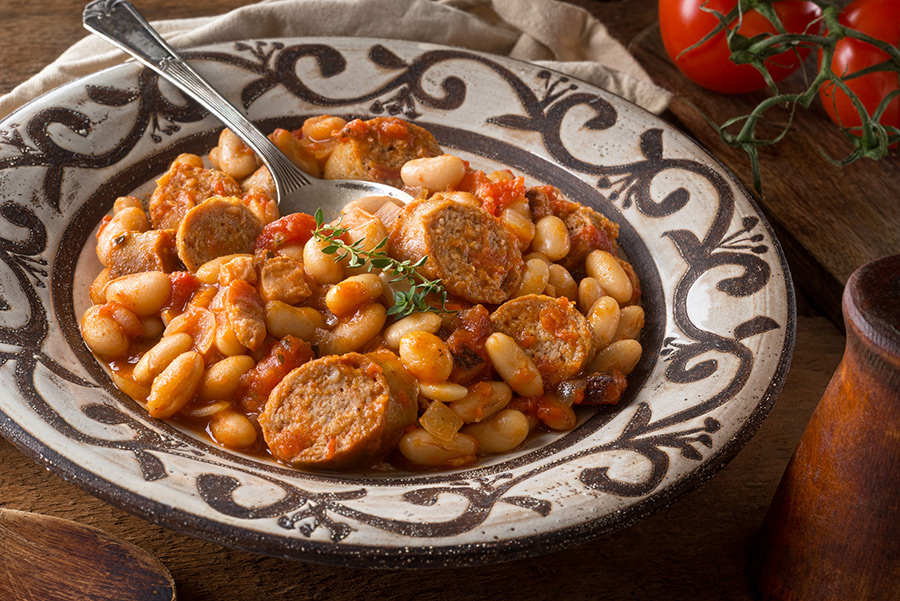
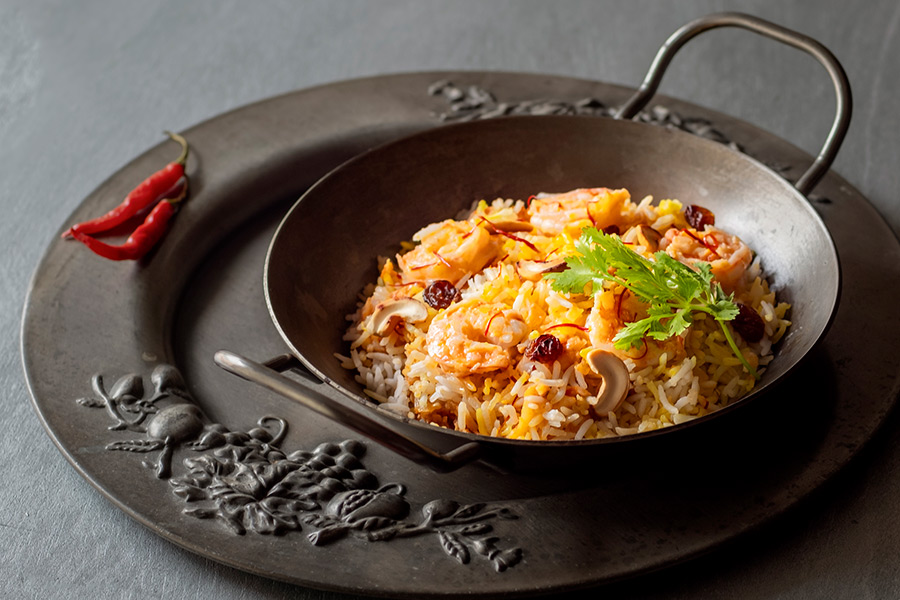
Shuffle your ingredients
Canadian chefs have an amazing hand of ingredients to work with. With a simple shuffle, operators can pack and pile and heap and mound flavours to satisfy their customers’ cravings. Typically prepared in advance with cost-effective ingredients and sometimes even leftovers, layered dishes are convenient for operators yet a comforting and delicious choice for customers.
Comfort and classic mean different things to everyone. Take shepherd’s pie for instance: for some it can only be made with lamb, others only beef, and yet others are enamoured with just the idea of shepherd’s pie — saucy protein on the bottom, vegetable and root vegetable purée on top.
“The great thing about shepherd’s pie and all the other nationalities’ versions is that the ground beef can now be substituted with several equally good options. Where ground lamb was often replaced with ground beef, now we can suggest plant-based LightLife grounds and Field Roast Italian Sausage Crumble to offer flavourful ingredients for a traditional recipe. These can make for a vegetarian or vegan option of your dish and therefore making it available to more customers.”
Remember to go beyond just changing the protein. Vegetable combinations for the middle and unique mashes and purées for the top can elevate your stacked dishes and showcase the talents of your kitchen. Or take your dishes for a spin around the world to dazzle your customers’ tastebuds.
Shepherd’s Pie Variations
| Cuisine | Protein | Vegetable | Topping |
|---|---|---|---|
| Classic | Lamb | Carrots | Mashed Potatoes |
| Canadian (Cottage Pie) | Beef | Corn | Masked Yukon Gold Potatoes |
| Vegetarian | Lentils & Mushrooms | Carrots & Peas | Butternut Squash Mash |
| Vegan | LightLife Ground | Zucchini & Carrots | Cauliflower Mash |
| Indian | Chicken & Chickpea | Peppers & Green Beans | Spinach and Potato |
| Tex-Mex | Beef & Black Bean | Corn | Sweet Potato |
| Moroccan | Lamb | Tomatoes, Carrot & Celery | Sweet Potato |
Try plant-based
Plant-based is a big deal that’s here to stay. Whatever the reason — health, preference, ethical, religious or environmental — your customers are asking for more options. But, at the same time, they won’t compromise on taste.
The simplest approach is substitution. If up to now you’ve been a protein-centred establishment, take advantage of all the vegetarian options available.
“LightLife and Field Roast products include a varied list of plant-based products to use in your operation.”
James Keppy, Corporate Chef for Foodservice for Maple Leaf Foods
Keppy tells us, “LightLife and Field Roast products include a varied list of plant-based products to use in your operation. Grounds, sausage crumble, sausage patties, burgers, non-dairy cheese, hot dogs, pepperoni and chicken nuggets to start.”
Maple Leaf has made it straightforward and can add more plant-based options to your menu way beyond winter comfort foods.
“LightLife grounds look and cook the same as ground beef. They can be used to make meatballs, lasagnas and bolognese as well as allowing chefs to make their own signature dishes.”
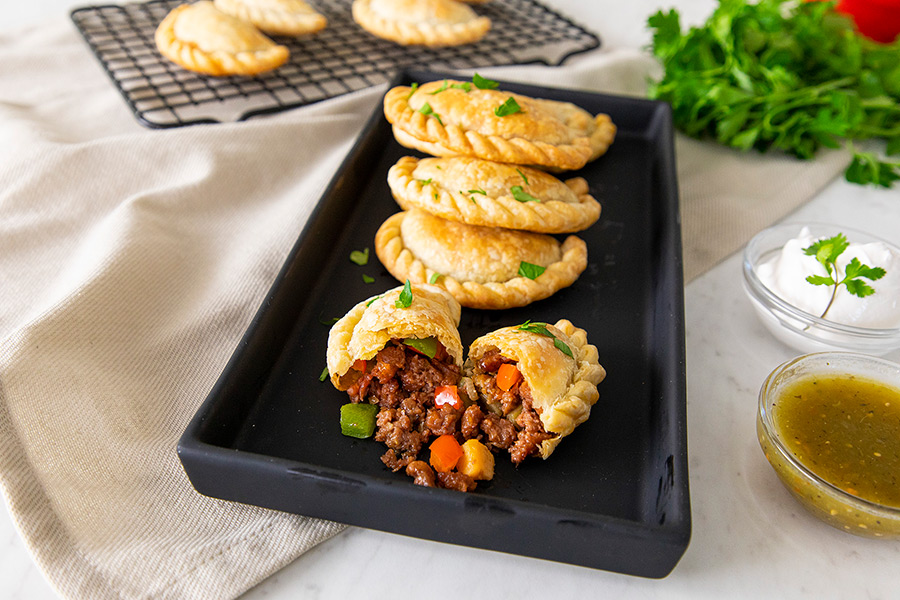
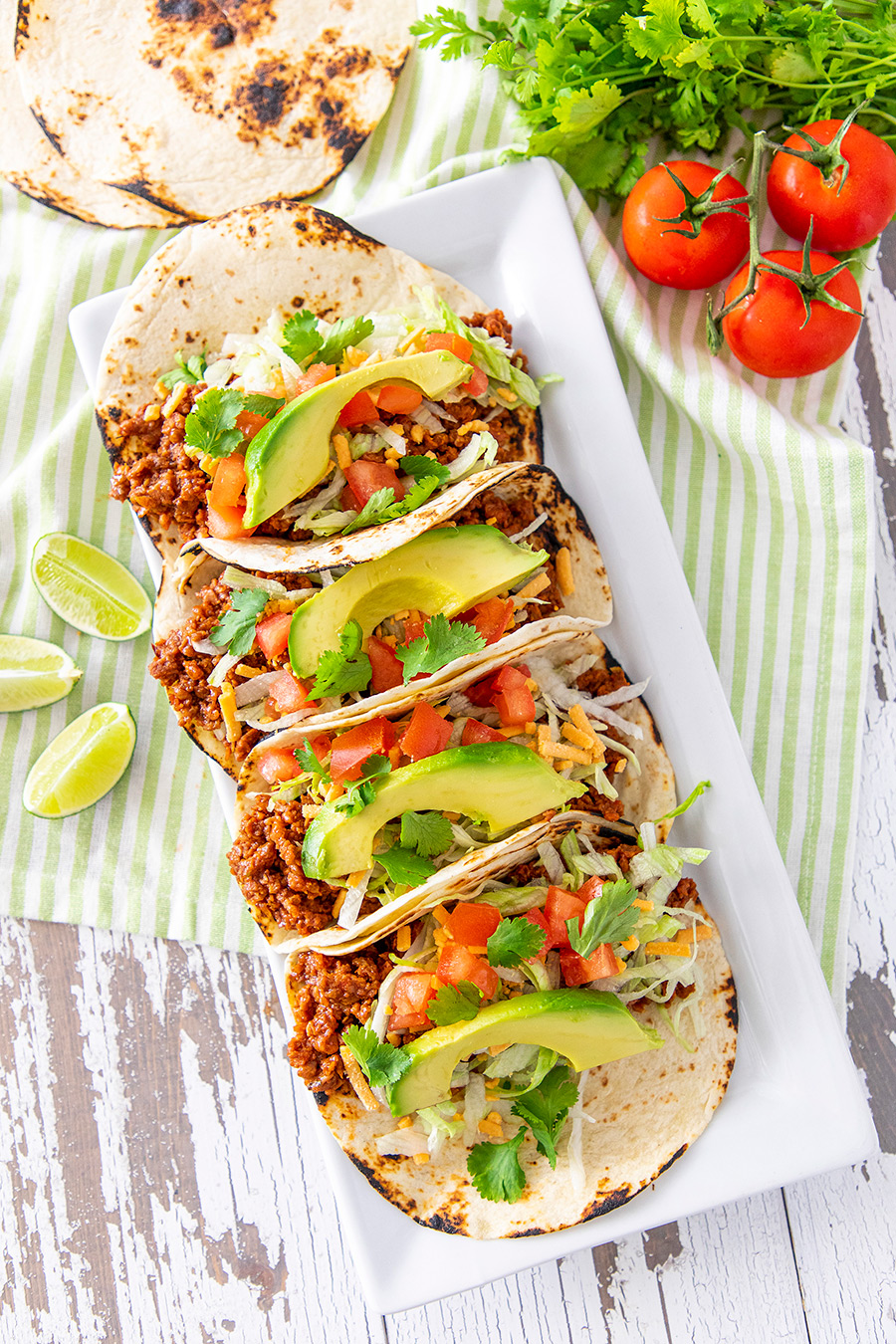
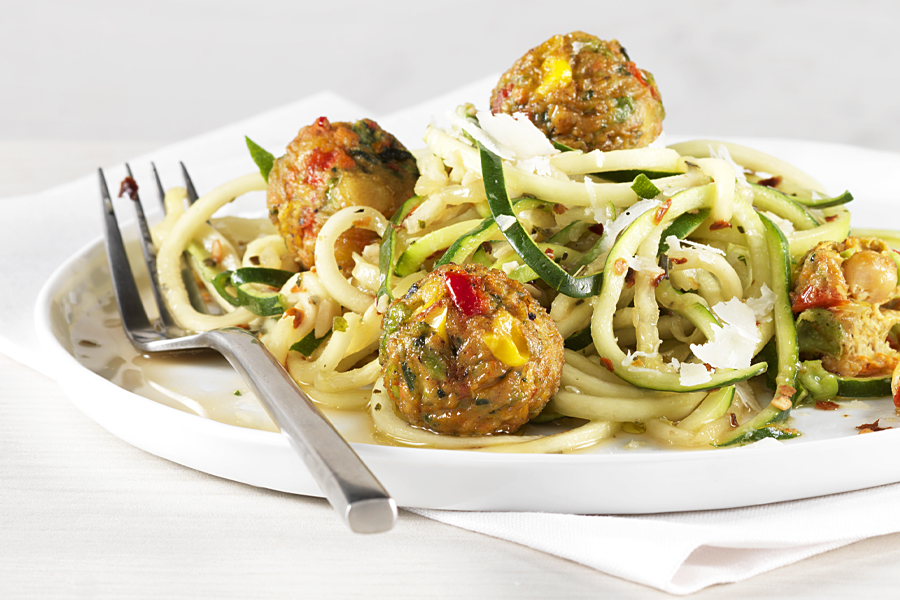
Traditional to Plant-Based
- Chicken Biryani → Chickpea Biryani
- Beef or Lamb Moussaka → Lentil Moussaka or LightLife Beef Moussaka
- Pinon → Black Bean Pinon
- Cassoulet → LightLife Sausage Cassoulet
- Chilaquiles → Vegetable Chilaquiles
Wild Card
It’s difficult to know what to expect this winter (not just talking about the weather), but one thing you can do is offer comfort through food using these winter favourites. As Maple Leaf’s Keppy said, no matter where your customers are dining, layered foods travel well for those picking up, are excellent for delivery, and also the option of selling unbaked for customers to bring warmth (and delectable scents) to their own kitchens.
At your table or theirs, play your stacked dishes and stack more of the odds in your favour.
What do Hank Aaron, Bill Clinton, Mike Tyson, Thomas Edison, and Nikola Tesla have in common? The tie that binds them is their vegetarian/vegan diet.
Our ancestors started eating meat about 2-½ million years ago — probably as scavengers, having stumbled upon a half-eaten carcass. Since then, we’ve been omnivorous — eating a mixed diet of meat and plant-based foods.
It wouldn’t be an exaggeration to suggest that consumption of meat was the key to our success as a species. Mark Thomas, professor of evolutionary genetics at University College London, estimates that the human brain grew three times in size after introducing meat into our diet. Our larger brains enabled higher cognitive abilities, which facilitated our ability to compete and propogate within hunter-gatherer social groups.
As CBC producer Kevin Ball opined in his podcast, The Matter of Meat, for humans “there was a correlation between IQ & BBQ.”
Plant by numbers
In the Autumn of 2018, Dalhousie University published an extensive report on the eating habits of Canadians. At that time, roughly 7 per cent of Canadians considered themselves vegetarians and roughly 2 per cent identified as vegans. More than half of these vegetarians/vegans were under the age of 35.
In addition, the study found:
- Over six million Canadians reported dietary preferences which reduce or eliminate meat consumption
- Fully one-third of Canadians were thinking of reducing their meat consumption over the next six months
- The majority of Canadians had considered making an effort to reduce meat consumption
The report’s author, Dalhousie University’s Dr. Sylvain Charlebois, has followed on with regular fieldwork over the last two years, to plot this trend. Based on the research conducted in January 2020, Dr. Charlebois estimates vegans now represent 2.5% of the population, and that over 16M Canadians could potentially be following a diet that restricts or eliminates meat consumption by 2025.
“…vegans now represent 2.5% of the population, and… over 16M Canadians could potentially be following a diet that restricts or eliminates meat consumption by 2025.”
Dr. Sylvain Charlebois, Dalhousie University’s
Online community
Increasingly, we live our lives online. Social media provides a powerful window into the collective zeitgeist.
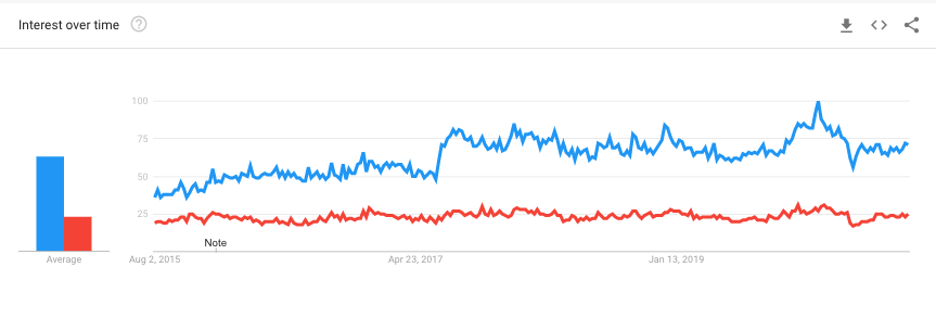
According to Google Trends, over the last five years “Vegan” has been trending up as a web search topic, while “Vegetarian” has been relatively stable and reflecting less interest among consumers.
The Google Trends graphic displays interest relative to the highest point on the chart for Canada since 2015. Vegetarian has had a value of 25 relative to the peak value of Vegan, indicating about one-quarter the amount of search incidence. The data underscores the growth of Vegan, with particular strength in BC and Ontario.
Google Trends — Canadian Web Searches for “Vegan” and “Vegetarian”
Pinterest Canada Account Director Ashley Shantz reports that more people than ever before are turning to Pinterest for well being and self-care, and that includes trying new lifestyles such as veganism. Pinterest searches for veganism in Canada were up +50% in June 2020 compared to the prior year.
Veganuary
“Veganuary” is a registered British charity encouraging consumers, at the beginning of each year in the month of January, to try a 30-day vegan plant-based diet. In 2020, over 400,000 consumers from nearly 200 countries signed up for the challenge, up from 250,000 in 2019. The highest participating countries were the U.K., U.S., and Germany. In 2018, 5,500 Canadians signed up for the challenge. This number rose to over 7,000 in 2019.
In the 2020 follow-up survey with participants, it was reported that the biggest challenge to sticking to their vegan diets during Veganuary was “eating out.” Given that nearly 75% of participants stated their intention to “continue with a vegan diet after (their) Veganuary pledge,” the opportunity for foodservice operators to expand vegan and plant-based offerings is clear.
Staking a claim
According to Technomic Canada’s Ignite Menu database, there has been a +10% increase in operators menuing plant-based items in Q2-2020 versus Q2-2019. Sophie Mir, associate editor at Technomic, reports that plant-based menu mentions increased by over 25% year-over-year.
The upscale BC-based chain, Earls, has embraced the vegan opportunity. Earls introduced a permanent, dedicated vegan menu in all its restaurants in 2018, including Spicy Tofu Tacos, a Crispy Tofu Zen Bowl, Avocado Toast, a Vegan Field Greens Salad, Vegan Hunan Kung Pao, and a Vegan Quinoa and Avocado Power Bowl.
Earls has also mirrored popular menu items, like its Dragon Roll, in a vegan-friendly version: The Green Dragon Roll – with yam, mango, and cucumber, topped with nori.
Where there’s fire
Increasingly, it appears, the pro-plant arguments are finding broader ground. As an operator, there is another very practical justification for meeting the emerging demand for vegan fare. Given the higher margins to be made on meat-free appetizers, sides, and centre-of-plate items, expanding your plant-based menu may add juice to both your top line sales and bottom line results.
While it’s likely that our long-ago ancestors initially started eating meat by accident, it is now, ironically, an evolved understanding and more informed sensibilities guiding us back to our herbivorous roots.