
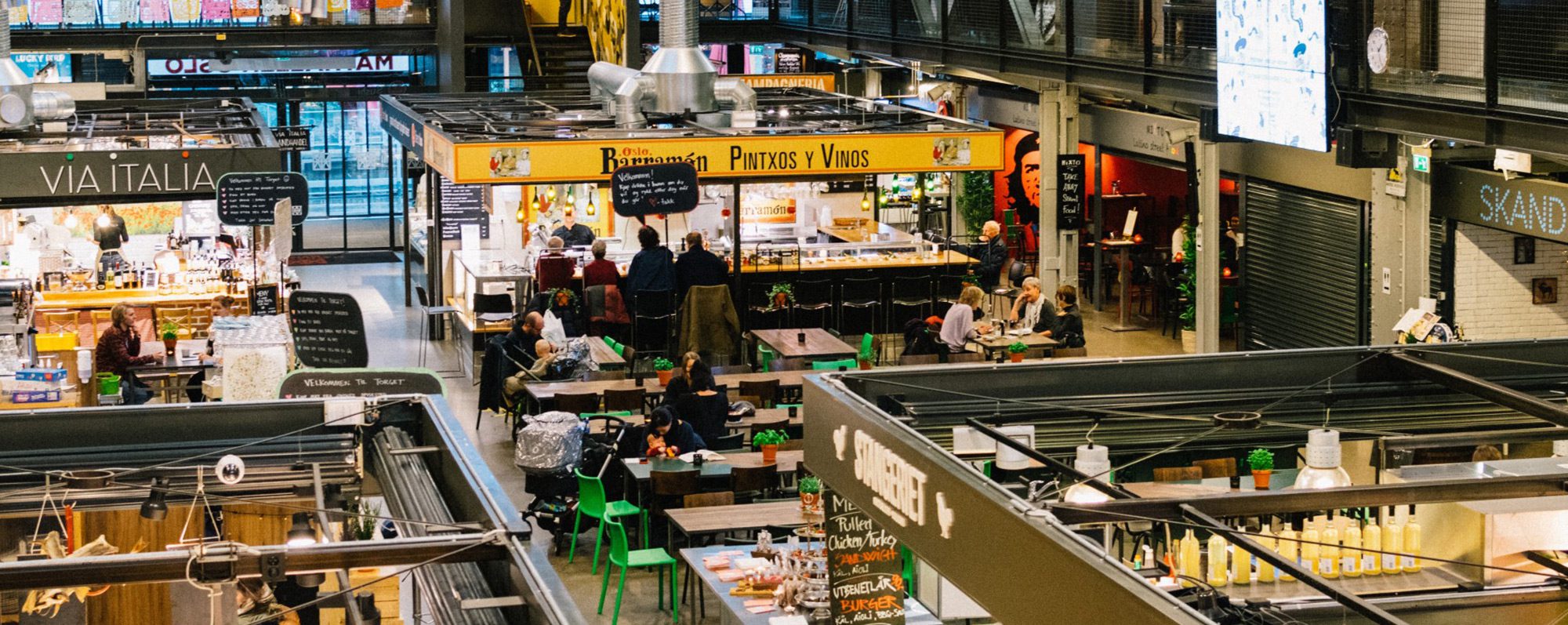
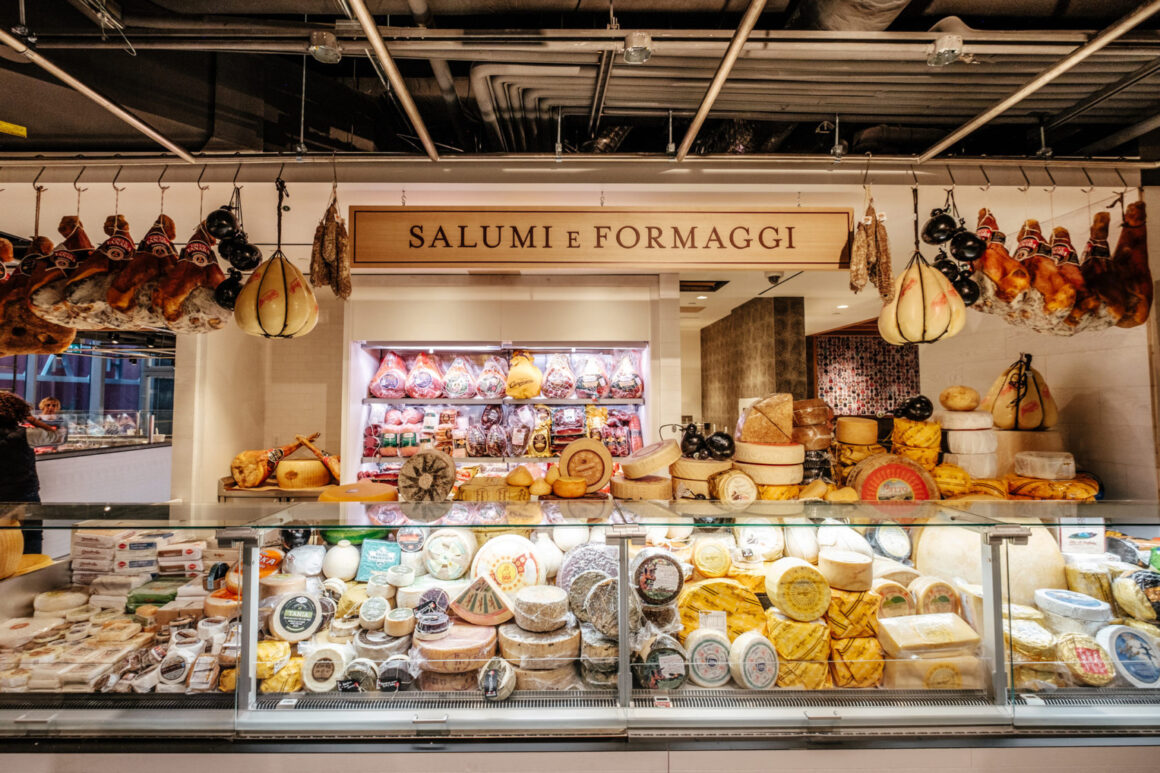
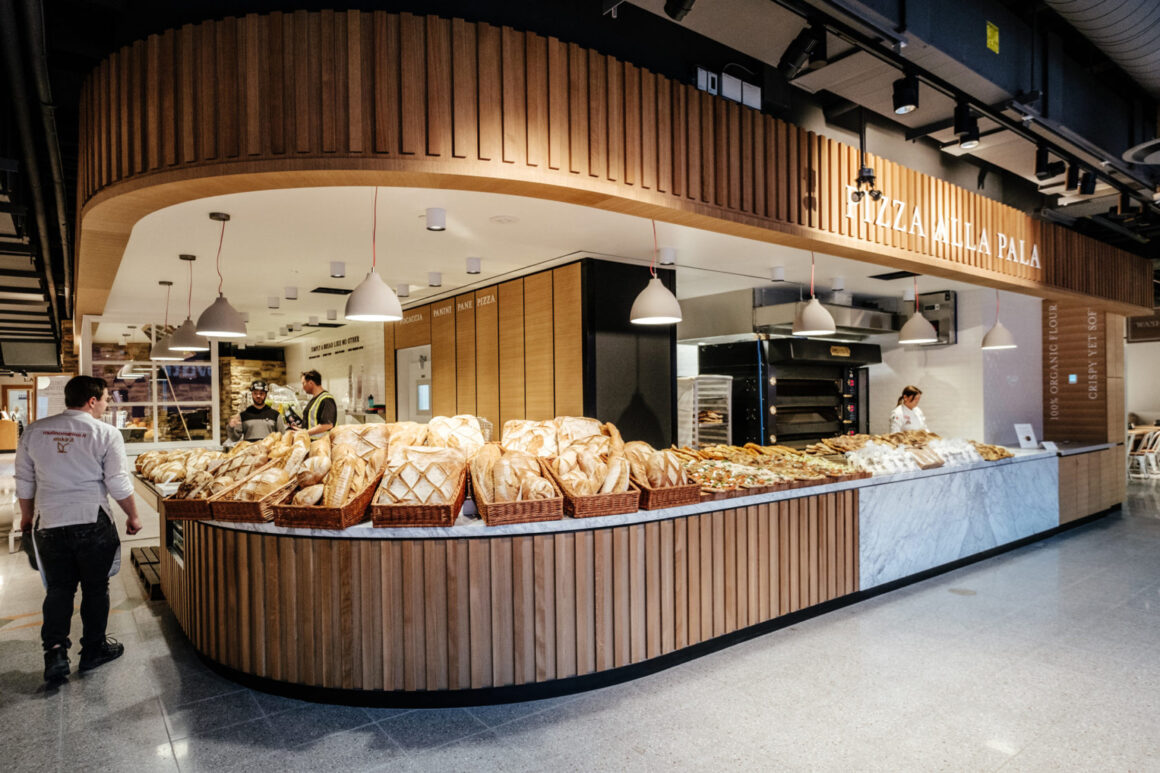
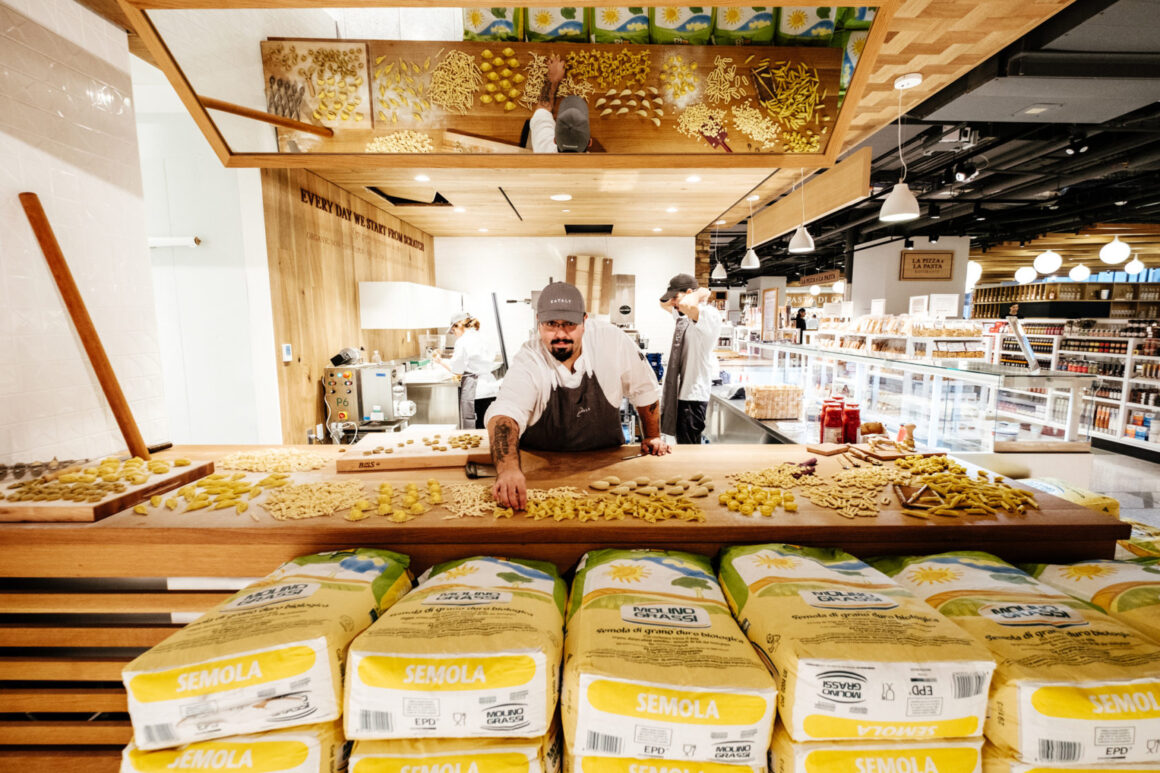
In late 2019, after years of hype and anticipation, Eataly opened its first Canadian operation in Toronto, joining a global empire of 40 stores, encompassing close to 50,000 square feet and employing 300+ people. It’s been described by Sylvain Charlebois, a professor of food distribution and policy, and director of the Agri-Food Analytics Lab, at Dalhousie University, as “an Italian-only food court on steroids: nine restaurants, a cooking classroom, a wine bar, a brewpub, a grocery area and even a mozzarella-making counter, all in one spot.”
As he told me, “these food halls appeal to patrons in a hurry looking for convenience solutions, eating on the go, grabbing on the go, as individuals or as a group. The reality is that more and more people will spend an increasing amount of money on food spent outside the home, a trend that will only continue to grow. That’s why the line between foodservice and food is blurring. Food halls are really smack in the middle.”
Eataly (though it does not refer to itself as a “food hall“) — and operations like it (Time Out Market is another big food hall that’s come our way) is part of a growing trend in Canada that, according to Technomic’s Canadian Emerging Channels Consumer Trend Report, speaks to urbanization, the influence of ethnically diverse younger consumers and the popularity of communal experiences.
Food halls, unlike the food courts of the past, are destinations in themselves, often showcasing local chefs, independent operators and global tastes. Many food halls are hyper-local in that they reflect their communities’ tastes so that consumers are able to find everything from fresh pasta to smoked meat sandwiches, depending on the location and its population.
And, as with so many other foodservice trends, it’s mainly Millennials driving the interest in these new foodie havens.
- While 15% of consumers visit food halls at least once a month, the number jumps to 26% among consumers aged 18-34 and 28% among men aged 18-34.
- 28% of consumers aged 18-34 are visiting food halls more often compared to two years ago.
- When it comes to food halls, variety and a sense of discovery are key. Overall, 75% of food hall users at least somewhat agree that food halls introduce them to dishes they have never tried before, and 73% say this channel introduces them to locally owned restaurants they were not aware of before. As a result, consumers often want to try as much as possible, with roughly a quarter saying they typically order multiple dishes from different stations when they visit food halls.
Source: Technomic’s Canadian Emerging Channels Consumer Trend Report
“…it is capturing the energy of food markets, restaurant rows and street food from around the world and making it more accessible and fresh.”
Lisa Hutcheson, Managing partner, strategic planning, operations, human resources with J.C. Williams Group
Are food halls here to stay?
Despite their recent entry into the Canadian market, food halls appear to be here to stay — trend rather than fad. “They already are [here to stay] and in continuous development,” says Lisa Hutcheson, managing partner, strategic planning, operations, human resources with J.C. Williams Group. “This is actually more grassroots than most give credit for… it is capturing the energy of food markets, restaurant rows and street food from around the world and making it more accessible and fresh.”
Threat or opportunity?
Should more traditional foodservice operations — independent restaurants, fast casual chains, family dining spots — be quaking?
“It depends on the operator’s skill to recognize and position themselves to capture the market share they need to survive,” adds Hutcheson. “Operators need to understand where they fit in the marketplace.“
Plus, they need to know what their guests are looking for and whether they’re meeting those changing needs. “You need to be proactive and not take anything for granted,” advises Charlebois. “Everyone is after that food-moving money that is moving with the modern consumer. I think it’s not specific to one generation, but what’s new to Millennials is they are not accepting what has been acceptable in the food industry before. New rules are required. It’s this awakening that the food market is much more fragmented.“
Food halls are a wakeup call for operators to focus on what makes them unique as well as an opportunity to hone their brand.
These venues could also become a new place for chefs and restaurateurs to collaborate.
“With rents soaring, independent chef-driven restaurants are struggling to keep the doors open in most Canadian cities,” says Dana McCauley, director, new venture creation at the University of Guelph. “Food halls where chefs with different concepts and complementary offerings can congregate and share the cost of common spaces such as storage, washrooms, etc. make economic sense and give diners access to variety. This strategy seems to be working for Assembly Chef’s Hall (which bills itself as Canada’s first chef-driven community market) and I think has potential to morph into new themes quite easily.“
Time will tell if food halls are a serious, long-term threat to more traditional operations or just the current hotspot for adventure-seeking diners.
Tips for competing against marketplace foodhalls
- Add pizzazz to your menu descriptions. Train your staff to better describe the food they’re serving rather than simply being order takers.
- Try something completely different. How about going menu-less at least one night a week so diners can be surprised? Or consider having your chef choose the food for diners as some Japanese Omakase eateries do.
- Consider opening up the kitchen to make it part of the dining theatre.
- Bring back some of that old school tableside food prep to create excitement.
- Add more shareable dishes to the menu to bump up the fun quotient.
- Increase your market footprint and increase foot traffic by using delivery services.