
Should your restaurant be active on social media? Absolutely. Is it important also to have a website and mailing list? Even more so.
Why? Basing your marketing plan on social media alone is akin to renting without a lease. Websites and mailing lists, however, offer the control that comes with ownership.
Why you need a website and mailing list for your restaurant
Websites offer restaurants many benefits. Jenny Companion, VP eastern operations, and Nathalie Kent, communications coordinator, of hospitality consulting agency The Fifteen Group say, “Having a proprietary website provides more freedom to tell the story of your restaurant, control the narrative, share all pertinent information and maintain a certain look and feel. You can share your full menu in a large format […], offer easy access to make reservations or contact your team, share maps, and more.”
“Having a proprietary website provides more freedom to tell the story of your restaurant.”
Jenny Companion, VP eastern operations, The Fifteen Group
Nathalie Kent, communications coordinator, The Fifteen Group
Your mailing list is your most valuable digital commodity because it consolidates contact information for people who interact with you in many places.
Companion and Kent say, “Building a mailing list is also beneficial as it affords restaurants more direct communication with their guests. Rather than posting a restaurant LTO or promotion on Instagram and hoping it gets seen, they can send a newsletter directly to their target audience’s inbox.”
“Building a mailing list is beneficial as it affords restaurants more direct communication with their guests.”
Jenny Companion, VP eastern operations, The Fifteen Group
Nathalie Kent, communications coordinator, The Fifteen Group
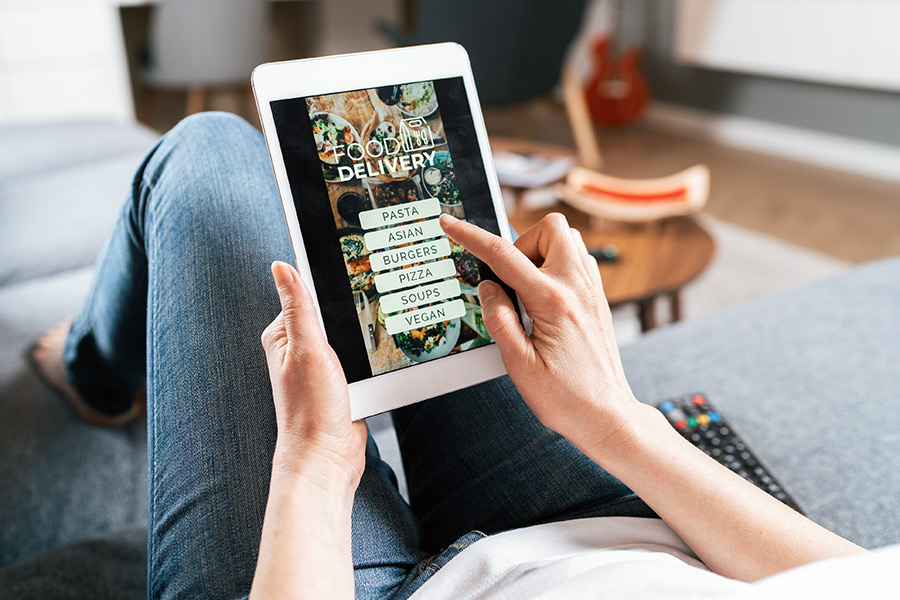
Why social media alone for your restaurant isn’t enough
Your community expects to find you on at least one or two social media platforms. This allows you to promote your brand and engage with followers. But each platform has both content and functional limitations.
Be mindful that what you build on any third-party platform like Instagram, Facebook or TikTok is somewhat precarious. Changing algorithms can limit who sees your posts, services can be converted from free to paid, and sometimes platforms even shut down (goodbye, Google+).
Each social media platform has both content and functional limitations.
For Facebook Pages, which businesses use, ongoing algorithm changes favour paid posts over organic reach, meaning your posts appear less frequently in your followers’ feeds. If you have a Facebook page, no doubt you receive frequent nudges to “boost” your posts — for an advertising fee, of course.
On Instagram, posts used to appear in reverse chronological order. If you posted an enticing photo of your lunch special at 9 a.m., followers who used the app that morning most likely would have seen it. Now, the rules that dictate how your posts rank in followers’ feeds are far more complex, including factors like followers’ behaviour (e.g., the types of posts they engage with), the interactions between you and them, timing and more. It’s complicated.
You might not like it, but there’s nothing wrong with social media platforms changing the rules when they please. After all, they offer their services for free, but not out of altruism. They’re businesses prioritizing their interests.
Again, just like renting that great space without a lease, basing your restaurant’s marketing plan entirely on social media doesn’t offer a lot of security.
The power of website ownership
Apart from the content, marketing, and operational benefits of having a great website, it’s yours to control. If you want to change up the design or integrate new functionality like a mailing list service, well, you’re in charge.
You own your domain name (like www[dot]bestrestaurant[dot]ca) and choose the platform to build your website on. By using a hosted website, you can focus on functionality, content, and SEO (strategies to help search engines display your site to would-be visitors) while your provider handles the nuts and bolts (think fun stuff like updates, security, backups, etc.). One website platform is Sociavore, which was developed for independent restaurants.
Yes, you’ll need to pay for your domain name (URL) and platform fees, while your social channels are free. But you won’t be at the mercy of social media’s frequently changing rules and players, and visitors to your site will find everything they need in one place.
Making the most of an email list
Congratulations if you have scores of followers on social media, but do you know how to contact them outside the platform? Visits to your website may be booming, but do you know who those visitors are?
Creating a mailing list allows you to make the most of traffic to your website, social channels and restaurant. It’s your master list of everyone who’s said they want hear from you.
No matter what happens to your social channels or website, your mailing list is there for you. It’s your most powerful marketing and relationship-building tool, allowing you to communicate directly with your subscribers. Build it with care and treat it like gold.
“Those who sign up for your mailing list are, by definition, already engaged with and invested in your brand, so you’ll be able to capitalize on an active and interested audience to drive business.”
Jenny Companion, VP eastern operations, The Fifteen Group
Nathalie Kent, communications coordinator, The Fifteen Group
As Companion and Kent say, “Those who sign up for your mailing list are, by definition, already engaged with and invested in your brand, so you’ll be able to capitalize on an active and interested audience to drive business.”
Seven tips to maximize your restaurant email list
- Offer multiple opportunities to subscribe — Put sign-up links on each social channel and your website, and provide paper forms and/or digital options on your premises. Always seek to expand your list.
- Offer incentives — It’s well worth providing special offers or promotions for people to join your mailing list.
- Personalize email — A little thing like using subscribers’ names in email goes a long way toward relationship building.
- Learn about subscribers’ interests — Polling subscribers about their interests means you can target content to them. Send the promo about your new meat lovers’ menu to the people who are happy to see it, not the vegan crowd.
- Don’t flood subscribers’ inboxes — If you send too many emails, they may tune you out or, worse yet, unsubscribe.
- Remember, consent is key — Spam may have a place on some menus, but it doesn’t belong in your mailings. Learn more about Canada’s anti-spam legislation.
- Use a mailing list service — You don’t have to manage your list alone. Services like MailChimp or Constant Contact support you in enrolling new subscribers, anti-spam compliance, sub-list creation, communication design, and analyzing impact.
Photos and video reign supreme in social media today, so you may be excited to jump into this form of marketing. And, how hard could it be to post mouth-watering pictures or an appetizing video of your signature dishes?
While nice to have, you don’t need a dedicated social media team or professional photographer for success. With a strategy, knowledge of basic principles of photography, and some tools to enhance your smartphone camera pics, you can generate engagement and drive traffic to your establishment.
Strategize for success
It all starts with your brand
Think of your brand as the story you want to tell, visually and with words. First, define the brand you’re promoting: your establishment’s, yours as a chef, or both. Then identify your key message. Is it about local food and sustainability? Family-style ambience? A party vibe, or fine dining? Commentary on food politics?
Your brand is the foundation for each social media marketing decision you make, from the channels you use, what you share, and the mood of your images. Yes, mood, since that’s what you want to create.

Which social channels should you use?
There are many social media channels. Consider which socials work best for food generally and your brand in particular, where your customers hang out, and what fits well with your resources and skills.
Instagram and Facebook are the big players, and many in your community will be there. Consider a presence on one or both. These are tablestakes.
We eat with our eyes first. Instagram is the place to be for images (and increasingly video). It’s ideal for showcasing your food and atmosphere. You can also use a Facebook page to amplify your story in photos and videos. It also provides a robust information directory for details like hours, menus and directions. You can even engage with your community through live video on both platforms.
Try to be where your target demographic is. If you cater to Millennials and Gen Z, consider using the video platform TikTok. While less visual, Twitter can effectively convey your brand and discuss food issues in a newsier format.
Don’t bite off more than you can chew
Social media is surprisingly time-consuming to maintain well. Don’t feel you have to be on all channels or use video if it’s not your thing. It’s better to focus on one or two channels that you’re comfortable with and can use well.
Plan your approach
Make a basic plan for each social media channel you use. Think about:
- How often you want to post — Consistency is more important than frequency.
- Timing — Post that great shot of eggs benny when people are making brunch plans, not at four p.m. on Sunday.
- Varying content across channels — People may follow you on more than one platform. They can tune out if you post the same photo at the same time everywhere. Vary timing, promote different dishes or use different shots of the featured dish.
- Engagement— It’s not all about what you receive from social media. How will you respond to followers who tag your restaurant in photos or leave comments? Your engagement with them is at least as important as what you post.
Synchronize key information
Changing your hours? Update them on any channel where they’re posted. Or, put a link to your Facebook page in your other channel profiles so you only need to update once.
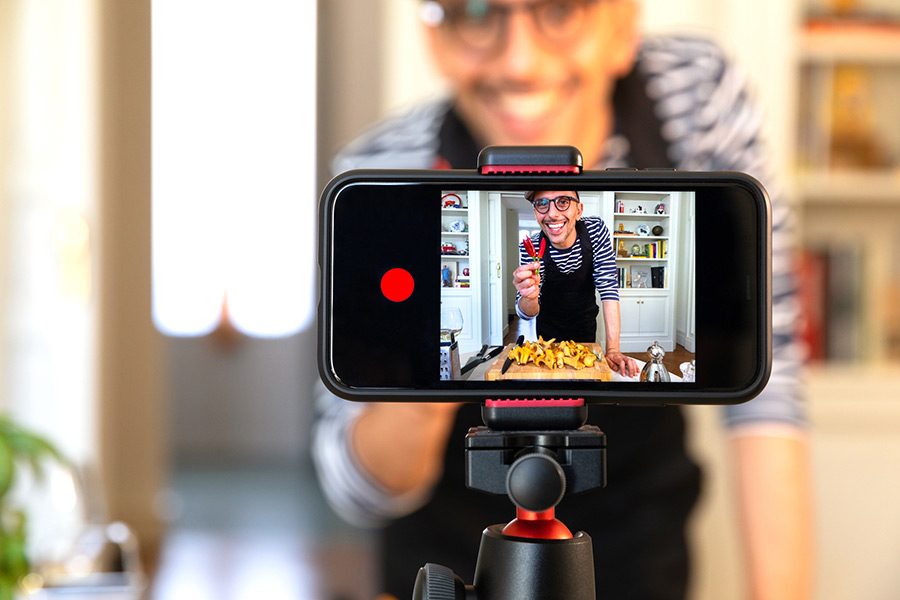
Sharing guidelines
What makes your content uniquely identifiable so followers stop scrolling to check out what you’re up to? Visually, it may be your food styling, the human elements included, the mood of your photos, or curated elements of your personal life. Telling your story cohesively supports your brand identity.
Content wise, if you’re going to share a political or personal post when you’ve only featured food before, ensure your intention supports your brand. A photo of the head chef’s new baby may generate a positive response; a rant about a local political issue may not, unless you’ve established your reputation as a public figure with views that people follow.
Learning for success
Smartphone camera quality has advanced greatly, but you still need to bring some photography savvy and skills to the game. Many online articles and courses are available. Through learning and practice you’ll develop a good eye for what works best for you.
Here are four basic considerations for attention-grabbing images.
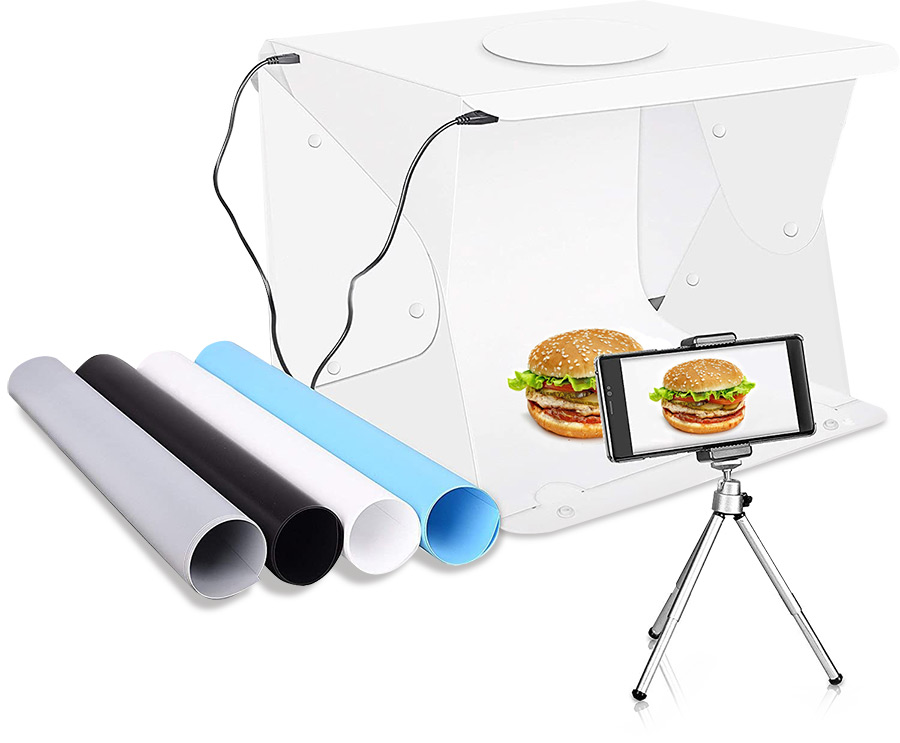
- Lighting — Use natural, diffused light or an evenly lit space whenever possible. If lighting is an issue, photograph your dish in an illuminated light box or attach a ring light to your phone (they’re not just for selfies!). Don’t use a flash, which can create harsh contrast and glare.
- Layout — How you compose photos can add emphasis and drama, influencing the viewer’s reaction. Try various styles like the rule of thirds and centring. Be aware of what doesn’t belong — that sexy cocktail doesn’t look as appealing with a bar mop in the background.
- Perspective — Experiment with different angles to see what works best for each dish. Does an overhead shot make that towering salad look flat, while a 45-degree perspective adds drama to a bowl of steaming soup? For video, the popular overhead style may feel instructional when you’re trying to convey the excitement of a dish coming together.
- Editing— It’s always worth taking a few minutes to correct and enhance photos before sharing them. You can adjust shadows and brightness, enhance colour, crop for stylistic effect, and add filters for a cohesive tone. You can use an editing app or the tools built into platforms like Instagram.
Equip for success
Choose among the following basic tools to take your smartphone photos to the next level:
- Tripod (consider overhead capability)
- Light box, available through Brand Points PLUS
- Ring light (standalone or clips onto your phone)
- Light diffuser screens
- Reflectors (as simple as foam board) to bounce light
- Snapseed, a free but powerful editing app for iOS and Android