
Give your customers the pleasure of slow food in this fast-paced world. Simple, yet sublime with infinite variety, this staple of kitchens worldwide brings comfort in every bite. Slow and relaxed, evoking an island state of mind.
Stew defines you. Ethnically diverse using cost-effective (and local) ingredients, stew can warm up your menu this fall and winter while at the same time keep your budget cool.
Love cooked into every bite
Yes, the love is in every serving of stew. You can smell and taste the memories – home, family, friends, meals shared. As one-pot wonders, traditionally using simple ingredients, stew is undeniably greater than the sum of its parts and a part of every nationality.
Find a stew that tells customers your story and transports them to happiness.
Philman George, corporate chef for High Liner Foods, has a life full of stew. “Every Sunday, my mother, who hails from the Caribbean, would prepare a one-pot stew. The house would smell so good, with aromatics like thyme and ginger root.”
Now, Chef Phil loves dry stew, a traditional West African dish, an influence of his wife, who is from Sierra Leone.
“It consists of taking a mix of vegetables and spices and cooking this mixture with roasted chicken legs and thighs until nearly all of the liquid has evaporated. What’s left is a rich paste that sticks to the chicken,” he says. As a fish and seafood-focused chef, he has adapted this stewing method and created a dry fish stew.
“Great care is taken to ensure that the seafood retains all its natural tenderness. I season and sear the seafood in cast iron and set aside. The vegetables, stock and aromatics are stewed down and seafood is added at the end. It’s big time comfort food!”
Chef Phil prides himself on fun, ethnic and approachable food. His goal is to place craveable seafood on your menu and generate more profit through the “Heart of the House.”
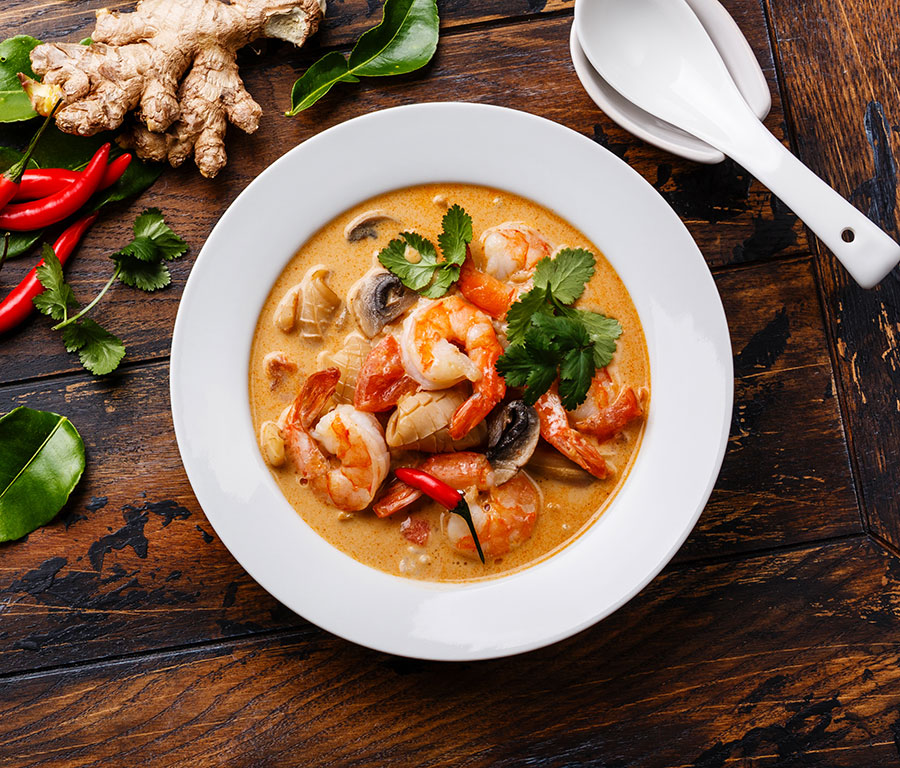
“Every culture has their version of stew. In Canada, especially on the east coast, chowders are our seafood stew! High Liner has some delicious stew recipes using cod and PEI mussels.”
Philman George, corporate chef for High Liner Foods
“Every culture has their version of stew. In Canada, especially on the east coast, chowders are our seafood stew! High Liner has some delicious stew recipes using cod and PEI mussels.”
As he says, “Stews are the go-to bowl for winter and fall.”
Stir up some fun with innovative approaches
“All ethnic stews can find a place on cold weather menus, when there is a focus on a single stew. There needs to be a story behind it – where the recipe comes from or a signature ingredient or cooking method the chef used to make it stand out,” says James Keppy, national culinary manager foodservice at Maple Leaf.
A favourite of his is a Mexican-Style Chicken Stew with chicken thighs, black beans, tomatoes and hot sauce, finished off with sour cream and tortilla chips.
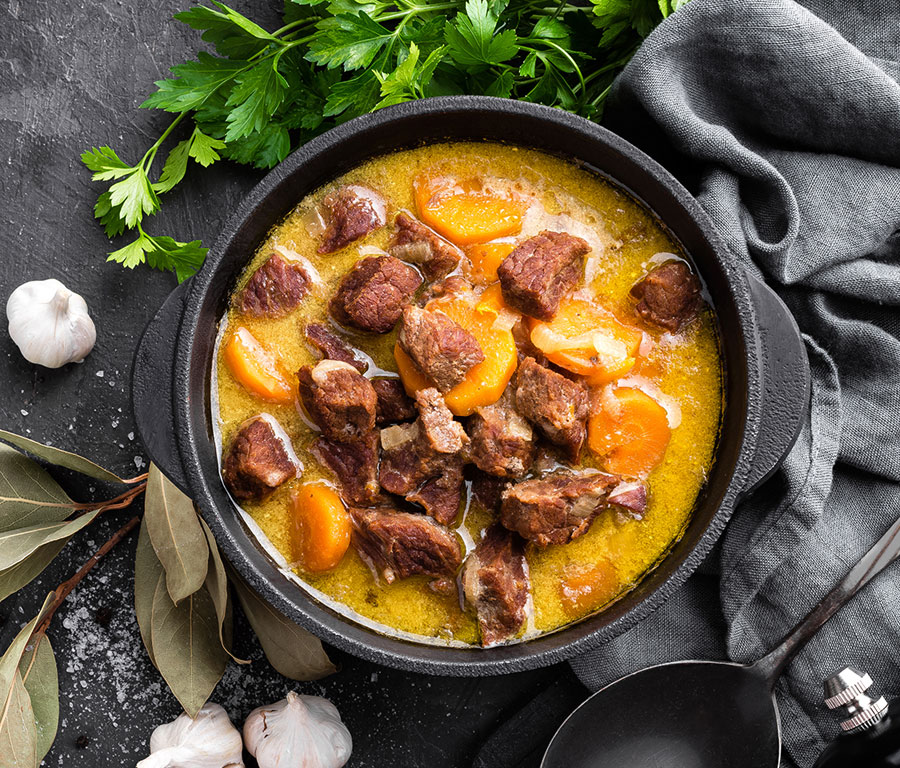
“All ethnic stews can find a place on cold weather menus. There needs to be a story behind it … to make it stand out.”
James Keppy, national culinary manager foodservice at Maple Leaf
Coaxing flavour and tenderness from underappreciated cuts is the real magic of stew, he says. “Using raw boneless, skinless chicken thighs and the pork cuts from the shoulder are cost-effective options for a great stew,” the chef reminds us.
Mix and match flavours and ingredients
Definitely not a thing of the past, a stew session using ingredients and flavours which do not regularly play together or crossing ethnic boundaries will create a unique stew that tells your story. If you do it right, it may even transport the ingredients to a new, undiscovered place.
Plant-based proteins will continue to drive menus. Maple Leaf’s au naturel! line of products and their Lightlife Plant Based Burger and Grounds deserve a place on your stew menu. Good for you, your customers and the planet – and distinctly on-trend.
“Maple Leaf also offers turkey breasts, pulled pork and beef, and sausages (Oktoberfest, Mediterranean, Andouille and Spanish Chorizo) for non-traditional twists to a stew,” adds Chef James.
With infinite protein, vegetable and spice combinations, there is a stew that is right for you and your customers. You will run out time before you run out of ideas!
Stew tips
- Think frozen. With the increasing number of dietary requests and restrictions, you may want to stew up delicious solutions that can be at the ready in the freezer. Simple additions like a hazelnut parsley gremolata add a punch of freshness and detail your customer appreciates.
- Go beyond the bowl. Elevate your stew with a puff pastry topper, drop in some signature dumplings or pull out a vegetable and showcase on top. Present with artisanal breads (great for getting every last morsel), mash, steamed grains, polenta or pasta. Or when in doubt, serve with more veggies.
- Consider the upsell. “Remember that shrimp is the most consumed seafood item in Canada. So, no matter what stew you’ve made in your establishment, upsell that stew with the addition of shrimp,” says High Liner’s Chef Phil.
Your time-starved kitchen deserves a break. Stew, a hands-free, budget-saving option that tastes even better the next day is the perfect solution. Don’t you worry about a thing, because in a stew, everything is going to be alright!
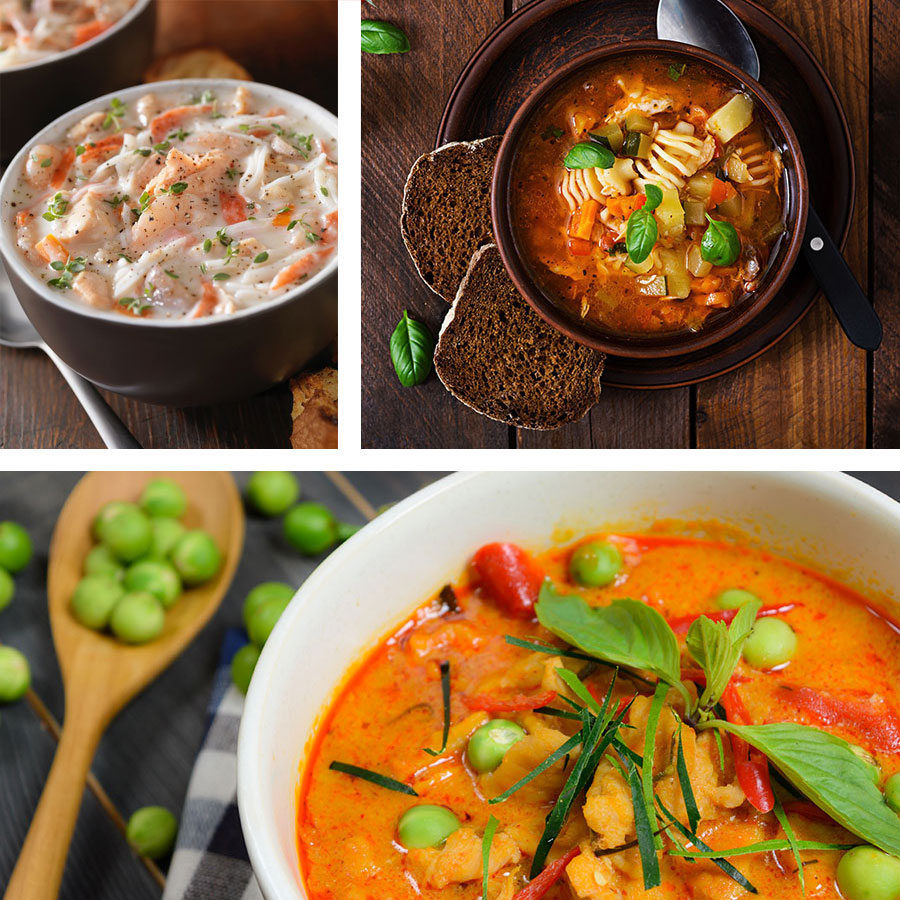
Try veggies (and fruit) first
Stews can showcase delicious locally available ingredients throughout the fall and winter months. Creatively choose seasonal options and design a stew around them, maybe a specific farm-focused flavour profile.
Customers increasingly crave food transparency, even for their fruits and veggies. Why not choose your veggies and fruit first? For instance, the humble rutabaga (not the same as turnip) soars out of obscurity in a spice-drenched Tagine.
Fruits deserve a spot in the pot, too. Apples, peaches, pears and plums add sweetness and a native flavour. How about Rhubarb Koresh, for instance? A fruit stew is a new approach to the dessert menu in the colder months.
Using seasonal vegetables and fruits in stew makes sense – and cents – cost-effective, locally sourced, with a twist on the flavours of home. Keep customers coming back for seconds and thirds.
Go global with your stews!
| Bredie Paprikash Bourgignon Irish Babotie Ratatouille Pot au feu | Chili Stroganoff Daal Feijoada Goulash Gumbo | Pozole Tagine Waterzooi Bo Kho Stifado Chowder |
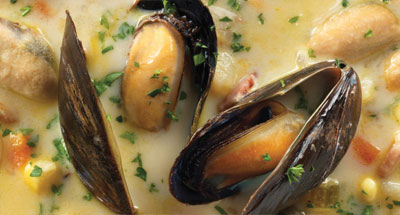
Hearty Mussel Chowder
It’s time for sensational skillets to race through your menu. Sizzles, pops and delectable smells drift through the air when you cook in a skillet or fry pan or sauté pan. A technique that brings out the flavours of simple ingredients in a short amount of time is an unbeatable choice for busy foodservice kitchens.
Who you are and where you grew up (even who fed you) are key when you consider what “skillet” means to you. But for everyone, skillet evokes the feeling of nostalgia. A warm hug from your mom or dad, aunt or uncle, grandparent. A weekend breakfast ritual or a comforting weeknight meal.
As the pandemic continues — we are so close to being on the other side — customers are still looking for comfort to ease the anxiety caused by ongoing changes to normal routines.
Do skillets have a place on current menus? Most certainly. Who doesn’t want the comfort (or a reminder) of simpler times? So, go ahead, take your skillet to the starting line, stay true to your brand with your eye on the finish (and bottom) line, in this crazy race back to the new normal.
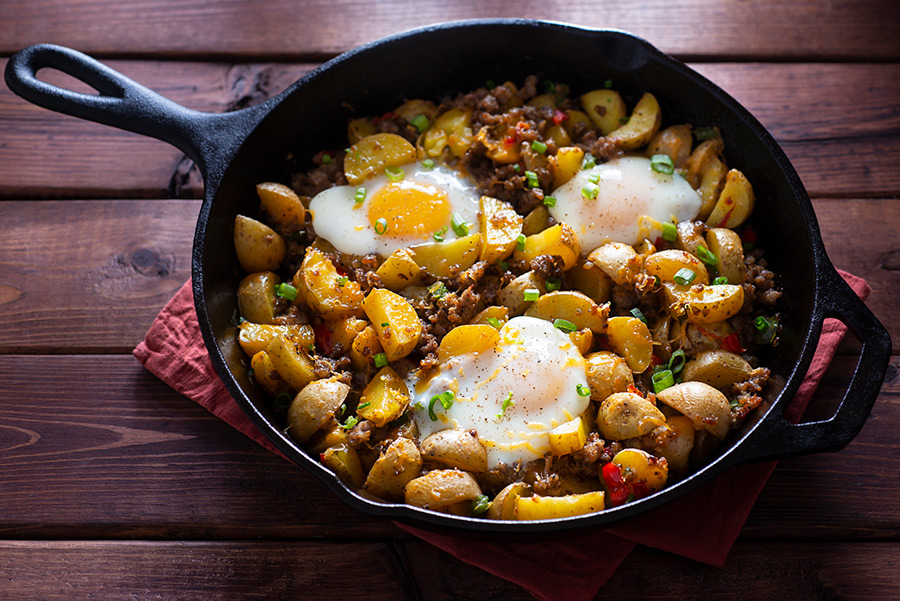
On your mark
James Keppy, corporate chef for Maple Leaf Foods, continues helping restaurant operators streamline their menus by promoting value-added ingredients.
For Keppy, breakfast is the first place he thinks of for skillets. “But they can be offered through lunch, dinner and finishing with desserts. Often made as a family meal, they are perfect for operators to create as individual meals that can arrive hot and steaming to the table.”
Skillets, sautés and stir fries are also a perfect option for restaurant LTOs. And Keppy adds, “One-dish meals are great to serve on the patio as well as for delivery. Small skillets can be prepped and quickly cooked allowing for easy variety and daily menu features.”
“One-dish meals are great to serve on the patio as well as for delivery. Small skillets can be prepped and quickly cooked allowing for easy variety and daily menu features.”
James Keppy, corporate chef for Maple Leaf Foods
Menus have been gradually shrinking for many reasons and that won’t likely change once we finally get to the other side of the pandemic.
“With smaller menus, ingredients need to be used in multiple applications throughout the menu. Each restaurant has its signature dishes and a skillet can be a way to possibly offer those dishes as a stir-fry, a sauté or simmered in a sauce,” he suggests.
With planning and proper prep, operators can focus on utilizing lower cost ingredients but still give a powerful flavour boost.
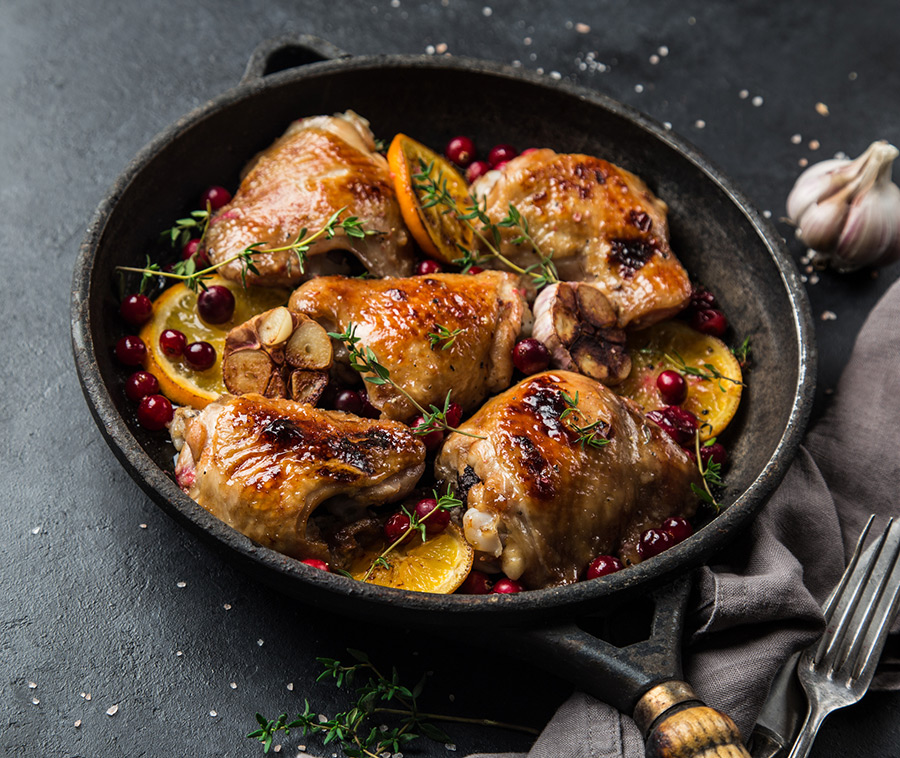
Get set
“I love the word skillet! It evokes feelings of comfort and familiarity,” says Thomas Heitz, corporate chef for Kraft Heinz Canada. “We have a huge portfolio of products that really work well with skillet concepts.”
Escalon and Mama Linda brand of tomato and tomato products, Philadelphia Cream Cheese, Velveeta, Richardson’s, Diana’s, Renée’s are a few he mentions as being “skillet-friendly.”
“Skillet meals are an effective choice for today’s smaller menus for a combination of reasons, including cross utilization of menu items and decreased labour requirements.”
Thomas Heitz, corporate chef for Kraft Heinz Canada
“Skillet meals are an effective choice for today’s smaller menus for a combination of reasons, including cross utilization of menu items and decreased labour requirements. This results in increased quality because staff can focus on a smaller inventory of ingredients and then reap the rewards of decreased costs.”
It’s so easy to create a daily skillet using ingredients that may need some attention, either from your fridge, freezer or pantry.
Finishing your skillet dishes with unique offerings created by Heitz’s speed scratch approach offers the benefits of consistency and time savings without compromising on flavour.
“My speed scratch Singapore Sauce is gastronomically intense but so easy. A 50:50 blend of Richardson’s Butter Chicken Sauce and Richardson’s Szechuan Sauce.”
As customers come out of lockdown fogs, they are shifting their eating habits. They still crave comfort, but want some healthy with that comfort.
Heitz reminds us, “Skillets may not necessarily have a healthy connotation, but they certainly can offer indulgent and familiar flavours with healthy twists. They are just screaming for spinach, rapini, broccolini or tomatoes to be added.”
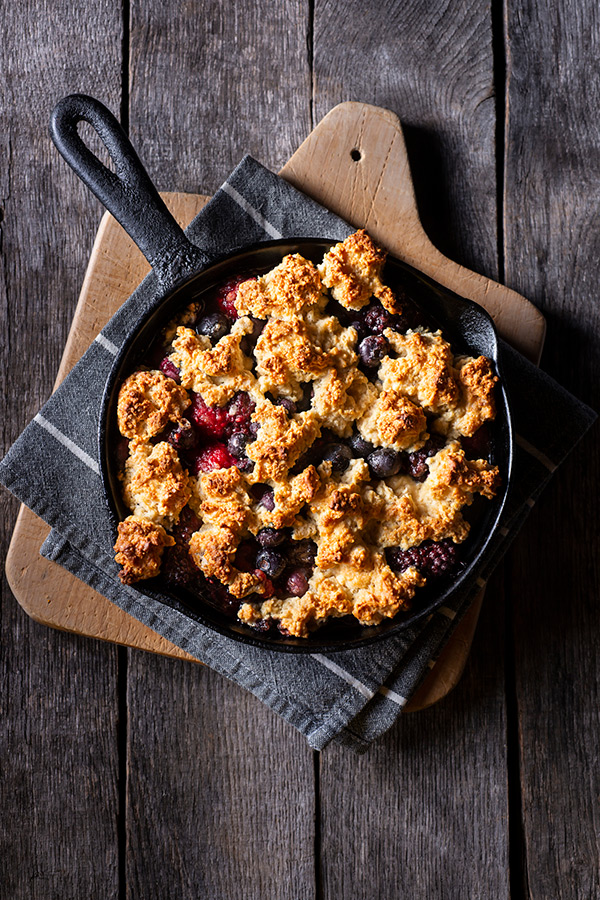
GO!
It’s the bits and pieces of you, your background, your brand and your ingredients that can be put together to make delicious and memorable dishes, one skillet at a time.
“Like adding bacon or ham to Lunch Mac ‘n Cheese Skillet,” says Maple Leaf’s James Keppy.
Constantly building concepts for customers, Keppy tempts us with Spicy Mexican Chorizo Sausage Breakfast Skillet or gives us great examples of cross utilization using boneless chicken thighs in both a Creamy Chicken & Biscuit meal or Parmesan Lemon Chicken and Rice Skillet.
Serving up skillets for flavour, comfort and health that use simple ingredients that can be cooked fresh to arrive on the plate or in the delivery box in less than 15 minutes is definitely a race you and your customers both win!
Once a necessity during the tumultuous year the foodservice industry has faced, now smaller streamlined menus are here to stay. And with good reason. Trimming and slimming down your menu adds well deserved money back to your bottom line, benefiting both you and your customers.
Long before COVID-19, if you remember back that far, Technomic had already acknowledged simplification of menus. Their Canada’s Shrinking Menus 2018 report noted that restaurant operators had been gradually cutting back on their menus since 2013.

Stat: Number of entrées down 15%, appetizers down 12% and dessert menu offerings down 18%. But number of beverages, sides, add-ons, kids’ and senior menu options were increasing.
Technomic reported that operators were being strategic about how and where to spend their money while dealing with the labour issues in the Canadian workforce.
Their Post-Pandemic Playbook continues the same macrotrend, stating labour issues already felt in foodservice pre-pandemic could be worse as former employees find other opportunities.
They also predict that many operators will likely focus on menu items that are revenue and profitability drivers, post-crisis.
Simplifying the menu makes good business sense: assisting cost control, reducing labour costs and keeping customers happy.
Cost control
Smaller menus naturally use fewer ingredients. A tighter food inventory provides operators with many cost-control options without hurting menu quality. In fact, menu quality will naturally improve.
James Keppy, corporate chef for Maple Leaf Foods, is busy helping operators streamline menus and promoting value-added ingredients to help chefs in their kitchens.
“Operators need to do a few things well. No one can afford to have their menu be a book anymore,” says Keppy.

“Operators need to do a few things well. No one can afford to have their menu be a book anymore.”
James Keppy, corporate chef for Maple Leaf Foods
“Inventory items need to be reduced so that they can be controlled and better utilized in multiple applications across the menu. This inventory reduction affords little to no waste.”
Technomic’s State of the Canadian Menu 2021 report agrees and suggests operators adapt products to various dayparts, mealparts, menu categories and ordering options. They state that menu streamlining will be a necessity for operators amid and after the pandemic, sticking around as a long-term trend. Multiple applications increase efficiency on several fronts, from labour to storage to spending.
Fewer ingredients mean you will be ordering larger quantities of your staples, allowing for bulk purchases and economies of scale.
The time it takes to manage inventory decreases from counting to reordering. With a tighter handle on inventory, food waste is also significantly reduced.
Consumers continue to look for customization when ordering. A smaller menu can still accommodate these requests. Operators can rethink well-performing ingredients and use them strategically in their offerings. But that also means eliminating poorly performing ingredients.
Keppy agrees. “If there are inventory items present that are costly but show low sales on the menu mix, they are a drain on your resources in both money and storage.
“Menu items and their ingredients that travel well are important. Maple Leaf Pulled Pork and Beef can be customized by individual operators with their seasonings and sauce and will keep their heat for delivery. These products can be used for sandwiches, build your own tacos, and for mac and cheese topping.”
Labour costs
Relying on menu fundamentals is key, according to Technomic’s State of the Canadian Menu 2021 report. Operators scaled back their menus to focus on core items. Smaller SKU counts helped operators reduce operational complexity by streamlining their menus, reducing waste and staffing needs, and increasing speed of service.
“Smaller menus factor in labour. This could lead to the elimination or doubling up of stations in the kitchen,” says Keppy.
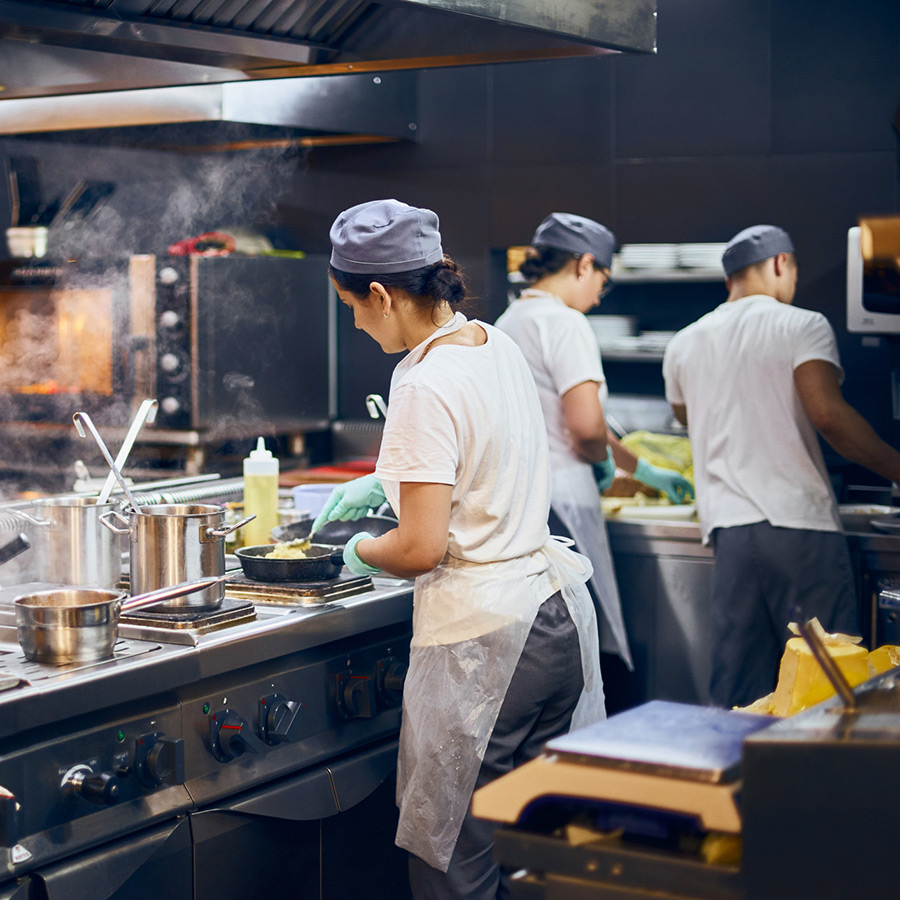
“Smaller menus factor in labour. This could lead to the elimination or doubling up of stations in the kitchen.”
James Keppy, corporate chef for Maple Leaf Foods
With fewer items on the menu, it is faster to train new employees — front of house and back of house. Wait staff will have more comprehensive menu knowledge and can effectively upsell and educate customers. Kitchen staff can quickly become experts on recipes, leading to faster service and higher quality dishes.
Additional benefits of having fewer moving parts, people and ingredients are increased efficiency and minimal mistakes — everybody wins in this scenario.
Happy customers
Everyone wants to be happy. Smaller menus help your customers get there. It is easier for your customers to understand who you are and what makes you awesome if they aren’t getting lost in your menu.
Visually, the menu will be more appealing in print and online. The physical menu will have white space and room to move, taking advantage of menu psychology theories. Plus, the digital menu will be simpler to scroll.
“Keep the menu easy to read and therefore easier to make a menu choice… especially if your customers are reading and ordering from a phone.”
James Keppy, corporate chef for Maple Leaf Foods
“Keep the menu easy to read and therefore easier to make a menu choice… especially if your customers are reading and ordering from a phone,” says Keppy.
Smaller menus increase the perception of quality over quantity and don’t overwhelm indecisive guests.
As ticket times decrease, customers get their orders faster, and that makes them ecstatic.
Gearing down to go up
“Do what you are good at and what you are known for while still offering items that appeal to the general groups of meat eaters, vegetarian and vegans, healthy eaters and indulgent consumers. If you are a chicken place, offer fried, grilled and a plant-based version,” says Keppy.
He also reminds us that “no matter what you offer, always consider the quality and appearance on the plate as well as in the takeout container.”
Shrinking your menu is all about dollars and cents, and just makes good sense. Your operation will be stronger, more focused and even better than before. Your customers will thank you, and so will your bank account.
Winning at foodservice takes a lineup of all-star players. Yes, the food is important and always will be, but we aren’t just talking about the food. You need a team effort to succeed — to provide quality, consistency and service. Winning at takeout needs adaptable players. Is your takeout team ready?
The right coaches bring out the best in players. Why? Because they have played those positions. They understand the wins and losses, the risks, obstacles and struggles. Use foodservice coaches, from nationally recognized and trusted brands, to be your guides to build your best takeout menu and strategy.
Offensive line coach – on land
Chef James Keppy is the corporate chef for Maple Leaf Foods Canada.
“Operators … need to focus on items that they are known for, that travel well and that customers will come back to, again and again!”
Chef James Keppy, corporate chef for Maple Leaf Foods Canada
“Most corporate chefs are usually consulting with operators to introduce new menu items and increase check averages. Today, all of us are helping operators streamline menus and offering value-added products for quicker service times. We are matching the best products to hot hold for delivery, while keeping quality high.”
“Operators are already adapting to a takeout world, but they need to focus on items that they are known for, that travel well and that customers will come back to, again and again!”
“The menus should be getting smaller and ingredients need to have multiple applications wherever possible.”
- TIP: Consider family-sized options
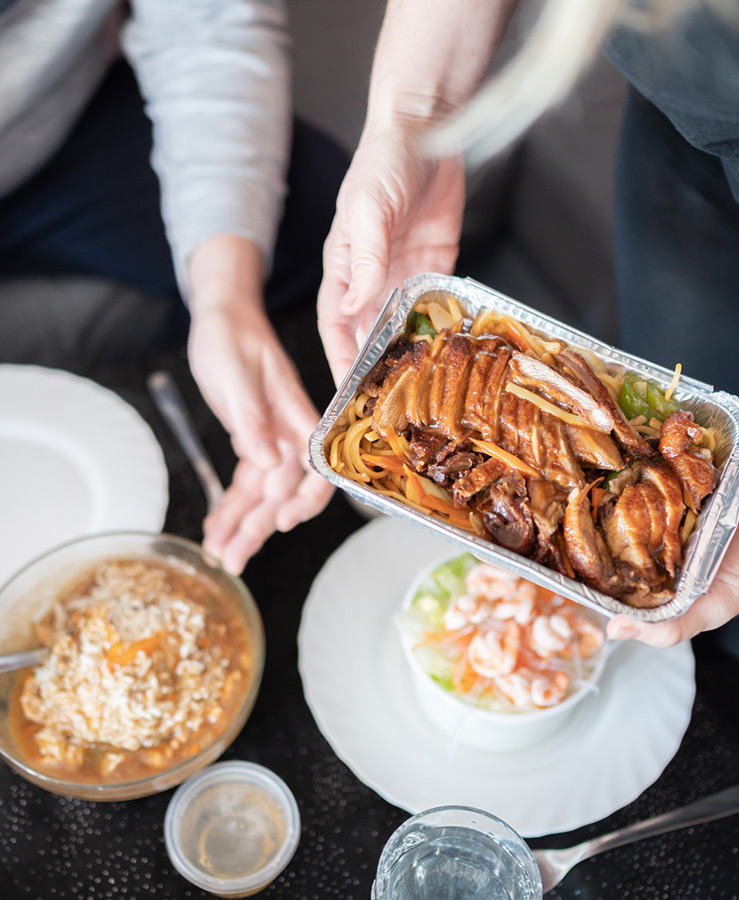
Wings and pizza are king, but the innovation will be in the complete family dinner. Consider selling popular menu items family style — servings for two, four or six instead of a family ordering four different entrées.
Takeout is blurring the lines between grocery and retail with finish-at-home meal kits. Get the order for tonight’s meal and offer up a “Finish at Home” package for tomorrow… like a smokehouse kit with cooked ribs with signature sauce, baked mac and cheese, slaw and Mexican street corn.
Maple Leaf offers pulled meats, shaved steak, fully cooked ribs, wings and chicken sandwiches — perfect for takeout menus.
Remember to return to the comfort foods, because they also happen to travel well!
“Wings will always hold well for travel, especially breaded wings, but so do pulled pork and beef, BBQ ribs, mac and cheese, shepherd’s pie, lasagne and chili. These items can quickly become a regular order in a family’s dinner rotation.”
Offensive line coach – at sea
Chef Philman George is the corporate chef for High Liner Foodservice. High Liner Foodservice is on a mission to remind Canadians how healthy, versatile and tasty seafood is.
“My goal is to place craveable seafood on your menu and help you generate more profit. I work closely with operators to help them succeed and reach their full potential with seafood offerings.”
Chef Philman George, corporate chef for High Liner Foodservice
“My goal is to place craveable seafood on your menu and help you generate more profit. I work closely with operators to help them succeed and reach their full potential with seafood offerings.”
- TIP: Maximizing your online presence is key. Whether through social media, reviews on Yelp, or third-party delivery apps, it’s vital that your restaurant be seen in as many digital avenues as possible.
- TIP: You eat with your eyes first! Take pride in capturing drool-worthy, Instagrammable photos of your menu items. Most delivery service apps offer photography sessions and most of them are free. Get as many dishes captured as possible!
- TIP: Be strategic with your takeout menu offerings. Less is more! Design a menu that is easy and quick to execute and delivers an exceptional culinary experience.
When customers order takeout, they want it relatively quickly and they want it to taste as good as it would if they were dining in-house. Be strategic with your takeout offerings to deliver great food without an extremely long wait time. Successful operators have streamlined their takeout offerings to make it simple for the kitchen staff to execute.
“High Liner has many fantastic products that can help the operator save time, money and deliver exceptional seafood takeout. I think the true value to the operator is being able to tap into our High Liner Foodservice dedicated seafood experts, available across Canada. They love seafood and are passionate about helping the operator achieve their seafood goals.”
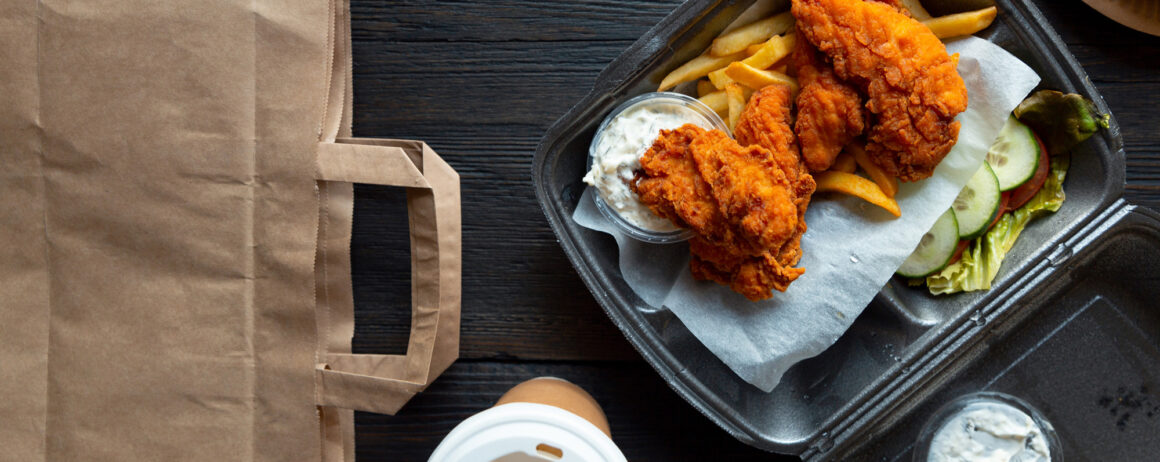
“We have some fantastic new Guinness beer-battered products which are unique and simple for the operator to execute.”
Special teams coach
Chef Thomas Heitz is the corporate chef for Kraft Heinz Canada, a company with a large portfolio of brands.
“Create something true to your brand. Don’t try to be everything, figure out what customers come to you for, what you do well. Own it and do it better.”
Chef Thomas Heitz, corporate chef for Kraft Heinz Canada
“Create something true to your brand. Don’t try to be everything, figure out what customers come to you for, what you do well. Own it and do it better. People do not tolerate mediocre food anymore.”
- TIP: Less is more. Streamline and focus your takeout menu.
An added benefit? If you are doing less, it’s easier to focus on being the best. Your customers are happy and satisfied, you reduce your ingredient count and labour needs and typically save money.
“The key to making that happen is convenience for the kitchen. Speed scratch. Take our Renée’s Roasted Garlic Aioli, add your own herbs or horseradish and you have a unique item you can execute with consistency. But that same Renée’s Roasted Garlic Aioli can used for other applications or again be quickly transformed into another unique ingredient just by adding one or two extras.”
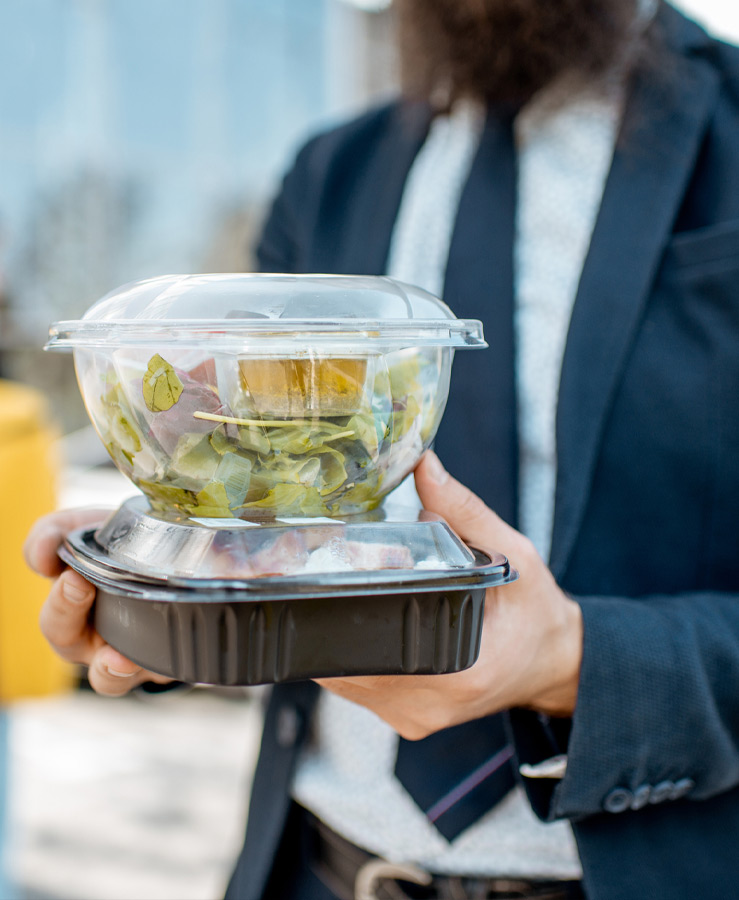
Whether takeout or in-house dining, it is still about the quality of the food. Maintaining quality for takeout means using the right packaging and hopefully, sustainable packaging. Some premium ingredients lose their premium status after 30+ minutes in the wrong packaging.
It’s okay to package takeout menu items deconstructed. Keep cold and hot items separate whenever possible.
- TIP: Test your takeout packaging before you use it with customers.
To test something for takeout: Put it into the container, put aside for 20 minutes or more. Give it to someone, tell them to walk up and down the stairs, maybe even drop the bag, then look and taste.
“Figure out the little things like whether to have the bun buttered or not buttered, using bibb versus iceberg lettuce. Your final menu item will be better for the time and attention to all the details.”
“Service is part of the details. Having your takeout packages sealed and numbered, for example, can provide your customers with peace of mind while ensuring orders are complete and delivering quality.”
“It’s all about collaboration: working as a team in your own establishment and working with vendors and suppliers to succeed. You don’t need to do it on your own. Let us help.”
The final huddle
The best defence against the ups and downs of foodservice is a good offence. A good offence takes practice, training and creativity. It’s worth taking the time to streamline your takeout plays to achieve quality, consistency and service. Grab the opportunity now and your team is sure to execute a smarter, more profitable, winning takeout game.
One, two, three…go, takeout team!