
The past two years have brought unforeseen challenges to the foodservice industry, leaving many operators scrambling to adapt. Check out the Canadian Foodservice Trends for 2022 to see where Canadian foodservice is going, what consumers are craving, how operators are continuing to pivot, and what successes they might see in 2022. Will this be the make-it-or-break-it year?
Menu Pivots Support Supply Changes

Persistent supply chain issues will inspire creativity and require flexibility in 2022. Almost a third of foodservice operators surveyed (29%) will raise menu prices by 5% or more over the next twelve months so exploring new ingredients or innovative menu pivots is key moving forward (Source: Restaurants Canada Q2 2021 Outlook Survey) Specifically, quirky preparations of familiar ingredients will allow for exciting menu additions without new SKUs—think pickled apples, candied garlic or salt-baked root veggies to impart new flavours and/or textures while, in some situations, even extending shelf life.
Inventiveness with favourite fare will also help operators stand out such as global sauces and ingredients on classic dishes and less-traditional cuts of meal that are more economical, chicken thigh vs chicken wing.
Stat: Chicken Thighs have seen a 39% increase in menu mentions over the past year
Source: Ignite Menu data, Q3 2020 – Q3 2021
All Buttered Up

As the comfort food trend surges on, many foodservice operators will turn their attention to butter, a staple ingredient in most kitchens. Flavoured butter will be grounds for culinary experimentation, ranging from umami-rich kombu or yeast butters to cocktails featuring herb-infused and browned butters.
Other buttery ingredients such as buttermilk, buttercream, butterscotch and ghee/clarified butter will gain attention. Elevated versions and applications of nut butters will also continue to grow in conjunction with the plant-based trend, with pistachio and macadamia butters finding momentum, and peanut butter making headway in new directions, such as on burgers or in cocktails.
Stat: Buttermilk is on 14% of operator menus and about 2% of operators menu butterscotch or clarified butter
Source: Ignite Menu Data, Q2 2020-Q2 2021
The Breakfast Boom

The crisis may have prompted some chains to cut back on breakfast over the past year, but the daypart is poised for a big bounce back in 2022. With recovery scenarios on the horizon, consumers are settling into a less-disruptive reality, one in which some are fully homebased, while others head back to the workplace. And – crucially – kids are going back to school campuses. For many, sourcing a morning meal from a restaurant is once again a part of the routine.
Expect chains to employ subscription deals, multiperson bundles, product innovation and amped-up marketing to capture morning traffic and establish loyalty. We’ll also see the return of 24/7 breakfast offerings as well as new competition from casual dining in the form of morning-only virtual brands and later-day breakfast options.
Eggs are perfectly suited for a post-pandemic slot in the limelight – simple, universal, craveable, adaptable, suggestive of new beginnings. Eggs also create opportunity for punny concepts and quirky branding, bringing some fun back to the dining experience.
Stat: 62% of Canadian consumers would like breakfast to be offered beyond morning hours
Source: Technomic July 2021 consumer survey, 1,000 consumers
Spicy And Sweet Combinations
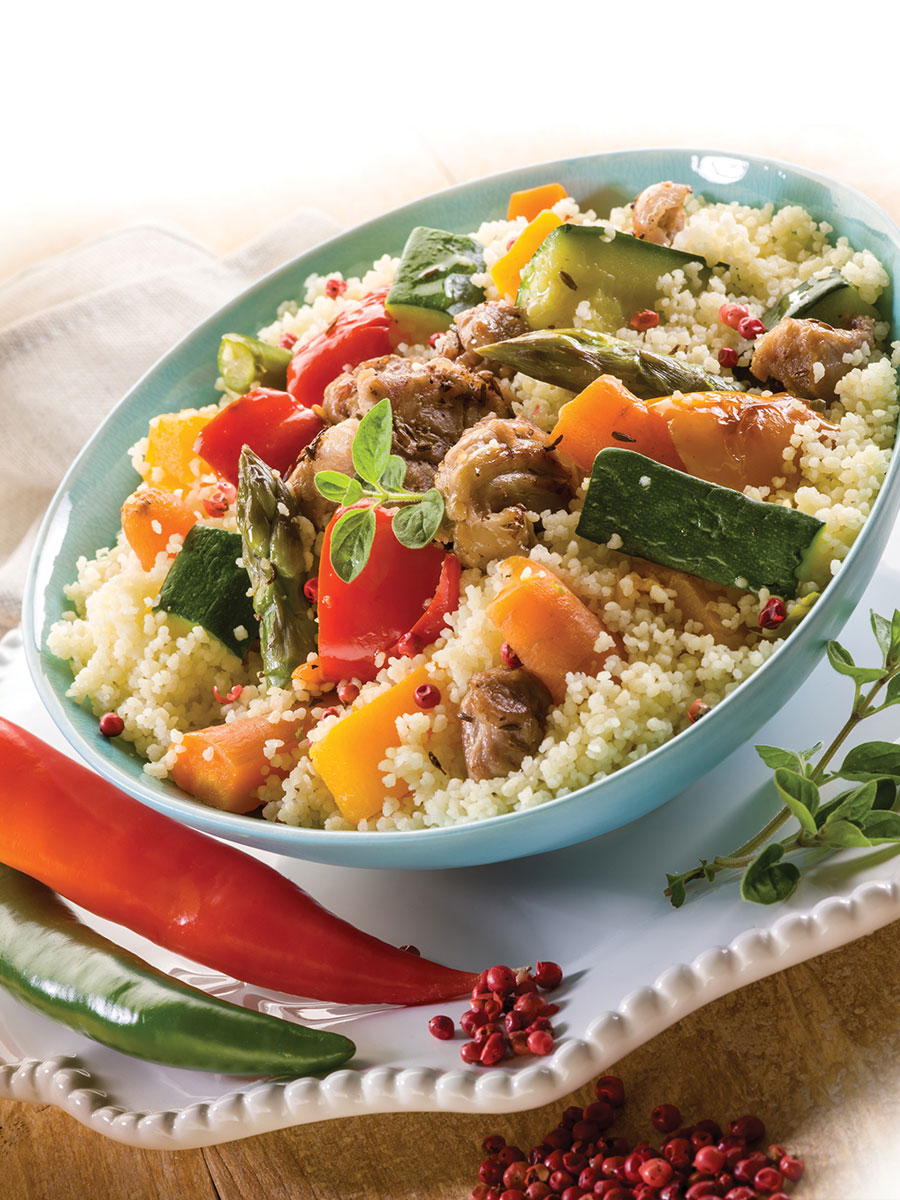
Beyond simple heat, operators are creating more complex flavour profiles, including sweet heat, to differentiate. There is growing demand for flavour experimentation and foodservice operators are upping their game by creating unique flavour profiles.
We are seeing more development of spice on the menu including spicy flavours combined with sweet flavours, which make spicy flavours more approachable for those looking for a hint of spice or a moderate spice level. From appetizers to desserts, operators are using ingredients like honey with chili oil and honey with hot sauce to create sweet-and-spicy combinations. Pidgin, located in Vancouver, menus szechuan pepper beignets that comes with sugar dusting, salted caramel and miso sauce.
Technology Boost
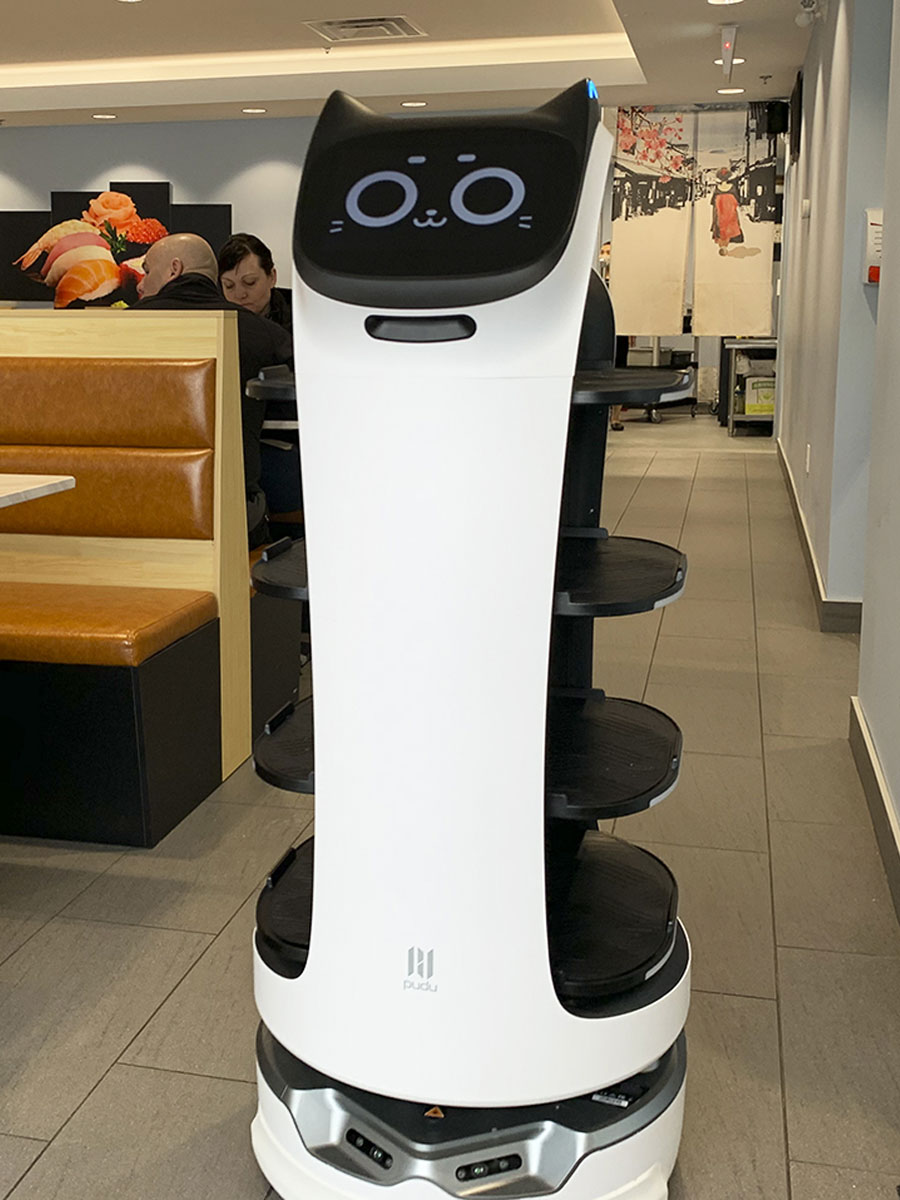
Technology has allowed restaurants to adapt to new expectations for contact-free foodservice. Online ordering and delivery have become a necessity for many operators and continues to evolve. More chains are starting to explore automated systems in both the front- and back-of-house, like grab-and-go cubbies from Paramount Fine Foods, or the Spyce Robotic Kitchen, as a way to improve safety during the pandemic as well as alleviate some of the challenges caused by labour shortages.
While many technologies remain cost-prohibitive to smaller operations, online ordering and menu solutions will continue to become more of an expectation for many consumers and are important to consider in strategic growth overall. We can expect further developments around mobile ordering, geofencing and other technologies; more tech-based self-delivery to help independents – especially – better control costs and quality.
Plant-Based Explosion

Plant-based ingredients have seen large increases in menu mentions, but the trend continues to grow further than just proteins. Dairy alternatives like oat milk are trending as well as plant-based condiments and cheeses.
Alternative and plant-based proteins have gained mainstream popularity, with many top chains adding the once-niche ingredients to their menus. Upcoming plant-based innovation includes vegan bacon, plant-based Bolognese, caviar and other non-traditional protein dishes.
Stat: Oat milk has grown 79% in menu incidence this year and plant-based beef has grown 21% in menu incidence
Source: Ignite Menu Data, Q3 2020-Q3 2021
Reliance On Delivery/Takeout Continues
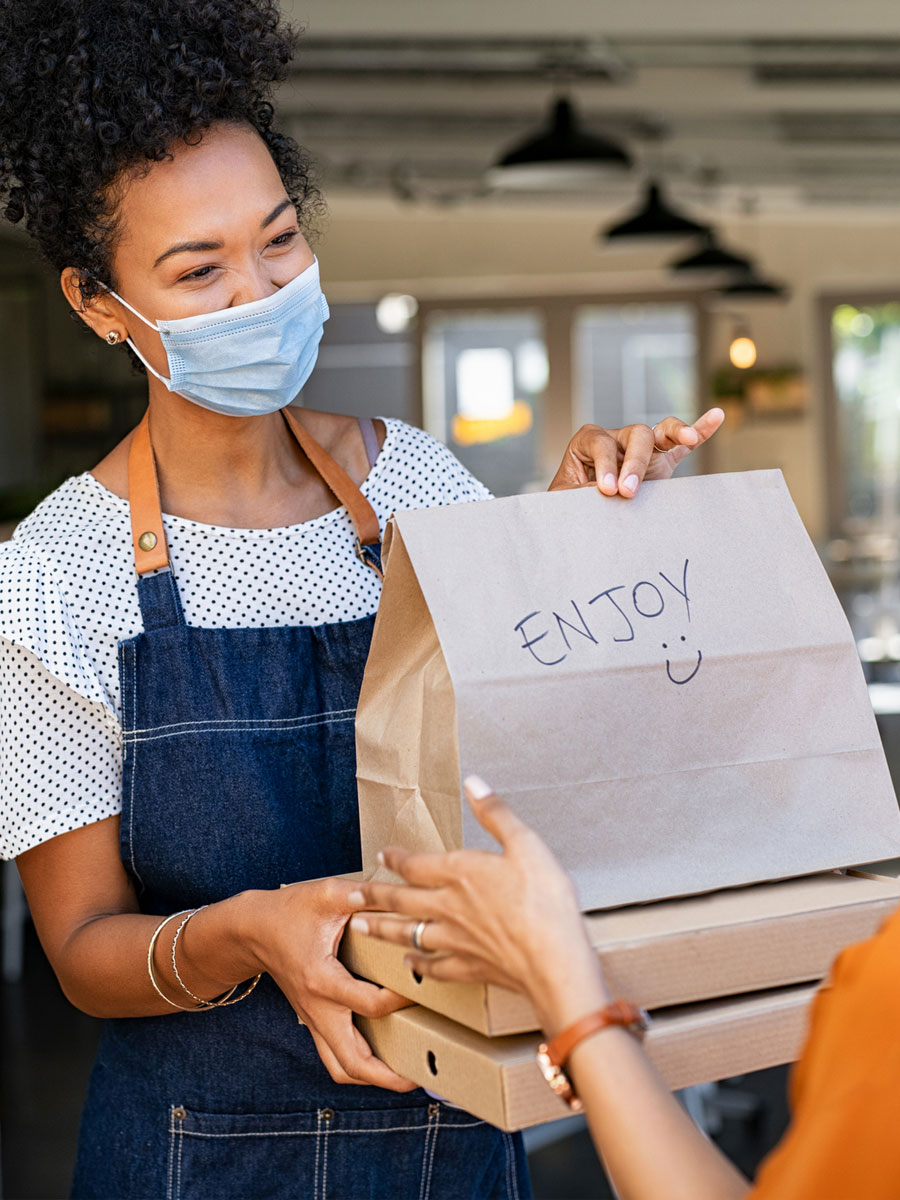
So many restaurants made the pivot to takeout and delivery over the past year, and this will continue to help drive sales for restaurants while some customers remain unsure about indoor dining. More than half of consumers (52%) indicate they will still rely more heavily on off-premise services such as takeout and delivery in the foreseeable future. The number of consumers who indicated they would be avoiding restaurants for the foreseeable future also went up from 23% in March to 25% in May (Source: Foodservice Digest for Canada September 2021).
Many restaurant operators are leaning into footprint innovation with more compact unit prototypes and delivery- or takeaway-only locations. While the threat of new variants and community spread remains a reality, ensuring there are menu items that are portable or more tailored for off-premise occasions will be key in keeping operations flexible as health and safety recommendations continue to shift.
Menu engineering, the process restaurateurs use to analyze the cost and popularity of menu items and adjust pricing to maximize profitability, is more important than ever for Canada’s foodservice operators.
The industry faces many challenges in this late-pandemic period, including staffing shortages, supply issues and rising costs. As patio season winds down, consumer hesitancy about in-restaurant dining continues, yet many people are eager to return to their favourite spots. Demand for takeout & delivery and expectations for a demonstrably safe dining experience remain high.
As a result, many restaurants are looking to downsize menus to upsize revenue, focusing on dishes that hit the sweet spot where high sales and maximum profit meet. They also need the flexibility to quickly change what’s on offer, as well as ways to demonstrate their ongoing commitment to in-house dining safety.
Operators need to go beyond the traditional, time-honoured calculations of menu engineering to reconsider the very nature of menus. How can they be easily changeable and available to patrons as conveniently and safely as possible?
The answer is digital restaurant menus.

“The main benefits of using digital menus are ease of access and flexibility. Any customer can view a digital menu anywhere . . . restaurant owners can add or modify menu items at any time.”
Amina Gilani, Co-Founder and COO of Sociavore
The benefits of digital restaurant menus
- Access and Agility — Amina Gilani, Co-Founder and COO of Sociavore, the independent restaurant website platform and Brand Points PLUS partner, says, “The main benefits of using digital menus are ease of access and flexibility. Any customer can view a digital menu anywhere, right from their smartphone, tablet or computer, even after hours when the restaurant is closed. Restaurant owners can add or modify menu items at any time without having to print new physical menus.”
- Many Ways to Share Your Brand Story — Digital menus go beyond simply listing food choices; they’re important marketing tools, since so many people check out menus online before choosing a restaurant to visit or order from. Your digital menu is a way to complement the brand story you tell on your website and in your physical premises.
- Maximizing Profit — Designing menus to highlight the most profitable items can influence customer choices to help restaurants maximize profit. Gilani says that digital menus give you the ability to “create engaging menu descriptions and add mouth-watering food photography to accompany each menu choice.”
- Expanded Information — Digital menus allow customers to easily access information about dietary concerns and restrictions, which traditionally have required conversations with the server. With the click of a link, customers can check ingredients and nutritional details.
- A Shoppable Experience — Your static digital menu can be converted into a shoppable ordering menu. Gilani says this allows customers “to browse and place orders for pickup or delivery right from your restaurant website.” With Sociavore’s commission-free delivery integration you can save on third-party delivery fees and retain your customer data too.
Different Ways to Digitize Your Menu
Menu digitization ranges from low-tech options to highly integrated systems:
- At the lowest tech level, some restaurants simply post photographs of menus on their website or Facebook page. The photography isn’t always optimal, but even when it is, readability can be an issue, especially on mobile devices. And the photos need to be reloaded each time the menu changes.
- Other restaurants upload PDF menus to their website and social media. This approach has the same mobile readability and reloading challenges as photos.
- Next level up are web-based menus. “Restaurateurs can use Sociavore to create and manage digital menus on their restaurant websites. With a few clicks of a button, you can add new items, limit inventory, add custom fees and taxes, and more,” says Gilani.
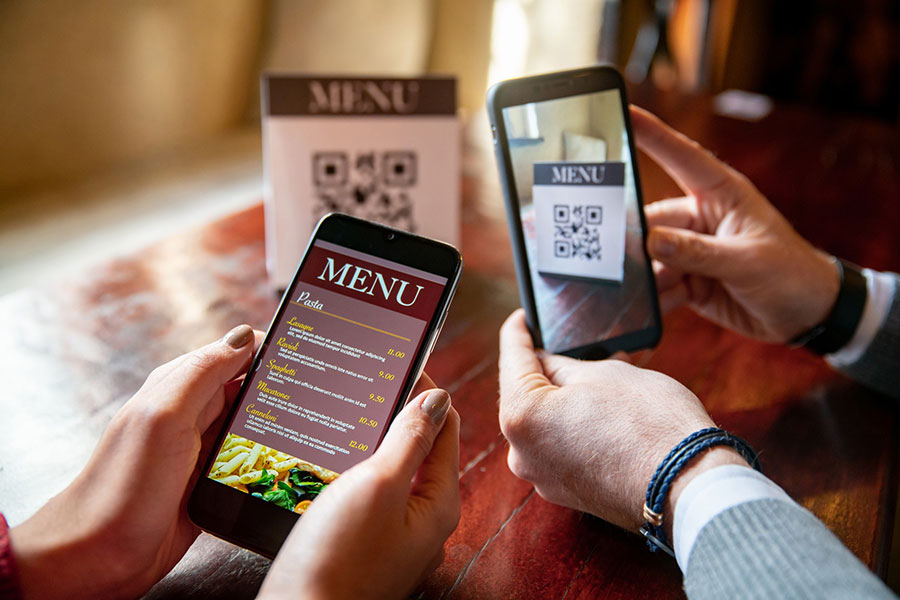
- Making QR (quick response) codes — those square barcodes that look a bit like abstract art — available on tabletop, at the storefront, and on marketing materials is the next rung up the digital menu ladder. They allow customers to quickly click through to the most current version of your digital menu as soon as they’re seated.
- Finally, QR codes can be integrated with contactless ordering and payment systems. A Restaurants Canada press release from December 2020 states: “QR codes are the new norm for menu viewing, touchless ordering, and paying the bill.”
A Deeper Dive into QR Codes
While QR codes have been around since the ’90s, they’ve really taken off as foodservice operators and consumers adapted to the realities of the COVID-19 pandemic. Using them is easier than ever, helping foster their ready acceptance by the dining public.
Many newer smartphones have built-in QR code viewers, so no special app is needed. A patron can simply open their phone’s photo app, focus on the QR code, and then follow the pop-up link to the restaurant’s menu. This makes ordering faster and minimizes contact with the server.
The right website platform can take QR codes to the next level with contactless ordering and payment system integration. Customers can order and even pay the bill from their phone to have their meal delivered to their table (or for takeout and delivery), for the ultimate in convenience and contactless dining.
“Guests can easily access the restaurant’s ordering menu via the QR code and order directly from the menu. This reduces short-term labour costs and increases table turnover with faster, more efficient ordering.”
Amina Gilani, Co-Founder and COO of Sociavore
QR codes also benefit restaurant operations, as Gilani explains: “Sociavore’s contactless dining feature streamlines the restaurant’s service by sending orders directly from the guest’s phone to the kitchen. Guests can easily access the restaurant’s ordering menu via the QR code and order directly from the menu. This reduces short-term labour costs and increases table turnover with faster, more efficient ordering.” She says, for instance, that this feature has powered the largest patios in Toronto (the Distillery District and RendezViews) as well as many independent restaurants.
Letting your community know about these safety enhancements may encourage the hesitant to return to in-person dining more quickly. It’s also helpful in retaining and attracting staff, a major industry concern.
Bye-bye Paper Menus?
The pandemic has certainly accelerated the demise of the formal printed menu. Many restaurants switched to single-use menus for safety reasons before moving to QR codes. But it may be premature to declare paper menus as passé as paper letters.
Not everyone has a smartphone. Some don’t have data and need your WiFi to use QR codes. Sometimes people simply forget their phone. Even the most tech-advanced restaurant should have some single-use paper menus available as a contingency.
Tips for the Digital Menu Age
- Embrace digital design — “Let your menu reflect your brand!” Gilani says. “Don’t be afraid to switch it up and create new menus for special events or holidays. Also, be sure to include a clear, well-lit photograph of each menu item — you’ll notice a significant increase in online sales and basket size.”
- Help customers become tech savvy — Some customers need to get comfortable with menu technology. Tactfully show them the ropes. Demonstrate that using QR codes is as easy as opening their phone app, and show them how to find more details about menu items. Once they’ve got the hang of how simple it is to use a tabletop QR code, they’ll be converts.
- Be generous with those QR codes — Consider placing several QR code stickers on each table. After all, patrons clamouring to click through to your digital menu won’t want to queue up for their chance!
It’s a fact. Restaurants across Canada are on the brink of reopening, whether to patio dining, in-restaurant meals, or both. Diners are understandably excited to return to their favourite culinary haunts. But what about restaurant staff, many of whom have been furloughed for part or all of the pandemic? How safe is it for them to return?
As Jeff Dover, principal of fsSTRATEGY Inc., says, “Very few cases of COVID-19 have been confirmed as spreading in restaurants; this includes areas of the country where indoor dining has been allowed. In short, the restaurant industry was [already] doing a good job of keeping staff safe.”
“Very few cases of COVID-19 have been confirmed as spreading in restaurants. In short, the restaurant industry was [already] doing a good job of keeping staff safe.”
Jeff Dover, principal of fsSTRATEGY Inc.
But keeping restaurant staff safe and having restaurant staff who feel safe are two different things. Canadian Restaurant Workers Coalition has been petitioning provincial governments to improve restaurant workers’ protections like paid sick leave and overtime pay. As reported in the Toronto Star, Not 9 to 5, a non-profit providing resources for mental-health well-being among hospitality workers, recently introduced the Mind Your Health project. The project includes a certification program on workplace safety from a psychological perspective, along with an online survey to collect data on mental-health well-being among hospitality workers.
Where to start
“The key for me is to ensure that staff wear masks and, even more so, keep six feet apart when possible,” advises Dover. “When staff have to be within six feet (e.g., taking orders, picking up food), the time of exposure should be limited. One of the primary challenges is tight kitchen spaces such as a line with multiple stations not six feet apart. Redesigning the menu to have fewer kitchen stations will help keep the staff safe. COVID-19 is more likely to be transmitted indoors and in close spaces. Redesign your workflows to eliminate or limit such interactions.”
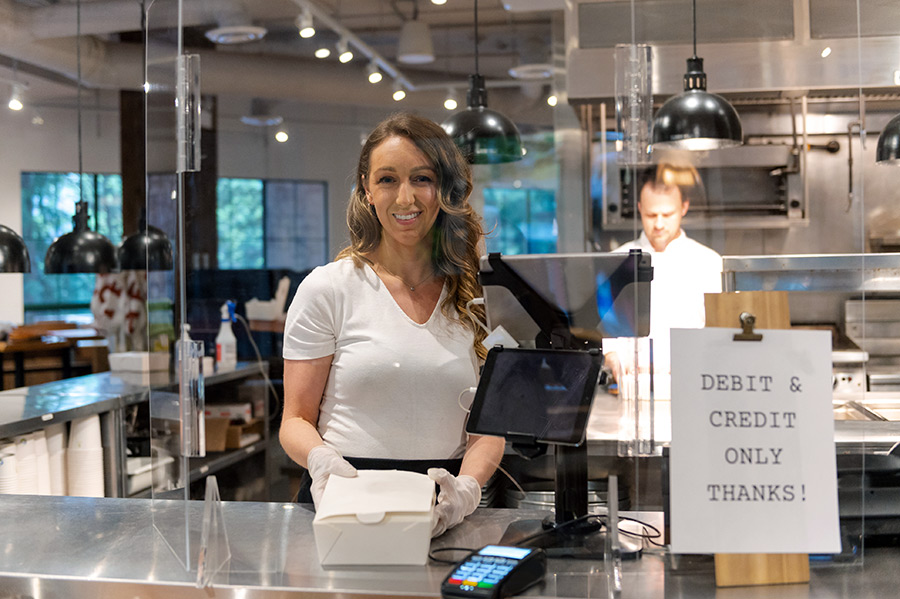
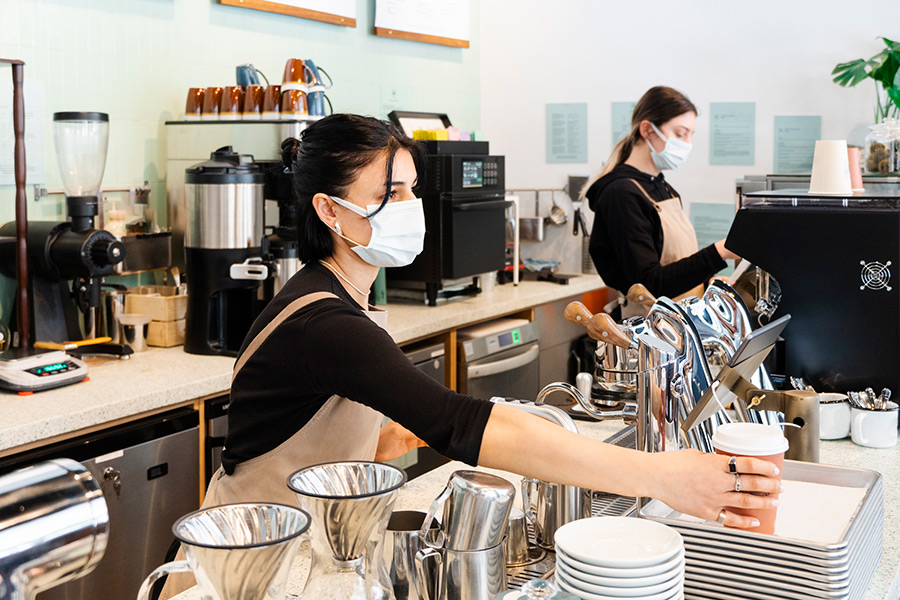
Sanitize regularly. Tables, work surfaces, and other areas, both front and back of house.
Reduce staff sharing. For instance, kitchen staff should never share utensils at back of house.
Change your menuing. Other changes will need to be instituted to ensure the safety of both your guests and your employees. Reusable menus, for instance, may become a thing of the past. Many restaurants, says Dover, are putting QR codes on tables to limit contact with shared items. “When guests request menus, they should be provided with a single use copy. Condiments should not be kept on tables and should be sanitized before use. Cutlery should be rolled and brought to the table after the guests are seated. Simple adjustments like these will assist in limiting the spread of COVID-19 for both guests and staff.”
Appoint a COVID-19 point person. “I recommend having someone responsible each shift to ensure COVID-19 prevention practices are adhered to,” says Dover. “This person could also be the go-to for questions about practices being employed to keep customers and staff safe.”
Organize vaccination days. A number of restaurant chains in the US have said they are providing pay for staff to get vaccinated and are even helping their employees to book appointments.
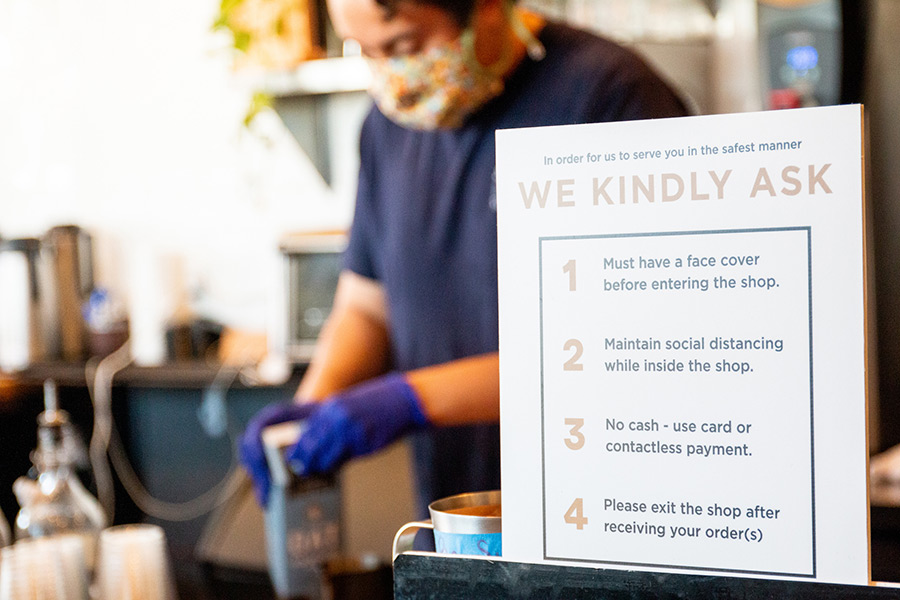
Offer paid sick days. This is key, says Dover. “You don’t want staff to come to work when they are not feeling well. Take advantage of federal and provincial paid sick day programs if you can. Paying sick days will be less expensive in the long run than having your restaurant closed due to a COVID-19 outbreak.” Should you experience an outbreak, make sure you have records of which employees worked when, along with info on your dine-in restaurant customers and who served them. Contact tracing is key.
Ramp up your communication. Let your staff know what you’re doing to keep them safe, and then inform your guests of the steps you’ve introduced to keep them — and your employees — safe. “If you are able to pay sick days, I would communicate it,” Dover advises. “The restaurant chains in the States paying staff (I heard two to four hours) to get vaccinated received great publicity. We have seen in jurisdictions that have opened up that there is significant pent-up demand. However, not all staff will be comfortable working and not all potential customers will be comfortable in dining rooms. Communication on the safety practices being employed will help alleviate any such fears.”

Your restaurant safety protocols checklist
Employee safety, testing and validation will be key to successful restaurant reopening. Healthcare and foodservice workers may be required to validate their health status before handling food in the post-COVID-19 environment. Here are some protocols you should initiate to ensure the highest level of safety:
- A Validated Body Temperature Check and Log for employees before they enter a place of work. These records will need to be maintained or even submitted to a higher authority on a regular basis, following the lead of most healthcare facilities.
- Food Safe Certification (or comparable) for all foodservice workers.
- Face Masks. All food handlers (and maybe even service staff) will be required to wear a protective mask. Ensure you have masks available for all your staff.
- Hand washing. Training in proper sanitary handwashing must be demonstrated and followed frequently.
- Sanitary uniforms. Many restaurants require uniforms but leave them up to employee. Gone may be that favourite Che T-shirt as a uniform of choice, along with unwashed shoes, baseball caps, or cargo pants and shorts, as operators pivot to requiring uniforms laundered daily and professionally, and not left in staff lockers or change rooms.
- Work surface sanitation protocol and records. Sanitizing of work surfaces, equipment and documentation of all protocols is recommended.
- HACCP enforcement. Temperature and travel logs must become second nature. HACCP (time temperature tracking) will become the most critical safety/sanitation issue in the future.
- New procedures for clean dishes, flatware and glassware. Flatware must be free of contamination before menu items are plated and delivered to a guest. Discuss with your chemical service providers how to ensure products and equipment are safe for staff and guests.
- Health inspections. Develop a plan to interact more with your local health department. Involve chefs and managers to create a flow of information.
- Focus on safe distances between employees. The typical design of a restaurant leads to the smallest amount of kitchen space to accomplish the job — leaving more space for revenue generation out front.
- Seek opportunities for menu change or equipment location swap to increase safe distancing in the kitchen and service area. While 2 metre social distancing may not be possible at all times, plan to incorporate more space.
- Rethink your staffing. Use the opportunity to rehire as many of your good staff as possible, but also consider adding new and better hires with more experience. Will you be continuing to offer delivery? Make sure you have the right staff for your right jobs.