
6 Strategies for Restaurants to Thrive During Inflationary Periods
As a restaurant owner, you may be feeling the pressure of inflationary periods.

With the cost of goods and services on the rise, it can be difficult to maintain profitability while still delivering high-quality food and service to your customers. However, there are several strategies you can implement to improve your business during these challenging times.
- Monitor Your Food Costs: One of the biggest expenses for restaurants is food. During inflationary periods, the cost of ingredients can skyrocket, which can seriously impact your bottom line. It’s important to regularly review your food costs and make adjustments as needed. This might mean finding new suppliers or sourcing ingredients locally to cut down on transportation costs. You can also consider adjusting your menu prices to reflect the increased costs of your ingredients.
- Focus on Efficiency: Another way to improve your business during inflationary periods is to focus on efficiency. Look for ways to streamline your operations and reduce waste. This might mean investing in new equipment or technology that can help you cook faster and more efficiently. It could also mean rethinking your menu to focus on dishes that are easier to prepare and require less prep time.
- Offer Special Deals: During inflationary periods, consumers are often more price-sensitive. Offering special deals or promotions can help attract customers and boost sales. For example, you might offer a “happy hour” promotion with discounted drinks or appetizers during off-peak hours. You could also create a “family meal” deal that offers a discounted price on a larger meal for families or groups.
- Prioritize Customer Service: Inflationary periods can be stressful for everyone, including your customers. It’s important to prioritize customer service and ensure that your guests feel valued and appreciated. This might mean training your staff to be more attentive and responsive to customer needs or investing in technology that can help you provide faster and more personalized service.
- Consider Alternative Revenue Streams: Finally, during inflationary periods, it’s important to think creatively about alternative revenue streams. This might mean offering catering services or partnering with local businesses to offer packaged meals or meal kits. You could also consider expanding your delivery or takeout options to reach more customers who may be hesitant to dine in.
- Buy Canadian-Made Products: Supporting local Canadian suppliers can help restaurants navigate inflationary pressures more effectively. Purchasing Canadian-made products reduces reliance on international supply chains, which are often affected by rising costs and delays. Locally sourced ingredients not only ensure fresher, higher-quality food but also contribute to the local economy. Additionally, marketing your restaurant as one that prioritizes Canadian products can attract customers who are passionate about supporting homegrown businesses.
In conclusion, while inflationary periods can be challenging for restaurant owners, there are several strategies you can implement to improve your business. By monitoring your food costs, focusing on efficiency, offering special deals, prioritizing customer service, and considering alternative revenue streams, you can position your restaurant for success during these challenging times. Remember, with a little creativity and hard work, you can weather any economic storm and continue to deliver high-quality food and service to your loyal customers.
As a hospitality brand, your business is built on the premise of serving customers’ needs with an experience and value aligning with their expectations. The question is, have you done the due diligence to truly identify and understand who your customer is?
The answer to this is critical to the success of effectively attracting the right customers who reflect your brand experience, to achieve a win-win customer-centric approach.
But why leave it to guesswork? It’s time to eliminate the stabs in the dark. Here are five easy strategies to identify who your guests are through relevant information and factual insights.
Customer-centric: you know who your customer is and your restaurant experience is designed foremost to service their needs and meet their expectations.

Location, Location, Location
It may be an old adage, but your restaurant location plays a significant role in identifying your largest potential customer base. Location acts as a convenience factor, meaning guests who reside or work nearby are more likely to frequent your restaurant, and more regularly as well. If your eatery is near a family suburban community, then you will likely be attracting more families with children, versus a downtown city restaurant. Your city or municipality can provide you with the demographic information of who resides in your area. The first step is to utilize these data to define your overall brand experience to match with the people most likely to dine with you, and the type of guests you want to attract to meet your objectives. Use this to guide the brand theme, service level, ambience, décor, menu offering, and price point.
Who’s eating there
Understanding who your closest competitors are and the types of guests they’re attracting is typically a realistic representation of those you can expect to serve as well. So, get out there and visit at least three competitors within the same restaurant category as you: quick service if you’re in the quick service sector and family casual if you’re catering to that market. Create a list of attributes you’ll be comparing such as operational flow, marketing, team uniforms, atmosphere, menu offering and price. Then take a seat at their table to truly understand the service experience and the types of guests also dining in or taking out. Be sure to note your observations on your checklist for easy comparison and analysis to help identify who your customer will be, or should be.
- TIP: Read your competitors’ customer reviews and browse their social media platforms to better understand the community of guests they are attracting and serving!

The digital customer is your customer
Some of the most useful information to understand your customer is right at your fingertips, literally! Social media platforms provide factual data on who is engaging with your brand from their location, age, gender, and the type of content they are most engaged in. The best part? All of this information is FREE and can be viewed over various time frames to observe how your digital customer community is growing and changing based on your marketing efforts. Start by creating a monthly report in Excel, so you can track user demographic and engagement results. Analyzing this info may uncover gaps between who is engaging with your digital brand versus who is actually dining with you, and where to focus your efforts to attract the right customer for better business results.
Have you asked them?
Ask and you shall receive, as the saying goes. If you’re an established restaurant with a social media community or a customer email list, an efficient low-cost strategy to better understand your actual customer is to ask them more about who they are. Go to the source for up-to-date intel, by creating surveys of one-10 questions or social media polls to collect data about their location, age, lifestyle, preferences, and ways you’re performing from their perspective. Remember to keep the questions short and sweet to improve customer response results. This info will be invaluable not only to identify who your current customer is, but also to improve operations and service levels to better align with guests’ expectations. Utilizing incentives such as gift cards or complimentary menu items is an effective way to motivate responses, while making guests feel valued by your brand. Total win-win!


Get to know them, personally
An approach at the core of the most successful hospitality brands is taking the time to truly get to know your guests on a personal level. Everybody wants to feel welcomed and valued, so that when diners walk into their favourite restaurant, they feel special when greeted personally by a familiar face. The simplest and likely the most rewarding approach to understanding your customer base is to have your team take the few extra minutes per visit to ask guests questions that in turn create the customer-centric experience. (Be careful, though, to be subtle and not intrusive.) Turn this service approach into a strategy by having a set of questions each service team member is to utilize to spark conversation with each new table. Once they’ve received the guest responses, have them document the guest profile in a shared document. The result? Collectively, as a team, you are gathering relevant information to better understand your current customers, how to better serve them, and how to improve business success.
Key demographic data to try to collect:
| Gender |
| Ethnicity |
| Age range |
| # of guests dining |
| With or without children |
Here are a few question examples:
- Name introductions.
- Inquire if they live in the neighborhood. If they do, great; if they don’t, ask casually where they’re from.
Now you will gain an understanding of how far guests are willing to travel to experience your brand. - Have they dined with you before? If so, what did they order the last time? Did they enjoy it?
- TIP: Great opportunity for suggested upselling here!
- Find out how they first heard about your restaurant.
This will provide insight on the effectiveness of your marketing and communication strategies.
In addition to these consumer data collection strategies, most point-of-sale systems provide valuable customer lifestyle and preference data such as most popular dining times, preferred menu items, and average cheque size. Report on these findings monthly and summarize the results along with the demographic data collected. By combining these five strategies and analyzing the valuable information over an extended period of time, you will achieve a clearly defined customer base you can better serve with a more finely tuned customer-centric approach.
Marketing your restaurant brand successfully, meaning you’re actually experiencing a return on your marketing dollars, can often seem an insurmountable task.
It’s important to keep in mind that some of the most effective restaurant marketing strategies are designed to produce long-term results, as guests need constant visual reminders and communication about your brand to persuade their decision-making.
Here are 10 restaurant marketing strategies to leverage with the core objective of increasing revenue in the short- and long-term:
Targeted Digital Advertising
Instagram and Facebook have made it extremely easy to attract and gain new guests with targeted digital advertising. Set your ad objective to target audiences similar to who follows your social pages, and drive them right to your website for reservation bookings. You can track the results, and not only begin seeing your social community grow, but also your reservation bookings.
Ticketed Events and Experiences
Create a seasonally inspired ticketed experience or event that requires guests to secure their spot in advance with a ticket. Not only does this guarantee a full house, but also allows you to manage the profit margin to increase your revenue, while creating a unique experience for guests. Try EventBrite for ease of ticket management.


Promotional Marketing
Promotional marketing has a reputation of hurting the bottom line, but that isn’t always the case if planned strategically. There are many ways to maintain your brand experience and reputation, while offering a nominal perk to encourage guests to dine with you, and spend a little bit more. The objective with promotional incentives should be to increase the average check, by upselling the order on profitable menu items. Themed menu nights, pre-set menus, menu specials, alcohol features, and combos are all forms of promotional restaurant marketing that can increase revenue.
Sampling and Tastings
What better way to encourage sales than by giving someone a complimentary experience first! This marketing tactic allows you to communicate one on one the key selling features of the menu item or beverage, while making the guest feel special with a complimentary tasting. Work with your suppliers to create the experience and provide additional support and product, which will also reduce your expenses and increase your profit.
FACT: Customers are 93% more likely to purchase an upgraded bottle of wine ($10 more) when offered a sampling.

Pop-Up
Why wait for the guests to come to you, when you can go to them? Pop-up carts, booths, and street activations can be very a cost-effective way of reaching a new audience and marketing your brand experience directly. Be sure to hand out a promotional piece, such as a complimentary appetizer or dessert card, to invite guests to your physical location to dine again!
Private Label Products To Go
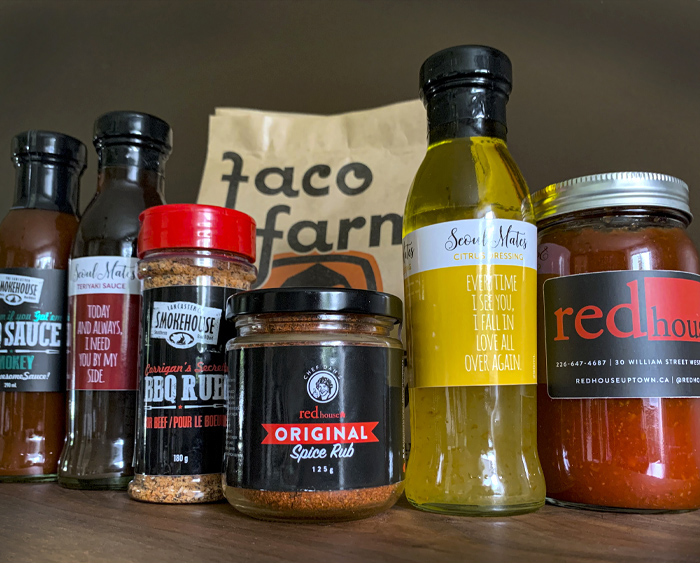
Consider leveraging your most popular dishes, sauces, or made-in-house products that have the highest profit margin, and packaging them to go for guests to enjoy at home. This out-the-door form of marketing keeps your brand top of mind in guest homes, sparks word-of-mouth advertising, and provides your business with another revenue stream.
Dining Rewards
Most restaurant point-of-sale systems have built-in rewards programs that track guest’s information and dining history. The systems are extremely sophisticated, and often provide digital marketing opportunities to reward guests based on their dining behaviour and milestones, such as birthdays and anniversaries. Whether it’s a complimentary birthday dessert or points towards achieving a unique experience, be sure to maximize the preexisting marketing tools in your point-of-sale, or reservation booking systems, to encourage repeat business.

Brand Collaborations
You know the saying – “Keep your friends close, and your enemies closer”? This rings true for restaurant competitors too! Over the last few years, as restaurants have struggled with new industry challenges, we’ve witnessed the birth of restaurant and chef collaborations with the objective of bringing unique experiences to guests and driving new business. Consider hiring a well-known chef to design your seasonal menu, or feature some unique menu items designed by another popular restaurant that serves a different type of cuisine, or collaborate on a pop-up to share costs. The ideas are endless, and with the right collaboration the results can be very positive for the bottom line.
Google Business
When it comes to marketing your restaurant brand, Google Business is a tactic that many restaurant brands have still not tapped into fully. Google Business pages provide a platform where you can showcase images, post daily updates, create digital promotions for guests, link to your website and social platforms, and encourage guests to reward you with 5-star reviews. When a guest Googles your brand, your Google Business page is likely the first thing that pops up, which is why it’s so critical to manage this platform. The best part, all of the digital tools are free.
Own Your Restaurant Website
Let your website be the front door to your restaurant where diners can learn about you before they make a reservation. Your online strategy isn’t complete without one and sites such as the all-in-one platform Sociavore was developed for independent restaurant operators like you to be in full control of your brand, content, online ordering and reservation booking system. Your website attracts visitors and drives sales, so take control of your online presence. Book a Sociavore demo here.
Take your marketing efforts to a more profitable level by implementing one or more of these creative strategies for your restaurant brand.
The perennial challenge of staffing in the labour-intensive foodservice industry has only been exacerbated by the COVID-19 pandemic. Widespread staffing shortages as restaurants reopen, coupled with serious financial losses due to long periods of closures and restrictions, mean savvy foodservice operators are looking for effective retention and hiring strategies that won’t break the bank.
Understanding the Issue
Objective analysis of a problem’s root causes is the first step to finding solutions. While some reasons for staff shortages are beyond your control, be open to the possibility that your own practices may be a factor. For instance, ongoing government support programs may be one reason foodservice staff aren’t flocking back. But telling staff that their colleagues who haven’t returned would rather collect a benefit cheque than work could backfire: finger pointing may be part of your retention problem.
There are many nuanced reasons that many have chosen to leave the foodservice industry — or perhaps your establishment — including:
- Pandemic downtime that led to reflection about career and life priorities, with some workers choosing to retrain online or start businesses from home.
- Safety concerns about serving the public and/or taking public transportation to work in a pandemic that’s now in its worsening fourth wave.
- Childcare shortages or the need to stay home with children who are schooling remotely.
- Your wages, benefits, advancement opportunities and workplace culture may be less attractive than the competition’s.
But What About Cost?
Some retention and recruitment strategies come with a price tag. Assess that against the costs of losing valuable employees you’ve already invested in and operating short-staffed. You may find that you can’t afford not to implement some of those strategies.
The cost of turnover can run to several thousands of dollars per departure, based on hiring process and training costs, lost productivity, and other factors. In pandemic times, turnover cost cuts even more sharply. Without enough staff to run your restaurant, tables may sit empty; some restaurateurs have even had to cut back on operating hours or close altogether.
Which Comes First: Hiring or Retention?
It may seem counterintuitive, but think about retention before hiring strategies. Why? Because the reasons your staff want to stay are also why people want to join your workplace. A poor reputation in the job market due to high turnover has a chilling effect on hiring; being known as a great employer attracts applicants.
The pandemic created a seller’s market in real estate, but when it comes to foodservice jobs, it’s a buyer’s market. Job seekers have their pick and so do your current staff — retention is more important than ever.

Retention and Hiring Strategies
Pay Increases
In addition to providing competitive starting wages, consider implementing pay ranges with increases at set intervals. On a four-step scale, the starting rate could be followed by three incremental increases every six months to a year to encourage employees to stay.
Tip Distribution
Is your tipping policy — or lack of one — a source of staff dissatisfaction? You may not be ready to build gratuities into menu costs, but tip sharing could address compensation inequities between front- and back-of-house staff.
Benefits
Jeff Dover, principal at the foodservice consultancy fsSTRATEGY Inc., says health and/or dental benefits can be cost effective for small operators. “Benefits are important and, given that many restaurants don’t offer them, can make a restaurant an attractive place to work. Help with childcare is very beneficial as well.” Dover says paid sick days are timely given the pandemic. While some employees may treat them as vacation days, there is a pressing need for employees not to come to work sick.
Referral Bonuses
“Referral bonuses are becoming more prevalent,” Dover adds. Not only are they attractive to current staff, but he says they work well too. “New hires are more likely to stay if they know someone, especially if that person has stuck their neck out to recommend them.”

Ongoing Training
Training isn’t just for new hires. Offer ongoing training and development for staff who’d like to learn new skills, rotate through different jobs, or advance into leadership. Ask what they’d like to learn more about to keep it timely and meet their needs.
Establish Career Paths
Communicate the career paths in your establishment. Dover says, “Teaching people what it takes to get promoted and helping them do so is great for retention.”
Prioritize Staff Health and Safety
Health and safety is top of mind these days. Make it a topic at all staff meetings, reviewing protocols to bolster employees’ confidence that they and their co-workers are doing the right things the right way for safety. Be proactive about discussing mental health, and consult industry and community resources to address any issues.
General Culture
Is your culture rigid or flexible? Do schedules take staff needs into account? Are minor repairs and interpersonal issues addressed quickly to minimize day-to-day work frustrations? Do you communicate openly with your team? Do staff feel safe bringing forward concerns? Do you offer open recognition but private criticism (constructive, of course)? Never underestimate the retention and hiring power of your staff feeling supported and heard.

Hiring Strategies that Reflect the Times
Asking applicants to drop off paper résumés can be off-putting for a digital-savvy labour pool. Trendy speed-dating-style hiring fairs are problematic during the pandemic. Think about recruiting online, offering applicants the choice of submitting traditional or video résumés, and conducting Zoom interviews. If you want to meet in person before making the final decision, use those tools to shortlist candidates.
Use Your Website for Hiring
Your website is an important tool in your hiring process. Amina Gilani, co-founder and COO of Sociavore, the independent restaurant website platform and Brand Points PLUS partner, says: “Use the Sociavore job creator tool to create customized job listings and generate mobile-friendly application pages right on your restaurant website. You will receive virus-screened application packages directly in your email — no third-party recruiting website required. Accept and manage application submissions all from one dashboard.”
Go Social for Recruiting
You work hard to build your social media accounts, so why not harness them for recruitment? Your followers just may want to work for you or refer candidates to you, so let them know you’re hiring and link to your website job listings.
Signing and Retention Bonuses
Signing and retention bonuses can sweeten the deal for potential new hires.
“The best thing you can do is make your restaurant a great place to work.”
Jeff Dover, principal at fsSTRATEGY Inc.
When it comes to hiring and retention, Dover says, “The best thing you can do is make your restaurant a great place to work. […] Treat employees like a valuable commodity (which they are), and do what you can to keep people happy. […] Make your restaurant a place where Gen Z wants to work. They want to work for a company whose values align with theirs, so be environmentally friendly, address social issues, etc. Get the staff involved in implementing programs. If you nail this, you will have a way easier time than other restaurants finding and retaining staff.”