
Restaurants across Canada are opening up again. There are varying degrees of restrictions across jurisdictions, but one way or another, people are once more enjoying the experience of dining out. Although we don’t know the future of the COVID-19 pandemic, Canada’s vaccination rates are cause for optimism.
As Restaurants Canada reported on June 17, 2021, the pandemic’s brutal financial impact on restaurants has “stretched their resiliency to the limits.” Restaurant Canada’s survey data indicates that 80 per cent of restaurants have been losing money or “barely scraping by” during the pandemic, and that 45 per cent of foodservice operations have been losing money for over a year.
As restaurants navigate this period of recovery, the question of how to recoup lost revenues will be top of mind. Guest capacity, labour utilization and menu costs are key factors in achieving cost efficiency.
The guest experience is paramount
Foodservice operators need to find the right balance between cost reduction and meeting the expectations of eagerly returning guests.
Jenny Companion, VP eastern operations for the hospitality consulting agency The Fifteen Group, says, “The key to regaining restaurant sales and profitability is tied to guest experience.” She notes that guests will be looking for ongoing safety measures and for “high levels of experience and service. People are excited to dine out again and are willing to spend their money, but just as before COVID, they expect value for their money.”
“The key to regaining restaurant sales and profitability is tied to guest experience.”
Jenny Companion, VP eastern operations, The Fifteen Group
Companion adds, “Trying to improve profits by cutting staff hours or changing the quality of product won’t work. Instead, restaurant owners and managers need to find ways to manage provincial restrictions and guidelines to make dining experiences seamless for guests from start to finish. Using screening apps and providing online information are quick, efficient ways to engage with guests and manage expectations.”
Focus on guest communications
Some cost-reduction measures won’t be visible to your guests, but others, like timed seating, impact them directly and shouldn’t come as a surprise. Open, upfront and ongoing communication is key to guest acceptance of such measures.
Advise guests about changes that affect them on your website and social media, and at the time of reservation, arrival, and at the table. Explain why these measures are needed, ask for their support, and thank them for understanding. Patrons, especially the regulars, want you to succeed.
Top 10 cost reduction tips for your restaurant
Maximize guest capacity
As restaurants focus on financial recovery, maximizing table turns is critical, especially in jurisdictions with ongoing restrictions. The more you can turn tables (without alienating guests!), the more efficiently your labour costs can generate profit.
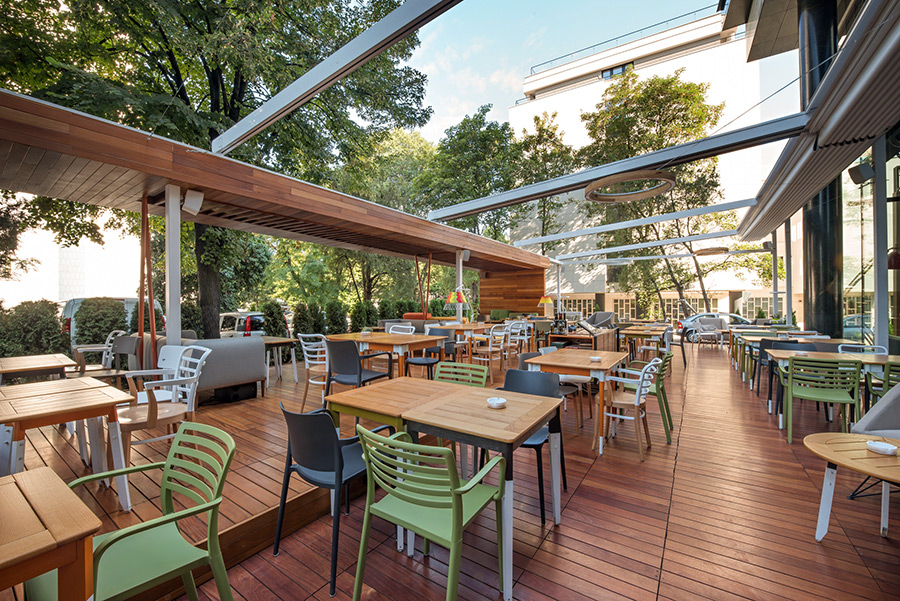

- The (almost) all-weather patio: Canadian weather can be capricious even in summer, from blisteringly hot to cool and wet. You need to outfit your patio for any number of conditions at any time of year. Umbrellas, misters, heaters, wind breaks and other options can make outdoor dining more comfortable for your patrons and keep those tables turning.
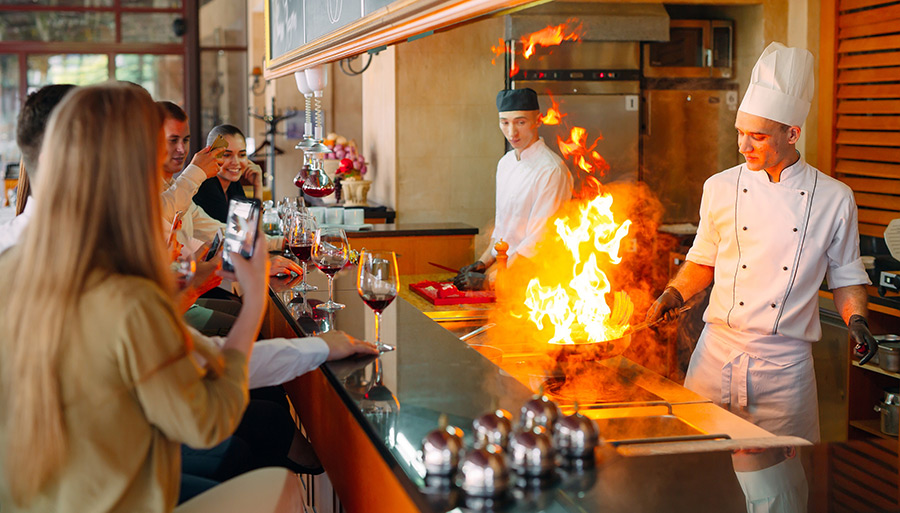
- The in-kitchen chef’s table: If you have the space and regulations permit it, consider adding a table for guests to dine right in the kitchen and be served by the chef. Discerning diners will clamour for this exclusive experience and you’ll have more table turns.
- Timed seating: Now more than ever, you simply can’t afford for guests to linger for hours over their meal. Setting time limits for seatings (e.g., 90 minutes for dinner) may be the answer. Encourage guests to review the menu before they arrive to expedite ordering. Give them a quality experience by expressing your gratitude and sending them on their way with a little treat for later.
- Fixed seatings: Take the concept of timed seating a step further with two or three fixed seatings for dinner, if not daily then on certain days. Guests may be familiar with this concept from past New Year’s and Valentine’s Day dinners. Keep up that spirit of celebration with a special seasonal menu and make it an event not to be missed. The time limits and a set menu also help you manage labour and menu costs.
Manage restaurant labour costs
- Utilize government wage subsidies: Research and take advantage of any federal or provincial wage subsidy programs available to restaurants. Companion says, “We recommend taking advantage of the wage subsidy to help cover some of the costs associated with proper staff training and skill-building, to create a more efficient, well-trained team executing at a 10 out of 10 level going forward.”
- Optimize staff scheduling: Reducing staff may be a tempting cost reduction strategy, but it can backfire if customer service suffers and affects sales. Focus instead on optimal scheduling. Your goal is to have the right number of staff for anticipated customer traffic, while keeping both cost effectiveness and employee retention front of mind. For example, don’t book one employee into an avoidable overtime pay situation when another could be scheduled at regular pay. Similarly, take care not to schedule staff on their requested day off if other employees are available to work.
Manage menu costs
“Controlling costs, and specifically menu costs, is vital to the profitability of any restaurant,” advises Companion. “Inventory costs are on the rise and some products are becoming increasingly difficult to find. This means that it’s more important than ever to know and document all of your recipes, determine the plated item costs and properly engineer your menu.” And while she says that foodservice operators need to be prepared to raise prices, hopefully these cost reduction tips can mitigate that.
- Work with your suppliers for the best prices: Work with your suppliers to secure the best prices, and buy in bulk according to items’ shelf life. You could share some of those savings with customers through limited time offers, another strategy for keeping seats filled.
- Streamline your menu: Putting your menu on a diet improves the guest experience by making choices easier. A shorter menu allows you to showcase your signature dishes while favouring those that generate the most revenue and profit. Other benefits include the economies of buying fewer items but in larger quantities, and staffing efficiencies.
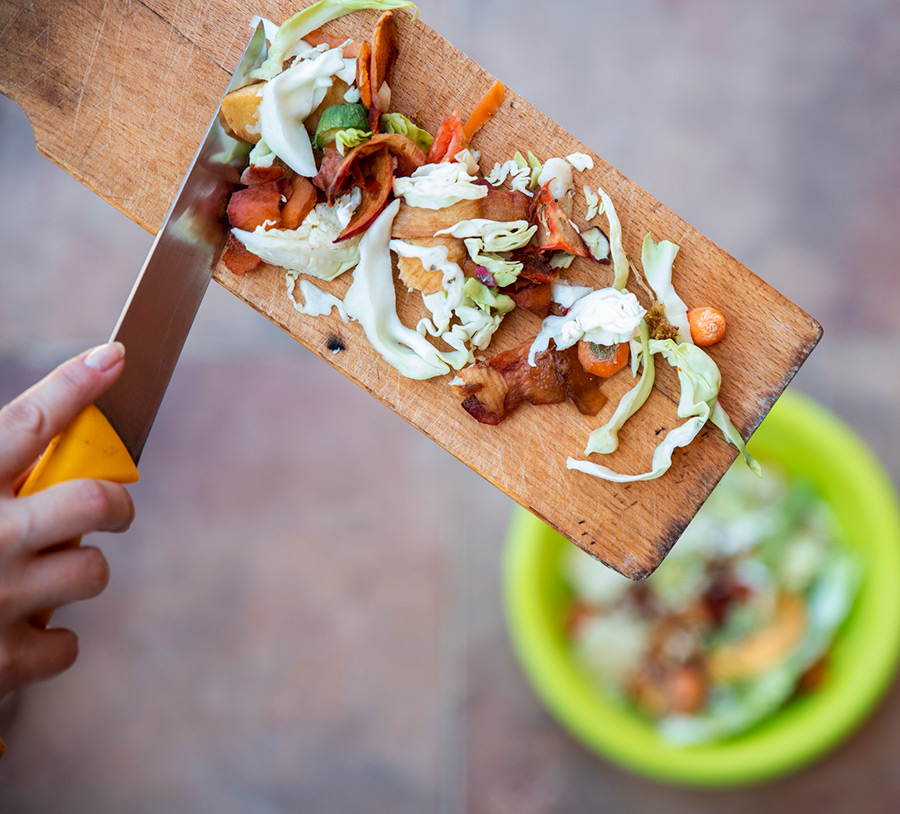
- Reduce food waste: Wasted food is wasted money. It’s also an ethical issue. Make the most of every ingredient you purchase through proper temperature-controlled storage, tip-to-tail cooking, reasonable portion sizes, creating specials using ingredients before they expire, and streamlining your menu.
- Know your inventory inside-out: Inventory management is crucial to managing menu costs. Keep a detailed stock inventory so you know what you have on hand at all times and expiry dates. This and understanding demand patterns can prevent overbuying. When food is delivered, inspect it to ensure it’s what you ordered and don’t accept anything with spoilage or damage.
Should your restaurant be active on social media? Absolutely. Is it important also to have a website and mailing list? Even more so.
Why? Basing your marketing plan on social media alone is akin to renting without a lease. Websites and mailing lists, however, offer the control that comes with ownership.
Why you need a website and mailing list for your restaurant
Websites offer restaurants many benefits. Jenny Companion, VP eastern operations, and Nathalie Kent, communications coordinator, of hospitality consulting agency The Fifteen Group say, “Having a proprietary website provides more freedom to tell the story of your restaurant, control the narrative, share all pertinent information and maintain a certain look and feel. You can share your full menu in a large format […], offer easy access to make reservations or contact your team, share maps, and more.”
“Having a proprietary website provides more freedom to tell the story of your restaurant.”
Jenny Companion, VP eastern operations, The Fifteen Group
Nathalie Kent, communications coordinator, The Fifteen Group
Your mailing list is your most valuable digital commodity because it consolidates contact information for people who interact with you in many places.
Companion and Kent say, “Building a mailing list is also beneficial as it affords restaurants more direct communication with their guests. Rather than posting a restaurant LTO or promotion on Instagram and hoping it gets seen, they can send a newsletter directly to their target audience’s inbox.”
“Building a mailing list is beneficial as it affords restaurants more direct communication with their guests.”
Jenny Companion, VP eastern operations, The Fifteen Group
Nathalie Kent, communications coordinator, The Fifteen Group

Why social media alone for your restaurant isn’t enough
Your community expects to find you on at least one or two social media platforms. This allows you to promote your brand and engage with followers. But each platform has both content and functional limitations.
Be mindful that what you build on any third-party platform like Instagram, Facebook or TikTok is somewhat precarious. Changing algorithms can limit who sees your posts, services can be converted from free to paid, and sometimes platforms even shut down (goodbye, Google+).
Each social media platform has both content and functional limitations.
For Facebook Pages, which businesses use, ongoing algorithm changes favour paid posts over organic reach, meaning your posts appear less frequently in your followers’ feeds. If you have a Facebook page, no doubt you receive frequent nudges to “boost” your posts — for an advertising fee, of course.
On Instagram, posts used to appear in reverse chronological order. If you posted an enticing photo of your lunch special at 9 a.m., followers who used the app that morning most likely would have seen it. Now, the rules that dictate how your posts rank in followers’ feeds are far more complex, including factors like followers’ behaviour (e.g., the types of posts they engage with), the interactions between you and them, timing and more. It’s complicated.
You might not like it, but there’s nothing wrong with social media platforms changing the rules when they please. After all, they offer their services for free, but not out of altruism. They’re businesses prioritizing their interests.
Again, just like renting that great space without a lease, basing your restaurant’s marketing plan entirely on social media doesn’t offer a lot of security.
The power of website ownership
Apart from the content, marketing, and operational benefits of having a great website, it’s yours to control. If you want to change up the design or integrate new functionality like a mailing list service, well, you’re in charge.
You own your domain name (like www[dot]bestrestaurant[dot]ca) and choose the platform to build your website on. By using a hosted website, you can focus on functionality, content, and SEO (strategies to help search engines display your site to would-be visitors) while your provider handles the nuts and bolts (think fun stuff like updates, security, backups, etc.). One website platform is Sociavore, which was developed for independent restaurants.
Yes, you’ll need to pay for your domain name (URL) and platform fees, while your social channels are free. But you won’t be at the mercy of social media’s frequently changing rules and players, and visitors to your site will find everything they need in one place.
Making the most of an email list
Congratulations if you have scores of followers on social media, but do you know how to contact them outside the platform? Visits to your website may be booming, but do you know who those visitors are?
Creating a mailing list allows you to make the most of traffic to your website, social channels and restaurant. It’s your master list of everyone who’s said they want hear from you.
No matter what happens to your social channels or website, your mailing list is there for you. It’s your most powerful marketing and relationship-building tool, allowing you to communicate directly with your subscribers. Build it with care and treat it like gold.
“Those who sign up for your mailing list are, by definition, already engaged with and invested in your brand, so you’ll be able to capitalize on an active and interested audience to drive business.”
Jenny Companion, VP eastern operations, The Fifteen Group
Nathalie Kent, communications coordinator, The Fifteen Group
As Companion and Kent say, “Those who sign up for your mailing list are, by definition, already engaged with and invested in your brand, so you’ll be able to capitalize on an active and interested audience to drive business.”
Seven tips to maximize your restaurant email list
- Offer multiple opportunities to subscribe — Put sign-up links on each social channel and your website, and provide paper forms and/or digital options on your premises. Always seek to expand your list.
- Offer incentives — It’s well worth providing special offers or promotions for people to join your mailing list.
- Personalize email — A little thing like using subscribers’ names in email goes a long way toward relationship building.
- Learn about subscribers’ interests — Polling subscribers about their interests means you can target content to them. Send the promo about your new meat lovers’ menu to the people who are happy to see it, not the vegan crowd.
- Don’t flood subscribers’ inboxes — If you send too many emails, they may tune you out or, worse yet, unsubscribe.
- Remember, consent is key — Spam may have a place on some menus, but it doesn’t belong in your mailings. Learn more about Canada’s anti-spam legislation.
- Use a mailing list service — You don’t have to manage your list alone. Services like MailChimp or Constant Contact support you in enrolling new subscribers, anti-spam compliance, sub-list creation, communication design, and analyzing impact.