
If you can remember Encyclopedia Britannica, Swanson TV dinners, party lines, TV converter boxes, banana seat bicycles, transistor radios, the Sears Wishbook catalogue, and the last Stanley Cup parade in Toronto, then you’re a Baby Boomer or the parent of one.
Baby Boomers remain, according to Statistics Canada, the most significant age group in Canada. They are, however, approaching a tipping point. At some point in the not too distant future, the Baby Boomer market segment (born between 1946 and 1964) will no longer be the largest market segment by population. It’s inevitable that Millennials will overtake Boomers in sheer numbers. But that doesn’t tell the whole story.
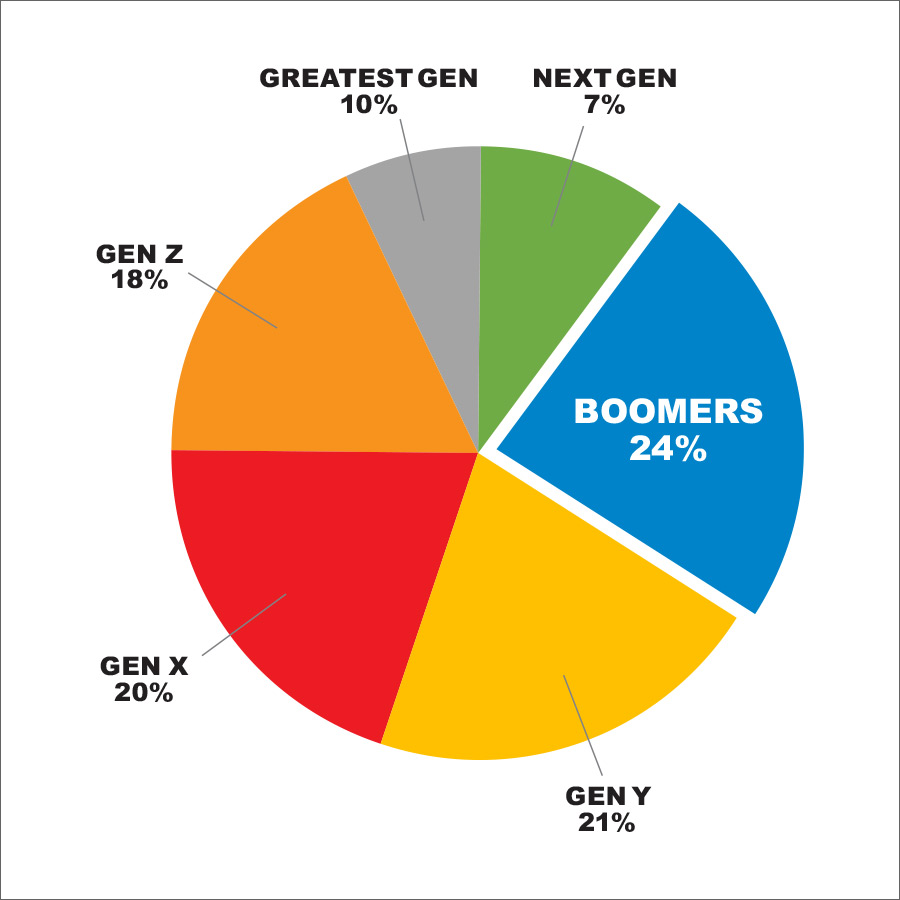
Meet Canada’s generations
- Baby Boomers: 1946-1964
Back-end Boomers: Age 57-68
Front-end Boomers: Age 69-75 - Generation X: 1965 to 1979
Age 42-56 - Generation Y: 1980 to 1994
Age 27-41, often referred to as Boomers’ kids or Millennials - Generation Z: 1995 to 2010
Age 11-28, the newest generation to be named
Baby Boomers still make up the largest segment of the Canadian population. But, beyond this, they hit above their weight in terms of economic impact. Even as back-end and front-end Baby Boomers age, they will remain a consumer force to be reckoned with.
Going, going, not gone
Close to five decades years ago, fewer than one in 12 Canadians was a “senior” (65+). By the mid-1990s, that had risen to almost one in eight. In 2011, when the first of the Baby Boom generation crossed the threshold, the number of seniors began to mushroom. By 2030, less than a decade from now, nearly one in four Canadians will be seniors.
In some ways, the Baby Boomers’ golden years could be a golden age for discretionary and leisure purchases. Over half still have a household income above $60K/year, and only about one-quarter of Baby Boomer households still have kids at home who have failed to launch.
The end is not quite nigh
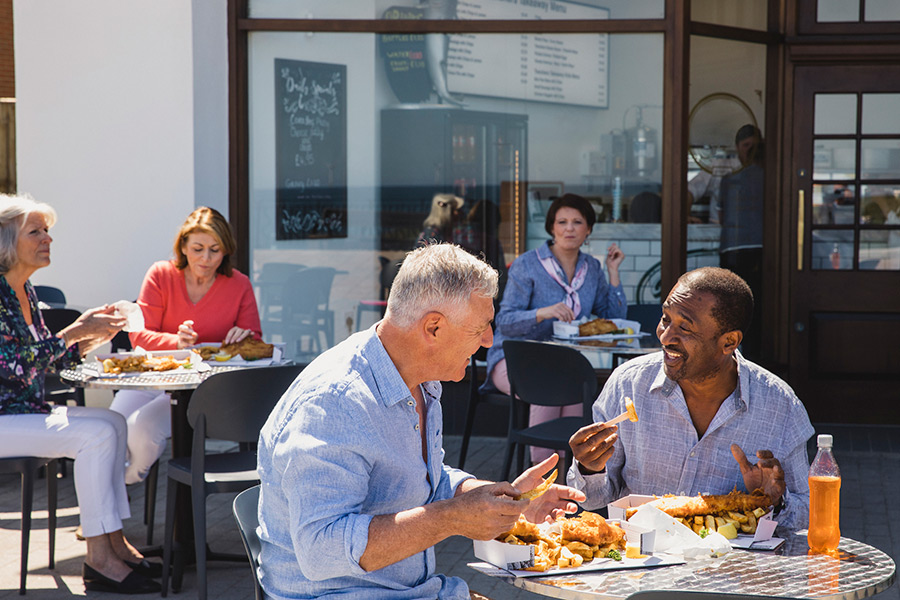
In Canada circa 1976, almost 12% of jobs were held by someone 55 years of age or older. Comparatively, the current participation rate has nearly doubled to 21.5%. That’s more than one in five jobs held by those who, a generation ago, were approaching or in their retirement years.
In her piece titled, “Like it or not, the Boomers are here to work,” Linda Nazareth coined the term “Perennials” to describe mature working boomers — they keep coming back every year.
This trend will likely not significantly abate in the near term. Nazareth cites the U.S. Bureau of Labour Statistics prediction that, by 2024, the over-55 cohort will be the largest segment of the workforce. Canada and other Western-developed economies will likely be in the same boat.
Not going quietly
According to Technomic’s Generational Consumer Trend Report, more than half of people (in the U.S.) between the ages of 53 and 72 use foodservice on a weekly basis.
Given their disposition to not go gently into retirement, and the purchasing power that accrues from their accumulated personal wealth, Baby Boomers are worth paying attention to.
Here are some other trends Technomic has flagged for savvy restaurant operators:
- Boomers are big flavour seekers. 66% of respondents like to explore new flavours, especially when they are added to perennial favorites, such as burgers and chicken.
- Boomers are brand loyal and enjoy patronizing their favourite restaurants. Thirty-six percent tend to visit the same few restaurants each time they go out to eat. But they also value food quality and taste more than other age groups — 70% say taste is an important menu attribute and 68% value food quality.
- Boomers like deals. 50% enjoy looking for value in their dining experiences.
- Boomers like their restaurants clean. 63% of boomers say cleanliness is a very important feature in restaurants, especially as it applies to clean bathrooms and utensils.
The challenge for marketers is to provide what Boomers want as their needs evolve in the back furlongs of their lives. There’s a tendency to shift from conspicuous consumption to more experiential consumption.
While, overall, Baby Boomers’ appetite for conspicuous consumption may be waning, travel, leisure, and foodservice spending remains a priority. This holds for both Baby Boomers in retirement and those still in the workforce.

Baby Boomer eating habits are changing
How have Baby Boomer tastes and eating habits changed over the past two decades? The NPD Group has a number of survey instruments that track historical food consumption of Canadians at home and away from home.
Compared to the beginning of this century, Baby Boomers have markedly shifted their food consumption:
Eating more:
- Better-for-you foods – yogurt, RTE cereal, hot cereal, fish and vegetables
- Front-end Boomers are more likely than Back-end Boomers to choose special labels like “all natural,” “cholesterol free,” “low fat” and “no artificial sweeteners”
- Special labels at breakfast, such as “low fat/diet/light,” “whole grain” and “vitamins added.”
Eating less:
- Family friendly, less nutritious foods – waffles, pancakes, hot dogs and French fries.
Limiting the meat:
- Dr. Sylvain Charlebois, Project Lead, Institute of Agrifood Analytics at Dalhousie University, has data confirming the finding that Baby Boomers are eating less meat.
Overall, Canadian beef consumption is down by 16% or 94 million kilos per year, compared to 2010. Over six million Canadians have either adopted a meatless diet or are have adopted a “flexitarian” lifestyle, limiting the amount of meat they eat every week, AND, nearly a third of Canadians are “thinking about” reducing meat consumption in 2019.
While this trend noticeably skews to younger consumers, more than 42% of flexitarians are Boomers, who view reduced meat consumption as a healthy choice.
The bottom line?
For the first time in its history, as of 2017, Canada had more residents 65+ than children 14 years or younger.
Time will continue to march for Baby Boomers who remain working, and those participating in society in other ways. But, just as they demanded attention when they first came of age, aging Baby Boomers will reward restaurant operators who hear them.
So, it makes good sense, and will make for good business, to keep the specific likes and dislikes of this demographic multitude in mind to keep fueling the growth of your foodservice operation.
Meet your Baby Boomer diners
Factors driving Baby Boomer food choices and restaurant visits

- Flavour seekers
Boomers enjoy trying new flavors in familiar foods – 66% of respondents like to explore new flavors. - Brand loyal
Thirty-six percent tend to visit the same few restaurants each time they go out to eat. - Quality and taste
Boomers index food quality and taste more than other age groups — 70% say taste is an important menu attribute and 68% value food quality. - Deal or no deal
Along with taste and quality, price turns the dial for Boomers. Gen Xers are the most likely to seek deals and discounts at restaurants (55% say they do so), baby boomers come in a close second at 50%. - Flexitarians
Few Boomers are full-time vegetarians BUT more than 50% say they plan to increase their consumption of fruits and vegetables. - Cleanliness matters
Restaurant cleanliness matters to Boomers, with 63% saying it is a very important attribute. - Picky about takeout
Order accuracy is a top priority to 70% of baby boomers, and 75% expect the food quality and taste to be as good as it is when dining in the restaurant. Convenience is not as important to this generation as it is to millennials and Gen Zers. - Personalized service
Boomers are less likely to order from a mobile device or app. Boomers still value customer service in casual dining. - Cash is king
Not fans of cashless operations and kiosk ordering at QSRs and restaurants.