
At the height of the COVID-19 pandemic, 800,000 Canadian foodservice workers were laid off or had their hours cut down to zero. Across the country, employment in the industry dropped an average of 21 per cent.
As we all climb out of the COVID cellar, resumption of operations presents challenges for restaurant operators. Uncertainty is the only certainty.
How to go about hiring and rehiring staff once restrictions start to ease? How to manage fluctuating workloads and uncertainty about shifting and unpredictable restraints and restrictions on restaurant operations?
“Without knowing what is going to happen a few weeks or a few months from now, the ebbs and flows are challenging,” says Jeff Dover, Principal at fsStrategy Inc. “Scheduling may be difficult for those restaurants that have been closed and those looking at reopening with uncertain and different business levels.”

Dover recommends a labour matrix for scheduling. “It’s a valuable scheduling tool that requires forecasting covers per hour and determining how many cooks you need based on forecasted covers.”
The matrix can help track crucial staffing questions including:
- At what level of covers do you need a second cook, a third, a full team?
- When do you need to bring in a dishwasher?
Once you have worked through the matrix, adjust to allow for prep and meet labour requirements, including provisions to be flexible on shift length. Adjustments must be made to ensure time for prep as well as meeting labour laws (e.g., three-hour minimum shift).
Some operators are hiring contract staff to help through the uncertain times, but Dover advises seeking out salaried staff instead. They will pay better attention and know cook times, portion times, presentation and are more likely to be loyal after the pandemic is over — at long last. Remember also that government tax rules may consider contract staff to be employees, if they appear to be doing the job of full-time employees, so there’s not necessarily a benefit from that.
“A silver lining of COVID is that it should be easier to find good cooks.”
Jeff Dover, Principal at fsStrategy Inc.
“A silver lining of COVID is that it should be easier to find good cooks,” he says. “That has been such a challenge forever and, in the short term, you may be able to acquire some good people. If they are treated well and compensated well, they are more likely to stick around.”
Other staffing-related questions to consider as you ramp up to reopen:
- How are you going to handle delivery business once your dining room reopens?
- Are you going to continue focusing, at least in the short term, on takeout & delivery, with menus geared to T&D?
- Do you have production capacity for both eat-in and takeout given delivery volumes might be greater than they were before the pandemic?
- How will you enforce health and safety protocols for all types of staff — indoor and delivery?
Once the operational parts are in place and the doors of the restaurant are allowed to open again for dine-in, don’t forget to make sure your guests know what you’re doing.
“Communicate your cleaning and sanitizing practices clearly. Your guests need to be comfortable coming back.”
Jeff Dover, Principal at fsStrategy Inc.
“Communicate your cleaning and sanitization practices clearly,” Dover says. “Your guests need to be comfortable coming back. In the past, we have done this privately. Now people want to know.”
Even before COVID became part of our daily vocabulary, the foodservice and beverage industry had high rates of mental health challenges and substance use issues. It can be a stressful job at the best of times and the long, variable hours and fast pace make it difficult to always take care of ourselves. Burnout can take hold.
Running a restaurant in the midst of a global pandemic has ratcheted up the pressure, increased anxiety levels and created even more strain on our mental health. “The pandemic has made things worse in so many ways,” says Hassel Aviles, co-founder of Not 9 to 5, which she launched with executive chef and restaurateur Ariel Coplan in 2017. “This is everyone’s first global pandemic so we are all figuring it out as we go, but this has severe consequences.”
Through this challenging time, we’re all feeling extra anxiety, frustration, trauma and grief, she notes. Increased isolation due to physical distancing, job loss and business closures, financial insecurity, and a lack of sufficient support and resources are only piling on the pressure.
Aviles, who has worked as a bartender and server, knows firsthand the pressures and perils of the job. “Back then, no one was having conversations about mental health or addiction with staff.”
When Aviles and Coplan asked their hospitality community, 90 per cent said “yes” to experiencing mental health and/or substance use challenges. Their research and surveys over the last two years have revealed depression, anxiety, substance use, burnout and disordered eating as some of the top concerns.

When Aviles and Coplan asked their hospitality community, 90% said “yes” to experiencing mental health and/or substance use challenges.
There are some signs to watch for that can indicate someone you work with, or someone who works for you, might be struggling with their mental health:
- Change in personality. You may notice sudden or gradual changes in the way that someone typically behaves or the person may just seem different.
- Agitated. They seem uncharacteristically angry, anxious, agitated, or moody.
- Withdrawn. They withdraw or isolate themselves from others.
- Poor self-care. They stop taking care of themselves and may engage in risky behaviour.
- Hopelessness. They seem overcome with hopelessness and overwhelmed by their circumstances.
Adapted from changedirection.org
“The best way for employers to ensure they’re paying attention is to create a working environment built on psychological safety,” Aviles says. “It means you feel you can be vulnerable with one another without experiencing any negative consequences. For too long, workers have been told to ‘check their emotions at the door,’ and this intolerance of vulnerability has created an environment of suppression.”
Five tips for fostering psychological safety
- Demonstrate engagement. Be present and focus on the conversation, and ask questions because you truly want to know the answer.
- Role model. Practise active listening, and recap to show that you’re understanding and validating the thoughts and input of others. If something goes wrong, don’t place blame, instead focus on solutions.
- Be approachable. Be available and build rapport by talking about life outside of work.
- Involve your team. Seek the input, opinions and feedback from your coworkers, and acknowledge their input when you do make your decision.
- Mistakes are okay. Encourage teammates to take risks, and demonstrate that making mistakes are part of the process, and they provide opportunities to learn.

Tips for improving workplace health
- TIP: Acknowledge verbally and openly that no one is unaffected by this pandemic and its consequences, there is a lot of healing that comes from validation and feeling heard.
- TIP: Practise active listening skills.
- TIP: Rest, rest and rest. We are all exhausted, this experience is incredibly taxing on our bodies and minds.
- TIP: Be extra gentle to yourself and others.
- TIP: Triple down on a self-care routine, including nourishing yourself with a healthy balanced diet, exercise, sufficient sleep and social connection.
- TIP: Make a list of activities that spark joy for you. Refer to it weekly.
- TIP: Find safe ways to channel your intense emotions. These may or may not include anger, rage, sadness, frustration. Examples include rigorous exercise like boxing, art, singing, dancing, screaming, punching a pillow.
- TIP: Avoid toxic positivity for yourself and others. An excessive and ineffective overgeneralization of a happy, optimistic state across all situations isn’t healthy.
Aviles suggests creating a working environment where all team members are encouraged to seek help when needed, and have easy access to resources for mental health and substance use challenges. “It’s important to have an understanding of what supports are available including workplace accommodations, employee benefits and other means of support.”
Aviles and Coplan have created an online course to educate and train hospitality industry workers to better identify, understand, and respond to mental health and substance abuse challenges. They call it CNECTing, which stands for Change Needs Everyone Coming Together. “We chose this name because connection is essential to make a positive impact and change in our industry,” Aviles says.
- Important Resource: Digital assets for the CNECTing course are available here.
Learn more:
- Mind the Bar Foundation provides information and support resources for those in the hospitality industry who are struggling with depression, anxiety, thoughts of suicide, substance abuse, addiction, or workplace harassment.
- The Full Plate offers free resources and services designed for all hospitality workers.
- Wellness Together Canada was funded by the Government of Canada in response to the unprecedented rise in mental distress due to the COVID-19 pandemic.
- United States-based #Fair Kitchens is working to create a healthy kitchen culture based on open communication, passion, support and teamwork. More than 50 Canadian foodservice and beverage operators have already signed on as friends.
Thinking like a retailer is not something most foodservice operators consider. Embracing retail can and will assist restaurants bridge the revenue gap until customers come back to the dining room. Adopt one or two, or more of these top tips to jump-start the retail side of your business.
Chef John Placko is an independent culinary consultant and educator who specializes in modern (molecular) cuisine. Combining his specialty with 45 years in the hospitality industry from restaurants, hotels, airlines and food manufacturing, Chef John has shared his expert advice:
Create mouth-watering meal kits
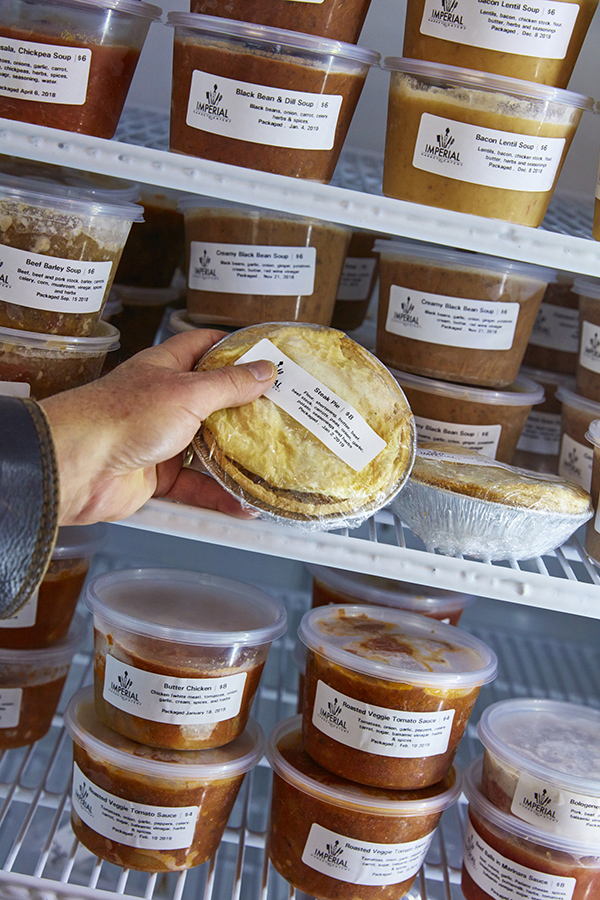
You are doing it anyway. So, why not jump into the meal kit game? Meal kits are a retail version of your mise en place. Pack it up before you cook for the customer to prepare instead. Ingredients you have on hand become value-added when you provide the prep and portioning before packing.
Offering meal kits in line with your brand but different from your current menu offerings adds variety — for you and your customer. Planning meal kits within your current ingredient inventory is smart management and can encourage creativity.
Most meal kit services are offered as a subscription. Yes, that is an option, but also consider offering meal kits by preorder only and/or have them available as a grab ‘n go when customers are picking up their takeout.
Package to perfection
We aren’t talking about take-out packaging. We mean pre-packaging: scheduling and planning to properly package products and ingredients for the sole purpose of selling retail. Ready for your customers to grab from the cooler or shelf or your staff to quickly add to orders.
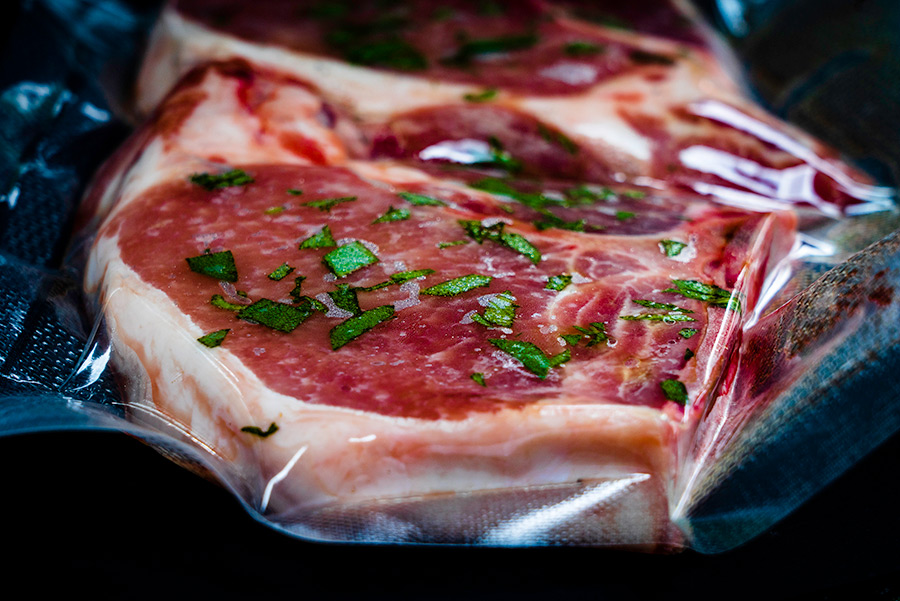
“Vacuum packaging, or sealing, is an excellent choice for operators adding retail offerings to their business,” says Placko. “Whether you vacuum pack for the purpose of sous vide cooking or just for storage, there are numerous benefits for the operator.”
“With vacuum packed bags, both you and the customer can easily see the contents. Simply add a sticker with all of the pertinent information.”
| Benefits of Vacuum Packaging |
|---|
| Increases shelf life |
| Maximizes storage space (fridge, freezer or ambient) |
| Provides portion control |
| Aids in inventory management |
| Increases food safety |
| No cross contamination |
| Inexpensive storage method (pennies per bag) |
Keep it fresh part 1 — for operators
Change is hard. But it can be good. It provides new opportunities, new experiences and a fresh perspective on what’s important.
By adding retail options or even embracing a new cooking technique you can keep it fresh for you and your staff. Involving staff — who know your business and your customers as well as you do — can invigorate your team with a new sense of energy and excitement.
And bonus? Your customers reap the benefits, too.
“The sous vide technique is a perfect solution for operators wanting to increase their retail offering,” says Chef John. “You can portion, pack, cook and sell in the same bag, minimizing handling, reducing cleanup and providing your customers with a perfectly cooked product. Sous vide cooking in essence is a pasteurization method and can give your cooked products a shelf life of a week or two or more.”
Keep it fresh part 2 — for customers with social media
“It’s imperative to continually engage with your customers. Everyone has been thrown the same curveball. There is so much noise out there. How are you going to break through?” says Placko.
“Social media is an inexpensive way to regularly connect with customers. Keep them engaged and checking back to see what’s new.”
Chef John Placko, independent culinary consultant and educator
“Social media is an inexpensive way to regularly connect with customers. Keep them engaged and checking back to see what’s new.”
How can you do that? Daily updates on what’s been added to your retail offering. Presentation tips. Photographs. Build up to weekend specials by talking throughout the week. It doesn’t need to be complicated to be effective.
Mind your price points
No matter how your business has pivoted to manage through the ups and downs of the last year and to prepare for the coming months, you always want to be targeting your key margins… even when thinking like a retailer.
“Prepackaging keeps you in charge of your time and labour. Most operators have moved to takeout and delivery. Maybe that wasn’t a normal business channel for your operation. Remember to revisit your costs as it takes more time and labour to package takeout and delivery. Offering a retail version (prepackaged) dessert menu might allow your selling price to drop slightly and possibly be more enticing to your customers.”
Consider a niche customer focus
Your customers are looking for foods that meet their needs — nutritional, allergen free, plant-based, keto-friendly. Why not use your retail offering to address at least one of these needs? Build yourself a niche. It can be as simple as offering portion-controlled nutritious breakfast options. Or as complex as a mix and match for a full keto-friendly meal.
Ensure you are working within your operation’s strengths (and expertise).
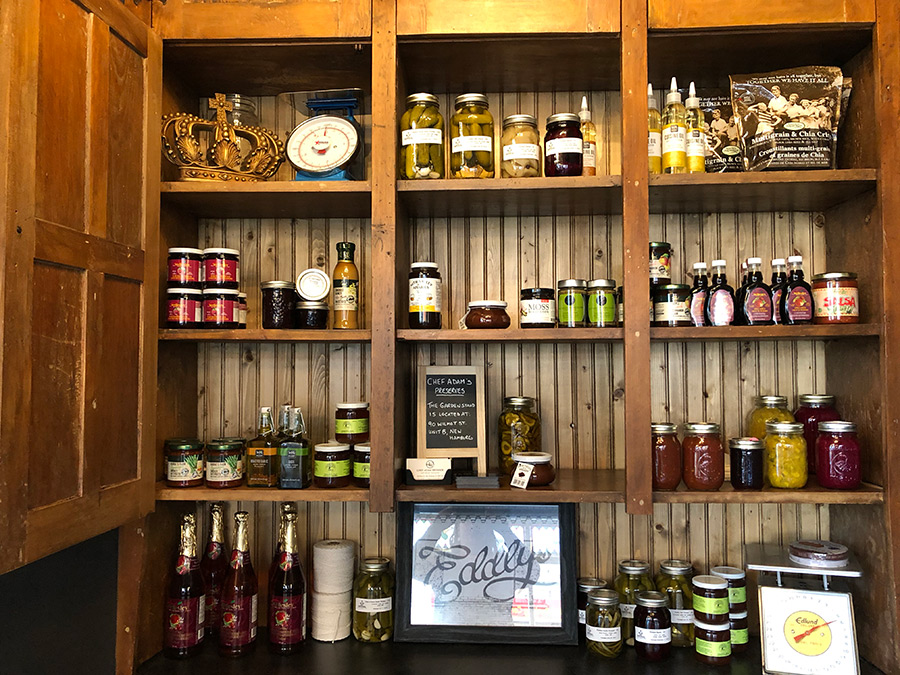
Don’t forget your front of house
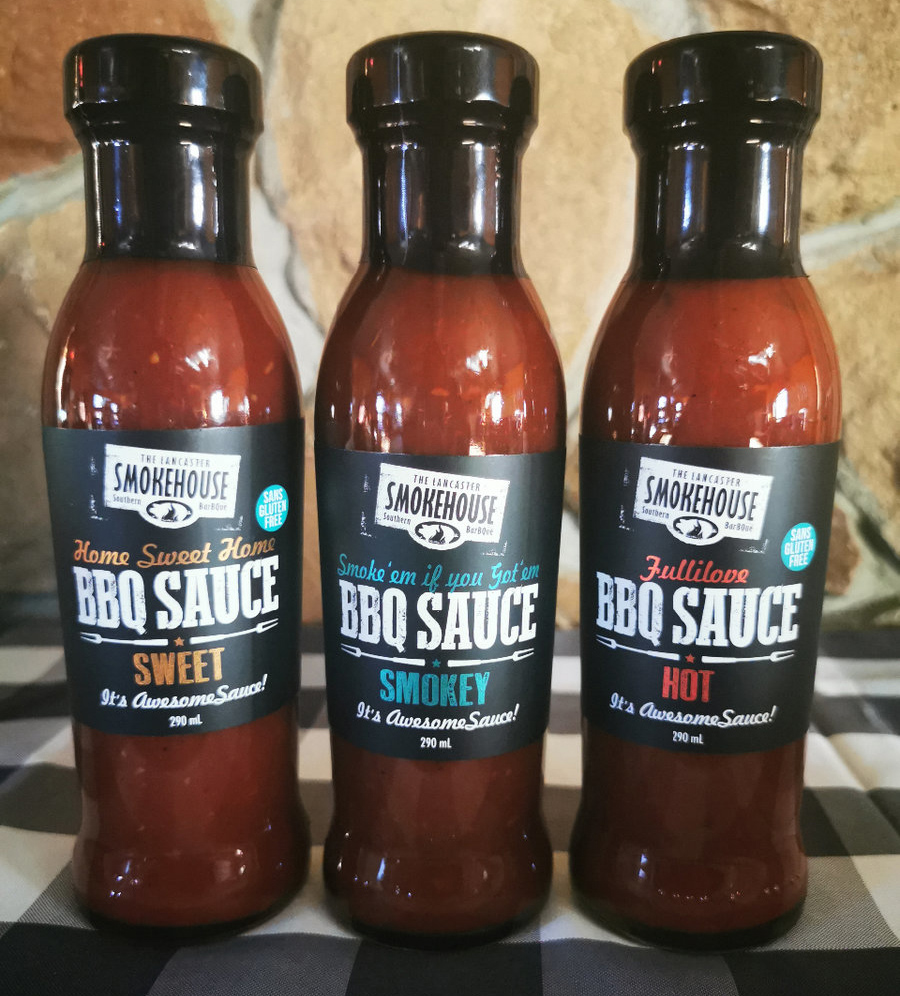
Create a convenient location right inside the door but allowing for social distancing within that space. Customers are more likely to increase their cheque size if items are conveniently placed for grab and go.
If you have a good takeout area or can expand your takeout area into your dining room space, you could show short video loops while your customers are waiting/social distancing. The short videos might show the preparation of dishes — include two to five dishes, some current and some dishes being planned for the future to build anticipation.
Remember the next meal
Offering retail add-ons to your current menu offering is a good start.
Your customers may be ordering for what they want to eat right away but entice them with the next meal, much the way they might shop at a food retailer: “Buy dinner and get lunch (breakfast)” or buy lunch and get something (not necessarily the whole meal) to go with dinner. With an adequate selection of retail items — with no need to order in advance — your customers could end up picking up their entire next meal.
Build a community
Social distancing for our physical health is also affecting our mental health. With limited options for gatherings/hanging out/clubs/meetings, why not embrace some online options? Invite customers (virtually) into your kitchen or dining room. Offer a cooking lesson on a recipe you don’t offer on your menu or instructions on putting together a meal kit. Show off your knife skills. Have your mixologist (virtually) put together some cocktail kits and recipes.
Linking your retail options to online sessions is a great way to build relationships and interest while increasing revenues. Making them invitation only — buy this kit for exclusive access — builds excitement.
Retail selling offers operators another revenue stream while remaining true to their brand and current menu offering. Pack it up with creativity and soon you will think like a retailer.
Home for the holidays? That’s a fact for many Canadians who are still grounded by COVID-19. But that doesn’t mean celebrating the festive season has to be a bust — for your guests or you.
Hanukkah, Christmas, Kwanzaa, and New Year’s are just around the corner, and many guests are already preparing for Zoom and other virtual holiday get-togethers. Even though many restaurants are closed or limited for eat-in business because of the pandemic, you can still offer special holiday and seasonal menus to capture some of those holiday dining dollars. Think festive takeout and meal kits to help your guests ring in the season.
- Tip: Do something seasonal with your takeout packaging. Use splashes of colour, add festive messaging on packages, wrap with bows or even tie with balloons. Christmas crackers and New Year’s hats can help turn takeout into memorable experiences.
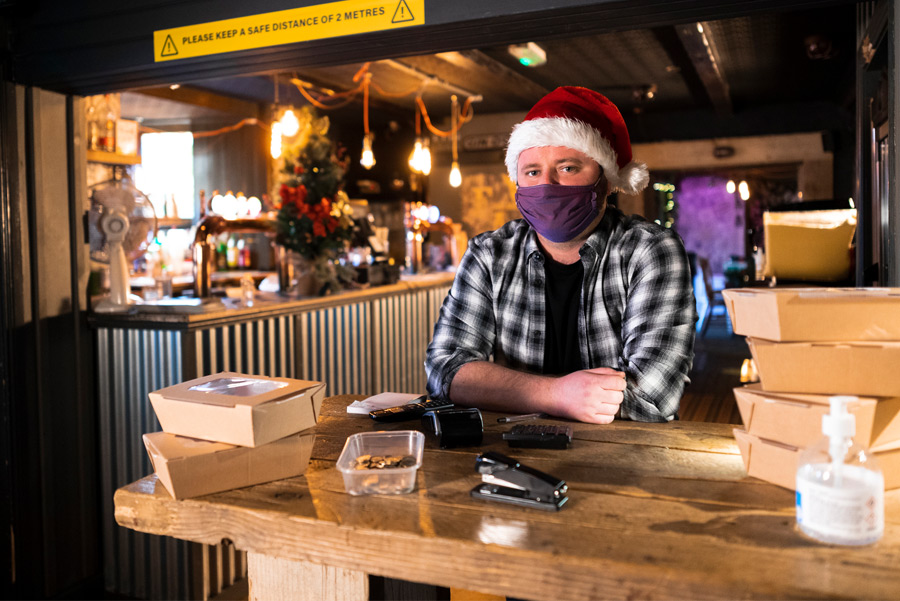
Ramp up your meal kit service
Some of your guests will want to replicate the experience of creating that special holiday meal, whether they’re eating with close family or Zooming with a crowd of fellow diners. You can provide the inspiration, the ingredients, and the packaging while letting your guests feel they’re the chefs.
- Tip: Pre-prep your packaging and simple step-by-step instructions for a select group of holiday meals so you’re ready.
Offer “fancy” meals to go
While most restaurants with takeout and delivery are offering pared down, simple versions of their menus, there’s a niche for operators who also want to feature a gourmet menu for special occasions like the winter holidays. “Fancy” food still has a place with guests celebrating the season who don’t want the same old, same old menu items. For a higher price point you can feature a stylish, one-off menu, along with a good wine, that replicates a fine dining experience. Bon appétit!
- Tip: Ramp up your Instagram photography to show diners the fancy dishes that are just a click away.

Don’t forget cocktail kits
Now that many restaurants can add alcohol to takeout and delivery food orders, why not do something fun, like creating cocktail kits? In many areas, operators are not permitted to sell actual cocktails for delivery, but there is no law against sending deconstructed versions of your guests’ favourites. For instance, a Mexican restaurant could include the ingredients for a mojito — sealed bottles of rum, lime juice, soda water, sugar and mint. One bar in Toronto, Project Gigglewater, used Instagram to advertise cocktail kits ready for delivery with such names as “Keep Calm & Quarantine” and “Toilet Paper Greens.”
- Tip: Consider creating winter holiday-themed cocktail kits. Eggnog, anyone?
Social media influencers seem to be everywhere these days. They create content on platforms like Instagram and Facebook to sway their followers to engage with the businesses they promote.
But does influencer marketing work for restaurants?
Trevor Lui, restaurateur, cookbook author and co-founder of the agency Quell, says it can. “I think that in the age of trying to figure out how to expand the reach of your brand, utilizing people that have reach within their own network on a social level is beneficial.”
“I think that in the age of trying to figure out how to expand the reach of your brand, utilizing people that have reach within their own network on a social level is beneficial.”
Trevor Lui, restaurateur, cookbook author and co-founder of Quell
Sean Beckingham, principal at the food and beverage marketing agency Branding & Buzzing, agrees. He says working with an influencer allows you to address their niche audience. “They’re going to tell the best story from their lens.”
Beckingham says digital marketing “is not just about an influencer having an Instagram account. It’s about running ads, having a content strategy. It’s about partnerships. You have to really open up your basket of marketing.”
But influencers are still important.
“When you’re purchasing their power, they can do many things for you,” Lui says. These include posting on their account, temporarily taking over your account or live feed, or being a brand spokesperson. Each has a different fee structure, which may involve a combination of dollars and product.
Beckingham notes that the COVID-19 pandemic’s toll on restaurants has led his agency to approach costs differently. “Where we used to charge restaurants to do certain things, we’re asking suppliers to cover costs. We’re doing everything we can to keep them (restaurants) open because they’re such an important part of society.”
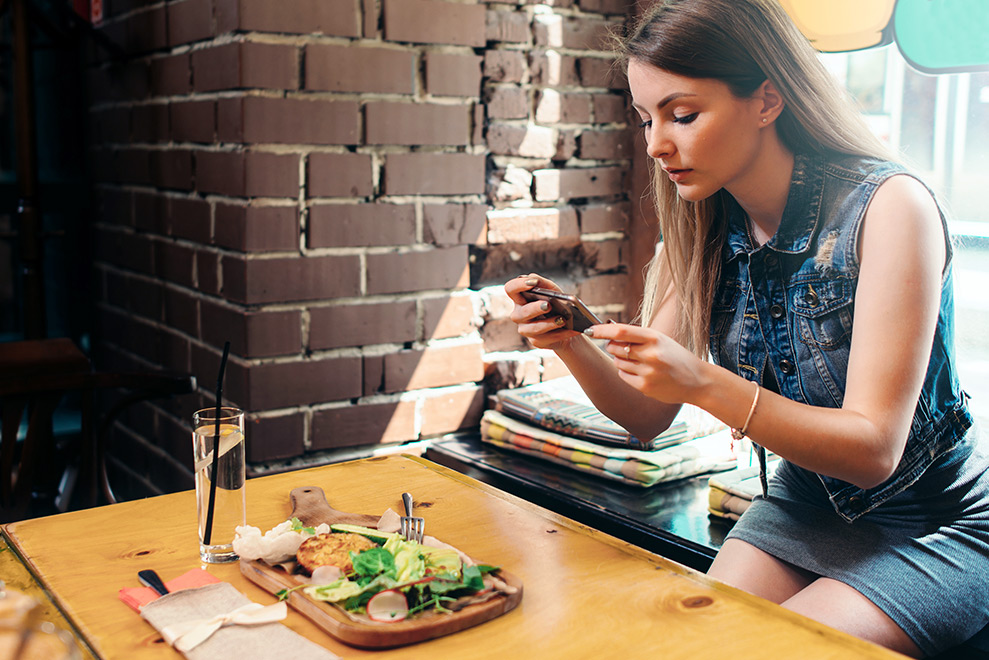
Building authentic partnerships
Beckingham says restaurant operators can find influencers through an agency, social media specialist, or on their own. Lui’s first approach is to “rely on a tight network of people that I’ve done work with in the past,” whether influencers or trusted advisors who select them for him.
- Tip: Whatever the approach, don’t focus only on follower count.
Beckingham advises vetting influencers to ensure they’re a good fit. Are both they and their audience local to you? Do their demographics fit your target market? He suggests using selection tools like geo-targeted maps in Instagram, hashtag searches, and identifying contributors to local publications. Also ask for the influencer’s media kit — it should explain their demographics and reach.
- Tip: Assess the authenticity of a potential influencer partnership. Would your burgers-and-fries brand resonate with their wellness-focused followers?
Ryan Hinkson of @EatFamous, an influencer and food culturalist with 275,000 Instagram followers, echoes the importance of authenticity. “The times when I’m most excited to actually try something or eat somewhere are usually when I get the best results.”
Building and measuring success
Successful campaigns start by discussing with the influencer your goals, such as target reach and specific outcomes. Also communicate expectations for deliverables and data measurement. “I have very tangible, transparent and clear outcomes for what I want to achieve on any program,” Lui says, “so I have those conversations well in advance.”
- Tip: Develop measurable tactics to meet your goals.
For instance, if your initial focus is on building your social media following, a contest to drive engagement can be effective.
Lui, who recently launched a new brand, Joy Bird, says, “The more impressions on your brand, the faster it gets bumped up in any type of algorithm. Because everything is algorithm based.”
They partnered with an influencer to run a contest where entrants had to follow the brand and tag two friends. The result? Brand followers increased from 320 to 960 over a two-week period.
Beckingham suggests established restaurants could offer a series of tastings for influencers. “You may want to do a burst when you have a new menu launch where you have five influencers come in at the beginning, and every month have another influencer come in.”
Specific calls to action like a secret menu item or limited time offer promoted only in a specific campaign allow you to directly measure its sales results, as do trackable gift cards.
Mutually rewarding relationships

Building trusted relationships between influencers and restaurants is a mutually rewarding outcome of successful influencer marketing.
Hinkson says he’s worked with some restaurants repeatedly over the years and they’ve developed synergy. “They’ve been happy with what I’ve done and I’m a fan of what they do.” He knows of other influencers who also experience this. “And if it’s yielding good results, then I say go with it.”
These relationships matter more than ever during the pandemic. “Really and truly,” Beckingham says, “if your restaurant is established, you should go back and look at the folks you’ve worked with in the past that have been good to you […] because you’re both in it together.”