
Brand is the personality of your business. Your brand certainly shines through on the menu and in the food you serve, but how about your restaurant décor? The slow winter months are an ideal time to refresh your space to invigorate your brand, engage your customers and revitalize your staff. (Yes, they, too, are energized when you refresh your brand.)
What’s your brand identity?
First and foremost, stay true to yourself when planning a front-of-house upgrade. “It’s essential for a restaurant to know how they want to be perceived,” says Chris Rasmussen, CEO of LeoLight, a division of Pico whose mandate is to “to provide operators and distributors a full-service partnership for their ambience and food warming needs.”
For example, wax, fuel cell and LED candles each offer a different feel. Using a wax candle on a sports bar table or an LED on a high-end steakhouse table won’t meet customer expectations or properly reflect your brand.
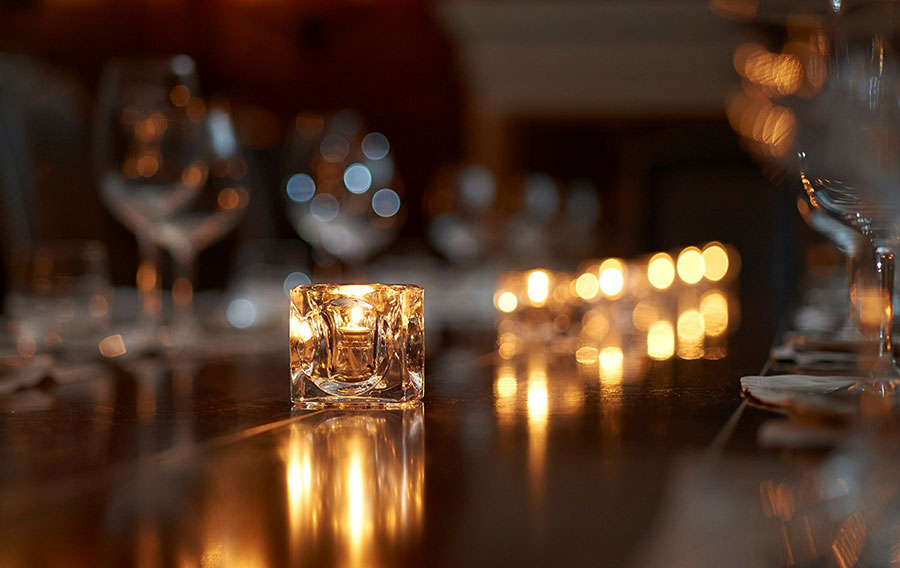
“Ambience is an important factor when deciding where to spend dining dollars. Ambience can lead to a better experience, which in turn can lead to a higher guest check.”
Chris Rasmussen, CEO of LeoLight, a division of Pico
“Ambience is an important factor when deciding where to spend dining dollars,” says Rasmussen. “Ambience can lead to a better experience, which in turn can lead to a higher guest check.” The goal should be to make your guests so relaxed and comfortable they stay longer…and order more.
Remember outdoor lighting for your spring and summer planning, Rasmussen reminds foodservice operators. “Canadian patio season is short and sweet; make it impactful.”
- TIP: Use string lighting and table lighting to match the interior ambience.
Find YOUR colour
Colour. Pure and simple, colour can transform your dining room (entrance and bathroom, too). Paint and a brush are really all you need to complement your brand. Repainting the entire space may not be necessary, though your assessment should factor in whether you need a complete paint job. If you’re looking for accent, trying a new colour on a focal wall may make more of a statement than using a uniform colour scheme. Use the psychology of colour to accentuate dining experience.
A splash of colour in unusual places can add personality to your brand. Imagine red chairs in a neutral coloured space, such as offsetting grey seat coverings. Contrast colour in the entrance.
- TIP: Don’t just look to artificial colour to liven your space.
Greenery also lends colour and texture and suggests a more “organic,” natural feel.
Spruce up your fabric
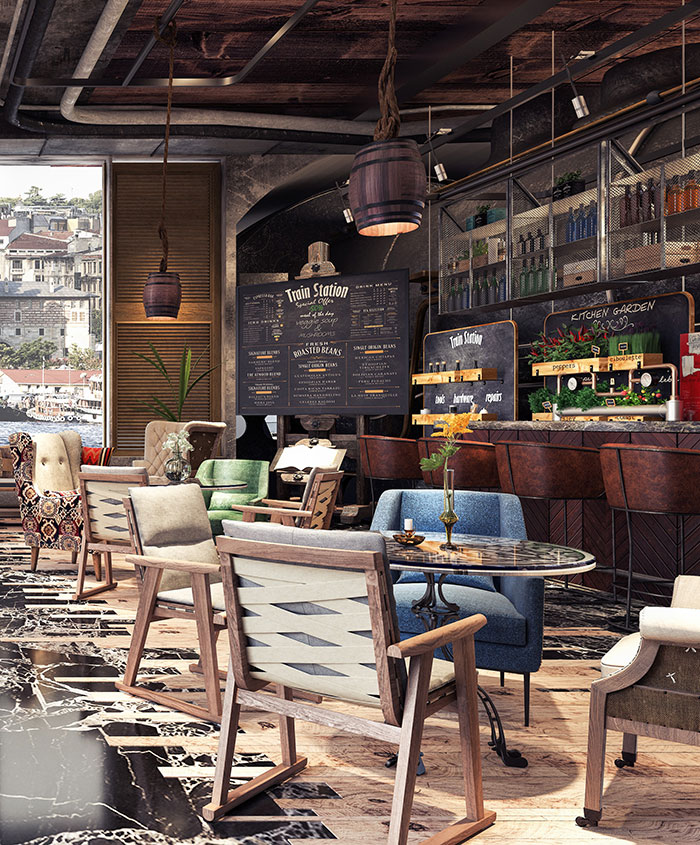
Fabric can add more than just texture to your restaurant. Use fabric to weave your brand through the space, whether it’s a logo treatment tastefully done or some other pattern that speaks to your brand.
Window coverings offer an opportunity to try a new colour scheme without the commitment of a big paint job. Seat cushions or backs refinished in geometric pattern smarten things up (and cut down on noise – a bonus).
- TIP: Add (or remove) tablecloths. Upgrade to cloth napkins or simply change the colour scheme to subtly elevate a dining experience.
Reinforce your restaurant brand with staff uniforms through use of colour, style or subtle logo placement. Supplying staff with hats and jackets for personal use gets word on the street.
Engage with your community
Engage with your customers and community outside the restaurant. Sponsor a sports team, charity event or festival that fits your image. Get inspired by checking out 10 creative restaurant marketing strategies.
Promote game days, school colours and community events. LeoLight offers a LED remote control, colour-changing product where you can have 16 different colours to play with.
- TIP: Invite local artists to display their work in your space. Not only do you enliven your space, but you also give profile to local talent.
Up the fun factor
Let there be light. Lightboxes can add “lightness” to your space. Slim LED Restaurant Lightboxes are becoming increasingly popular in restaurants where menus need to be prominently backlit for your guests to see the print. Lightboxes use energy-efficient LED lighting, which is 75% more efficient than fluorescent lighting, and can illuminate your printed graphics in ways that add more than just light to your restaurant.
Create an Instagram wall. This is an invitation for your customers to snap even more photos promoting your brand. How you display the shots can continue telling your story. How about creating a huge backdrop display screen with rotating Instagram images? Invite your diners to create imagines and see them instantly displayed. And don’t forget, Instagram images can liven up both the inside and outside of your restaurant…for very little money.
Invite customers to follow your TikTok profile. TikTok is a powerful way to engage and interact with your customers, and can be used to grow your brand in youth demographics.
- TIP: Go big with your Instagram images.
Strengthen your identity by rethinking your space. A few tweaks – with minimal cost – will brighten your image – and your restaurant brand.
During the pandemic, the need for outstanding visuals to sell your food is even greater than before, when competition was already fierce for food dollars. That’s where professional-looking food photography comes in.
Consider food photography being worth not only a thousand words, but a thousand dollars in revenue for your restaurant brand. In a digital world that’s easily influenced by visual storytelling, this is the impact that high quality styled food images can have in attracting new business to your restaurant.
Consider food photography being worth not only a thousand words, but a thousand dollars in revenue for your restaurant brand.
According to the TripAdvisor “Influences on Diner Decision-Making” survey from 9,500 international diners, 60% of respondents from the US reported that online photos influence their dining decisions. The impact of online photos proved even higher in Spain at 72%, followed by Italy with 67%, France with 64%, and the UK with 52%. This is definitely something to keep in mind when trying to attract tourist (and other) diners.
For restaurant brands large and small, the importance of capturing high quality, well-planned menu photography remains the same – HIGHLY IMPORTANT! And during the pandemic, the need for outstanding visuals is even greater.
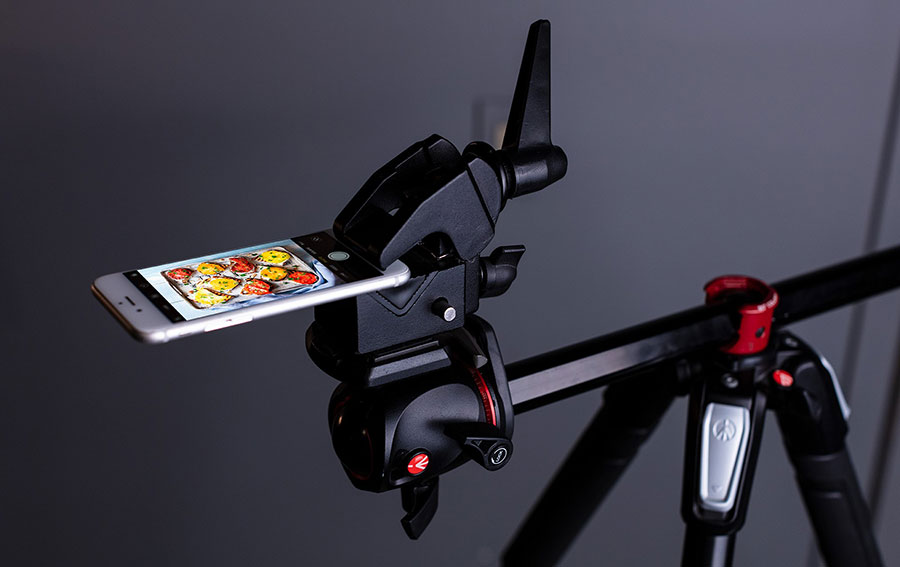
So, when is using a phone to take your restaurant brand’s photography a good idea?
For chefs or restaurateurs, if you have basic photography knowledge and understand lighting, angles, product positioning, shot styling, and are tech-savvy with the latest editing applications, then go for it!
- TIP: Scroll through Instagram to find inspiration and shot examples to guide your photoshoot.
However, if you are like most of us, with little photography expertise beyond selfies, and even less time to spend in this area, and if you want to put your best visual face forward, here are some other solutions to create a professional profile at reasonable cost:
Hire new talent
Aspiring photographers or recent photography graduates are a great place to start as they need projects to build their portfolios and often have very affordable rates. Try posting a free ad on jobsites like Indeed.com and on your restaurant’s social media pages to attract résumés.
Find the food influencers
A food influencer is an Instagram user with an above average following who focuses on curating and sharing food and restaurant-related content that produces user engagement to influence consumers’ decision-making.
These are savvy photographers and editors who are always on the lookout for new content to curate!
TIPS:
- Find and follow Instagram influencers whose content relates to your restaurant brand. For example, pizza places should find influencers who curate and post content about pizza.
- Invite influencers to your restaurant to taste the menu and enjoy the overall brand experience. If you put on a great show, they will likely take LOTS of photos!
- Get the photos! Discuss if you can use their photos to post on your digital platforms. NOTE: Some may request a fee per image.
- Give credit where credit is due. Social media etiquette is always giving photographers or curators credit for their photos by tagging them in the post. This helps to promote their skillsets and personal brand in return for photo use, which sometimes is enough to eliminate fees.
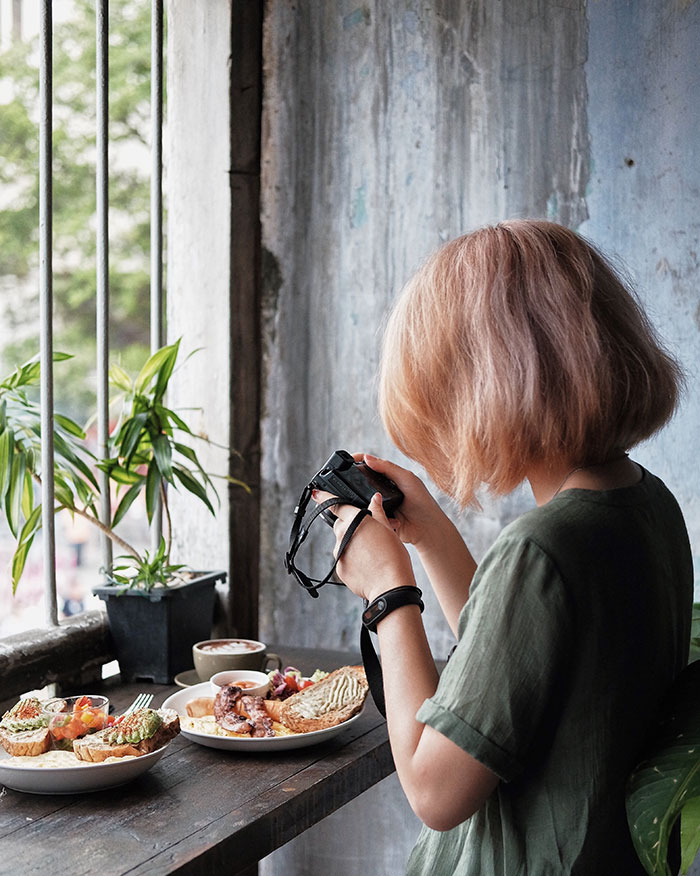
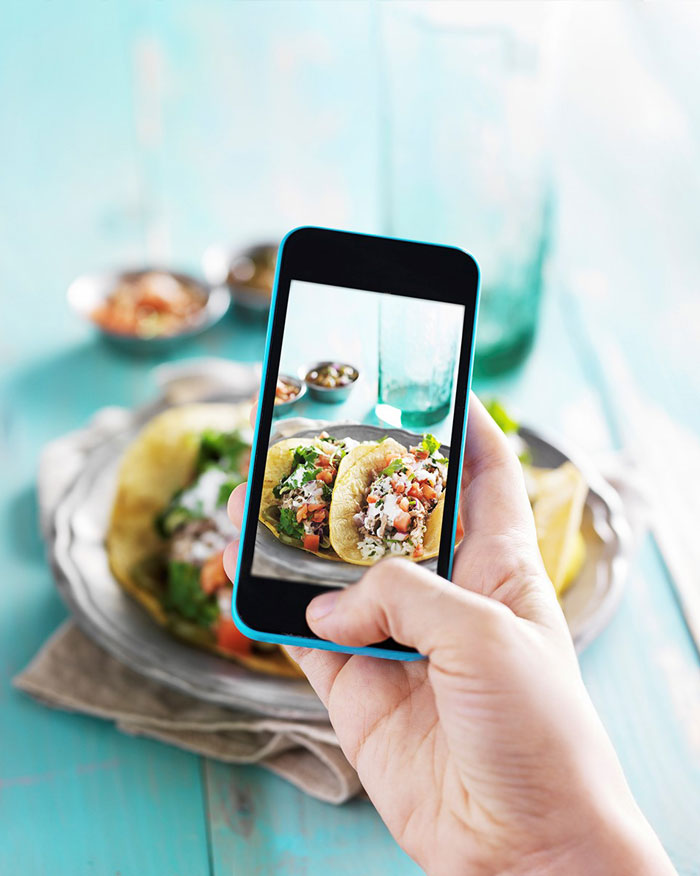
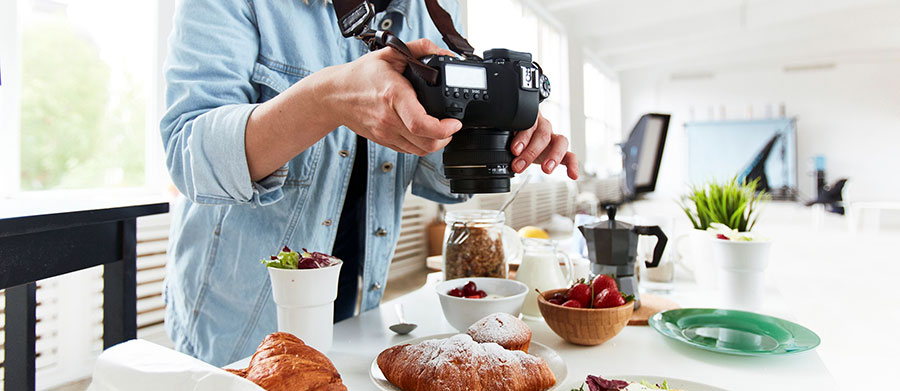
Whether you choose to take your own photos, or use a trained photographer, understanding how to make your food look its best from the kitchen preparation to the final shot can help to achieve your desired look.
Your website and social media channels might be the first experience and interaction potential guests have with your brand. You have one chance to attract business from that first impression.
This is why it is so important to put your best shot forward!
TIPS:
- Select menu items that are unique to your brand and also present well.
- Decide on a consistent element to your brand photography. Whether it’s a backdrop, tabletop surface, or prop, this helps to define your brand.
- Go for natural lighting. This means shooting near windows. If your restaurant interior is dark, then rent lighting and reflectors to achieve a natural lighting affect to avoid the “flash.”
- Develop a shoot schedule and shot list. This should outline:
- The item details, or combination of items. Consider the kitchen and bar prep time when arranging the shot list.
- Which dishware and glassware the items will be shot in.
- The angle of the shot and lighting details.
- What props or people will be featured in the shot.
- An example image of the final look you are trying to achieve.
Consumers will search your website and scroll through your social media channels to read reviews and look at photos of your menus and space before deciding whether or not to book a reservation or order from your restaurant. Those visuals may mean the difference between choosing your place…or the eatery down the street.
You don’t need a fine art degree to execute beautifully presented plates. Somewhere between Chicago restaurant Alinea’s Da Vinci-esque attention to detail and a cafeteria scoop and slap, there is a style of food plating that represents your very own establishment. Plating, like art, is personal and should tell the story of your menu.
Menus changed dramatically in the last year to cover losses from restrictions and shutdowns. Entire menus were downsized, menus became hyper-focused and the individual menu items remaining were squeezed to maximize profits. Has your plating adjusted accordingly?
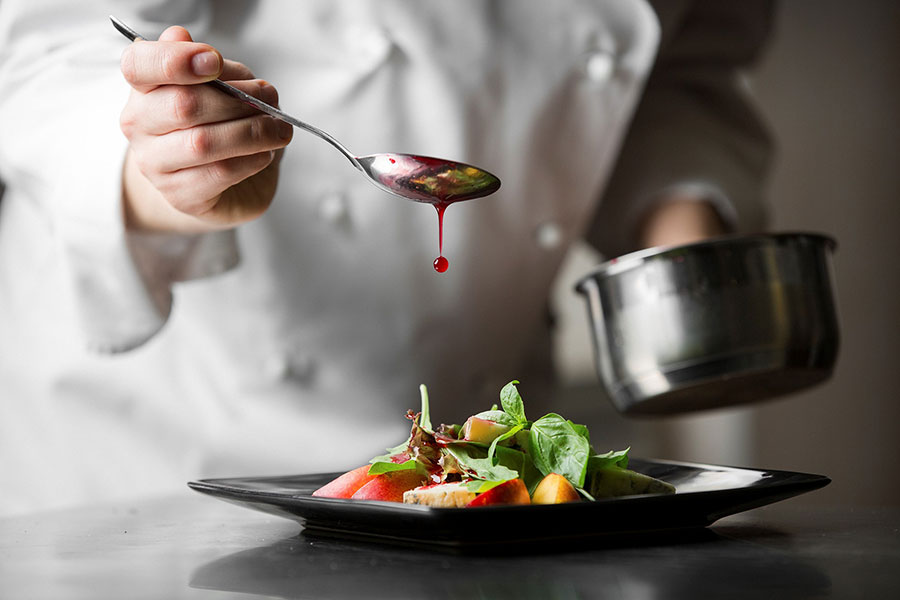
With a splash of art, a touch of math, and a dollop of common sense, you will be on your way to palatable plating. Follow these handy tips:
The art of food plating
- Find your focal point. All meals have a focal point. Likely the starting ingredient you used to design the flavour of the dish. Focus on that one ingredient, usually the protein, and build complementary flavours around it. Apply the same principle when plating.
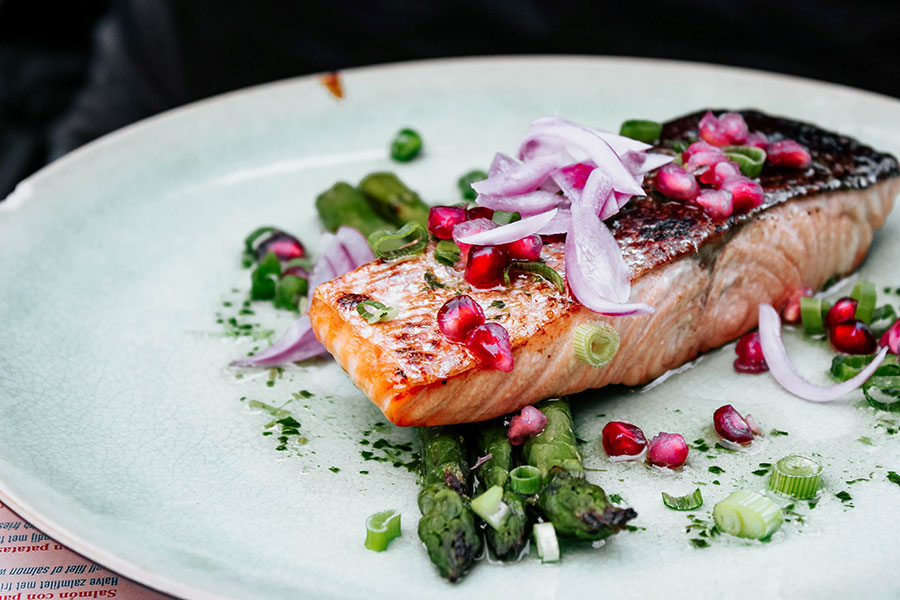
- Splash some colour. Plate colour should enhance the food. White plates are popular because they provide a blank canvas and great contrast for your dishes. However, a flavour-popping special’s ingredients that lean towards beige would benefit from a coloured plate instead. Black dinnerware gives a negative contrast matching well with brightly coloured ingredients.
- The colour of the ingredients can be adjusted for further visual appeal without compromising on design flavour, like using purple fingerling potatoes instead of white.
- Mix up your texture. Offer different visual textures on the plate by mixing and matching to find a balance. Adjust textures while maintaining flavour. Hard, soft, smooth, grainy, fluffy, flaky and coarse.
Math
- Find your best size. Choose plates large enough to accommodate food without overcrowding. Oversized plates offer a dramatic flair but can give the impression of too-small portions. The less on the plate, the more precision required as focus is tight.
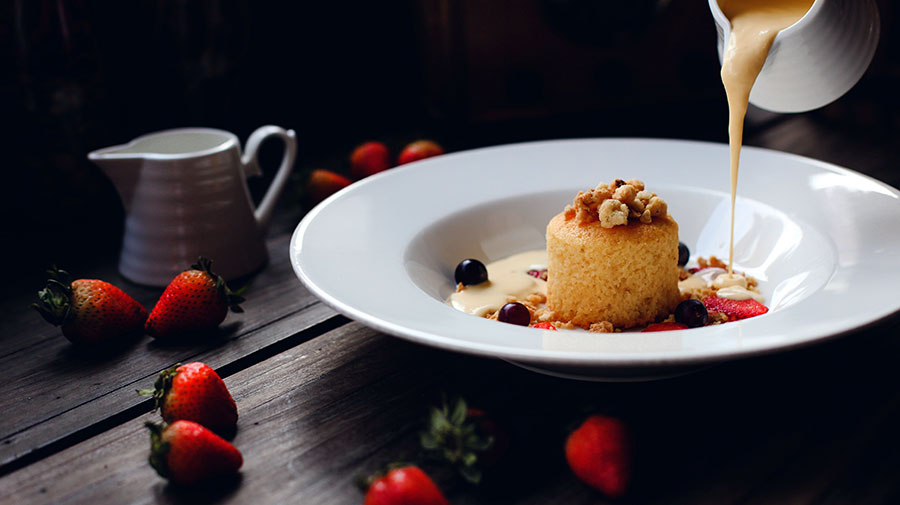
- Scale down. Perception of quantity increases if your portion sizes match the scale of the plates, bowls or platters. Simply put, smaller portions on smaller plates. Reducing portion sizes by 10 per cent but visually filling the plate is good for your bottom line.
However, if your dinnerware inventory doesn’t contain the size you need and purchasing a new size is out of the budget, strategic placement and arrangement of smaller portions on larger dishes can still deliver. - Follow the rule of thirds. In food, the rule suggests placing the focal point to the left or right side of the plate. Go further and apply a well-used photography rule to your plates (or bowls or platters) no matter the shape or size to artfully showcase your focal ingredient.
- Work the odd numbers. Although never scientifically proven, many chefs believe an odd number of elements, like shrimp or meatballs, is more visually appealing and gives a perception of more food. Even numbers typically require more precise placement for balance.
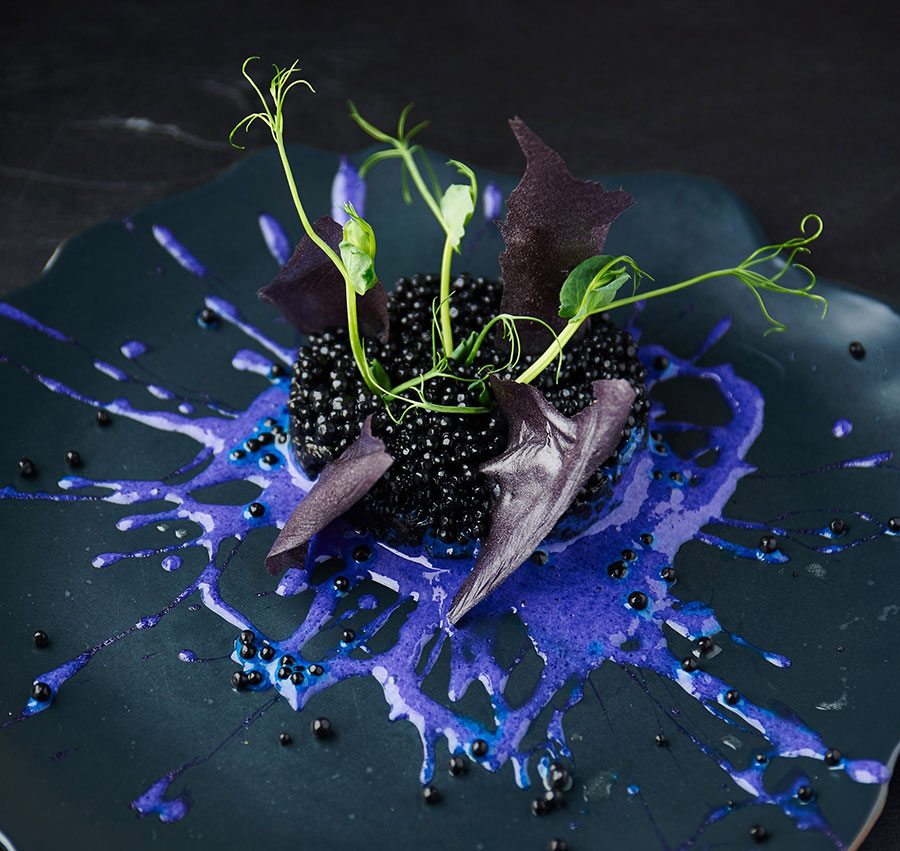
- Consider shapes. Consider the shape of the food and the plate. Circles (dots of sauce, a timbale of grains, brussels sprouts) on a square plate add instant drama. Include height and depth.
Common sense
- Learn to fit in. How the dish reads on the menu should translate easily to the plate. The customer shouldn’t be confused as the order is placed on the table.
Plating must fit within the capabilities of the kitchen and skill level of staff.
A poor choice of plate, its size and colour, can throw off a well-organized kitchen if it doesn’t have a logical place. - Watch the trends. Tightening and reducing portion sizes on menus is smart business. Turn it up to brilliant by marketing your menu as nutritionally balanced to hit those customers craving healthy, tasty and beautiful food.
- Make it a movable feast. Walk around with your plated meal. Does it move?
- Step back. However beautiful your plate looks, it always comes down to how it “eats.” Sit in the diner’s chair and dig in. Is it the experience you were aiming for?
Remember:
- Use a clean plate – no chips, fingerprints, scratches or markings
- Plate quickly enough to maintain proper food temperature
- Don’t let food touch the rim
- Pick a focal point/ingredient
- Ensure servers know the direction in which the plate should be served
Elevating your food with thoughtful plating gives a memorable first impression before your customers even take a bite. If they grab their cameras before their forks? Your food plating is a masterpiece.