
Does your restaurant celebrate National Meatball Day (March 9)? Or National Margarita Day (February 22)? Add let’s not forget Eat All Your Veggies Day on June 17. There’s been a proliferation of national food days (not to mention weeks and months) in recent years, with one for just about anything (National Eat What You Want Day, anyone?).
National food days aren’t officially decreed by governments. Rather, they’re set by the individuals or organizations — many of them marketing agencies — behind the numerous online calendars. These include The Complete List of Annual Food Holidays for Restaurants by Flanagan Foodservice in Canada, and National Today and Foodimentary from the U.S.
There are many differences and overlaps among the various calendars. The calendars above all celebrate National Cheesecake Day on April 30, while listing other food days on different dates or excluding some altogether.
What’s common to all national food days calendars is that they’re designed to complement your restaurant’s marketing plan. Jackie Oakes, senior marketing manager at Flanagan Foodservice, says it was important to compile their listing because “celebrating food holidays helps your story and menu stay fresh.”
“Celebrating food holidays helps your story and menu stay fresh.”
Jackie Oakes, senior marketing manager at Flanagan Foodservice
Wondering how to leverage national food days to entice patrons to visit or order takeout and delivery? Our 10 tips will help you craft a strategy that not only generates sales but enhances your reputation at the same time.
Start with a strategy
Plan ahead to make national food days part of your marketing strategy. Map out the days you want to profile to create your own calendar. Build in ample time to develop each campaign, including promotional materials and testing any new menu items. Plan according to your resources to ensure each campaign is successful.
Limit the number of food days you celebrate
There are hundreds of national food days, so it’s smart to be selective about how many you promote. After all, if every day is special, are any truly special? And focus on days that will be special to your community.
Consider timing
Do you need to celebrate National Champagne Day on New Year’s Eve? If business is slower early in the year, you could do worse than using National Cheese Lovers Day (January 20) to promote your awesome grilled cheese or macaroni.
Stay on brand
Breakfast and brunch restaurants might not want to let National Egg Day on June 3 slip by. And National Greasy Foods Day (October 25) could be just the ticket for some burgers and wings joints. But either day might be off-brand for other restaurants.
“We love to align with celebrations that highlight our brand’s values and offerings.”
Cindy Perri, brand guardian for Charcoal Group restaurants
“We love to align with celebrations that highlight our brand’s values and offerings,” says Cindy Perri, brand guardian for Charcoal Group restaurants. “When we align a celebration, promotion or event in that way, it speaks to the overall brand experience that our guests have come to enjoy, so in turn we create a buzz with our guests and ultimately build brand value.”
Think Canadian
Canucks love to celebrate our iconic foods like Nanaimo bars, tourtière, and the donair. Consider tapping into that passion by including a few of these on your own food days calendar.
Beertown Public House, a craft beer dining establishment, has tweeted about National Poutine Day on April 11, showcasing a photo of their poutine and using the hashtag #ProudlyCanadian.
1,500 Canadians were asked what their favourite iconic Canadian food is. The clear winner? POUTINE! Happy #NationalPoutineDay! 🇨🇦 #Beertown #BeertownBites #ProudlyCanadian pic.twitter.com/RARa4XNQbH
— Beertown (@BeertownPublic) April 11, 2018
Promote and engage on your socials
“Social strategies have never been more important than they are right now,” says Flanagan’s Jackie Oakes. “If you want to be where your customers are, this is the place to be.”
Use social media not just to promote, but also to drive engagement. For National Butter Tart Day (June 1), why not join the fierce debate: raisins or nuts? Run a poll on Facebook, Instagram or Twitter. The number of passionate responses may surprise you! Provide eye-catching signage and hashtags on your premises, and watch patrons handle promotion for you.
Use special offers and contests
“Celebrating food holidays and highlighting a current menu item or introducing an LTO can be a great way to generate interest in your brand,” Oakes says.
Earls Restaurant has celebrated Canada’s iconic cocktail on National Caesar Day with LTOs. In 2019 they offered Caesars at a special price on their Twitter account, and in 2020 they ran a giveaway for their Caesar kit on Instagram.
CAESAR THE DAY — It’s never too early to enjoy a Caesar when they’re featured all day! Celebrate #NationalCaesarDay with us for $5 Caesars today only, all day long.â €
— Earls Restaurants (@earlsrestaurant) May 16, 2019
â£â €#Caesars #CanadasCocktail pic.twitter.com/Wo7x9EjefV
Acknowledge special food needs
Use occasions such as National Gluten Free Day (January 13) and National Vegan Day (November 1) to showcase offerings for your community with allergies and special diets. They’ll appreciate feeling included and safe at your establishment.
Don’t forget the ingredients
National food days celebrate ingredients as well as dishes. National Maple Syrup Day (December 17) is a springboard to promote food and beverage items sweetened with it.
Give back
Consider combining a national food day with a donation program for a cause important to you or your community. Donating a portion of sales not only supports charities, but enhances your restaurant’s reputation.
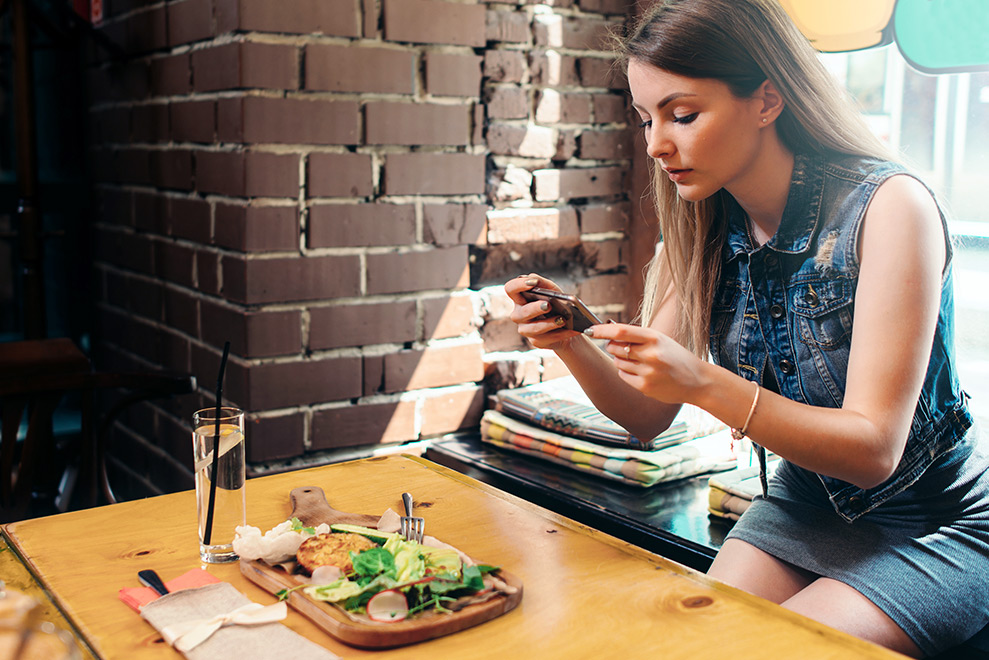
Social media influencers seem to be everywhere these days. They create content on platforms like Instagram and Facebook to sway their followers to engage with the businesses they promote.
But does influencer marketing work for restaurants?
Trevor Lui, restaurateur, cookbook author and co-founder of the agency Quell, says it can. “I think that in the age of trying to figure out how to expand the reach of your brand, utilizing people that have reach within their own network on a social level is beneficial.”
“I think that in the age of trying to figure out how to expand the reach of your brand, utilizing people that have reach within their own network on a social level is beneficial.”
Trevor Lui, restaurateur, cookbook author and co-founder of Quell
Sean Beckingham, principal at the food and beverage marketing agency Branding & Buzzing, agrees. He says working with an influencer allows you to address their niche audience. “They’re going to tell the best story from their lens.”
Beckingham says digital marketing “is not just about an influencer having an Instagram account. It’s about running ads, having a content strategy. It’s about partnerships. You have to really open up your basket of marketing.”
But influencers are still important.
“When you’re purchasing their power, they can do many things for you,” Lui says. These include posting on their account, temporarily taking over your account or live feed, or being a brand spokesperson. Each has a different fee structure, which may involve a combination of dollars and product.
Beckingham notes that the COVID-19 pandemic’s toll on restaurants has led his agency to approach costs differently. “Where we used to charge restaurants to do certain things, we’re asking suppliers to cover costs. We’re doing everything we can to keep them (restaurants) open because they’re such an important part of society.”
Building authentic partnerships
Beckingham says restaurant operators can find influencers through an agency, social media specialist, or on their own. Lui’s first approach is to “rely on a tight network of people that I’ve done work with in the past,” whether influencers or trusted advisors who select them for him.
- Tip: Whatever the approach, don’t focus only on follower count.
Beckingham advises vetting influencers to ensure they’re a good fit. Are both they and their audience local to you? Do their demographics fit your target market? He suggests using selection tools like geo-targeted maps in Instagram, hashtag searches, and identifying contributors to local publications. Also ask for the influencer’s media kit — it should explain their demographics and reach.
- Tip: Assess the authenticity of a potential influencer partnership. Would your burgers-and-fries brand resonate with their wellness-focused followers?
Ryan Hinkson of @EatFamous, an influencer and food culturalist with 275,000 Instagram followers, echoes the importance of authenticity. “The times when I’m most excited to actually try something or eat somewhere are usually when I get the best results.”
Building and measuring success
Successful campaigns start by discussing with the influencer your goals, such as target reach and specific outcomes. Also communicate expectations for deliverables and data measurement. “I have very tangible, transparent and clear outcomes for what I want to achieve on any program,” Lui says, “so I have those conversations well in advance.”
- Tip: Develop measurable tactics to meet your goals.
For instance, if your initial focus is on building your social media following, a contest to drive engagement can be effective.
Lui, who recently launched a new brand, Joy Bird, says, “The more impressions on your brand, the faster it gets bumped up in any type of algorithm. Because everything is algorithm based.”
They partnered with an influencer to run a contest where entrants had to follow the brand and tag two friends. The result? Brand followers increased from 320 to 960 over a two-week period.
Beckingham suggests established restaurants could offer a series of tastings for influencers. “You may want to do a burst when you have a new menu launch where you have five influencers come in at the beginning, and every month have another influencer come in.”
Specific calls to action like a secret menu item or limited time offer promoted only in a specific campaign allow you to directly measure its sales results, as do trackable gift cards.
Mutually rewarding relationships

Building trusted relationships between influencers and restaurants is a mutually rewarding outcome of successful influencer marketing.
Hinkson says he’s worked with some restaurants repeatedly over the years and they’ve developed synergy. “They’ve been happy with what I’ve done and I’m a fan of what they do.” He knows of other influencers who also experience this. “And if it’s yielding good results, then I say go with it.”
These relationships matter more than ever during the pandemic. “Really and truly,” Beckingham says, “if your restaurant is established, you should go back and look at the folks you’ve worked with in the past that have been good to you […] because you’re both in it together.”