
Just when you thought you were getting the hang of social media and content marketing, along comes another digital platform to shake things up!
Although it may seem relatively new, TikTok began in 2016, and since then has become the fastest growing social media platform, with more than 1 billion people worldwide and an average of 3.2 million Canadians, engaging in the video platform monthly. That’s a BIG consumer audience that you can be tapping into, and similar to Instagram, food, drinks and recipe creation continue to be top trending topics. And as any successful foodservice operator knows, it is important to stay ahead of the latest trends in restaurant marketing.
Currently on TikTok there are more users generating restaurant content with a rise in hospitality brands beginning to utilize the platform. Let’s dive into 101 on how restaurants can utilize TikTok’s video sharing platform to generate buzz and reach more guests.
Who’s your TikTok audience?
Since launching, the platform has continued to attract a younger audience with more than 50% of global users being under the age of 34, 41% of them aged 16-24, and in Canada 60% of users are female. Even if this core audience doesn’t represent your average customers, it is still worth having them connect with your restaurant brand for future business, and keep in mind, the other 50% are 35 and over. These audience profiles are critical to developing effective TikTok content and messaging.
TikTok Basics
TikTok videos can range between 5 and 60 seconds in length. One of the most exciting benefits for restaurant brands is that unlike other social platforms that are driven by highly professional and polished content, TikTok is popular for videos that are fun, creative, authentic, personalized, and humorous. As you get started, forgo hiring a professional videographer until you understand if this platform is right for your brand. However, invest in a phone camera adjustable tripod that allows you to set up shots from many angles, and provides some additional lighting. Prices range from $30-$200, and tripods can easily be sourced through Amazon.ca.
- TIP: Natural lighting always produces the best video and photography results. If your restaurant space is darker, then it’s worth the $100 to invest in softbox lighting and reflectors to achieve the best shot. This type of portable equipment is available at photography stores as well as Amazon.ca.
3 Steps to follow before you create your first TikTok post:
- Set Up a TikTok Business Account, versus a personal account, as it provides you with performance analytics that will be useful for future advertising campaigns.
- Use a well-branded image or logo (recommended size 200 x 200), as your profile picture, include a brief description including a custom hashtag unique to your brand, and links to either your website or takeout platform. Link your TikTok account to Instagram for automatic sharing.
- Follow similar businesses to yours within your industry, and follow their followers. Then monitor the types of video content that your competitors are sharing, and make note of what is achieving engagement, likes, and comments.
Explore your creative side
TikTok’s unique in-app content creation features have set the platform apart, as the creative opportunities are endless yet they do take some time to master.
- Music – TikTok will suggest music for your post from popular songs, trending songs, and your video length. Music selection can lead to viral content, so choose wisely.
- Filters/Effects – you can easily add in creative effects and filters to make your video stand out in the feed. Create or select a unique element for your brand that is consistent across all of your videos.
- Timing and Voiceover – within the app you can edit your video, add in text, pauses and sounds at key moments, as well as voiceovers to help share your message further. Incorporating popular voiceovers is a fun and easy way to achieve more engagement.
TikTok content ideas for your restaurant
Start creating simple and fun video content that showcases what your brand does best.
- Your team – create fun short videos of your team in action from front to back of the house. Record personalized messages from team members who feel comfortable speaking on camera about why they enjoy working at your business, and what they enjoy on the menu.
- Space – engage new guests with a tour of your restaurant space so they know what to expect from the moment they step through your front doors.
- Menu – your menu is one of your differentiating brand experiences so leading with this content will be effective in establishing for new followers what your offering is all about. Share your unique dishes, seasonal changes, ingredients and where they come from, as well as daily specials.
- How to make – TikTokers love tutorials that can be replicated at home, turned into challenges, or just for brand insight. Create videos of your team preparing signature dishes, cocktails, and unique menu items with a wow factor that generates shares.
Post and grow your restaurants TikTok account
Here are additional tips to effective posting, and growing your TikTok reach:
- Keep your post descriptions short and to the point, as you only have 150 characters to work with.
- Use hashtags relevant to your content and trending, while repeating a hashtag that is unique to your brand for content searchability.
- Encourage guests to follow you – send DMs on Instagram, post a QR code in your restaurant, add the TikTok icon and link to your website, and send an e-newsletter to increase your followers.
- Encourage diners to create and share content about your restaurant, then comment and share their video content for increased engagement.
- Post weekly, with a goal of sharing daily as you become a TikTok pro.
Stay tuned for TikTok 102 for restaurants, to learn how to leverage influencer campaigns and advertising best practices.
Marketing your restaurant brand successfully, meaning you’re actually experiencing a return on your marketing dollars, can often seem an insurmountable task.
It’s important to keep in mind that some of the most effective restaurant marketing strategies are designed to produce long-term results, as guests need constant visual reminders and communication about your brand to persuade their decision-making.
Here are 10 restaurant marketing strategies to leverage with the core objective of increasing revenue in the short- and long-term:
Targeted Digital Advertising
Instagram and Facebook have made it extremely easy to attract and gain new guests with targeted digital advertising. Set your ad objective to target audiences similar to who follows your social pages, and drive them right to your website for reservation bookings. You can track the results, and not only begin seeing your social community grow, but also your reservation bookings.
Ticketed Events and Experiences
Create a seasonally inspired ticketed experience or event that requires guests to secure their spot in advance with a ticket. Not only does this guarantee a full house, but also allows you to manage the profit margin to increase your revenue, while creating a unique experience for guests. Try EventBrite for ease of ticket management.
Promotional Marketing
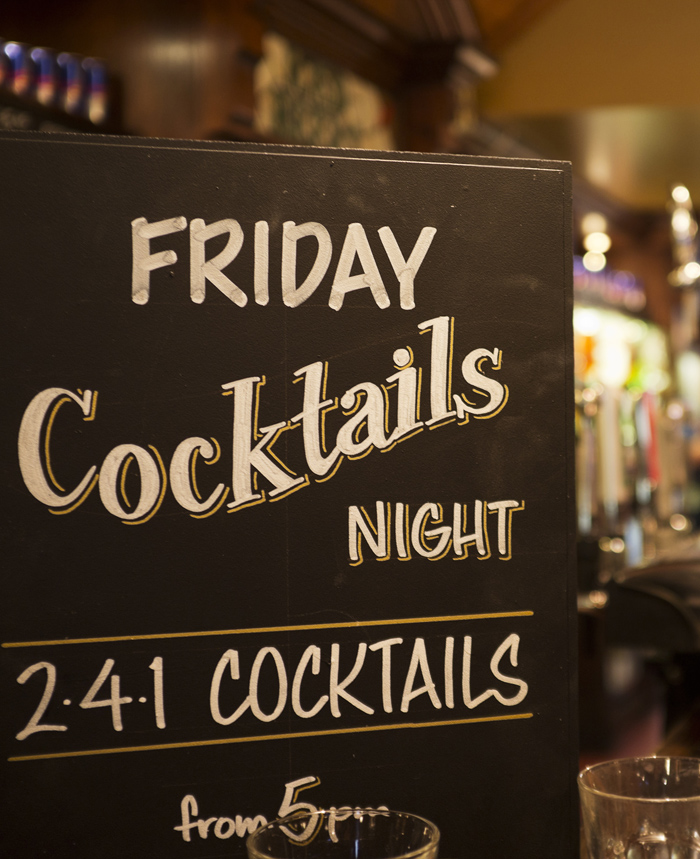
Promotional marketing has a reputation of hurting the bottom line, but that isn’t always the case if planned strategically. There are many ways to maintain your brand experience and reputation, while offering a nominal perk to encourage guests to dine with you, and spend a little bit more. The objective with promotional incentives should be to increase the average check, by upselling the order on profitable menu items. Themed menu nights, pre-set menus, menu specials, alcohol features, and combos are all forms of promotional restaurant marketing that can increase revenue.
Sampling and Tastings
What better way to encourage sales than by giving someone a complimentary experience first! This marketing tactic allows you to communicate one on one the key selling features of the menu item or beverage, while making the guest feel special with a complimentary tasting. Work with your suppliers to create the experience and provide additional support and product, which will also reduce your expenses and increase your profit.
FACT: Customers are 93% more likely to purchase an upgraded bottle of wine ($10 more) when offered a sampling.
Pop-Up
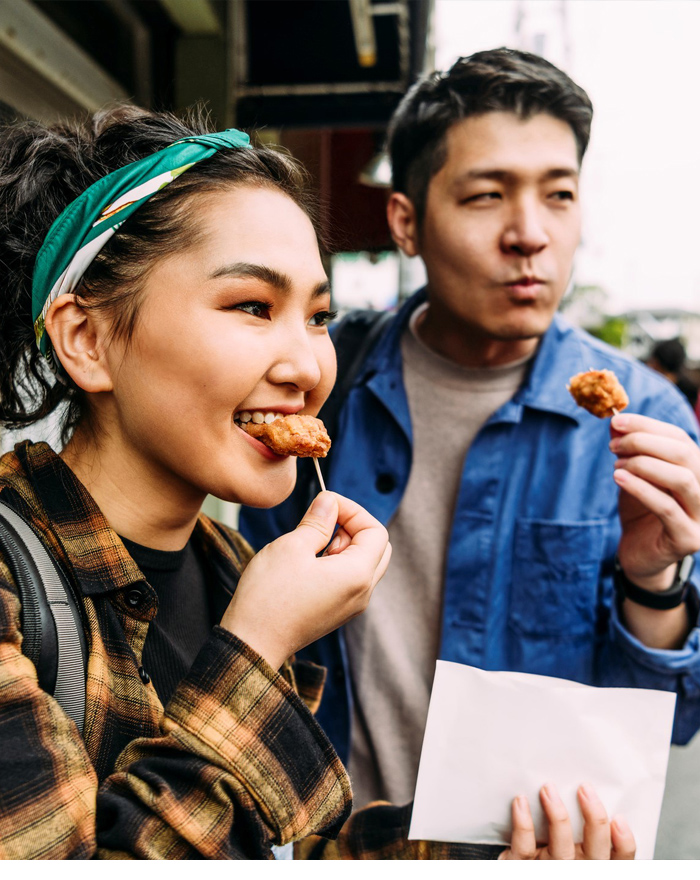
Why wait for the guests to come to you, when you can go to them? Pop-up carts, booths, and street activations can be very a cost-effective way of reaching a new audience and marketing your brand experience directly. Be sure to hand out a promotional piece, such as a complimentary appetizer or dessert card, to invite guests to your physical location to dine again!
Private Label Products To Go
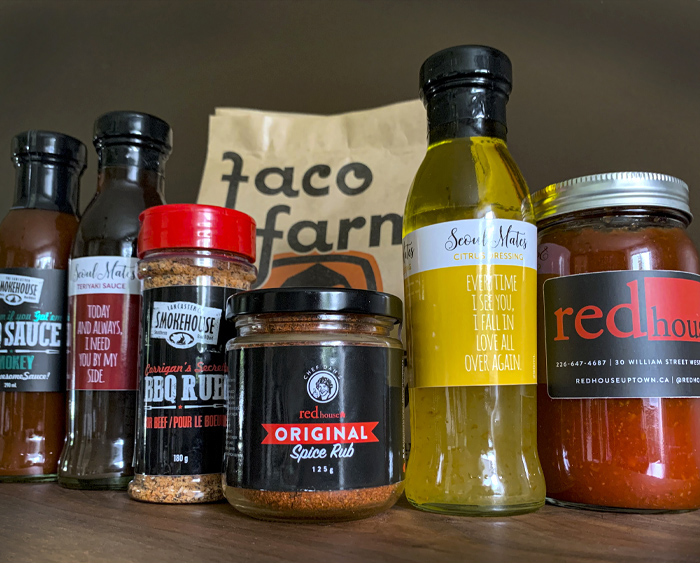
Consider leveraging your most popular dishes, sauces, or made-in-house products that have the highest profit margin, and packaging them to go for guests to enjoy at home. This out-the-door form of marketing keeps your brand top of mind in guest homes, sparks word-of-mouth advertising, and provides your business with another revenue stream.
Dining Rewards
Most restaurant point-of-sale systems have built-in rewards programs that track guest’s information and dining history. The systems are extremely sophisticated, and often provide digital marketing opportunities to reward guests based on their dining behaviour and milestones, such as birthdays and anniversaries. Whether it’s a complimentary birthday dessert or points towards achieving a unique experience, be sure to maximize the preexisting marketing tools in your point-of-sale, or reservation booking systems, to encourage repeat business.
Brand Collaborations
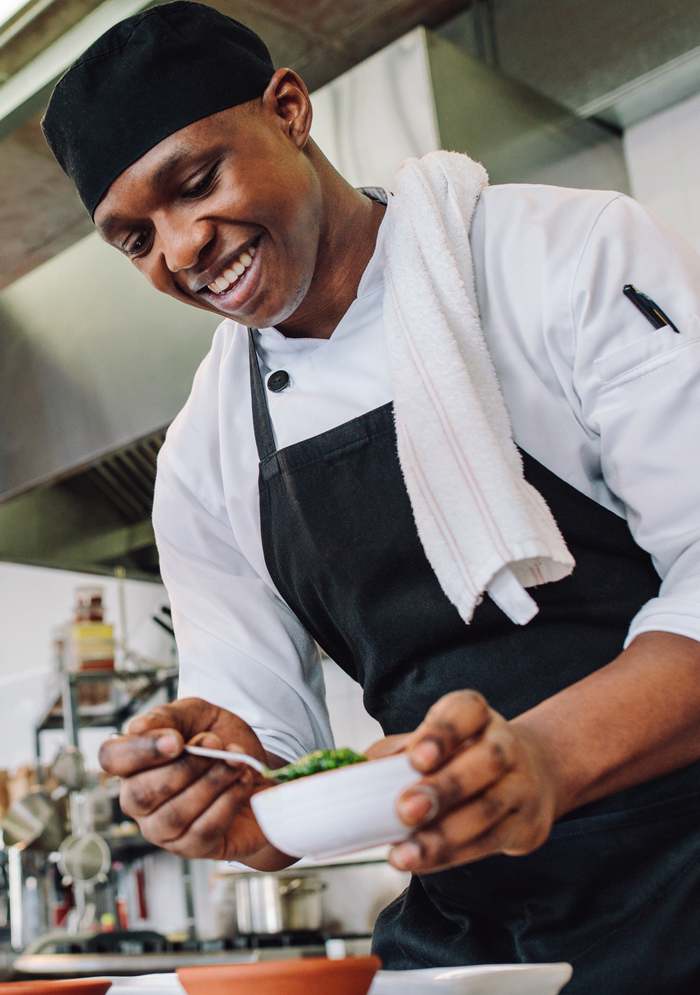
You know the saying – “Keep your friends close, and your enemies closer”? This rings true for restaurant competitors too! Over the last few years, as restaurants have struggled with new industry challenges, we’ve witnessed the birth of restaurant and chef collaborations with the objective of bringing unique experiences to guests and driving new business. Consider hiring a well-known chef to design your seasonal menu, or feature some unique menu items designed by another popular restaurant that serves a different type of cuisine, or collaborate on a pop-up to share costs. The ideas are endless, and with the right collaboration the results can be very positive for the bottom line.
Google Business
When it comes to marketing your restaurant brand, Google Business is a tactic that many restaurant brands have still not tapped into fully. Google Business pages provide a platform where you can showcase images, post daily updates, create digital promotions for guests, link to your website and social platforms, and encourage guests to reward you with 5-star reviews. When a guest Googles your brand, your Google Business page is likely the first thing that pops up, which is why it’s so critical to manage this platform. The best part, all of the digital tools are free.
Own Your Restaurant Website
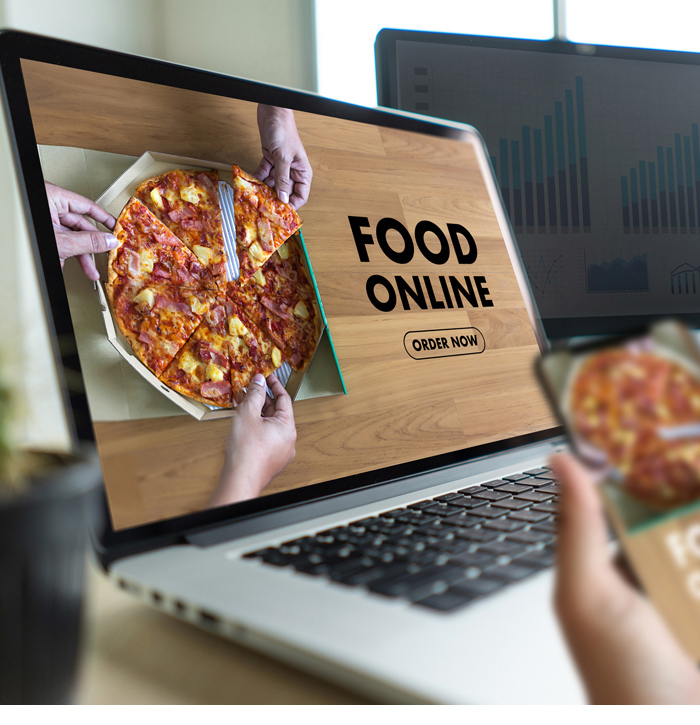
Let your website be the front door to your restaurant where diners can learn about you before they make a reservation. Your online strategy isn’t complete without one and sites such as the all-in-one platform Sociavore was developed for independent restaurant operators like you to be in full control of your brand, content, online ordering and reservation booking system. Your website attracts visitors and drives sales, so take control of your online presence. Book a Sociavore demo here.
Take your marketing efforts to a more profitable level by implementing one or more of these creative strategies for your restaurant brand.
During the pandemic, the need for outstanding visuals to sell your food is even greater than before, when competition was already fierce for food dollars. That’s where professional-looking food photography comes in.
Consider food photography being worth not only a thousand words, but a thousand dollars in revenue for your restaurant brand. In a digital world that’s easily influenced by visual storytelling, this is the impact that high quality styled food images can have in attracting new business to your restaurant.
Consider food photography being worth not only a thousand words, but a thousand dollars in revenue for your restaurant brand.
According to the TripAdvisor “Influences on Diner Decision-Making” survey from 9,500 international diners, 60% of respondents from the US reported that online photos influence their dining decisions. The impact of online photos proved even higher in Spain at 72%, followed by Italy with 67%, France with 64%, and the UK with 52%. This is definitely something to keep in mind when trying to attract tourist (and other) diners.
For restaurant brands large and small, the importance of capturing high quality, well-planned menu photography remains the same – HIGHLY IMPORTANT! And during the pandemic, the need for outstanding visuals is even greater.
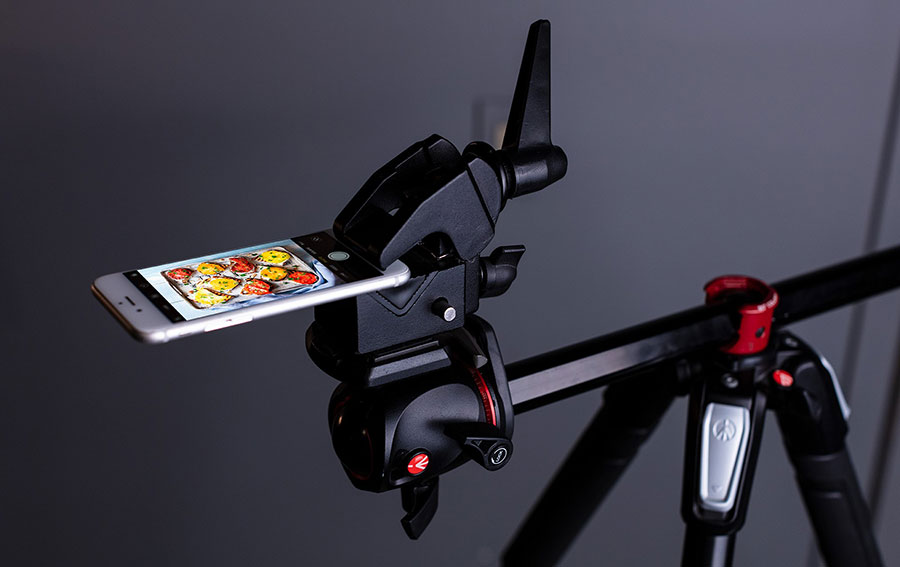
So, when is using a phone to take your restaurant brand’s photography a good idea?
For chefs or restaurateurs, if you have basic photography knowledge and understand lighting, angles, product positioning, shot styling, and are tech-savvy with the latest editing applications, then go for it!
- TIP: Scroll through Instagram to find inspiration and shot examples to guide your photoshoot.
However, if you are like most of us, with little photography expertise beyond selfies, and even less time to spend in this area, and if you want to put your best visual face forward, here are some other solutions to create a professional profile at reasonable cost:
Hire new talent
Aspiring photographers or recent photography graduates are a great place to start as they need projects to build their portfolios and often have very affordable rates. Try posting a free ad on jobsites like Indeed.com and on your restaurant’s social media pages to attract résumés.
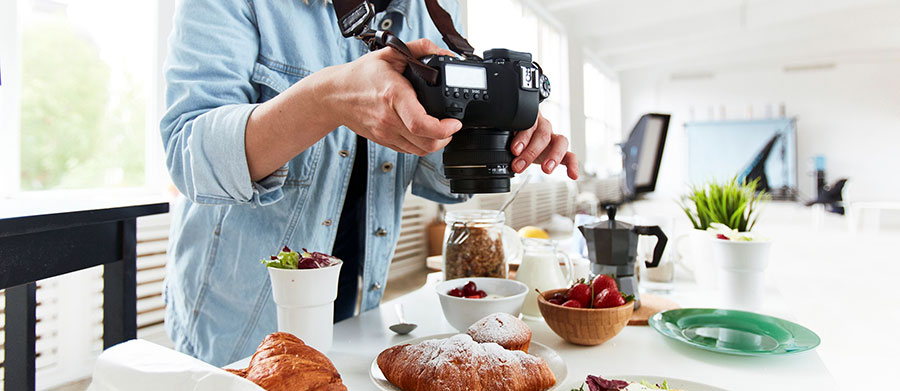
Find the food influencers
A food influencer is an Instagram user with an above average following who focuses on curating and sharing food and restaurant-related content that produces user engagement to influence consumers’ decision-making.
These are savvy photographers and editors who are always on the lookout for new content to curate!
TIPS:
- Find and follow Instagram influencers whose content relates to your restaurant brand. For example, pizza places should find influencers who curate and post content about pizza.
- Invite influencers to your restaurant to taste the menu and enjoy the overall brand experience. If you put on a great show, they will likely take LOTS of photos!
- Get the photos! Discuss if you can use their photos to post on your digital platforms. NOTE: Some may request a fee per image.
- Give credit where credit is due. Social media etiquette is always giving photographers or curators credit for their photos by tagging them in the post. This helps to promote their skillsets and personal brand in return for photo use, which sometimes is enough to eliminate fees.
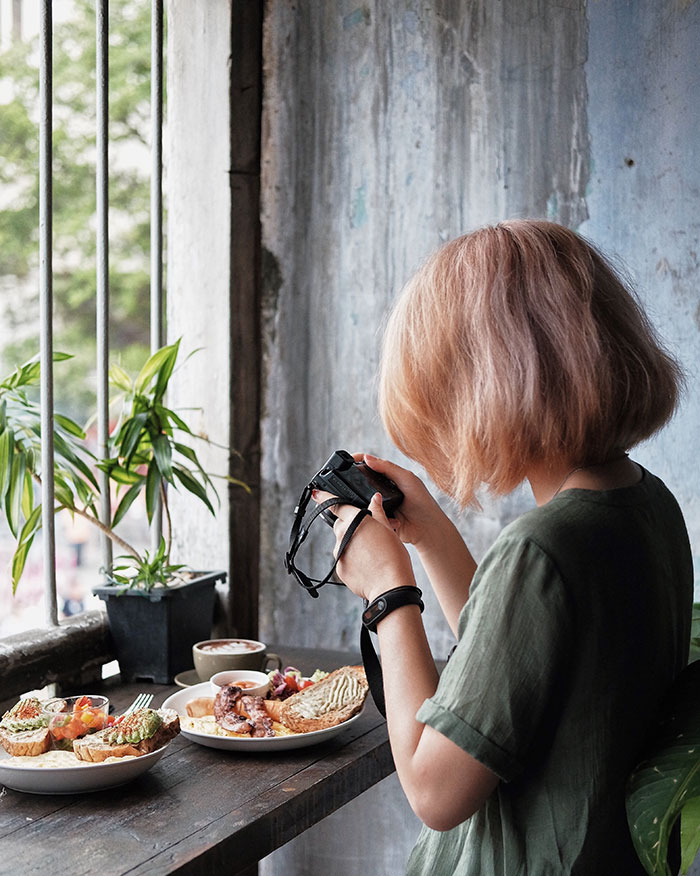
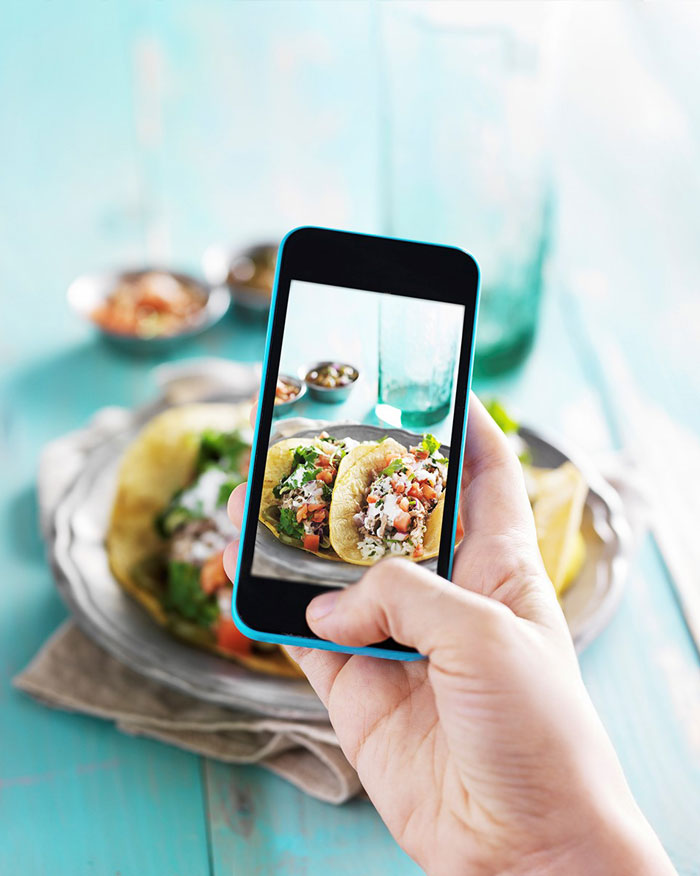
Whether you choose to take your own photos, or use a trained photographer, understanding how to make your food look its best from the kitchen preparation to the final shot can help to achieve your desired look.
Your website and social media channels might be the first experience and interaction potential guests have with your brand. You have one chance to attract business from that first impression.
This is why it is so important to put your best shot forward!
TIPS:
- Select menu items that are unique to your brand and also present well.
- Decide on a consistent element to your brand photography. Whether it’s a backdrop, tabletop surface, or prop, this helps to define your brand.
- Go for natural lighting. This means shooting near windows. If your restaurant interior is dark, then rent lighting and reflectors to achieve a natural lighting affect to avoid the “flash.”
- Develop a shoot schedule and shot list. This should outline:
- The item details, or combination of items. Consider the kitchen and bar prep time when arranging the shot list.
- Which dishware and glassware the items will be shot in.
- The angle of the shot and lighting details.
- What props or people will be featured in the shot.
- An example image of the final look you are trying to achieve.
Consumers will search your website and scroll through your social media channels to read reviews and look at photos of your menus and space before deciding whether or not to book a reservation or order from your restaurant. Those visuals may mean the difference between choosing your place…or the eatery down the street.
Managing guest expectations during times of constant change through effective communications tactics
Keeping your guests informed and up to date about what to expect when dining at your establishment has never been so critical to the success of your foodservice operation. The restaurant industry remains in a state of constant change, and to maximize the allowable dining capacities, you need to up your communications game.
Start off by keeping these key questions top of mind for a more tactical approach to your communications:
- What do guests want to know right now about my restaurant?
- How will the message we’re communicating make them feel?
- Where and how do they want to receive messages?
- How will they respond and how can our team be ready?
Transparency is a Winning Tactic
First and foremost, a transparent and authentic approach is critical in achieving effective communications that will leave your restaurant guests feeling comfortable, safe and informed about the NEW dining experience at your establishment. Be first to share your health and safety procedures, operational changes such as seating and team updates, and menu modifications, so guests know upfront what to expect without having to ask. This tactic will help to demonstrate that your team takes the changing circumstances seriously, you’re informed, and you want to provide the best guest experience.

Consistent and Timely Information is Key for Restaurant Marketing
In a recent poll, 59% of respondents shared that they use Google to find out information about a restaurant, while 41% use Instagram.
Reservation booking platforms, search engine listings, your website, social media, and review websites all share pertinent information about your restaurant that informs guests decision-making. The information listed on these digital touch points must to be current and consistent for maximum awareness. There is nothing more frustrating for a guest than showing up to find a closed restaurant, when online it says it’s open.
Here is the key information guests are looking when they search; be sure to keep it updated:
- Health policies and procedures
- Hours of operation and seating times
- Menus
- Reservation system
- Takeout and delivery options
- Specials
- Contact information
- TIP: Help reduce email inquiries, direct messages, and phone inquiries by providing a few frequently asked guest questions and up-to-date team responses on your website, Facebook, and Google Business page!
Focus on the Fun
It’s easy these days to overuse the pandemic in our communication, however when the time is right, focus on the new and exciting things happening at your restaurant to entice guests back in to dine and continue to take out. New menu items, improved service, seasonal drinks, revamped décor and design, weekend events, and special occasion celebrations are all things to communicate that will remind guests of why they should choose to dine with you versus a competitor. Promote what you’re best known for, and feature it on all of your communications platforms!
Get Even More Social
Social media is your simplest and quickest way to share what’s happening at your establishment with guests, and to spark two-way communication. Up your posting to daily, and share the unique brand experiences that will excite guests the most. With health and safety top of mind for diners, ensure your photography and video content showcase your team following the proper procedures, in order to resolve any guest concerns; transparency is absolutely the best policy. When boosting your social media presence be prepared for increased guest inquiries through direct messages and comments, and have a plan in place to respond within less than 24 hours. The FAQs and responses are also a useful tool when responding on social media.
Land in the Inbox
Whether you send monthly emails or have never sent email communication from your brand, now is the time to get in the inbox. You’ll be fighting for space, however email communication is a great tactic to provide more detailed information for guests to help keep them informed of your weekly or monthly happenings. E-newsletters should be short and sweet, with a catchy subject line, and include hyperlinks either back to your website or a direct email for more information. Utilize email communication to feature operational and safety news, menu features, and special events.
- TIP: Can’t afford a graphic designer? Try Canva at no charge for a well-designed branded e-newsletter you can create in no time.
Guests are eager and excited to get back to in-dining, and the most effective approach to filling your seats is to communicate timely and accurate information that sets a clear guest expectation. Your brand can’t over-communicate right now; it’s time to get loud!
Social media influencers seem to be everywhere these days. They create content on platforms like Instagram and Facebook to sway their followers to engage with the businesses they promote.
But does influencer marketing work for restaurants?
Trevor Lui, restaurateur, cookbook author and co-founder of the agency Quell, says it can. “I think that in the age of trying to figure out how to expand the reach of your brand, utilizing people that have reach within their own network on a social level is beneficial.”
“I think that in the age of trying to figure out how to expand the reach of your brand, utilizing people that have reach within their own network on a social level is beneficial.”
Trevor Lui, restaurateur, cookbook author and co-founder of Quell
Sean Beckingham, principal at the food and beverage marketing agency Branding & Buzzing, agrees. He says working with an influencer allows you to address their niche audience. “They’re going to tell the best story from their lens.”
Beckingham says digital marketing “is not just about an influencer having an Instagram account. It’s about running ads, having a content strategy. It’s about partnerships. You have to really open up your basket of marketing.”
But influencers are still important.
“When you’re purchasing their power, they can do many things for you,” Lui says. These include posting on their account, temporarily taking over your account or live feed, or being a brand spokesperson. Each has a different fee structure, which may involve a combination of dollars and product.
Beckingham notes that the COVID-19 pandemic’s toll on restaurants has led his agency to approach costs differently. “Where we used to charge restaurants to do certain things, we’re asking suppliers to cover costs. We’re doing everything we can to keep them (restaurants) open because they’re such an important part of society.”
Building authentic partnerships
Beckingham says restaurant operators can find influencers through an agency, social media specialist, or on their own. Lui’s first approach is to “rely on a tight network of people that I’ve done work with in the past,” whether influencers or trusted advisors who select them for him.
- Tip: Whatever the approach, don’t focus only on follower count.
Beckingham advises vetting influencers to ensure they’re a good fit. Are both they and their audience local to you? Do their demographics fit your target market? He suggests using selection tools like geo-targeted maps in Instagram, hashtag searches, and identifying contributors to local publications. Also ask for the influencer’s media kit — it should explain their demographics and reach.
- Tip: Assess the authenticity of a potential influencer partnership. Would your burgers-and-fries brand resonate with their wellness-focused followers?
Ryan Hinkson of @EatFamous, an influencer and food culturalist with 275,000 Instagram followers, echoes the importance of authenticity. “The times when I’m most excited to actually try something or eat somewhere are usually when I get the best results.”
Building and measuring success
Successful campaigns start by discussing with the influencer your goals, such as target reach and specific outcomes. Also communicate expectations for deliverables and data measurement. “I have very tangible, transparent and clear outcomes for what I want to achieve on any program,” Lui says, “so I have those conversations well in advance.”
- Tip: Develop measurable tactics to meet your goals.
For instance, if your initial focus is on building your social media following, a contest to drive engagement can be effective.
Lui, who recently launched a new brand, Joy Bird, says, “The more impressions on your brand, the faster it gets bumped up in any type of algorithm. Because everything is algorithm based.”
They partnered with an influencer to run a contest where entrants had to follow the brand and tag two friends. The result? Brand followers increased from 320 to 960 over a two-week period.
Beckingham suggests established restaurants could offer a series of tastings for influencers. “You may want to do a burst when you have a new menu launch where you have five influencers come in at the beginning, and every month have another influencer come in.”
Specific calls to action like a secret menu item or limited time offer promoted only in a specific campaign allow you to directly measure its sales results, as do trackable gift cards.
Mutually rewarding relationships

Building trusted relationships between influencers and restaurants is a mutually rewarding outcome of successful influencer marketing.
Hinkson says he’s worked with some restaurants repeatedly over the years and they’ve developed synergy. “They’ve been happy with what I’ve done and I’m a fan of what they do.” He knows of other influencers who also experience this. “And if it’s yielding good results, then I say go with it.”
These relationships matter more than ever during the pandemic. “Really and truly,” Beckingham says, “if your restaurant is established, you should go back and look at the folks you’ve worked with in the past that have been good to you […] because you’re both in it together.”