
Big non-meat, plant-based alternatives are here to stay – and growing.
A recent study by Technomic reports “almost two-thirds of Canadian consumers (65%) consider vegetarian offerings to be slightly or much more healthy. And, a quarter express they are ordering more healthy items at foodservice now than two years ago.”
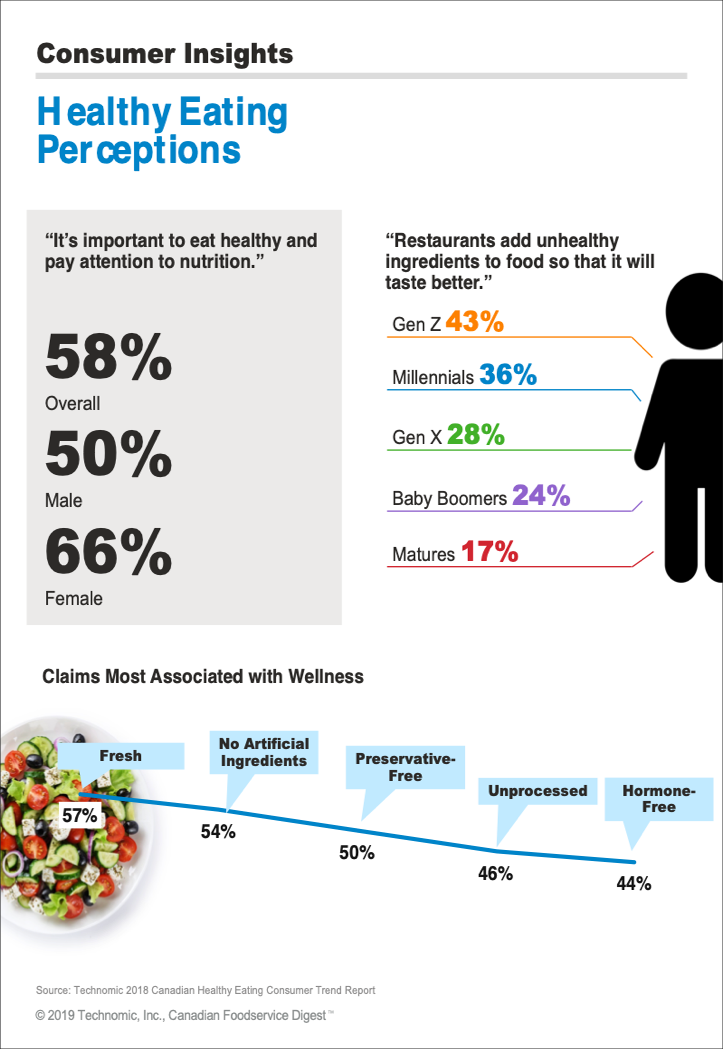
According to Technomic, “Gluten free is the top health claim across segments due to its popularity for both dietary and allergy reasons. Gluten-free claims also line up with many low carb diets like keto that are rising in popularity. Since these leading labels are on the top 200 restaurant menus, consumers may expect to see specialty options more widely available.”
Healthy Claims at Top 200 Limited-Service Restaurants
| Leading Claims | Fastest-Growing Claims | |
|---|---|---|
| 1 | Gluten-free | Vegan |
| 2 | Vegetarian | Dairy-free |
| 3 | Diet | Diet |
| 4 | Vegan | |
Healthy Claims at Top 200 Full-Service Restaurants
| Leading Claims | Fastest-Growing Claims | |
|---|---|---|
| 1 | Gluten-free | Vegan |
| 2 | Vegetarian | Diet |
| 3 | Diet | Dairy-free |
| 4 | Vegan | Keto |
As a result of this demand shift, restaurants are featuring plant-based proteins in a variety of applications. Optimism that the future is bright for plant-based protein has been fuelled by the reaction to the wave of products from Beyond Meat and others that have seemingly cracked the code and done the improbable – bridging the chasm between meat and meat-alternatives – by offering healthful and appetizing alternatives to beef and pork that replicate the taste and mouth feel consumers crave.
A&W introduced the Beyond Meat burger in Canada in 2018 and, thanks to unexpectedly high consumer trial, sold out beyond the ability of the supply chain to maintain inventory. A&W soon after introduced a Beyond Meat Breakfast Veggie-sausage sandwich that shocked consumers by the degree to which the product tasted like “real” sausage.
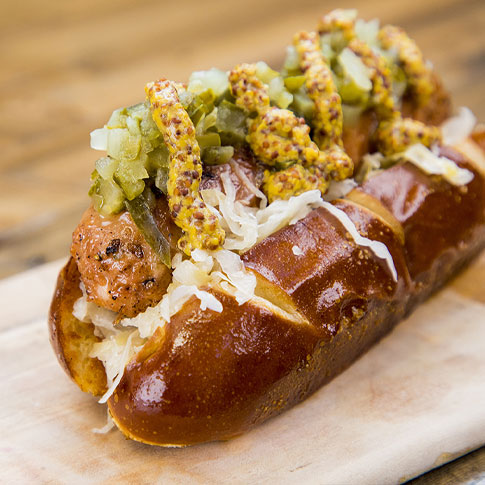
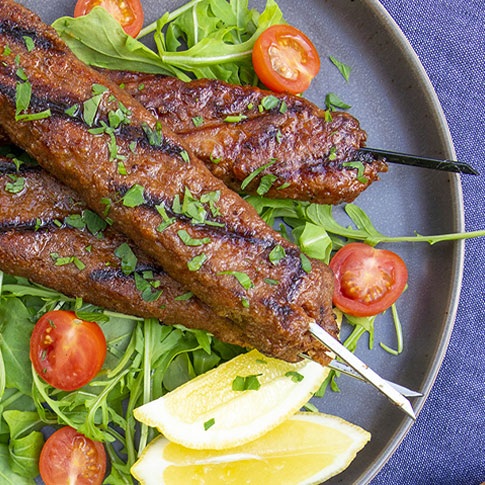
Large protein players like Tyson Foods and Maple Leaf are betting many millions that this trend has even longer legs. Maple Leaf announced plans in 2019 to build a US$300 million 230,000-sq.-ft. processing plant in Shelbyville, Indiana to more than double Maple Leaf’s investment in meat alternative offerings like its Lightlife Burger. Michael McCain has called plant-based protein “a billion dollar opportunity,” and recently told analysts that “it is on the cusp of becoming mainstream.”
In an interview with the Toronto Star, he said “in our plant-based business, we are confident that there’s a significant growth opportunity. Right now, most of our activity is around organic growth. We’re investing in new plant capacity, new innovation.”
Kids and plant-based restaurant menu alternatives
Even kids’ menus, traditionally boasting options like breaded chicken fingers and mac ‘n cheese, are going healthier.
According to a recent Technomic insights report: Over the past year, traditional kids menu offerings have declined, including kids grilled cheese (-16.5%), kids hamburger (-22.2%) and kids french fries (-36.4%), while lighter categories, such as kids salad, have seen an increase (+29.4%). “This demonstrates the swap of some heavier dishes for healthier choices that millennial parents most especially have been gravitating toward for their children.”
Fastest growing ingredients on kids’ menus
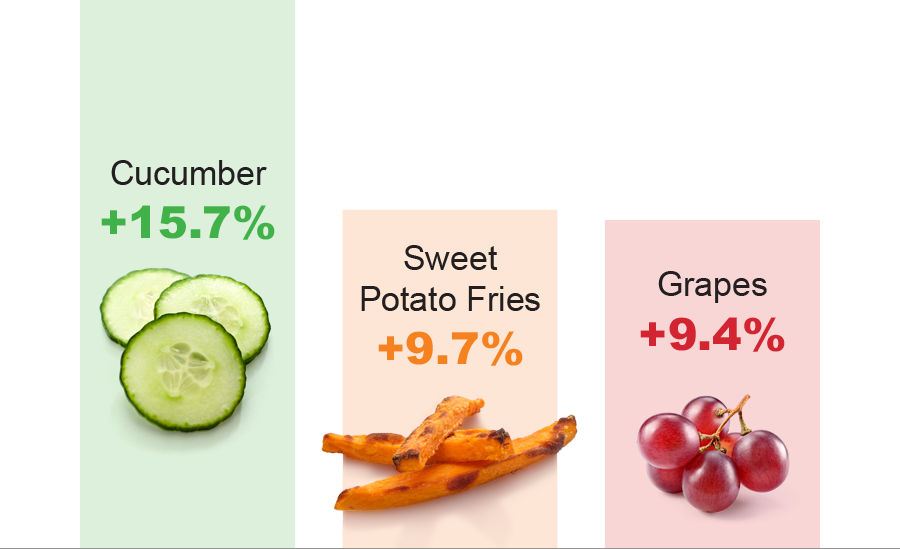
Savvy operators are taking note and adjusting their kids’ offerings to make them healthier and more mature.
Where do you play in the “healthy” sandbox?
A host of operators – including heavyweights like McDonald’s and Tim Hortons – emerging in all segments of foodservice have, in full or part, revamped their offerings to appeal to the broad constituency of health-seeking consumers (Exhibit 2). Sift your menu through this growing group to see how much ground you cover in the “healthy” sandbox.
One company, Montreal-based Copper Branch, billed as the largest vegan restaurant chain in the world, has ridden the plant-based wave to more than 30 locations including in the US.
Copper Branch has gone beyond vegetarian/vegan, and embraced the key elements of what “healthy” means to today’s consumer – fresh, natural (non-GMO, nothing added), free-from, unprocessed, sustainable, low carbs, nutraceutical, and more. Their menu items tick a lot of consumer boxes, from raw and organic naturally fermented Kombucha beverages, to sandwiches served on a choice of organic ancient grain kamut bun, gluten-free bun, collard green wrap or organic spelt wrap… and they let their customers know through bold menu design and social media.

Does your restaurant menu measure up?
It’s clear, if your menu is not speaking the language of current consumer health and wellness perceptions, you’re losing ground.
So, how do you make sure this key sales tool of your restaurant operation reflects your values if you want to communicate a shift to healthier options? The solutions are easier – and less expensive – than you might think:
- Speak the language. Copper Branch uses terms like “100% plant-based, gluten-free options, all-natural, many organic & non-GMO ingredients.” If you choose to make these claims, though, be prepared to back them up with what emerges from the kitchen.
- Use symbols in the form of a menu legend and place them next to menu items, much the way soome restaurants let diners know if dishes are mild, spicy or super-hot. WebstaurantStore blog recommends a menu legend like this one:
- Grill – A grill shows that chicken, sandwiches, patties, fish, and other foods can be grilled rather than sauteed, deep fried, or cooked in butter.
- Leaf – A leaf shows that pasta dishes, sandwiches, wraps, salads, and other foods can be made vegetarian.
- V – A “V” shows that vegetarian dishes can be made vegan.
- Grain – A grain shows that sandwiches, subs, and wraps can be made with whole grains instead of white flour.
- Zigzag – A zigzag symbol inside of an oven shows that crab cakes, seafood, meats, and poultry can be broiled rather than deep fried or sauteed in butter.
- Vegetable – A vegetable shows that certain meals can be made with organic ingredients.
- Sugar-Free – A sugar-free symbol shows that desserts or drinks can be made without real sugar.

- Offer sensible substitutions – and let your guests know. Use your menu to communicate that you can create healthier alternatives, such as grilled instead of breaded and fried, if diners reqest them.
- Try “healthy” promotions like a special “Meatless Monday” menu.
- Use social media to spread the word that you’re a “healthy” place to be.
What comes after X and Y? If you said, “Zed” or “Zee,” you would be partly correct. When it comes to demographics, the group order is Boomers, GenX, GenY, and then GenZ. That chronology of labels for the demographic age cohorts makes alphabetical sense, but it misses the bigger picture.
In an extensive profile of GenZ by Global News, GenZs describe themselves in a diverse number of ways. GenZ is a generation unlike any other, and they challenge the notion that they can be understood as a mere extension of GenY (Millennials).
In their own words…
- “We have a unique mindset”
- “Have our own way of thinking”
- “We know what we want”
- “We are creators, innovators, entrepreneurs, and Activists”
- “Technologically impacted”
- “We’re pragmatic, sensible, and seek value for money”
- “We want control”
- “Optimistic about what the future holds — and truly believe we can change it. But we have an emergency fund just in case”
Who’Z the boss?
GenZ may be young, but they’re already smart enough to know that their time is nigh. Consider that by 2026, in the US, GenZ is estimated to represent 23% of the population and become the single largest US consumer segment.
Depending on how you define the cohort, Generation Z makes up approximately 20 per cent of Canada’s population, based on 2017 data from Statistics Canada. In terms of purchasing power, GenZ in Canada directly spends about $50B annually. However, their influence over food decisions extends beyond this.
“We’re pragmatic, sensible, and seek value for money.”
Generation Z
NPD Canada’s analysis of consumer foodservice purchases in 2019, showed that GenZ was responsible for:
- Driving foodservice traffic growth
- Having the highest relative redemption rate of foodservice purchases on deals
- The highest percentage of digital foodservice transactions
Getting to know GenZ
Kevin Stewart, founder of AgVision Media, an agricultural insights and consulting company, has developed a number of insights about GenZ and their impacts on the food industry:
- Their food choices are based on health, animal welfare and environmental sustainability
- They are driving the growth of the popularity of plant-based patties in foodservice and retail
- They “spend more money on food than they do on clothes”
- “They’re looking more towards what they call ‘eating with a conscience'”
- More inclined to order food online than eat at a restaurant – “They want their food on the couch or on the go” — mobility is key

CauZes & effects
He suggests that the coming of age of GenZ will be a significant disruption for the food industry. With GenZ becoming your leading customer demographic, you may do well to question whether you’re in the restaurant business, or if you’re committed to leveraging technology and delivery solutions to meet the food and beverage needs of your clients. Clearly, this trend got turbo-charged as a result of COVID-19.
Foodservice and consumer insights provider Technomic recently published findings of their 2020 Canadian Generational Consumer Trend Report. The report benchmarks the current attitudes and tendencies of GenZ, and documents strategies that large chain operators are already implementing in response.
- Environmentally consciousness is a core value for GenZers
- Among GenZers, plastic reduction is evolving from preference to expectation
- GenZ over-indexes with operators that deliver convenience/mobility and value-for-money
Away from homeZ
It’s clear you’ll want to tap this generation.
My work/life balance does not permit me to prepare and/or eat my meals at home (by Age Group):
| 1. GenZ (Born 1996 and later) | 51% | ||
| 2. Millennials (Born 1977 to 1995) | 34% | ||
| 3. GenX (Born 1965 to 1976) | 20% | ||
| 4. Boomers (Born 1946 to 1964) | 12% | ||
Compared to last year, I generally eat outside my home more often than I used to (by Age Group):
| 1. GenZ (Born 1996 and later) | 51% | ||
| 2. Millennials (Born 1977 to 1995) | 30% | ||
| 3. GenX (Born 1965 to 1976) | 13% | ||
| 4. Boomers (Born 1946 to 1964) | 11% | ||
Source: Dalhousie University Study: Disintegration of food habits, 2018
The future is now
If it feels like you were just being told about Millennials and the importance of that segment to your foodservice business, you wouldn’t be wrong. One of the unanticipated consequences of the adversity brought by COVID-19 has been to confirm that change is the only constant in foodservice.
Foodservice has shown a remarkable ability to quickly adapt operations in a myriad of ways. However, in a post-COVID world, the GenZ tsunami will rise fast. By all accounts, GenZ will lean heavily into disruption, with a generational understanding of their power to demand the reinvention of foodservice to meet their unique needs.
Ghost kitchens (also called virtual kitchens, cloud kitchens, dark kitchens) are delivery-only spaces that have the back-end without the front. No seating areas, no counters, no servers, no real “ambience,” not even a physical takeout space.
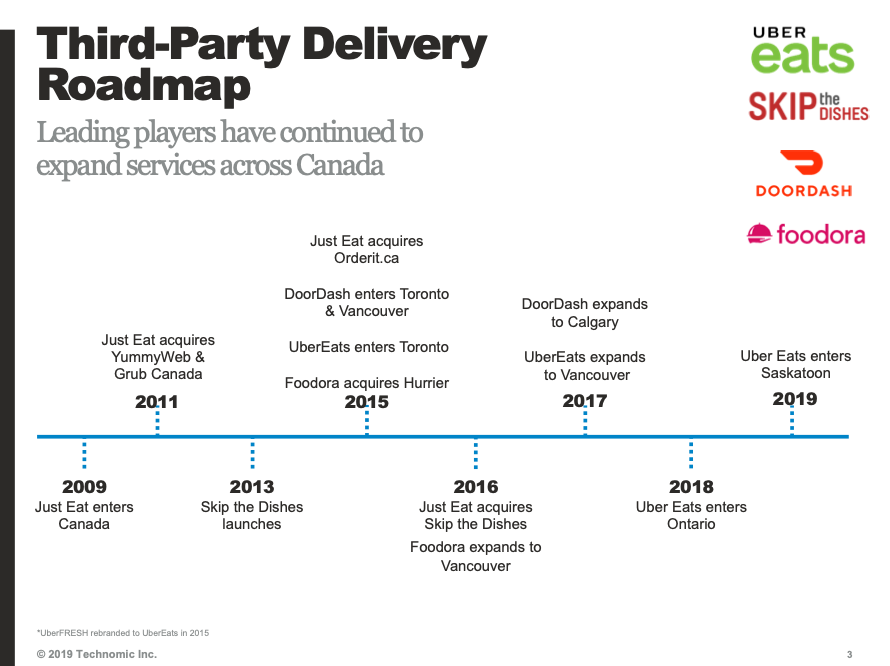
In a society where the sharing economy is growing more important and driving innovation, it’s an idea for our times. Everything is ordered online, prepared in the ghost kitchen, and delivered by third-party marketplaces like Uber Eats, Skip the Dishes, DoorDash and Foodora. Customers interact with the delivery company only. (See Exhibit 1.)
This technology-driven concept lowers overhead for staffing and site costs. As rents have gone up and margins shrink, more operators are enticed by the lure of doing away with front-of-house expenses. In short, it can make the numbers work where they might not otherwise. But there can be challenges if not done properly.
Virtual flexibility
Depending on the brands being served, ghost kitchens can turn out more than one type of cuisine and can feed various menus or sites. That’s especially appealing if you want to move efficiently from one market segment to another to take advantage of trends and growth. And it can be a great way to help counter the ebb of seasonal fluctuations.
“Chefs and restaurateurs have to maximize their capacity,” says Dana McCauley, associate director of new venture creation, University of Guelph. “You’ve got an asset that you need to run as many hours a day as possible to make the numbers work.”
Focusing on making, delivering and marketing food while reducing overhead is a saavy strategy, McCauley observes. “Today’s technology is making it possible. A solid online presence through websites and Instagram and various services are offsetting the importance of neighbourhood storefront locations to build visibility and diner loyalty.”
“Virtual kitchens are a blend of technology plays and restaurant plays.”
Sterling Douglass, co-founder and CEO of restaurant-tech company Chowly
Technology feeds operations
To succeed, ghost kitchens require a tech setup that fits with their operational flow. “Often, virtual kitchens are being run by technology companies and missing key operational steps,” says Sterling Douglass, co-founder and CEO of restaurant-tech company Chowly.
“Virtual kitchens are a blend of technology plays and restaurant plays,” Douglass says. “The teams building these technologies need a significant amount of experience in both areas. Lacking in technology experience will hurt volume and affect operations. Lacking in restaurant experience will decrease food quality, margins, and guest experience.”
He recommends operators answer the following key questions:
- How are concepts separated?
- How are they communicated to cooks?
- How are they bagged and prepped differently?
- How is the driver handoff different?
Know what you don’t
Ghost kitchens present a learning curve for bricks-and-mortar restaurant operators and those new to the industry. That includes everything from understanding the different labour costs to juggling multiple third-party services which are delivering the food.
Thinking about entering the ghost kitchen sphere? Chowly CEO Sterling Douglass offers four pointers:
- Concepts should be data driven
- Menus should be small and VERY simple
- POS integration is a must-have
- A very deep margin analysis should be conducted before launching
Delivery services typically take a 30 per cent cut from every order, though larger operations can negotiate more favourable rates.
On the virtual edge
Ghost kitchens can be found in shared commissary spaces and back ends of storefronts, and some other places, too:
- Popup cooking stations within the main kitchen of a restaurant that fill delivery-only orders from one, two or even a half dozen brands.
- Pod kitchens in shipping containers that can be placed wherever zoning permits. Some double as drive-throughs.
It will be important that operators can efficiently serve both dine-in consumers as well as those ordering takeout or delivery. Also, expect to see more restaurants forego dine-in altogether and experiment with delivery-only stores, especially in partnership with third-party delivery services.
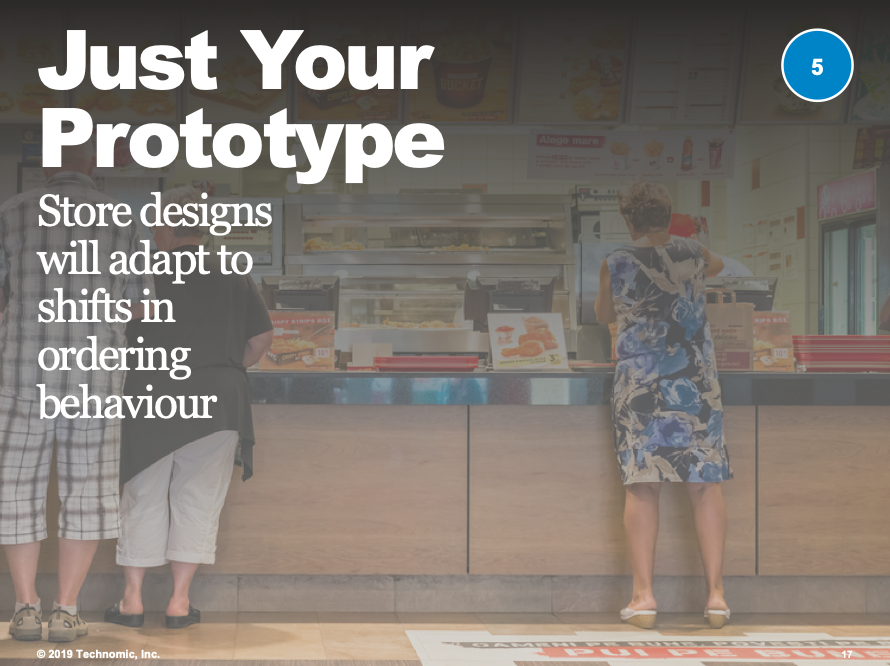
Exhibit 1. (Referenced in article)
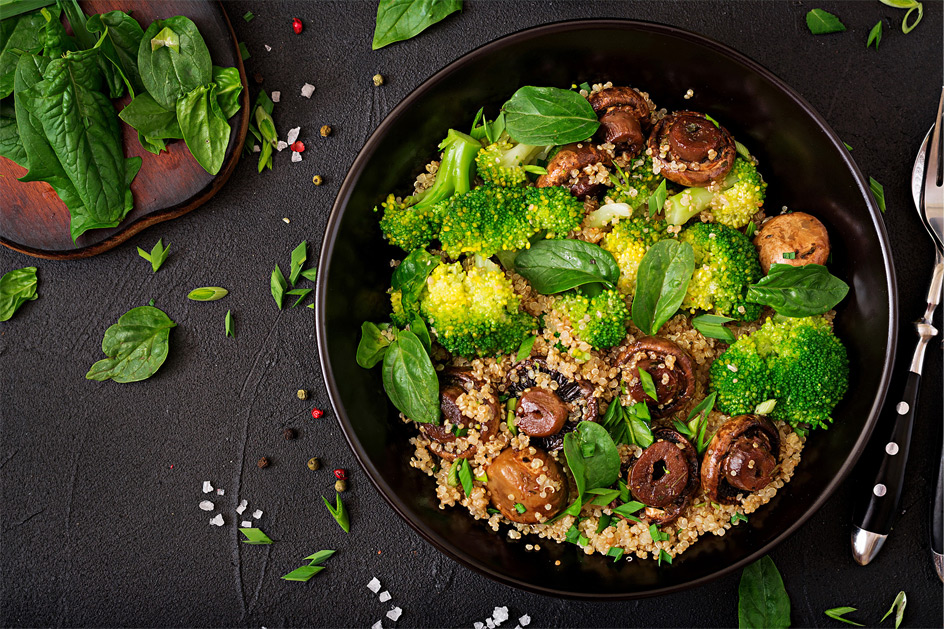
What do Hank Aaron, Bill Clinton, Mike Tyson, Thomas Edison, and Nikola Tesla have in common? The tie that binds them is their vegetarian/vegan diet.
Our ancestors started eating meat about 2-½ million years ago — probably as scavengers, having stumbled upon a half-eaten carcass. Since then, we’ve been omnivorous — eating a mixed diet of meat and plant-based foods.
It wouldn’t be an exaggeration to suggest that consumption of meat was the key to our success as a species. Mark Thomas, professor of evolutionary genetics at University College London, estimates that the human brain grew three times in size after introducing meat into our diet. Our larger brains enabled higher cognitive abilities, which facilitated our ability to compete and propogate within hunter-gatherer social groups.
As CBC producer Kevin Ball opined in his podcast, The Matter of Meat, for humans “there was a correlation between IQ & BBQ.”
Plant by numbers
In the Autumn of 2018, Dalhousie University published an extensive report on the eating habits of Canadians. At that time, roughly 7 per cent of Canadians considered themselves vegetarians and roughly 2 per cent identified as vegans. More than half of these vegetarians/vegans were under the age of 35.
In addition, the study found:
- Over six million Canadians reported dietary preferences which reduce or eliminate meat consumption
- Fully one-third of Canadians were thinking of reducing their meat consumption over the next six months
- The majority of Canadians had considered making an effort to reduce meat consumption
The report’s author, Dalhousie University’s Dr. Sylvain Charlebois, has followed on with regular fieldwork over the last two years, to plot this trend. Based on the research conducted in January 2020, Dr. Charlebois estimates vegans now represent 2.5% of the population, and that over 16M Canadians could potentially be following a diet that restricts or eliminates meat consumption by 2025.
“…vegans now represent 2.5% of the population, and… over 16M Canadians could potentially be following a diet that restricts or eliminates meat consumption by 2025.”
Dr. Sylvain Charlebois, Dalhousie University’s
Online community
Increasingly, we live our lives online. Social media provides a powerful window into the collective zeitgeist.
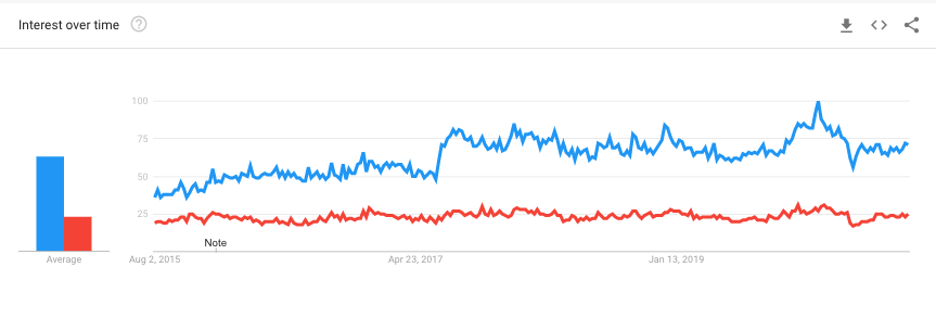
According to Google Trends, over the last five years “Vegan” has been trending up as a web search topic, while “Vegetarian” has been relatively stable and reflecting less interest among consumers.
The Google Trends graphic displays interest relative to the highest point on the chart for Canada since 2015. Vegetarian has had a value of 25 relative to the peak value of Vegan, indicating about one-quarter the amount of search incidence. The data underscores the growth of Vegan, with particular strength in BC and Ontario.
Google Trends — Canadian Web Searches for “Vegan” and “Vegetarian”
Pinterest Canada Account Director Ashley Shantz reports that more people than ever before are turning to Pinterest for well being and self-care, and that includes trying new lifestyles such as veganism. Pinterest searches for veganism in Canada were up +50% in June 2020 compared to the prior year.
Veganuary
“Veganuary” is a registered British charity encouraging consumers, at the beginning of each year in the month of January, to try a 30-day vegan plant-based diet. In 2020, over 400,000 consumers from nearly 200 countries signed up for the challenge, up from 250,000 in 2019. The highest participating countries were the U.K., U.S., and Germany. In 2018, 5,500 Canadians signed up for the challenge. This number rose to over 7,000 in 2019.
In the 2020 follow-up survey with participants, it was reported that the biggest challenge to sticking to their vegan diets during Veganuary was “eating out.” Given that nearly 75% of participants stated their intention to “continue with a vegan diet after (their) Veganuary pledge,” the opportunity for foodservice operators to expand vegan and plant-based offerings is clear.
Staking a claim
According to Technomic Canada’s Ignite Menu database, there has been a +10% increase in operators menuing plant-based items in Q2-2020 versus Q2-2019. Sophie Mir, associate editor at Technomic, reports that plant-based menu mentions increased by over 25% year-over-year.
The upscale BC-based chain, Earls, has embraced the vegan opportunity. Earls introduced a permanent, dedicated vegan menu in all its restaurants in 2018, including Spicy Tofu Tacos, a Crispy Tofu Zen Bowl, Avocado Toast, a Vegan Field Greens Salad, Vegan Hunan Kung Pao, and a Vegan Quinoa and Avocado Power Bowl.
Earls has also mirrored popular menu items, like its Dragon Roll, in a vegan-friendly version: The Green Dragon Roll – with yam, mango, and cucumber, topped with nori.
Where there’s fire
Increasingly, it appears, the pro-plant arguments are finding broader ground. As an operator, there is another very practical justification for meeting the emerging demand for vegan fare. Given the higher margins to be made on meat-free appetizers, sides, and centre-of-plate items, expanding your plant-based menu may add juice to both your top line sales and bottom line results.
While it’s likely that our long-ago ancestors initially started eating meat by accident, it is now, ironically, an evolved understanding and more informed sensibilities guiding us back to our herbivorous roots.