
The perennial challenge of staffing in the labour-intensive foodservice industry has only been exacerbated by the COVID-19 pandemic. Widespread staffing shortages as restaurants reopen, coupled with serious financial losses due to long periods of closures and restrictions, mean savvy foodservice operators are looking for effective retention and hiring strategies that won’t break the bank.
Understanding the Issue
Objective analysis of a problem’s root causes is the first step to finding solutions. While some reasons for staff shortages are beyond your control, be open to the possibility that your own practices may be a factor. For instance, ongoing government support programs may be one reason foodservice staff aren’t flocking back. But telling staff that their colleagues who haven’t returned would rather collect a benefit cheque than work could backfire: finger pointing may be part of your retention problem.
There are many nuanced reasons that many have chosen to leave the foodservice industry — or perhaps your establishment — including:
- Pandemic downtime that led to reflection about career and life priorities, with some workers choosing to retrain online or start businesses from home.
- Safety concerns about serving the public and/or taking public transportation to work in a pandemic that’s now in its worsening fourth wave.
- Childcare shortages or the need to stay home with children who are schooling remotely.
- Your wages, benefits, advancement opportunities and workplace culture may be less attractive than the competition’s.
But What About Cost?
Some retention and recruitment strategies come with a price tag. Assess that against the costs of losing valuable employees you’ve already invested in and operating short-staffed. You may find that you can’t afford not to implement some of those strategies.
The cost of turnover can run to several thousands of dollars per departure, based on hiring process and training costs, lost productivity, and other factors. In pandemic times, turnover cost cuts even more sharply. Without enough staff to run your restaurant, tables may sit empty; some restaurateurs have even had to cut back on operating hours or close altogether.
Which Comes First: Hiring or Retention?
It may seem counterintuitive, but think about retention before hiring strategies. Why? Because the reasons your staff want to stay are also why people want to join your workplace. A poor reputation in the job market due to high turnover has a chilling effect on hiring; being known as a great employer attracts applicants.
The pandemic created a seller’s market in real estate, but when it comes to foodservice jobs, it’s a buyer’s market. Job seekers have their pick and so do your current staff — retention is more important than ever.

Retention and Hiring Strategies
Pay Increases
In addition to providing competitive starting wages, consider implementing pay ranges with increases at set intervals. On a four-step scale, the starting rate could be followed by three incremental increases every six months to a year to encourage employees to stay.
Tip Distribution
Is your tipping policy — or lack of one — a source of staff dissatisfaction? You may not be ready to build gratuities into menu costs, but tip sharing could address compensation inequities between front- and back-of-house staff.
Benefits
Jeff Dover, principal at the foodservice consultancy fsSTRATEGY Inc., says health and/or dental benefits can be cost effective for small operators. “Benefits are important and, given that many restaurants don’t offer them, can make a restaurant an attractive place to work. Help with childcare is very beneficial as well.” Dover says paid sick days are timely given the pandemic. While some employees may treat them as vacation days, there is a pressing need for employees not to come to work sick.
Referral Bonuses
“Referral bonuses are becoming more prevalent,” Dover adds. Not only are they attractive to current staff, but he says they work well too. “New hires are more likely to stay if they know someone, especially if that person has stuck their neck out to recommend them.”

Ongoing Training
Training isn’t just for new hires. Offer ongoing training and development for staff who’d like to learn new skills, rotate through different jobs, or advance into leadership. Ask what they’d like to learn more about to keep it timely and meet their needs.
Establish Career Paths
Communicate the career paths in your establishment. Dover says, “Teaching people what it takes to get promoted and helping them do so is great for retention.”
Prioritize Staff Health and Safety
Health and safety is top of mind these days. Make it a topic at all staff meetings, reviewing protocols to bolster employees’ confidence that they and their co-workers are doing the right things the right way for safety. Be proactive about discussing mental health, and consult industry and community resources to address any issues.
General Culture
Is your culture rigid or flexible? Do schedules take staff needs into account? Are minor repairs and interpersonal issues addressed quickly to minimize day-to-day work frustrations? Do you communicate openly with your team? Do staff feel safe bringing forward concerns? Do you offer open recognition but private criticism (constructive, of course)? Never underestimate the retention and hiring power of your staff feeling supported and heard.

Hiring Strategies that Reflect the Times
Asking applicants to drop off paper résumés can be off-putting for a digital-savvy labour pool. Trendy speed-dating-style hiring fairs are problematic during the pandemic. Think about recruiting online, offering applicants the choice of submitting traditional or video résumés, and conducting Zoom interviews. If you want to meet in person before making the final decision, use those tools to shortlist candidates.
Use Your Website for Hiring
Your website is an important tool in your hiring process. Amina Gilani, co-founder and COO of Sociavore, the independent restaurant website platform and Brand Points PLUS partner, says: “Use the Sociavore job creator tool to create customized job listings and generate mobile-friendly application pages right on your restaurant website. You will receive virus-screened application packages directly in your email — no third-party recruiting website required. Accept and manage application submissions all from one dashboard.”
Go Social for Recruiting
You work hard to build your social media accounts, so why not harness them for recruitment? Your followers just may want to work for you or refer candidates to you, so let them know you’re hiring and link to your website job listings.
Signing and Retention Bonuses
Signing and retention bonuses can sweeten the deal for potential new hires.
“The best thing you can do is make your restaurant a great place to work.”
Jeff Dover, principal at fsSTRATEGY Inc.
When it comes to hiring and retention, Dover says, “The best thing you can do is make your restaurant a great place to work. […] Treat employees like a valuable commodity (which they are), and do what you can to keep people happy. […] Make your restaurant a place where Gen Z wants to work. They want to work for a company whose values align with theirs, so be environmentally friendly, address social issues, etc. Get the staff involved in implementing programs. If you nail this, you will have a way easier time than other restaurants finding and retaining staff.”
Loyal guests are repeat guests, so incentivizing them with valuable offerings that reward their commitment to your brand is definitely a win-win.
Consumers have become accustomed to being rewarded for their business since the 1700s, and Canadians on average are members of eight loyalty programs per household. For restaurants, introducing a loyalty program offers a magnitude of benefits.
“To amp up basic loyalty programs, operators can further engage customers by adding a gamified aspect or even incorporating surprise awards into their programs,” recommends Anne Mills, senior manager of consumer insights at Technomic. “With a rewards program, brands can also harness big data to better understand consumer behaviour and offer more tailored experiences. This, in turn, will drive repeat traffic and sales.”
- 36% of consumers say a rewards program is an expectation at fast food, and 34% say it’s not an expectation but could encourage them to visit more often
- 41% say a rewards program is an expectation at fast casuals, and 32% say it’s not an expectation but could encourage them to visit more often
- 64% of consumers say they visit fast-food restaurants because the price is reasonable, while 53% say the same of fast-casual restaurants
Source: Technomic’s 2018 Canadian Future of LSR Consumer Trend Report
“With a rewards program, brands can also harness big data to better understand consumer behaviour and offer more tailored experiences.”
Anne Mills, senior manager of consumer insights at Technomic
Building your brand
Developing the “right” loyalty program for your restaurant concept can result in many positive benefits from an improved guest experience, elevated brand position, and financial paybacks:
Guest experience
A complimentary glass of champagne, a discounted meal, complimentary birthday treats, and perks that surprise guests at point-of-sale checkout or payment all evoke positive guest brand association that leaves them feeling well thought of and valued, and returning for more. Often the calculation of what was spent to achieve the reward becomes overlooked, which results in guest retention.
Brand awareness
Positive restaurant brand experiences lead to positive word of mouth, which in turn lead to more bums in seats. In this digital age, positive reviews, social sharing, and increased website traffic are critical to a restaurant’s survival, so these opportunities are HUGE pros when considering a loyalty program.
Financial payback
The fact: brand loyalty equates to increased sales. On average guests enrolled in an effective loyalty program will spend 46% more with your business, because they are visiting you more by an average of 35%. These results are achieved by offering an easy-to-use program where the guest values the reward benefits

Getting started
Asking your guest to join another loyalty is a big ASK from a consumer perspective. Keeping their fears, daily challenges, spending habits, and decision-making behaviour top of mind is critical in developing a loyalty reward program designed for “your guest.”
So, what’s going to entice YOUR restaurant guests to feel comfortable in providing their personal information and gaining their interest in managing yet another app on their phone, or carrying another plastic card in their wallet?
Here’s where to begin understanding the loyalty landscape from an operational and guest perspective:
Identify
The loyalty applications or systems that will pair best with your existing POS system to avoid incremental equipment, integration and training fees.
Find the best digital reward and loyalty programs for you
These have become more popular in recent years as mobile phone capabilities have transitioned into digital wallets. A simpler acquisition process, less plastic in guests’ physical wallets, automatic reward tracking and user updates, reduced marketing costs, and daily brand exposure are just a few of the benefits of going solely digital.

Do a comparative analysis
Review the ease with which guests can join the program directly at POS or through digital channels, the data depth of the reporting, automation and trigger marketing support, the ease of reward redemption, flexibility in developing new rewards and incentives, and the fee structure of the program.
- TIP: 49% of Millennials eat out at least once a week and they are using takeout and delivery apps on average more than other guest segments. Millennials prefer point accumulation reward programs, based upon dollars spent, as seen with the success of the Starbucks reward program.
(https://www.softwareadvice.com/resources/5-tips-for-restaurant-loyalty-programs/)
Be the guest!
Join restaurant loyalty programs that already exist to understand the end-user experience, to gauge the value of various reward incentives from complimentary menu offerings to point accumulation.
Consider member acquisition
This is the initial goal of every loyalty program, but where does this step make sense within your current guest experience? For quick-service restaurants with an ordering counter, the “join us” ask is much more authentic when your guests place their order. However, for fast-casual and sit-down restaurants, table and receipt messaging may fit in more smoothly as part of the guest experience, with subtle server messaging relating to perks that can be achieved by joining the loyalty program.
Create a dedicated role
Assign someone within your team to act as the reward and loyalty expert. This step is critical to the program’s success, as it won’t manage itself. Organization of a successful loyalty program begins up front.
These various steps will provide your team with valuable insights to help identify which type of loyalty program will achieve guest retention, increase cheque size, but also be manageable for staff from front-of-house operations to head office.
As a teenager, Jordan Boesch was a “sandwich artist” at a popular quick-service restaurant, an experience in a family business that eventually spun itself out as 7shifts, a North America-wide company he founded in 2014. At its most basic, 7shifts is a web and mobile-based labour management and communications platform for restaurateurs which provides tools for controlling labour costs and scheduling staff, among other functions.
Save time and money
7shifts — and other programs like it, such as HotSchedules — offer a self-serve, simplified experience for restaurateurs and managers to get on top of some of the most nagging problems all operators face — labour management, staffing and scheduling, among the most pressing.
These programs can save operators considerable time and money, according to Boesch, and help them stay on top of their labour targets. “Our platform gives managers a chance to see if they are going to go over or be under those labour and budget targets in real time,” Boesch says, adding that the 7shifts system assists with forecasting sales and predicting costs.
It also helps employees communicate with managers and provide shift feedback, too. “If I had to bundle it all together, I would say that we’re not only a platform for managers but also for employees to help them be more engaged with their workplace.”
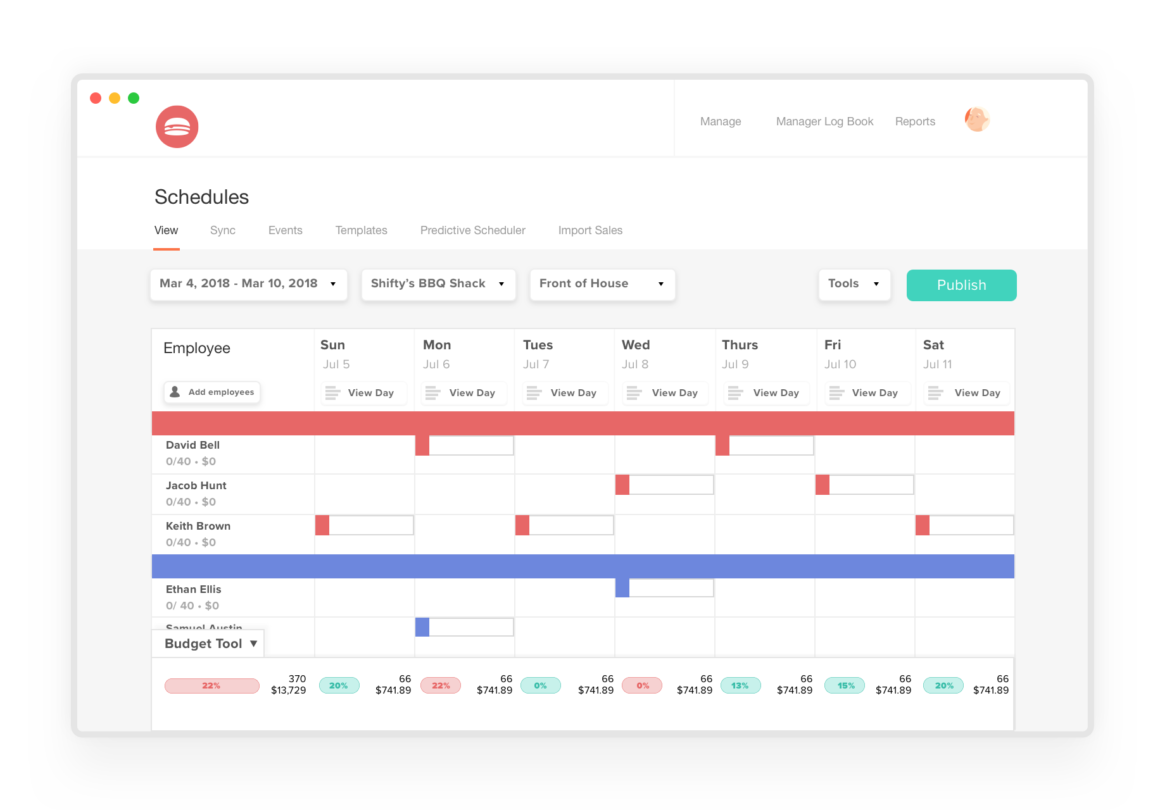
Eliminate scheduling chaos
Boesch saw up close the chaos that is the typical hourly-worker scheduling process. “There were always a lot of sticky notes and papers everywhere, and hand-written notes about shift-trading and when people could or could not work. It got me thinking about improving the situation.”
Labour management is a central focus of platforms like 7shifts, and Boesch stresses it’s not a matter of just scheduling the right number of people at the right time. “We draw on historical sales data from a point of sale (POS), and we look at weather patterns and seasonality. We look at all these variables that could influence how much labour you would need to service the demands of your restaurant at a particular time. We build that out for the restaurant, and they can make adjustments as needed depending on the insights.”
Behind the scenes, machine learning — the algorithms and models used by computer systems which continuously improve their performance over time — takes place, as it does in most of today’s technologies. The company draws on their own in-house machine learning team and data science team, which optimizes for the various efficiencies as they relate to weather and seasonality, but also the skill level of staff members. The result is less time wasted on scheduling and more time devoted to working with staff and driving sales — and profits.
“There were always a lot of sticky notes and papers everywhere, and hand-written notes about shift-trading…”
Jordan Boesch, 7shifts
Reduce turnover rates
Platforms like 7shfits can also help managers better control the “employee lifecycle” in the restaurant — hiring, training, scheduling and retaining. Employee turnover in restaurants is the highest of any private industry in North America, according to Boesch, and it has continued ramifications for restaurants. “Restaurants are now starting to look more closely at turnover rate and its costs from a macro level. It’s quite expensive, ranging from $3,000 to $5,000 when you lose an employee and upwards of $20,000 when you lose a manager,” he notes. “If $5,000 worth of meat disappeared from your fridge, you’d probably be checking cameras, yet operators have become almost complacent and see high turnover as normal.”
“The ROI for 7shifts is substantial in just being able to help operators schedule better,” Boesch says, adding that some of that is saved by preventing early clock-ins that quickly add up. The platform can also reduce the time spent scheduling by 80 per cent. “It takes some of the work out of the manager’s hands and gives employees the responsibility of determining the shifts they can work. The manager is involved only when approval is needed.”
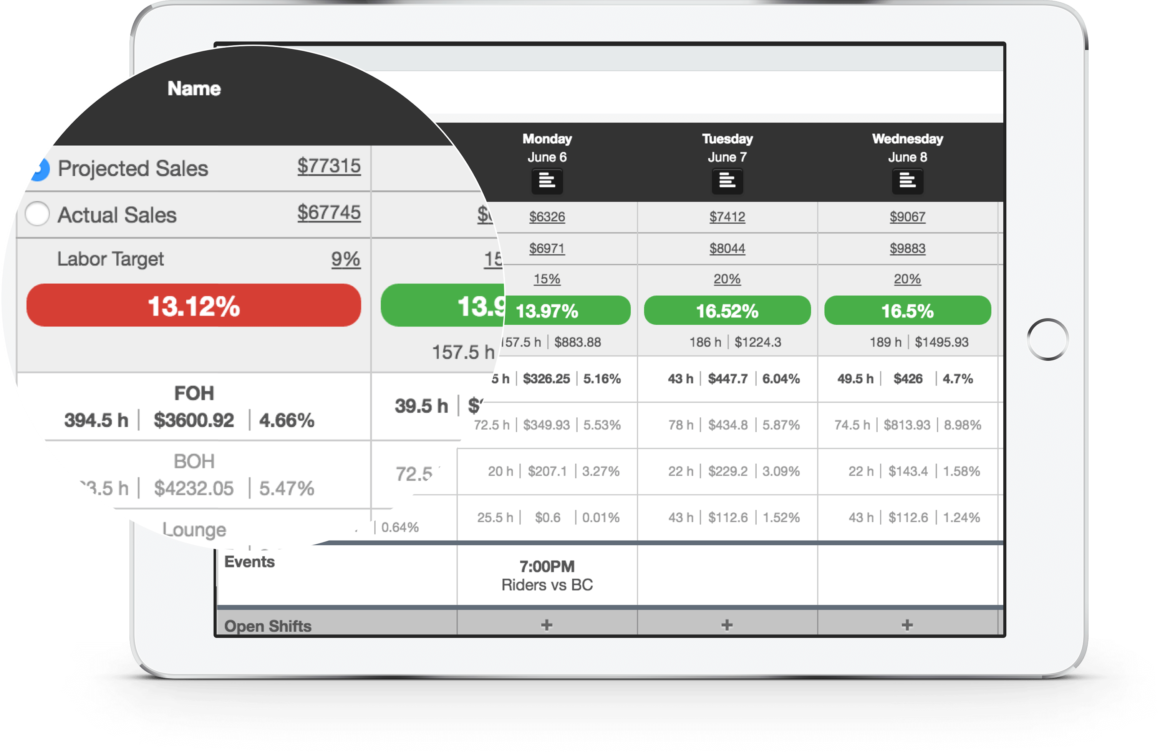

Embrace technology
“It’s becoming more common that restaurants are using technology,” says Boesch. “It has largely been an industry that’s slow to adopt technology, but that’s also meant that there is a lot of technology companies with a lot to offer the industry.” Boesch sees that trend continuing as a younger demographic of restaurateurs and food-business operators enter the industry. “Cloud-based technology is where they are going to look first. It’s an exciting trend, and I think it is going to grow.”
As we head into 2020, Boesch says it’s a good time to think strategically about the next 12 months. “Think about how you engage staff and manage your labour. Doing things the same way could mean leaving dollars on the table.”
Source: The Dish