
Recruiting and retaining staff has long been one of the biggest challenges for foodservice operators, and COVID-19 has upped the intensity. Public health restrictions, lockdowns, loss of employee positions, uncertainty about job security and apprehension around health and safety practices are all factors that have turned up the HR heat.
In its Q3 2021 Restaurant Outlook Survey, Restaurants Canada reported 93% of respondents are contending with a shortage of workers, and 50% say they are struggling with a significant staffing shortage. Three-quarters of respondents said the labour shortage has put more pressure on owners and management level staff to work more hours. Seven out of 10 respondents said they are reducing their hours of operation. Where they can afford to, 63% said they are raising wages to entice staff to work for them.
The crunch is especially acute in back-of-house, notes Jeff Dover, principal at fsSTRATEGY Inc. “Enrollment is down in culinary programs across Canada, so help isn’t on the horizon, and now is especially the time for operators to be innovative.”

“Minimum wage increases are forcing the industry to restructure operating budgets and operations as a whole. Operators are competing with other industries who are offering higher pay rates.”
Laura Traynor, district manager for ADP Canada
Compensation is becoming a challenge for all industries, and especially in foodservice. “Minimum wage increases are forcing the industry to restructure operating budgets and operations as a whole,” says Laura Traynor, district manager for ADP Canada. “Operators are competing with other industries who are offering higher rates of pay even for those with little to no work experience or post-secondary education.”
By stepping up their recruiting, hiring and retention game, restaurant operators can successfully compete for labour and get their restaurants running at peak efficiency. By taking a page from the gig economy playbook, restaurants can lure back workers who might be otherwise enticed by platforms like UberEats and DoorDash by offering flexibility and the added sweeteners of benefits.
“It’s important that operators continue learning and staying ahead of trends,” ADP’s Traynor says. “Employees will feel safer and more likely to stay if they know their employer is on top of the latest legislation and health and safety regulations.”
The wage challenges for restaurant owners
Wages are on the way up right across the country, and some restaurant operators are paying much more than minimum wage. One of them is Alex Moore, owner of Bampot House of tea and Board Games, in Toronto. He pays his employees $22.50 an hour before tips. “I’ve been working in this business for a long time, and I honestly feel like a liveable wage is the bare minimum I can do. I don’t want people who work for me to struggle. So I’ve made the numbers work.”
Moore says paying a liveable wage helps to improve morale and builds loyalty. He is also looking at instituting a salary grid and profit sharing with his three employees. “I’m running it tight, but I want to make it happen because it’s the right thing to do.”
The increase of minimum wage has created a domino effect across this and many other industries, ADP’s Traynor says. “With new employees being hired at a higher rate than before, this puts pressure on employers to increase the rate of more tenured employees in order to keep compensation structure fair.”

“Signing bonuses and retention bonuses and being flexible with scheduling can help with recruitment and retention.”
Jeff Dover, principal at fsSTRATEGY Inc.
In many markets, offering minimum wage is not enough, and many employers are offering well over that to retain talent. “Applicants know they can get wages at more than minimum wage and are not settling,” fsSTRATEGY’s Dover says. “Signing bonuses and retention bonuses and being flexible with scheduling can help with recruitment and retention.”
Top tips to recruit and retain hospitality workers:
- Treat staff like the valuable assets they are
- Pay more and increase wages as quickly as you can
- Be flexible on scheduling and time off
- Offer signing and retention bonuses
- Customize benefits to meet employee needs
- Provide rewards, recognition and opportunities for career advancement
- Offer mental health support
“All of this comes at a cost to operators but there is, at least in the short term, a willingness amongst consumers to accept price increases,” Dover adds. “Adjust operating hours if you must and close when not profitable. With a five-day week, one core team can work full time with two days off.”
Use technology to empower your restaurant staff
Third-party solutions like ADP’s HR Assist can help operators stay on top of and properly apply rapidly changing government policies. “Implementing technology solutions to streamline scheduling and management of paid time-off requests from employees makes navigating the unknowns more efficient,” says Shubh Mann, director of sales – channels at ADP Canada. “Giving employees the power to view their schedules in advance, request days off and swap shifts empowers them to have more control over their work-life balance and in the long run can help lower employee turnover.”
Shubh Manns top tips for restaurant operators:
- Take advantage of data-analyzing technology to effectively make decisions when scheduling staff so you do not over- or under-staff
- Outsource day-to-day admin tasks (e.g. payroll, HR, time and labour management) to free up time to focus on people and operations
- Streamline the onboarding process
- Use HR portals to efficiently create job descriptions, onboarding guides etc.
- Post jobs on sites such as Zip Recruiter to avoid looking through hundreds of résumés and posting manually on several locations to drive enough traffic
- Revaluate your current HR setup to ensure HR support is in place for your employees
Employ smart scheduling in your restaurant
“By reviewing your historical sales data, you can anticipate staffing as much as possible and plan accordingly,” Mann says. “If possible, get to know a bit about your employees’ lives outside of work and schedule them accordingly. For instance, a parent of three might be a better fit to handle the lunch rush and single students will likely prefer the evening shift.”
- Make scheduling controlled, organized, and easily accessible for staff
- Be prepared to quickly onboard with rapid training programs
- Activate a scheduling app that allows staff to show their availability, request days off, easily view their schedules, and swap shifts
- Post schedules in advance to help smooth out any bumps with seasonal ups and downs
- Establish clearly understood guidelines for time-off requests
- Where possible, ensure staff take paid time off in advance of holiday seasons and busy times to ensure they are well rested and ready to handle the workload
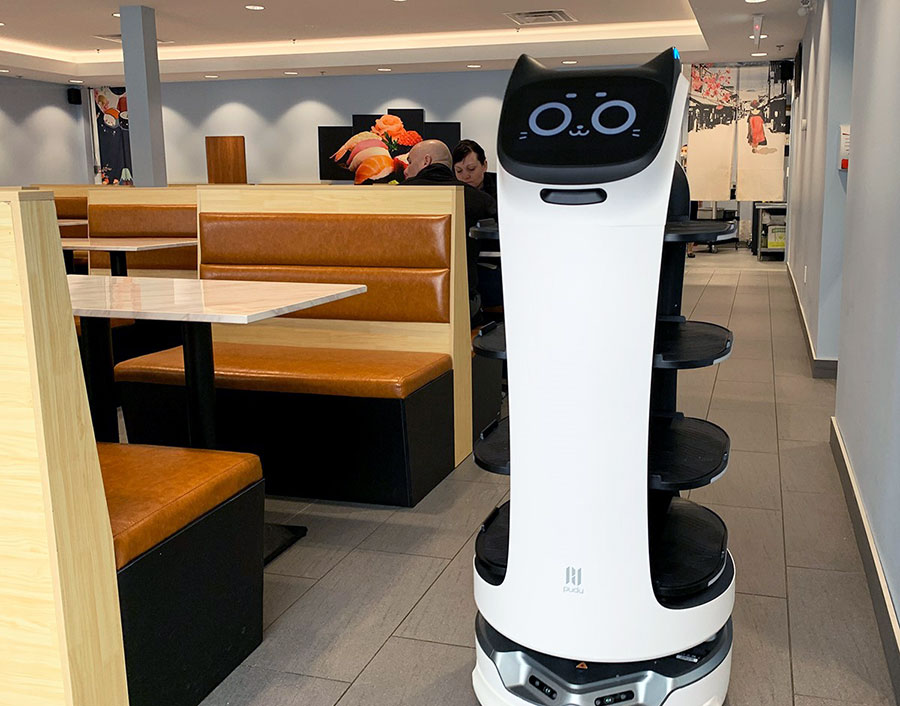
Try robot retail to alleviate staffing shortages
Robotics and artificial intelligence (AI) have been making strides across every industry and the restaurant and hospitality sectors are no exception, reports Restaurants Canada. Robot retail is making its way into dining experiences – from sanitation and disinfection to serving and hosting. Brands like GreenCo Robots are leading the way with robotics applications in restaurants.
Headed by engineer Liang Yu, the Edmonton-based company has about 40 robots in use across Canada. “The idea is not to replace people completely,” he says. “The robot is an assistant for the labour-intensive and repetitive work like busing and delivering water.”
Kitty Tong, owner of Golden Ocean Seafood Restaurant in Vancouver, says they’ve been using their robot to help serve food and alleviate some staffing issues during the pandemic. The robot has also attracted interest from regular customers and others who have heard about it by word of mouth and through media reports. “Both adults and children like to take photos with ‘Bella.’ They think the robot has a very special and fresh feeling.”
GreenCo robots range in cost from $16,000 to $30,000, depending on the model, and the company offers a three-year lease-to-own program and a one-week trial.
The perennial challenge of staffing in the labour-intensive foodservice industry has only been exacerbated by the COVID-19 pandemic. Widespread staffing shortages as restaurants reopen, coupled with serious financial losses due to long periods of closures and restrictions, mean savvy foodservice operators are looking for effective retention and hiring strategies that won’t break the bank.
Understanding the Issue
Objective analysis of a problem’s root causes is the first step to finding solutions. While some reasons for staff shortages are beyond your control, be open to the possibility that your own practices may be a factor. For instance, ongoing government support programs may be one reason foodservice staff aren’t flocking back. But telling staff that their colleagues who haven’t returned would rather collect a benefit cheque than work could backfire: finger pointing may be part of your retention problem.
There are many nuanced reasons that many have chosen to leave the foodservice industry — or perhaps your establishment — including:
- Pandemic downtime that led to reflection about career and life priorities, with some workers choosing to retrain online or start businesses from home.
- Safety concerns about serving the public and/or taking public transportation to work in a pandemic that’s now in its worsening fourth wave.
- Childcare shortages or the need to stay home with children who are schooling remotely.
- Your wages, benefits, advancement opportunities and workplace culture may be less attractive than the competition’s.
But What About Cost?
Some retention and recruitment strategies come with a price tag. Assess that against the costs of losing valuable employees you’ve already invested in and operating short-staffed. You may find that you can’t afford not to implement some of those strategies.
The cost of turnover can run to several thousands of dollars per departure, based on hiring process and training costs, lost productivity, and other factors. In pandemic times, turnover cost cuts even more sharply. Without enough staff to run your restaurant, tables may sit empty; some restaurateurs have even had to cut back on operating hours or close altogether.
Which Comes First: Hiring or Retention?
It may seem counterintuitive, but think about retention before hiring strategies. Why? Because the reasons your staff want to stay are also why people want to join your workplace. A poor reputation in the job market due to high turnover has a chilling effect on hiring; being known as a great employer attracts applicants.
The pandemic created a seller’s market in real estate, but when it comes to foodservice jobs, it’s a buyer’s market. Job seekers have their pick and so do your current staff — retention is more important than ever.

Retention and Hiring Strategies
Pay Increases
In addition to providing competitive starting wages, consider implementing pay ranges with increases at set intervals. On a four-step scale, the starting rate could be followed by three incremental increases every six months to a year to encourage employees to stay.
Tip Distribution
Is your tipping policy — or lack of one — a source of staff dissatisfaction? You may not be ready to build gratuities into menu costs, but tip sharing could address compensation inequities between front- and back-of-house staff.
Benefits
Jeff Dover, principal at the foodservice consultancy fsSTRATEGY Inc., says health and/or dental benefits can be cost effective for small operators. “Benefits are important and, given that many restaurants don’t offer them, can make a restaurant an attractive place to work. Help with childcare is very beneficial as well.” Dover says paid sick days are timely given the pandemic. While some employees may treat them as vacation days, there is a pressing need for employees not to come to work sick.
Referral Bonuses
“Referral bonuses are becoming more prevalent,” Dover adds. Not only are they attractive to current staff, but he says they work well too. “New hires are more likely to stay if they know someone, especially if that person has stuck their neck out to recommend them.”
Ongoing Training
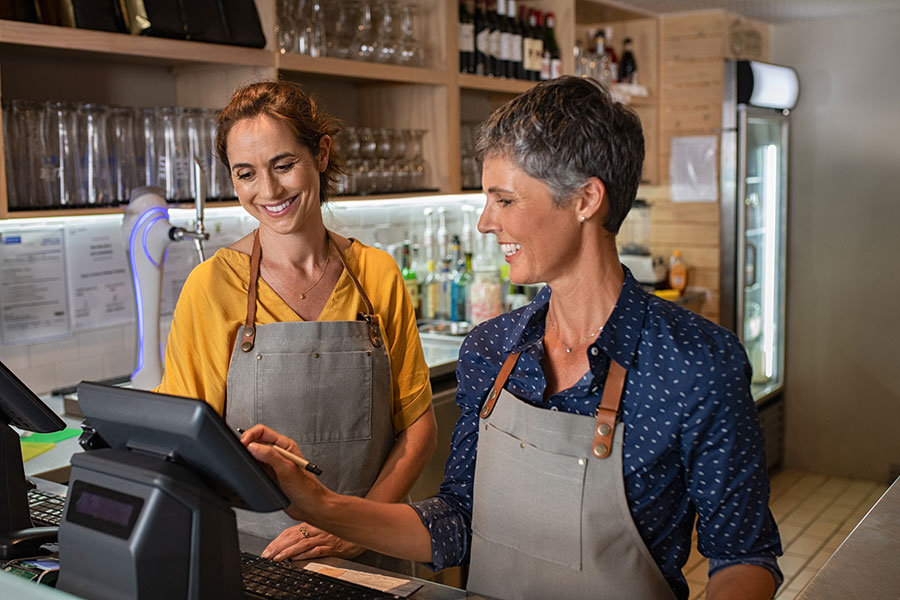
Training isn’t just for new hires. Offer ongoing training and development for staff who’d like to learn new skills, rotate through different jobs, or advance into leadership. Ask what they’d like to learn more about to keep it timely and meet their needs.
Establish Career Paths
Communicate the career paths in your establishment. Dover says, “Teaching people what it takes to get promoted and helping them do so is great for retention.”
Prioritize Staff Health and Safety
Health and safety is top of mind these days. Make it a topic at all staff meetings, reviewing protocols to bolster employees’ confidence that they and their co-workers are doing the right things the right way for safety. Be proactive about discussing mental health, and consult industry and community resources to address any issues.
General Culture
Is your culture rigid or flexible? Do schedules take staff needs into account? Are minor repairs and interpersonal issues addressed quickly to minimize day-to-day work frustrations? Do you communicate openly with your team? Do staff feel safe bringing forward concerns? Do you offer open recognition but private criticism (constructive, of course)? Never underestimate the retention and hiring power of your staff feeling supported and heard.

Hiring Strategies that Reflect the Times
Asking applicants to drop off paper résumés can be off-putting for a digital-savvy labour pool. Trendy speed-dating-style hiring fairs are problematic during the pandemic. Think about recruiting online, offering applicants the choice of submitting traditional or video résumés, and conducting Zoom interviews. If you want to meet in person before making the final decision, use those tools to shortlist candidates.
Use Your Website for Hiring
Your website is an important tool in your hiring process. Amina Gilani, co-founder and COO of Sociavore, the independent restaurant website platform and Brand Points PLUS partner, says: “Use the Sociavore job creator tool to create customized job listings and generate mobile-friendly application pages right on your restaurant website. You will receive virus-screened application packages directly in your email — no third-party recruiting website required. Accept and manage application submissions all from one dashboard.”
Go Social for Recruiting
You work hard to build your social media accounts, so why not harness them for recruitment? Your followers just may want to work for you or refer candidates to you, so let them know you’re hiring and link to your website job listings.
Signing and Retention Bonuses
Signing and retention bonuses can sweeten the deal for potential new hires.
“The best thing you can do is make your restaurant a great place to work.”
Jeff Dover, principal at fsSTRATEGY Inc.
When it comes to hiring and retention, Dover says, “The best thing you can do is make your restaurant a great place to work. […] Treat employees like a valuable commodity (which they are), and do what you can to keep people happy. […] Make your restaurant a place where Gen Z wants to work. They want to work for a company whose values align with theirs, so be environmentally friendly, address social issues, etc. Get the staff involved in implementing programs. If you nail this, you will have a way easier time than other restaurants finding and retaining staff.”
Internal marketing is the process of promoting your brand and products within your organization. In a restaurant, the internal communication between owners and employees is an important factor that contributes to the success of a restaurant. Restaurant operators who implement internal marketing programs recognize that their most valuable marketing media are the people who work for them.
Communicating brand and product knowledge to your employees doesn’t have to be boring. Here are some tips on strategies you can implement and execute to promote internal marketing within your restaurant:
Encourage individualism
For years the trend was to script everything a staff member said to guests and have them dress in branded uniforms to fit the “brand look.” Today, some of the most popular and successful restaurants encourage their staff to dress in a way that showcases their individuality. This encourages staff to be themselves and allows them to create meaningful and authentic relationships with regular and new customers.
Discount programs for staff
A great incentive for current employees to visit the restaurant on their days off is to offer meal discounts. If an employee wants to bring friends or family, the meal discount also extends to them. In addition, regular guests love seeing and interacting with staff when they are off the clock.

Create a fun environment
Employees who enjoy their work excel at work. If employees are having fun, they’re going to work harder, stay longer and help promote your restaurant to guests in a positive way. Be an employer they want to promote by creating a fun, efficient and well-run working environment.
Boost your staff events
Company events help with team building, validate your employees, and boost company morale. There is often a gap between management and employees. To help fill this gap, look for certain ways that the team can connect outside of the restaurant environment. Summer parties, wine/beer tours, fitness groups or educational sessions are great examples of team bonding. These activities in the workplace enable better communication, better relationships and ultimately increase productivity.
Set up regular tastings with suppliers
Tastings are one of the most effective tools for suppliers to help build their own brand awareness and ensure that employees are keeping their brand top of mind when suggesting alcoholic drinks. Beer, liquor and wine reps are always happy to conduct private tastings for restaurants that represent their brand. This is a great tactic to provide product knowledge to your employees in a fun way.
Bring on the sale contests
Adding an element of healthy competition can help generate engagement and potentially increase sales. Connect with suppliers and come up with a contest that promotes a great prize. The incentive will encourage staff members to be eager to win. By creating a contest like this, not only will your sales increase but the contest will also create internal excitement with the team. A win-win tactic.

Hold pre-shift meetings
A part of the internal marketing management process that gets overlooked is the pre-shift meeting. Take a few minutes before each shift to brief your staff about any promotions and features for the day. While working in a restaurant can be fun and rewarding, it can also at times be a thankless job. Give some praise to your staff by highlighting their achievements. You can also have a chef or bartender to put together a dish or drink that staff are encouraged to promote or feature for the night. During the shift meeting, have staff try it and romance it to each other.
At the height of the COVID-19 pandemic, 800,000 Canadian foodservice workers were laid off or had their hours cut down to zero. Across the country, employment in the industry dropped an average of 21 per cent.
As we all climb out of the COVID cellar, resumption of operations presents challenges for restaurant operators. Uncertainty is the only certainty.
How to go about hiring and rehiring staff once restrictions start to ease? How to manage fluctuating workloads and uncertainty about shifting and unpredictable restraints and restrictions on restaurant operations?
“Without knowing what is going to happen a few weeks or a few months from now, the ebbs and flows are challenging,” says Jeff Dover, Principal at fsStrategy Inc. “Scheduling may be difficult for those restaurants that have been closed and those looking at reopening with uncertain and different business levels.”

Dover recommends a labour matrix for scheduling. “It’s a valuable scheduling tool that requires forecasting covers per hour and determining how many cooks you need based on forecasted covers.”
The matrix can help track crucial staffing questions including:
- At what level of covers do you need a second cook, a third, a full team?
- When do you need to bring in a dishwasher?
Once you have worked through the matrix, adjust to allow for prep and meet labour requirements, including provisions to be flexible on shift length. Adjustments must be made to ensure time for prep as well as meeting labour laws (e.g., three-hour minimum shift).
Some operators are hiring contract staff to help through the uncertain times, but Dover advises seeking out salaried staff instead. They will pay better attention and know cook times, portion times, presentation and are more likely to be loyal after the pandemic is over — at long last. Remember also that government tax rules may consider contract staff to be employees, if they appear to be doing the job of full-time employees, so there’s not necessarily a benefit from that.
“A silver lining of COVID is that it should be easier to find good cooks.”
Jeff Dover, Principal at fsStrategy Inc.
“A silver lining of COVID is that it should be easier to find good cooks,” he says. “That has been such a challenge forever and, in the short term, you may be able to acquire some good people. If they are treated well and compensated well, they are more likely to stick around.”
Other staffing-related questions to consider as you ramp up to reopen:
- How are you going to handle delivery business once your dining room reopens?
- Are you going to continue focusing, at least in the short term, on takeout & delivery, with menus geared to T&D?
- Do you have production capacity for both eat-in and takeout given delivery volumes might be greater than they were before the pandemic?
- How will you enforce health and safety protocols for all types of staff — indoor and delivery?
Once the operational parts are in place and the doors of the restaurant are allowed to open again for dine-in, don’t forget to make sure your guests know what you’re doing.
“Communicate your cleaning and sanitizing practices clearly. Your guests need to be comfortable coming back.”
Jeff Dover, Principal at fsStrategy Inc.
“Communicate your cleaning and sanitization practices clearly,” Dover says. “Your guests need to be comfortable coming back. In the past, we have done this privately. Now people want to know.”
Loyal guests are repeat guests, so incentivizing them with valuable offerings that reward their commitment to your brand is definitely a win-win.
Consumers have become accustomed to being rewarded for their business since the 1700s, and Canadians on average are members of eight loyalty programs per household. For restaurants, introducing a loyalty program offers a magnitude of benefits.
“To amp up basic loyalty programs, operators can further engage customers by adding a gamified aspect or even incorporating surprise awards into their programs,” recommends Anne Mills, senior manager of consumer insights at Technomic. “With a rewards program, brands can also harness big data to better understand consumer behaviour and offer more tailored experiences. This, in turn, will drive repeat traffic and sales.”
- 36% of consumers say a rewards program is an expectation at fast food, and 34% say it’s not an expectation but could encourage them to visit more often
- 41% say a rewards program is an expectation at fast casuals, and 32% say it’s not an expectation but could encourage them to visit more often
- 64% of consumers say they visit fast-food restaurants because the price is reasonable, while 53% say the same of fast-casual restaurants
Source: Technomic’s 2018 Canadian Future of LSR Consumer Trend Report
“With a rewards program, brands can also harness big data to better understand consumer behaviour and offer more tailored experiences.”
Anne Mills, senior manager of consumer insights at Technomic
Building your brand
Developing the “right” loyalty program for your restaurant concept can result in many positive benefits from an improved guest experience, elevated brand position, and financial paybacks:
Guest experience
A complimentary glass of champagne, a discounted meal, complimentary birthday treats, and perks that surprise guests at point-of-sale checkout or payment all evoke positive guest brand association that leaves them feeling well thought of and valued, and returning for more. Often the calculation of what was spent to achieve the reward becomes overlooked, which results in guest retention.
Brand awareness
Positive restaurant brand experiences lead to positive word of mouth, which in turn lead to more bums in seats. In this digital age, positive reviews, social sharing, and increased website traffic are critical to a restaurant’s survival, so these opportunities are HUGE pros when considering a loyalty program.
Financial payback
The fact: brand loyalty equates to increased sales. On average guests enrolled in an effective loyalty program will spend 46% more with your business, because they are visiting you more by an average of 35%. These results are achieved by offering an easy-to-use program where the guest values the reward benefits

Getting started
Asking your guest to join another loyalty is a big ASK from a consumer perspective. Keeping their fears, daily challenges, spending habits, and decision-making behaviour top of mind is critical in developing a loyalty reward program designed for “your guest.”
So, what’s going to entice YOUR restaurant guests to feel comfortable in providing their personal information and gaining their interest in managing yet another app on their phone, or carrying another plastic card in their wallet?
Here’s where to begin understanding the loyalty landscape from an operational and guest perspective:
Identify
The loyalty applications or systems that will pair best with your existing POS system to avoid incremental equipment, integration and training fees.
Find the best digital reward and loyalty programs for you
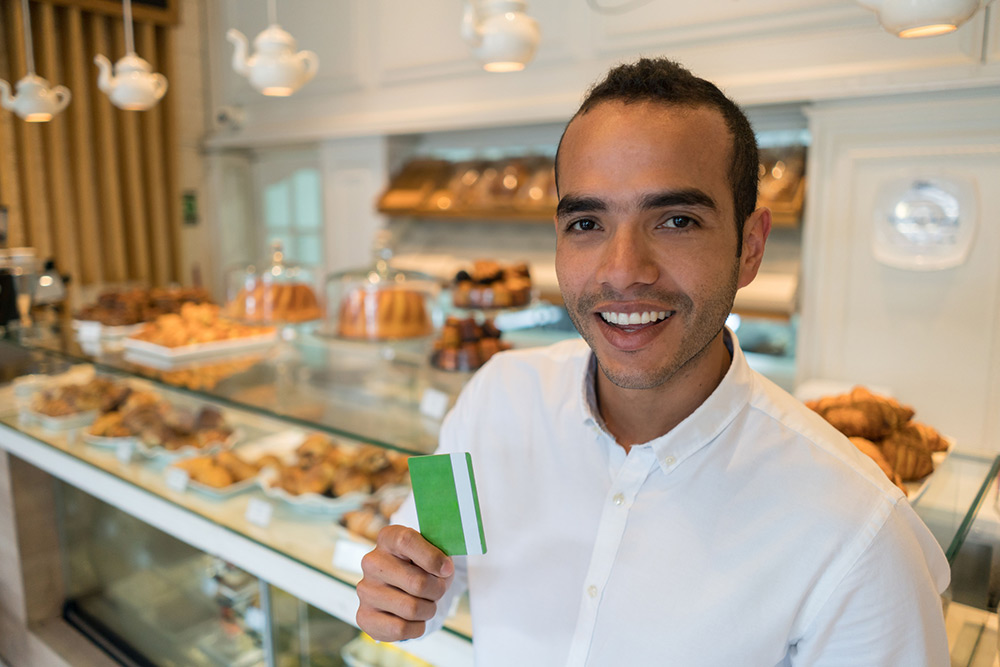
These have become more popular in recent years as mobile phone capabilities have transitioned into digital wallets. A simpler acquisition process, less plastic in guests’ physical wallets, automatic reward tracking and user updates, reduced marketing costs, and daily brand exposure are just a few of the benefits of going solely digital.
Do a comparative analysis
Review the ease with which guests can join the program directly at POS or through digital channels, the data depth of the reporting, automation and trigger marketing support, the ease of reward redemption, flexibility in developing new rewards and incentives, and the fee structure of the program.
- TIP: 49% of Millennials eat out at least once a week and they are using takeout and delivery apps on average more than other guest segments. Millennials prefer point accumulation reward programs, based upon dollars spent, as seen with the success of the Starbucks reward program.
(https://www.softwareadvice.com/resources/5-tips-for-restaurant-loyalty-programs/)
Be the guest!
Join restaurant loyalty programs that already exist to understand the end-user experience, to gauge the value of various reward incentives from complimentary menu offerings to point accumulation.
Consider member acquisition
This is the initial goal of every loyalty program, but where does this step make sense within your current guest experience? For quick-service restaurants with an ordering counter, the “join us” ask is much more authentic when your guests place their order. However, for fast-casual and sit-down restaurants, table and receipt messaging may fit in more smoothly as part of the guest experience, with subtle server messaging relating to perks that can be achieved by joining the loyalty program.
Create a dedicated role
Assign someone within your team to act as the reward and loyalty expert. This step is critical to the program’s success, as it won’t manage itself. Organization of a successful loyalty program begins up front.
These various steps will provide your team with valuable insights to help identify which type of loyalty program will achieve guest retention, increase cheque size, but also be manageable for staff from front-of-house operations to head office.